What Is a Burn Address? Understanding Token Burns
— By Whatsertrade in Analysis
Explore burn addresses, learn how token burns work, and identify when these actions might mislead investors in the crypto market.
Exploring Burn Addresses and Token Burns
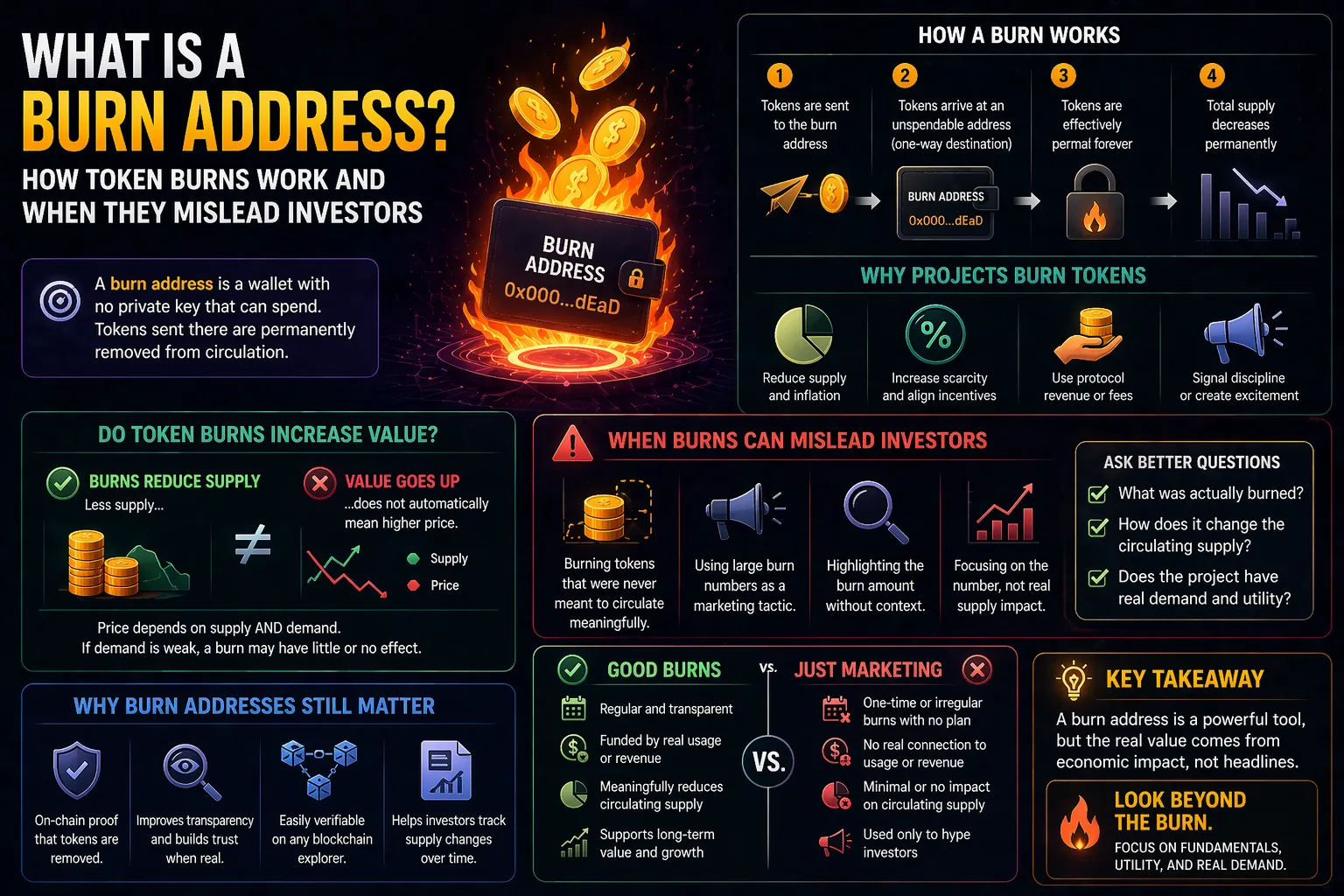
A burn address functions as a crypto wallet address used to remove tokens from circulation. This address is typically not controlled by anyone, rendering the tokens sent there unrecoverable and unspendable. Once tokens are transferred here, they are generally regarded as burned. Understanding the dynamics of a burn address is crucial for navigating the crypto landscape.
Token burns gain popularity because they suggest supply reduction and value support. While the blockchain activity is genuine, the significance isn't always as impressive as it appears. Investors need to discern when a token burn is more style than substance.
Functional Role of a Burn Address
A burn address serves as a one-way destination; tokens flow in but can't come out. They remain visible on the blockchain but are effectively locked away permanently, appealing to projects aiming to prove the permanent removal of tokens from circulation.
This verification process is central for projects committed to transparent supply dynamics.
Motivations for Token Burns
Projects decide to burn tokens for varied reasons: reducing inflation, increasing scarcity, or expending protocol revenue. Burns orchestrated through trading fees or treasury actions aim to elevate tokenomics and strategic value.
In certain ecosystems, token burns occur automatically, linking them to network utilization, while for others, these burns are strategic signals of fiscal discipline or events crafted to stir excitement.
The intent behind token burns can be economic, symbolic, or both.
Assessing Value Increment Through Burns
Token burns alone don't automatically increase value. Although they reduce supply, the token price hinges on the interplay between supply and demand. Without rising demand, burns may have negligible effects on valuation.
This misconception is prevalent in crypto. A reduced token supply doesn't ensure higher prices, emphasizing the importance of burns in the broader ecosystem context.
Recognizing Misleading Burn Practices
Burn addresses can sometimes be wielded to create a more bullish impression than justified. Projects may spotlight substantial burn figures, which lack significant impact on circulating supply. Tokens that scarcely circulate may face extensive burns without reshaping the market.
Projects might utilize burns as a strategic marketing maneuver, leveraging scarcity's appeal. Savvy investors must probe deeper: What exactly was burned? Did it affect meaningful supply shifts? Does the token hold substantial demand?
Token burns offer value when they alter the economic landscape meaningfully.
Relevance of Burn Addresses in Crypto
Token burns can be overstated, yet the burn address itself remains a vital verification mechanism for token removal, fostering transparency around supply changes.
In crypto, visible blockchain actions hold greater trustworthiness compared to vague commitments to future reductions.
Reflecting on the Impact of Burn Addresses
While a burn address serves as a real tool for permanent token removal, investors must look beyond the surface. It's pivotal to verify whether token burns translate to meaningful shifts in supply dynamics.
In crypto, token burns can be instrumental, symbolic, or merely promotional, and distinguishing among these matters significantly.
How to Bridge Crypto Between Chains: Complete Cross-Chain Tutorial 2026 How to Use 1inch: Complete DEX Aggregator Swap Tutorial (2026) How to Use OKX Web3 Wallet: Multi-Chain DeFi Hub Guide (2026)