107 BTC Sent to Burn Address After 11 Years of Dormancy
— By Whatsertrade in news
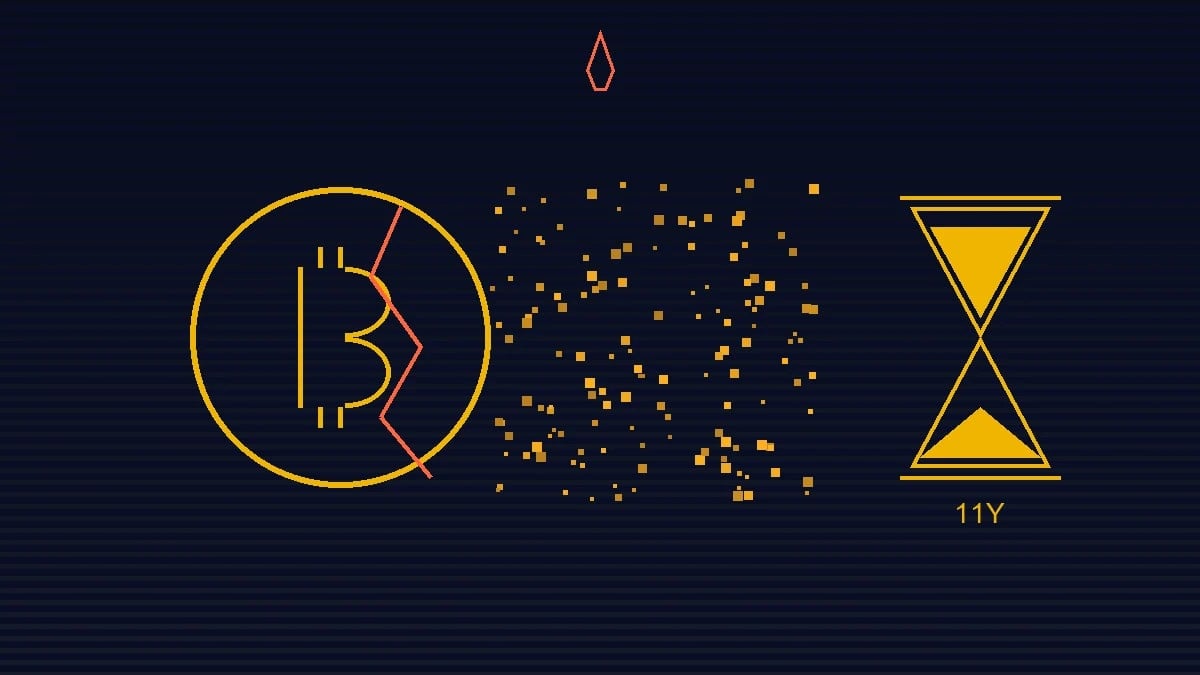
Five Bitcoin wallets dormant for 11 years sent 107 BTC worth $8.3M to a burn address, permanently removing the coins from circulation in an on-chain mystery.
An on-chain mystery is rippling through the Bitcoin community. On May 26, 2026, five wallets that had stayed silent for more than a decade suddenly woke up, moved 107 BTC worth about $8.3 million, and sent the entire balance to a burn address. The coins are now permanently unspendable, and nobody yet knows why.
What actually happened on chain
According to on-chain tracker Lookonchain, five separate Bitcoin wallets executed five transactions that all funneled funds to a known burn address. The total destroyed: 107 BTC, roughly $8.3 million at the time of the transfer. CoinDesk independently reported the same set of five transactions, valuing the burn at approximately $8.2 million.
Burn addresses are public, well documented, and provably unspendable. Once coins land in one, they cannot be moved again. There is no private key, no recovery, no override. The transactions sit on the Bitcoin ledger as a permanent receipt of money deleted from circulation.
Why 11 years of dormancy matters
The age of these wallets is what turns a strange transfer into a genuine mystery. Coins inactive for 11 years trace back to the 2014 to 2015 window, when Bitcoin traded in a band between roughly $200 and $700. Wallets from that era are often associated with early adopters, miners who held through multiple cycles, lost keys recovered after years, or holders who simply never logged back in.
Movement from this cohort is rare. Burning their entire balance in a single coordinated wave is essentially unprecedented at this scale.
How a Bitcoin burn address actually works
A burn address is a Bitcoin address whose private key is mathematically impossible to derive. Operators typically build one from a hash with no known preimage, or from a vanity prefix like 1BitcoinEater that fails the standard cryptographic checks needed to ever sign a transaction.
The protocol does not treat burn addresses differently. To Bitcoin nodes, the coins still exist in the unspent transaction output set. In practice, they will sit there forever because no valid signature can ever release them.
Theories: protest, statement, or accident?
Three explanations dominate community discussion. The first is voluntary destruction as a statement, perhaps a protest, perhaps a tribute, perhaps a philosophical gesture about scarcity. The second is an accidental burn from a misconfigured script or a typo across five copy paste operations, although the coordinated structure makes this less likely. The third is a deliberate signal from an early holder who decided that returning supply to nobody was more meaningful than selling.
None of the addresses have published a signed message claiming responsibility. Until someone signs from one of the source wallets, the motive remains open.
Historical context for Bitcoin burns
Bitcoin burns happen more often than most people realize, but rarely at this size. Small accidental burns occur every week from buggy scripts and miscoded transactions. Larger intentional burns have been used to demonstrate proof of burn, anchor data, or memorialize events. The 2014 Counterparty launch burned more than 2,000 BTC to bootstrap an asset layer, an event that remains one of the largest documented intentional burns on the network.
An 11 year dormant cluster burning 107 BTC in a single day belongs in that historical conversation, but it stands apart because there is no obvious project or protocol attached to it.
Supply impact against 19.8M in circulation
Bitcoin currently has about 19.8 million coins in circulation against a hard cap of 21 million. Removing 107 BTC is mathematically a rounding error at 0.00054 percent of supply. The signal value is larger than the supply value. Every burn permanently raises the effective scarcity floor by exactly the burned amount, and every burn from a long dormant cluster also subtracts from the pool of potentially lost coins that the market has already partially priced in.
Analysts who model lost or dormant supply will be watching whether this is an isolated event or the start of a pattern from the 2014 to 2015 cohort.
Track Bitcoin movements with DEXTools
Whale wallets, sudden burns, and dormant address awakenings are exactly the kind of on-chain signals that move price in minutes. DEXTools surfaces large transfers, wallet activity, and liquidity shifts across Bitcoin and the multichain ecosystem in real time so you can see the move while it is happening, not after the headlines catch up.