Bitcoin and USDC Join the Housing Market with Crypto Mortgages
— By Whatsertrade in Analysis
Discover how Bitcoin and USDC are now used for crypto mortgages, bridging digital assets and the housing market.
Bitcoin and USDC Enter the Housing Market as Crypto Mortgages Become Real
Crypto has spent years chasing real world adoption. It promised to change finance, reshape payments, and create a new digital economy. Yet for many people, crypto still feels far removed from everyday life.
That may be starting to change.
Coinbase and Better Home & Finance are pushing crypto into one of the most important financial decisions a person can make: buying a home. Their new model allows buyers to use bitcoin or USDC as collateral for a home down payment through a separate loan tied to the mortgage process.
This is not just another crypto product launch. It is a serious attempt to connect digital assets with the real economy in a way that everyday consumers can immediately understand. For the crypto industry, that makes this one of the most important adoption stories of the year.
Crypto mortgage utility is getting real
For a long time, the crypto market has been driven by speculation, narratives, and cycles of hype. Traders made money. Builders launched platforms. Investors chased the next big trend. But one question never went away: what is crypto actually useful for in normal life?
That is why this development matters.
A crypto backed path to a home down payment gives bitcoin and USDC a practical role in personal finance. Instead of sitting inside an exchange account or a wallet as passive holdings, these assets can become part of a major life purchase.
That changes the conversation.
Crypto is no longer being sold only as a bet on the future. It is being tested as a financial tool that could help people access homeownership without immediately selling their digital assets.
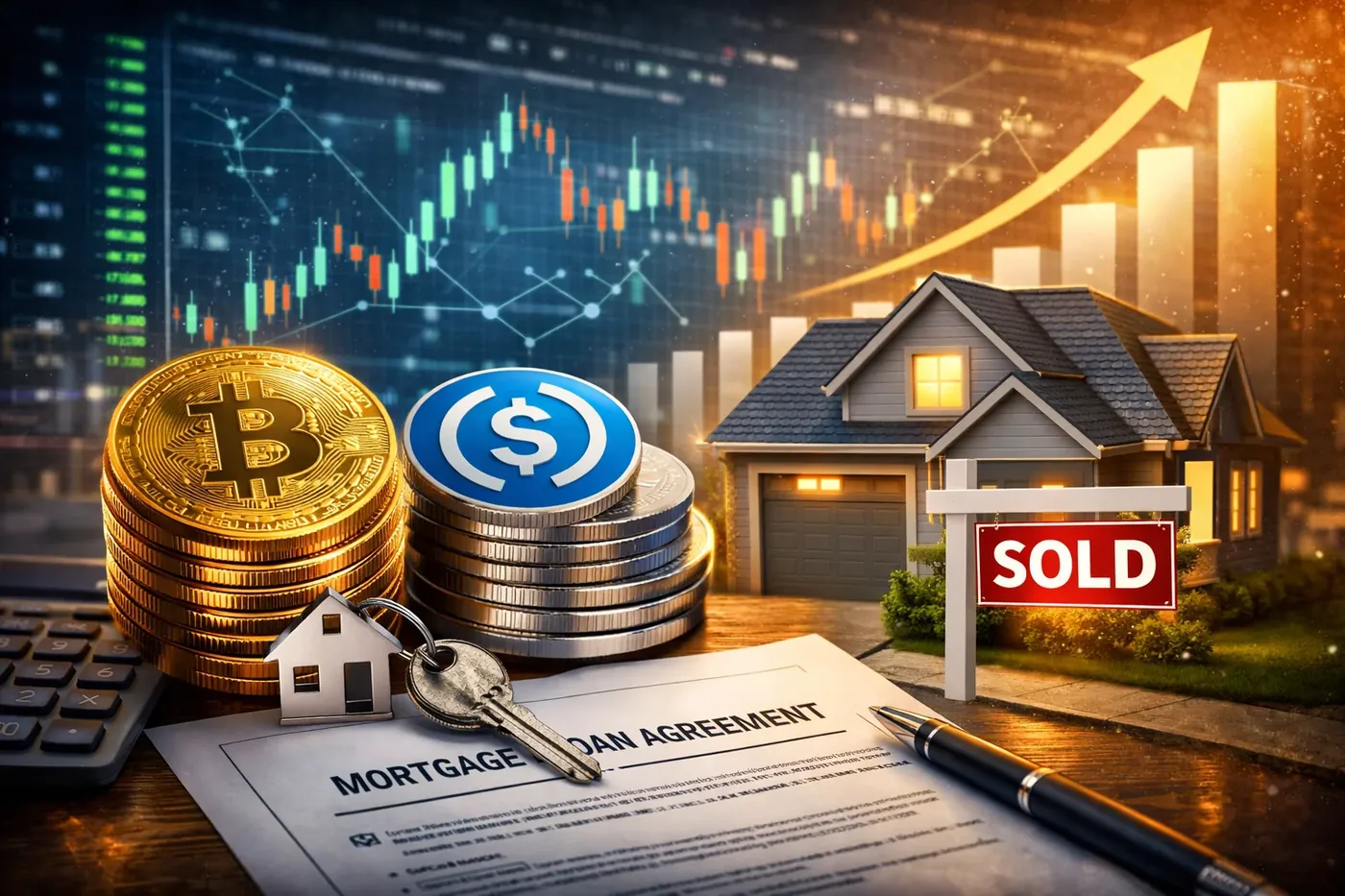
Why bitcoin and USDC make sense for homebuyers
Bitcoin and USDC serve two different purposes, and that is exactly why this model is gaining attention.
Bitcoin appeals to long term holders who believe its value can continue to rise over time. Many of them do not want to sell, especially if they believe the market still has upside. Selling also creates friction, including tax considerations and the emotional cost of exiting a position too early.
USDC offers a more stable option. Because it is tied to the US dollar, it reduces some of the volatility concerns that naturally come with crypto. That makes it easier to imagine in a housing related product, especially for buyers who want digital asset flexibility with less price risk.
Together, bitcoin and USDC create a bridge between crypto wealth and traditional real estate finance.
Buying a house with crypto just became a serious idea
For years, the idea of buying a house with crypto felt more like a headline than a practical reality. The concept generated attention, but the actual process remained limited, clunky, or highly niche.
This new structure feels different because it is not trying to replace the mortgage system overnight. It is trying to plug crypto into it.
That makes it much more realistic.
Instead of forcing buyers to choose between keeping their digital assets and pursuing homeownership, the model offers a third path. Buyers may be able to use their crypto as collateral while moving forward with a home purchase through a more familiar financing framework.
That is a huge shift. It turns crypto from something people trade into something people can build their lives around.
No margin calls could be the detail that changes everything
One of the most important parts of the announcement is the claim that there will be no margin calls as long as borrowers keep making payments.
That matters more than almost anything else.
Margin calls are one of the biggest fears attached to collateral based crypto products. In a volatile market, they can trigger forced liquidations at the worst possible time. That risk has made many consumers skeptical of using their digital assets in any serious financing strategy.
If this structure truly reduces that pressure, it could make crypto backed housing finance far more appealing to mainstream users.
It also sends a deeper message to the market: crypto financial products are maturing. The focus is moving away from pure leverage and toward long term consumer utility.
The housing market could become crypto's biggest mainstream breakthrough
Real estate is not a niche. It is one of the largest and most emotionally significant sectors in the world. People may not care about blockchain jargon or advanced DeFi mechanics, but they do care about buying a home, protecting their assets, and finding new ways to access capital.
That is why this story is so powerful.
If crypto can enter the housing market in a meaningful way, it becomes easier for the average person to understand why digital assets matter. The use case becomes instantly clear. People can see the value. They can imagine the application. They can connect crypto to something tangible.
This is the kind of adoption story the industry has needed for years.
Not another promise. Not another theory. A direct connection between crypto and real life.
There are still major risks investors should not ignore
The opportunity is big, but so are the risks.
Bitcoin remains volatile. Even with a more borrower friendly structure, price swings can still affect how users think about their debt, their collateral, and their long term balance sheet. Taking on housing exposure while remaining exposed to crypto is not a small decision.
There is also the tax angle. One of the biggest reasons some investors may prefer collateralized borrowing is to avoid selling and triggering a taxable event. That may sound attractive, but it also means buyers need to understand the legal and financial consequences of these products in detail.
Then there is the question of consumer protection.
Housing finance is not an experimental playground. It is one of the most heavily scrutinized areas of consumer finance for a reason. If crypto is going to become part of the mortgage conversation, the product experience must be transparent, compliant, and built for real users rather than crypto insiders.
This could redefine how people think about crypto wealth
One of the biggest long term implications of this model is psychological.
For many holders, crypto has existed in a separate category from the rest of their financial life. It sits outside traditional banking. Outside mortgage applications. Outside credit decisions. Outside the institutions people rely on for major purchases.
That separation may now begin to close.
If lenders and financial platforms start recognizing digital assets as usable financial collateral in a more structured way, crypto wealth becomes more real in the eyes of consumers. It starts to function less like a speculative side bet and more like an integrated part of personal finance.
That could influence far more than mortgages. It could shape lending, wealth management, and how the next generation builds financial strategies around digital assets.
Final take
Crypto has always talked about changing the financial system. Now it is trying to prove it in one of the hardest environments possible: the housing market.
That is why this story stands out.
A crypto backed home down payment model involving bitcoin and USDC is not just another industry experiment. It is a direct test of whether digital assets can serve a practical purpose in the lives of ordinary people.
If it works, the implications are massive.
It means crypto is no longer just something to buy, sell, or hold. It becomes something people can actually use when making one of the biggest purchases of their lives.
And if that happens, the real future of crypto may not begin in DeFi.
It may begin at the front door of a new home.
Coinbase Launches Crypto-Backed Mortgages in Partnership With Better Ripple Champions Stablecoins in Trade Finance How to Use Coinbase in 2026: Complete Beginner Guide SEC's New Crypto Classification: What's Changing? Top Token Security Tools 2026: Protect Your Crypto