CodecFlow Wins 6th Place at Pump.fun Hackathon With Robotics Execution Engine
— By Tony Rabbit in News

CodecFlow wins 6th place at Pump.fun's $3M Build In Public Hackathon with a robotics execution engine that gives AI agents instant computing environments across cloud, decentralized networks, and on-premises infrastructure.
CodecFlow Takes 6th Place in Pump.fun's $3M Build In Public Hackathon
The Pump.fun Build In Public Hackathon, one of the largest competitions in Solana's history with a $3 million prize pool, has announced its latest winner. CodecFlow has claimed 6th place with a unique proposition: an execution engine for robotics and AI agents that gives autonomous systems instant access to dedicated computing environments.
Trading memecoins on TON? Not.Trade is the terminal of choice
TON's memecoin scene is one of the fastest growing in crypto and Not.Trade is the fastest terminal on TON for catching launches early. Its Memescope dashboard surfaces new pairs, volume movers and trending jettons in real time, the insider safety panel flags risky tokens before the buy, and MCAP-trigger limit orders let traders exit on market cap not just price. Multi-wallet sniping and MEV protection ship by default.
Explore Not.Trade in depth →While most hackathon entries focused on trading bots, social tools, or memecoin infrastructure, CodecFlow went in a completely different direction. It asked: what if AI agents and robots could spin up their own computing environments on demand, across any cloud, any cluster, or any decentralized peer?
What Is CodecFlow?
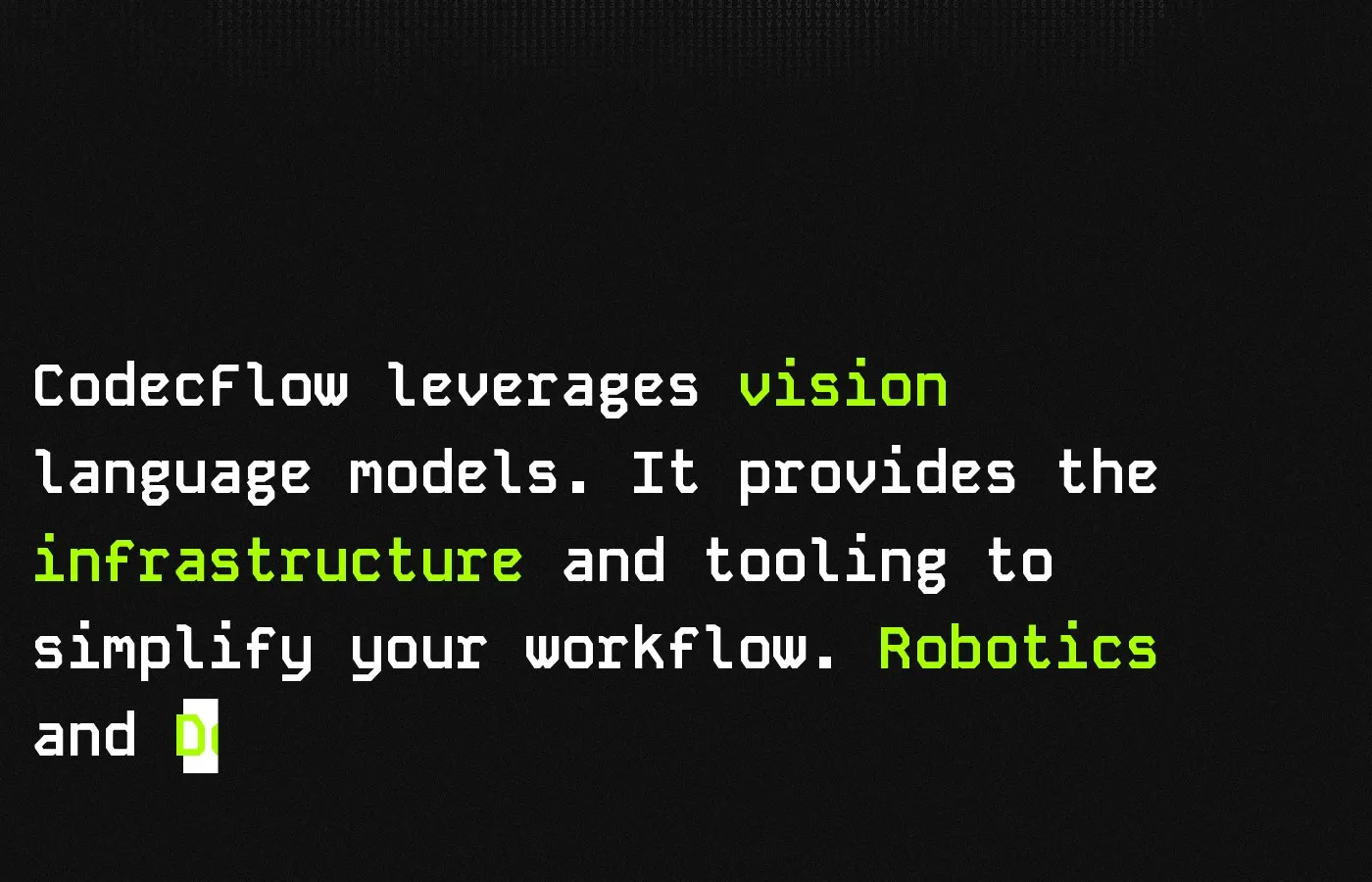
CodecFlow is an infrastructure platform that provides AI agents and robotics systems with instant access to computing environments. Think of it as a cloud provider purpose-built for autonomous machines. Agents get their own dedicated environments that spin up in seconds, whether on centralized cloud, decentralized networks, GPU-powered machines, or your own infrastructure.
The platform is built on three layers:
- Machines (Layer 1): Instant computer access. Agents get dedicated computing environments on centralized cloud, decentralized networks, GPU clusters, or on-premises infrastructure.
- Systems (Layer 2): Every environment imaginable. Support for multi-OS (Windows, macOS, Linux, mobile emulators), gaming environments, development tools, legacy systems, and custom tooling.
- Operators (Layer 3): AI workers that see and think. Vision-language models that interact with any software visually, handling unexpected situations and adapting to changes like humans do.
The Three Pillars: Machines, Systems, and Operators
CodecFlow's architecture separates concerns into three distinct layers, each solving a different problem in the autonomous computing stack.
Layer 1: Machines
The foundation layer handles raw compute. CodecFlow can provision environments on:
- Centralized Cloud: Auto-scaling infrastructure on AWS, GCP, Azure
- Decentralized Networks: Cost-effective computing via peer-to-peer GPU sharing
- GPU-Powered Machines: Dedicated resources for graphics-intensive tasks like robotics simulation
- Your Own Infrastructure: On-premises deployment for sensitive workloads
Layer 2: Systems
The systems layer handles environment configuration. Agents can work in any operating system or software environment, from modern web apps to decades-old desktop software. This includes pre-configured gaming environments, complete development toolchains, and even legacy systems like Windows XP or DOS for business automation.
Layer 3: Operators
This is where CodecFlow gets interesting. The operators layer uses vision-language models to let AI agents interact with any software visually. Instead of requiring APIs or rigid scripts, agents can see screens, understand interfaces, handle popups and errors, and follow natural human-like workflows. They learn from experience and get better over time.
Key Products: Fabric SDK and SimArena
CodecFlow has shipped two main products that showcase the platform's capabilities:
Fabric SDK
Fabric is CodecFlow's open-source SDK for building robotics applications. It provides the tools and infrastructure to simplify robotics workflows, making it possible to ship robotics projects in weeks instead of months. The SDK handles the complex infrastructure layer so developers can focus on building the actual robot behavior.
SimArena
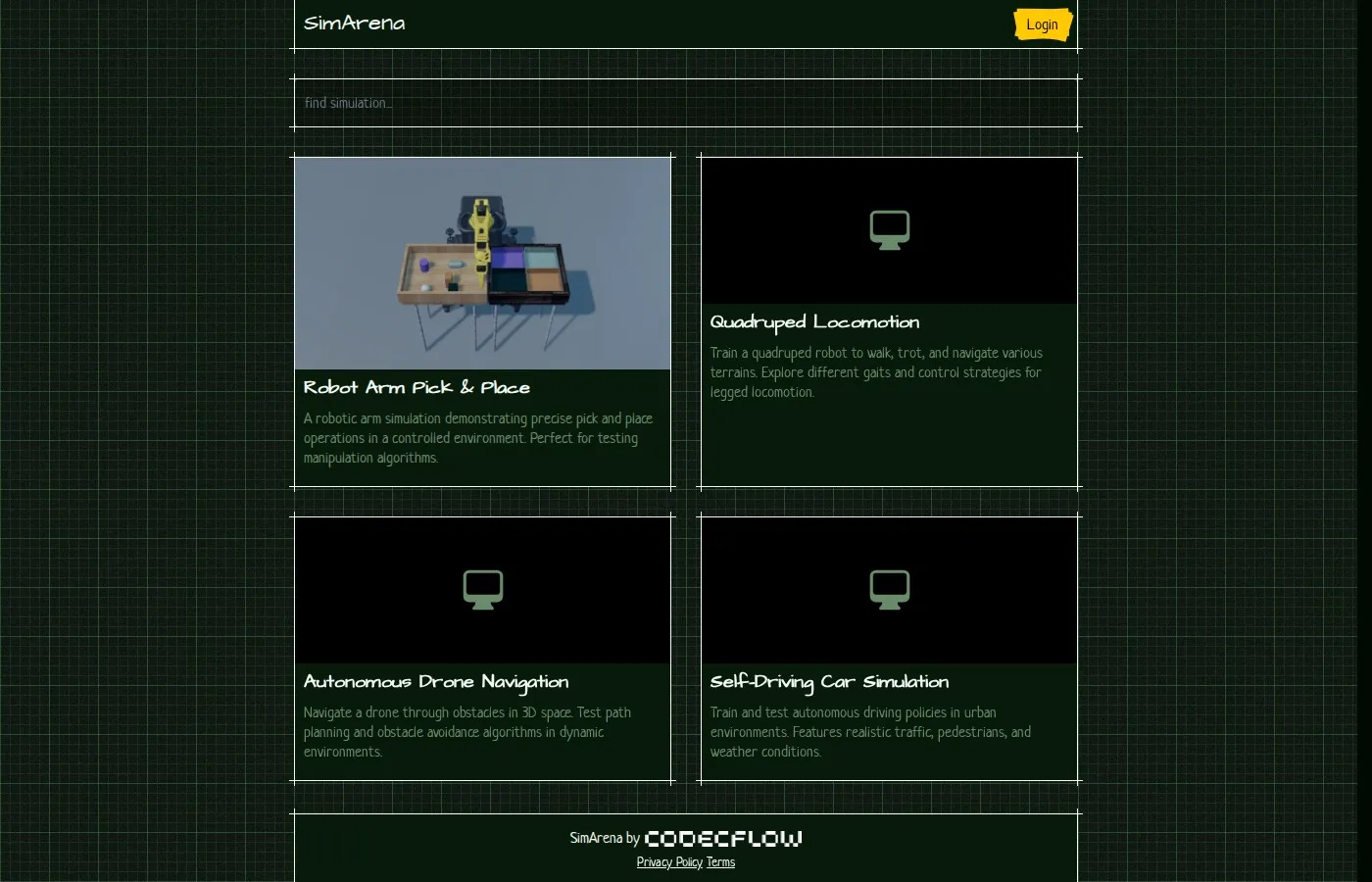
SimArena is a robotics simulation platform where developers can train AI models in virtual environments before deploying to real hardware. It supports policy training and sim-to-real transfer, which means you can test your robot's behavior in simulation and then deploy it to physical robots with confidence. This dramatically reduces the cost and risk of robotics development.
Use Cases: From Assembly Bots to Game Agents
CodecFlow's flexibility enables a wide range of applications:
- Robotic Sim Training: Spin up GPU simulations for policy training and sim-to-real transfer in minutes
- Game Bot Hosting: Deploy game-playing agents without worrying about GPU fleets or ban risk
- GUI Test Automation: Run vision-driven agents to click, type, and verify desktop applications at scale
- Legacy Software Automation: Let agents drive old Win32/COBOL UIs to modernize workflows without refactoring
- Data Extraction Workers: Launch headless browsers that scrape sites and stream clean data securely
- Model Fine-Tuning Pods: Burst-allocate multi-cloud GPUs to tune LLMs or VLMs cost-optimally
- Crowdsourced Compute Pool: Tap decentralized peers when cloud costs spike, avoiding vendor lock-in
Why CodecFlow Stands Out in the Pump.fun Hackathon
Most projects in the Pump.fun Build In Public Hackathon focused on crypto-native tools: trading bots, token launchers, social platforms, and DeFi infrastructure. CodecFlow is notable because it brings real-world robotics infrastructure to the Solana ecosystem.
The platform addresses a fundamental bottleneck in robotics and AI development: getting compute resources provisioned and configured quickly. Traditional cloud setup for robotics workloads involves complex configuration, GPU scheduling, and environment management. CodecFlow reduces this to API calls that resolve in seconds.
The combination of decentralized compute sourcing with robotics-specific tooling positions CodecFlow at an interesting intersection of crypto infrastructure and physical-world AI applications. The hackathon finish validates market interest in this crossover between DeFi infrastructure and real-world autonomous systems.
The Token: $CODEC
CodecFlow's token, $CODEC, is listed on CoinGecko and tradeable on Solana DEXs. As part of the Pump.fun hackathon requirements, the team launched the token to align community incentives with platform development. The token plays a role in the decentralized compute marketplace, where node operators and users transact for computing resources.
What Is Next for CodecFlow?
Based on the project's roadmap and current development:
- Expanded compute network: Growing the decentralized peer network for lower-cost GPU access
- More operator models: Training specialized vision-language models for different software environments
- SimArena expansion: Adding more simulation environments and robot types
- Enterprise partnerships: Targeting manufacturing and logistics companies that need scalable robotics automation
The Pump.fun hackathon provided visibility and validation. The real test will be whether CodecFlow can convert that into sustained adoption from robotics developers and AI agent builders who need reliable, fast computing infrastructure.
How to Get Started with CodecFlow
- Visit codecflow.ai to explore the platform
- Check the documentation for integration guides
- Try the Fabric SDK on GitHub
- Launch a simulation on SimArena
- Join the community on Telegram or Discord
Disclaimer
This article is for informational purposes only and does not constitute investment advice, financial advice, trading advice, or any other kind of advice. DEXTools does not recommend buying, selling, or holding any cryptocurrency or token. Users should conduct their own research and consult with a qualified financial advisor before making any investment decisions. Cryptocurrency investments are volatile and high-risk. DEXTools is not responsible for any losses incurred.