EIP-7702 Wallet Risks: DeFi Security Alert
— By Whatsertrade in Analysis
Explore how EIP 7702 transforms wallet permissions in DeFi, and learn how to avoid phishing threats. Don't let new wallet risks catch you off guard.
Ethereum is entering a new phase of wallet design. For years, most traders used externally owned accounts, meaning simple wallets controlled by private keys. These wallets could hold tokens, sign swaps, approve contracts and interact with decentralized applications. They were powerful, but limited. EIP 7702 changes that model by allowing regular wallets to behave more like smart contract wallets.
For users, this can unlock a smoother experience. Wallets may support batching, gas sponsorship, recovery tools, automated actions and more advanced permission systems. For builders, it creates a bridge between traditional wallets and account abstraction. For attackers, however, it also creates a new area to exploit.
That is why EIP 7702 scams could become one of the most important security topics for DeFi traders.
What Is EIP 7702 In Simple Terms
EIP 7702 is an Ethereum improvement that lets a normal wallet temporarily or persistently delegate execution to smart contract code. Instead of your wallet only signing one direct transaction, it can authorize logic that controls how actions are executed.
This does not mean EIP 7702 is unsafe by itself. The risk comes from what users may be tricked into signing. In the same way that token approvals became a major phishing vector, wallet delegation could become a new permission layer that many traders do not fully understand.
The danger is simple. If a user signs a malicious delegation, the attacker may gain a dangerous level of control over future wallet behavior. The user may believe they are approving a swap, claiming an airdrop or connecting to a new trading tool, while in reality they are granting execution rights to code they have not reviewed.
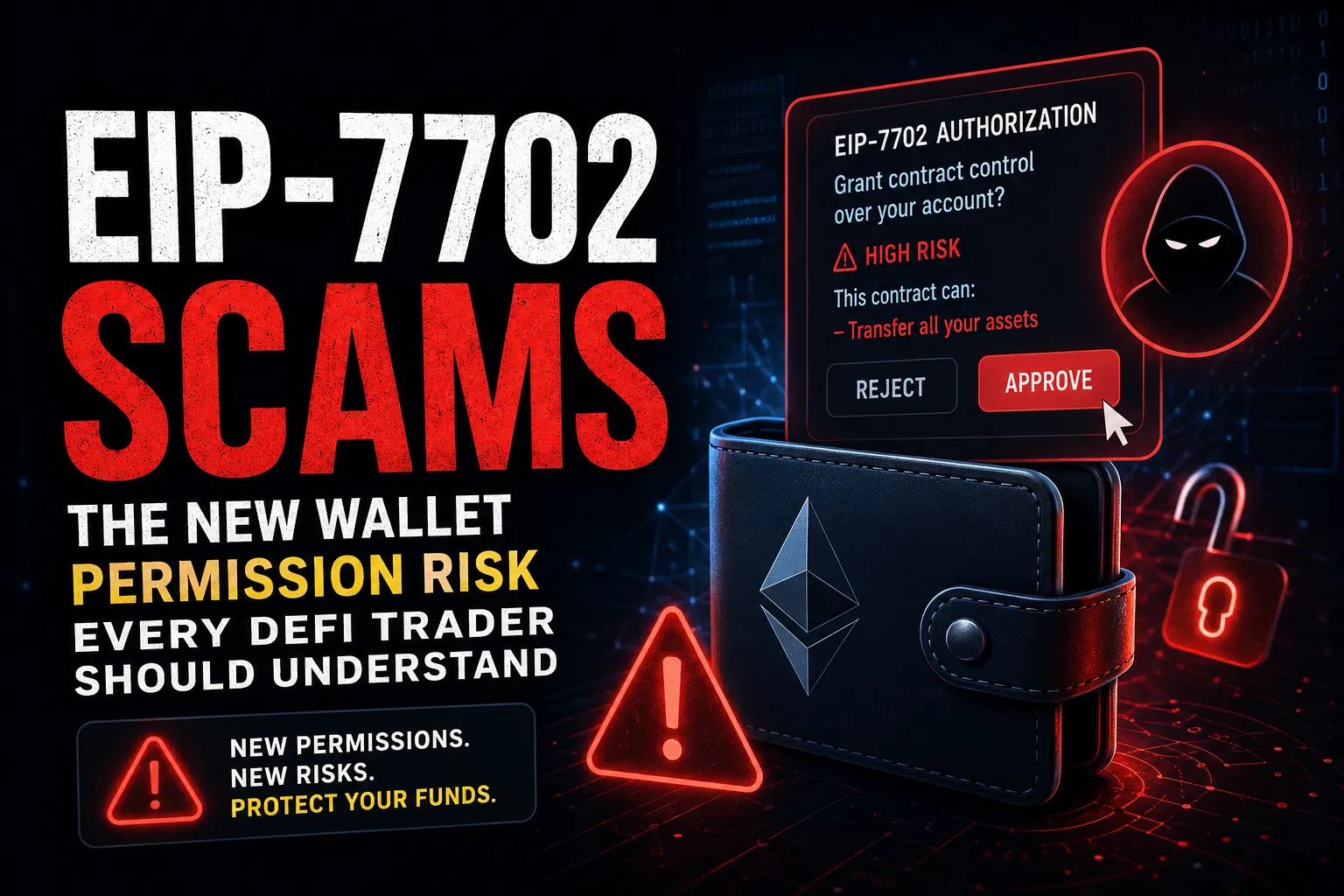
Why EIP 7702 Matters For DeFi Traders
DeFi traders interact with more contracts than the average crypto user. They approve tokens, sign permits, bridge funds, claim rewards, test new protocols, ape into low cap tokens and connect wallets to unfamiliar interfaces. That makes them a prime target for attackers.
EIP 7702 can improve trading workflows, but it also raises the stakes for wallet prompts. A signature is no longer just a signature. A delegation can become a powerful instruction that changes how a wallet behaves.
The most dangerous part is user experience. Many traders already click through wallet popups quickly, especially when gas is moving, a token is pumping or an airdrop claim is time sensitive. Attackers know this. They do not need to break Ethereum. They only need to make a malicious signature look normal.
How EIP 7702 Scams Could Work
A common EIP 7702 scam could begin with a fake decentralized application that looks like a token claim page. The user connects a wallet and sees a message asking for authorization. The interface may describe the action as a claim, verification or trading upgrade. The wallet prompt may appear technical, confusing or routine.
If the user signs, the wallet could delegate execution to malicious code. Depending on the design of the attack, that code could attempt to move assets, approve tokens, execute swaps or wait for future deposits.
Another possible scam could involve fake trading bots. A page might offer gasless trades, automated sniping or enhanced execution. To activate the feature, the user signs a delegation. The real purpose may be to give the attacker a way to execute unwanted actions later.
A third risk is cross chain confusion. Traders often use the same wallet across many networks. If a user signs a delegation that is valid across multiple chains, the damage could spread beyond one ecosystem.
Why This Is Different From A Normal Token Approval
Token approvals usually give a contract permission to spend a specific token. That is already dangerous when the approval is unlimited. EIP 7702 can be broader because it relates to wallet execution logic.
In practical terms, a token approval asks whether a contract can spend one asset. A malicious delegation may affect how the wallet itself behaves. That makes it harder for users to understand and harder for basic security habits to cover.
This does not make EIP 7702 bad. It makes education urgent.
Warning Signs Of An EIP 7702 Scam
The strongest warning sign is any wallet prompt that asks for delegation, authorization or account upgrade when the action does not clearly require it. A normal token swap should not need a mysterious wallet upgrade. A simple airdrop claim should not require broad execution permissions. A new trading tool should explain exactly what code is being authorized and why.
Traders should also be careful with urgent language. Scammers often use countdowns, limited claim windows, fake exchange listings and artificial social proof. If the page pressures you to sign quickly, slow down.
Another warning sign is a new website promoted only through replies, direct messages or unofficial accounts. EIP 7702 scams are likely to spread through the same channels as wallet drainers, fake airdrops and cloned protocol sites.
How Traders Can Reduce Risk
The first rule is to treat wallet delegations as high risk actions. Do not sign them unless you understand the application, trust the source and know why the delegation is necessary.
The second rule is wallet separation. Use one wallet for active trading, one wallet for testing new applications and one cold wallet for long term holdings. A wallet that signs experimental permissions should not also hold your main portfolio.
The third rule is to review permissions regularly. As wallet tools evolve, security dashboards will become more important. Traders should monitor approvals, permits, delegations and connected applications.
The fourth rule is to avoid signing from links found in replies or direct messages. Always navigate from official domains, verified project profiles or trusted aggregators.
Why EIP 7702 Could Still Be A Major Upgrade
Security risks should not hide the positive side of EIP 7702. Better wallet programmability can make DeFi more accessible. Traders may get safer recovery, better batching, smarter limits, gas abstraction and stronger automation. The same technology that attackers try to abuse can also power safer wallet design.
The key difference is transparency. Good applications will explain what users are signing. Good wallets will display permissions clearly. Good traders will learn to recognize when a signature gives away more control than expected.
Final Thoughts
EIP 7702 could change how Ethereum wallets work, but every new permission layer creates a new education gap. For DeFi traders, the biggest risk is not the standard itself. The biggest risk is signing something that looks harmless but delegates wallet behavior to malicious code.
The next generation of crypto phishing may not ask for your seed phrase. It may ask for a permission you do not understand.
That is why EIP 7702 scams deserve attention now. Traders who learn this early will be better prepared for the next wave of wallet attacks.
How to Bridge Crypto Between Chains: Complete Cross-Chain Tutorial 2026 How to Use 1inch: Complete DEX Aggregator Swap Tutorial (2026) How to Use OKX Web3 Wallet: Multi-Chain DeFi Hub Guide (2026)