ETH Transfer vs Bridge: Fastest Ways to Move ETH in 2026
— By AliceOnChain in Crypto

Don't let L1 gas fees stop your momentum. Master the move to Layer 2s with our 2026 guide on ETH Transfer vs Bridge. We explain exactly how to bridge ETH to Arbitrum, Base, and Polygon with real-time speed data. Stop wondering 'how long does it take to bridge ETH to Polygon' and start trading on the fastest, most liquid networks today using DEXTools insights.
ETH Transfer vs Bridge: Navigating the 2026 Layer 2 Landscape
As we navigate the 2026s, the Ethereum ecosystem has matured into a powerful, albeit fragmented, network of networks. For the average trader on DEXTools, a primary source of friction is the choice between an ETH Transfer vs Bridge operation. While a standard transfer moves assets within the same environment, utilizing a bridge is your essential passport to the world of Layer 2s (L2s).
1. Defining the Move: ETH Transfer vs Bridge
Before moving capital, it is vital to understand the technical divide. A standard transfer is a "same-chain" movement. For example, sending Ether from your MetaMask to an exchange address on the Ethereum Mainnet is a direct transaction. This process is generally fast—typically settling within 15 seconds to 5 minutes—but it keeps your assets locked within that specific network's ecosystem.
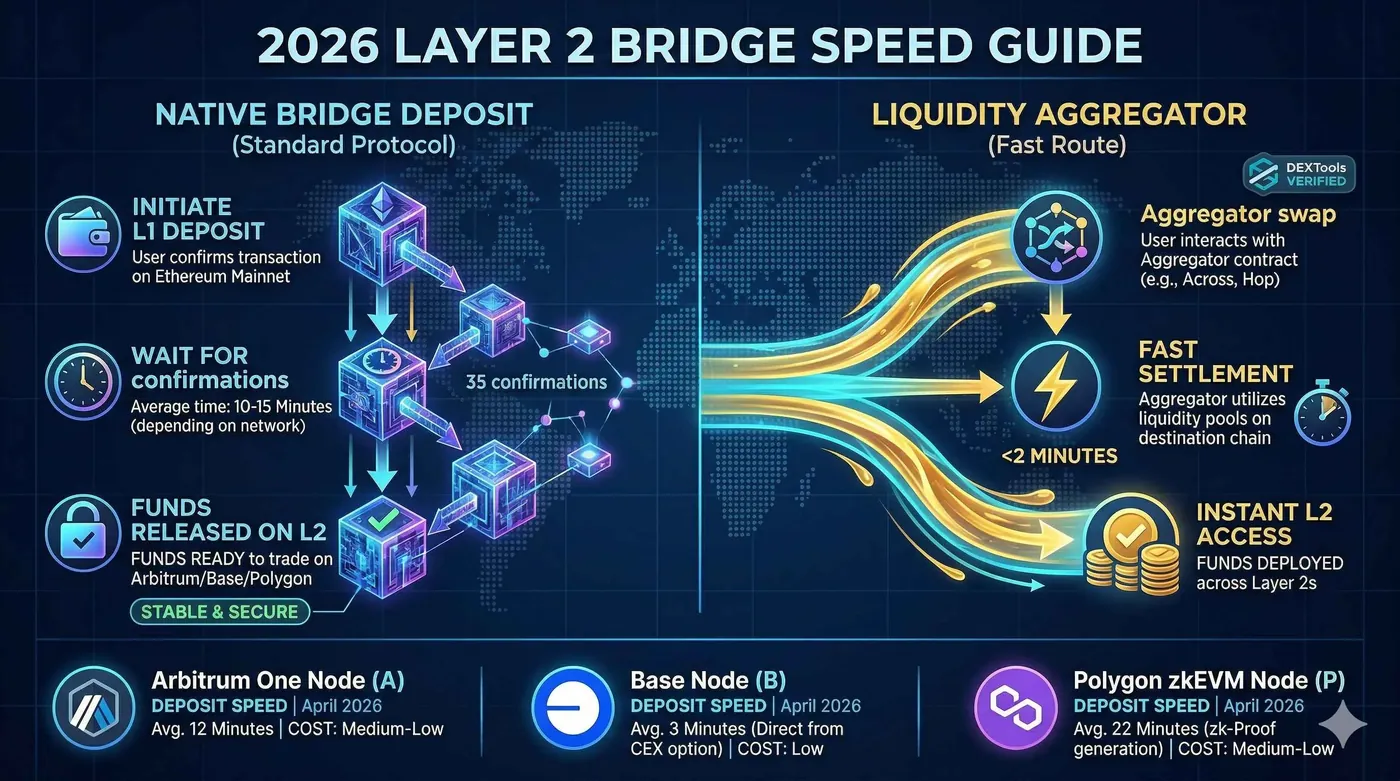
Polygon has evolved into a modular powerhouse, and many users still find themselves asking: how long does it take to bridge ETH to Polygon in today's market? When comparing a simple ETH Transfer vs Bridge on this network, the bridge deposit typically takes between 20 to 30 minutes.
If you are bridging to Polygon's zkEVM for enhanced security, the duration remains similar, though the gas cost may be slightly higher due to on-chain proof generation. These wait times exist because cross-chain bridges require several "confirmations" on the source chain to ensure the transaction is irreversible before releasing your funds on the destination side.
3. High-Yield Access: How to Bridge ETH to Arbitrum
Arbitrum remains a dominant destination for deep liquidity in 2026. To execute an ETH Transfer vs Bridge maneuver successfully here, you should start by visiting the official Arbitrum Bridge portal or utilizing a built-in aggregator like MetaMask Portfolio.
4. The Retail Shortcut: How to Bridge ETH to Base
Base has seen a meteoric rise in the 2026s due to its seamless integration with the broader Coinbase retail ecosystem. The standard ETH Transfer vs Bridge process here involves going to the Base Bridge website, selecting "Deposit," and confirming the transaction in your wallet.
On average, bridging to Base takes between 3 to 5 minutes, making it one of the fastest L2 on-ramps available. A significant shortcut for 2026 users is the ability to withdraw directly from a centralized Coinbase account to the Base network, which effectively completes the ETH Transfer vs Bridge movement instantly and circumvents the manual L1 bridging process entirely.
5. Pro Tips for Cross-Chain Mastery on DEXTools
Successful traders don't just wait for native bridges; they optimize for every second. When weighing an ETH Transfer vs Bridge for a time-sensitive trade, consider using liquidity aggregators like Across or Hop Protocol. These tools often settle cross-chain moves in under 2 minutes by utilizing pre-funded liquidity pools on both sides of the transaction.
Always check gas trends before initiating any ETH Transfer vs Bridge operation. Since bridging involves an L1 transaction, wait for periods when Gwei is low (ideally below 15). Finally, always verify that the token you receive on the destination chain is the "Canonical ETH" to ensure maximum compatibility when trading on DEXTools.
Conclusion
Whether you are learning how to bridge ETH to Arbitrum to chase a new yield farm or checking how long does it take to bridge ETH to Polygon for an NFT mint, understanding these paths is your greatest edge. An ETH Transfer vs Bridge assessment is crucial for every on-chain move. A transfer is for holding your ground; a bridge is for expanding your reach. By mastering these connections, you are prepared to navigate the most profitable corners of the 2026 decentralized universe.
--
Disclaimer: This article is for informational purposes only and does not constitute investment advice, financial advice, trading advice, or any other kind of advice. DEXTools does not recommend buying, selling, or holding any cryptocurrency or token. Users should conduct their own research and consult with a qualified financial advisor before making any investment decisions. Cryptocurrency investments are volatile and high-risk. DEXTools is not responsible for any losses incurred.
--
How to Bridge Crypto Between Chains: Complete Cross-Chain Tutorial 2026