Is ETHE an ETF? What Grayscale ETHE Actually Is in 2026
— By AliceOnChain in News
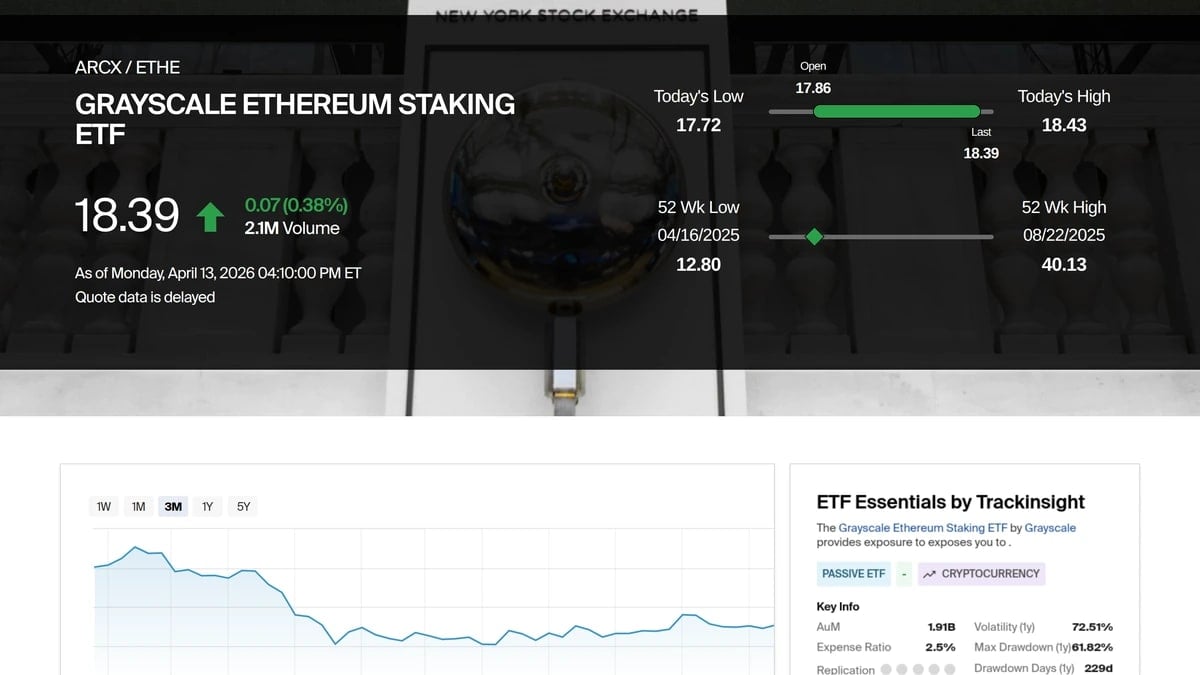
Yes. ETHE now trades as an ETF product in the current 2026 market pages checked for this update. Here is what changed, why old trust-era explainers are stale, and what to verify before buying.
If you are asking this in 2026, the short answer is yes. ETHE is now trading as an ETF product, and the current exchange pages used for this update identify it as Grayscale Ethereum Staking ETF. The reason people still get confused is simple: ETHE spent years associated with the older Grayscale trust structure, and a lot of articles, forum posts, and even ranking pages never fully caught up after the product structure changed.
That makes this one of those crypto-finance questions where the old answer and the current answer are different. If you read a stale explainer, you will be told that ETHE is not an ETF. If you check live market pages today, you will see ETHE presented as an ETF listing. That gap is exactly why this topic still gets searched.
Quick answer
- Yes, ETHE is an ETF in the current 2026 market pages reviewed for this update.
- The confusion exists because ETHE is heavily associated with the older Grayscale Ethereum Trust era, so many older explainers still answer this question as if nothing changed.
- If you are comparing products today, do not stop at the label. Check the exchange listing, fund name, sponsor fee, liquidity, spread, and whether you are looking at ETHE or the mini product ETH.
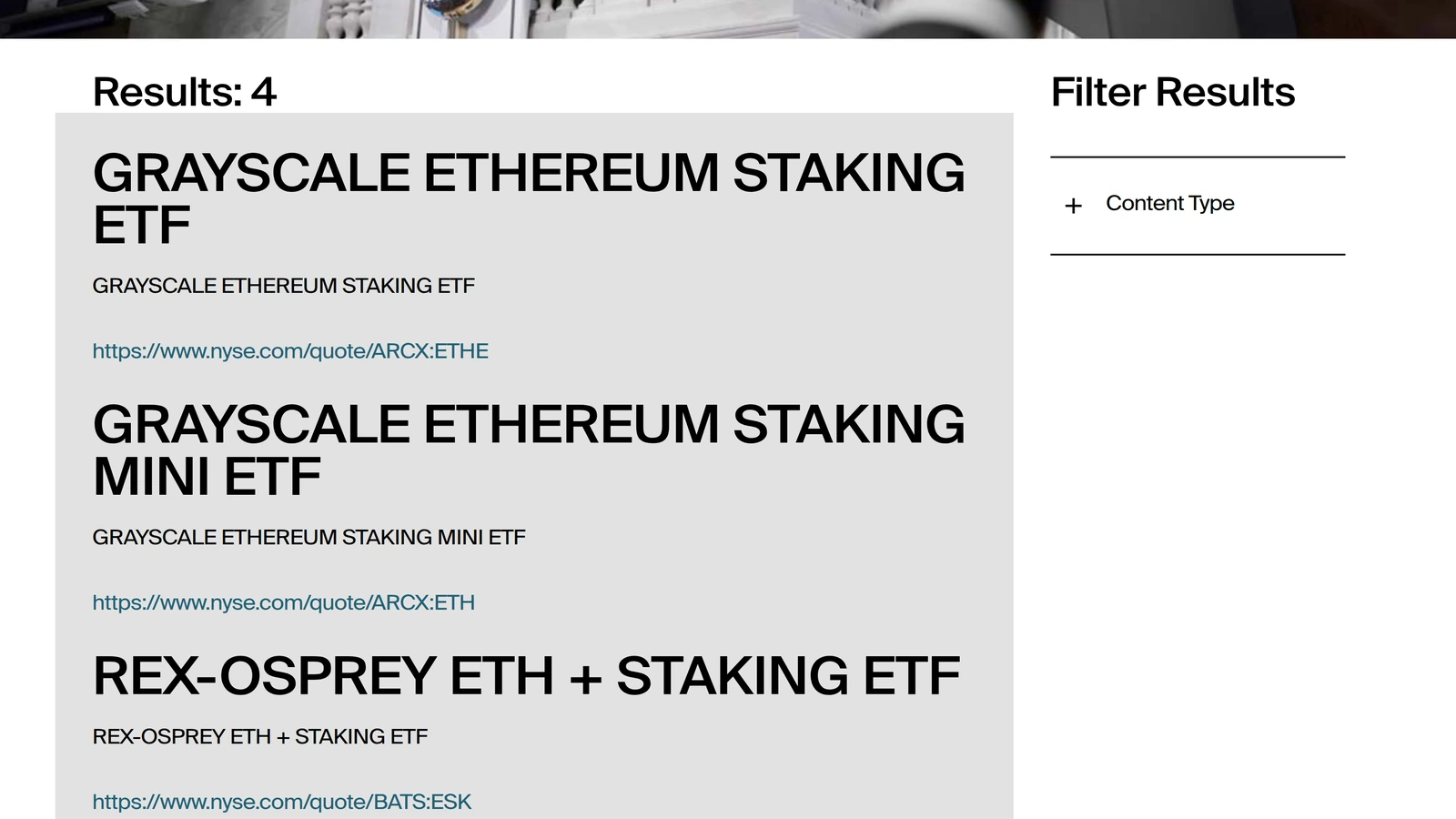
The short answer on ETHE in 2026
Based on the live exchange pages checked for this refresh, ETHE should no longer be described with the lazy old answer of "no, it is just a trust." The current listing context shows ETHE as Grayscale Ethereum Staking ETF. That means the article needed more than a cosmetic refresh - it needed a factual reset.
If your real question is "can I buy ETHE through my brokerage account like an exchange-traded product?" the practical answer is yes. If your real question is "is ETHE still the old closed-end style Grayscale structure that older articles warned me about?" then the more useful answer is that you need to separate the legacy trust narrative from the current listing reality.
That distinction matters because search intent here is not academic. People searching this are usually trying to avoid buying the wrong product, misunderstanding the wrapper, or comparing ETHE to other Ether-linked funds and assuming the names all mean the same thing.
Why people still think ETHE is not an ETF
There are three big reasons this query never dies.
This is exactly why a thin article no longer works here. Searchers do not just want a definition. They want the current map: what ETHE is now, why older pages still say something else, and how to avoid mixing up ETHE with ETH or with older trust-era commentary.
What changed from the old trust framing
The most important shift is conceptual. Older ETHE explainers treated the product as something you mostly analyzed through the old trust-vs-ETF lens: premiums or discounts, structural friction, and the question of whether it would ever behave like a standard exchange-traded product. That is not the cleanest way to answer the query anymore.
In the current market context, the better workflow is this:
- Verify the live exchange listing first. Do not trust an old explainer more than the current market page.
- Read the exact fund name. The label matters because it tells you whether you are looking at ETHE, ETH, or another Ether-linked product.
- Then compare economics. Sponsor fee, liquidity, spreads, trading venue, and product design matter more than stale headlines.
- Only after that compare the thesis. Are you choosing this for simple exposure, Grayscale familiarity, lower fees elsewhere, or a specific account constraint?
That is also why live screenshots help. They anchor the article in what investors can check right now instead of recycling outdated wording.
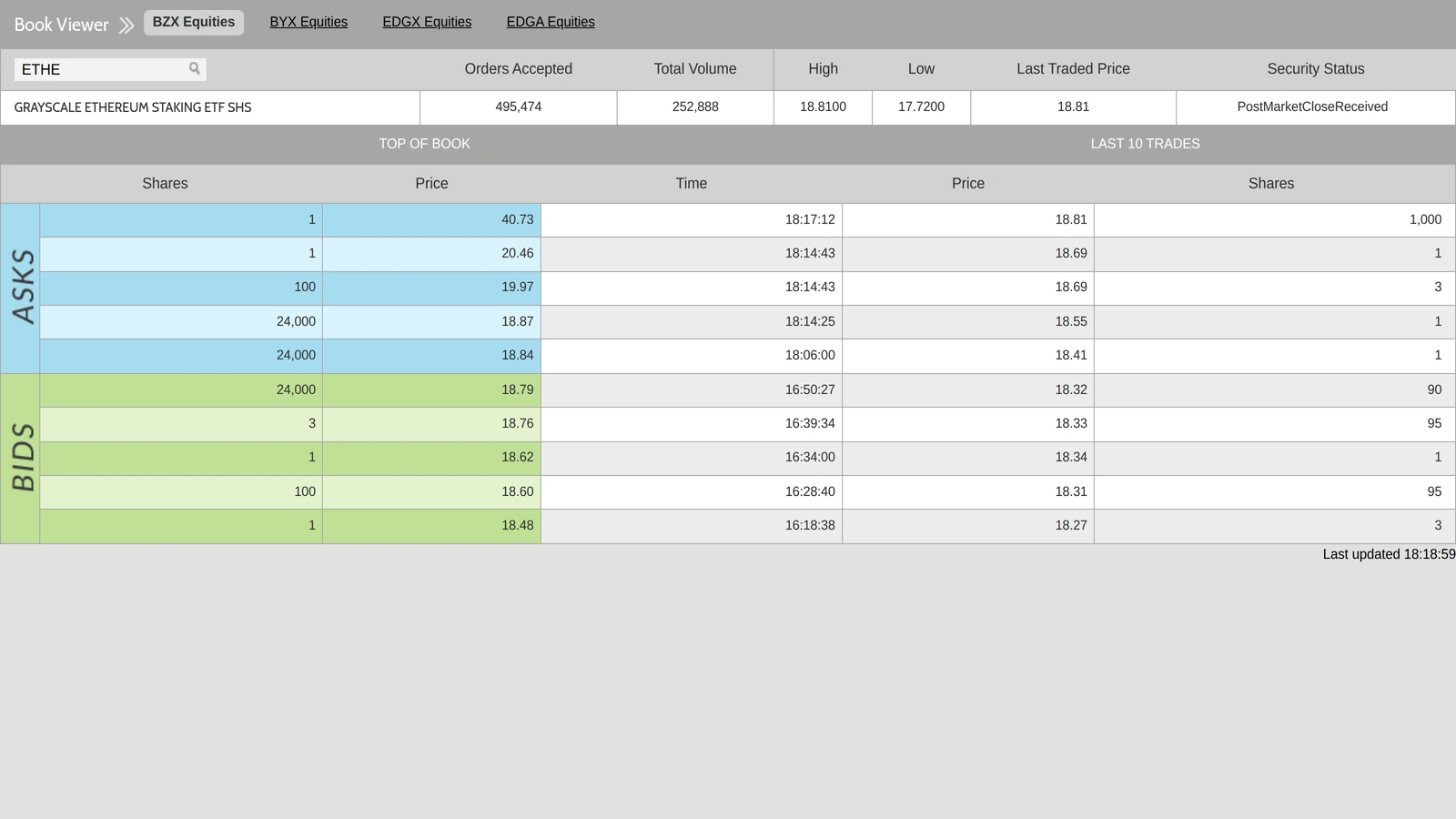
For practical decision-making, the question is no longer just "Is ETHE an ETF?" The better question is: what exactly am I buying if I choose ETHE today, and how does that compare with the nearest alternatives?
ETHE vs ETH inside Grayscale's current lineup
One of the easiest mistakes here is assuming ETHE and ETH are interchangeable just because both sit in the same Ethereum family. They are not the same ticker, and they should not be treated like the same product just because the names look close from a distance.
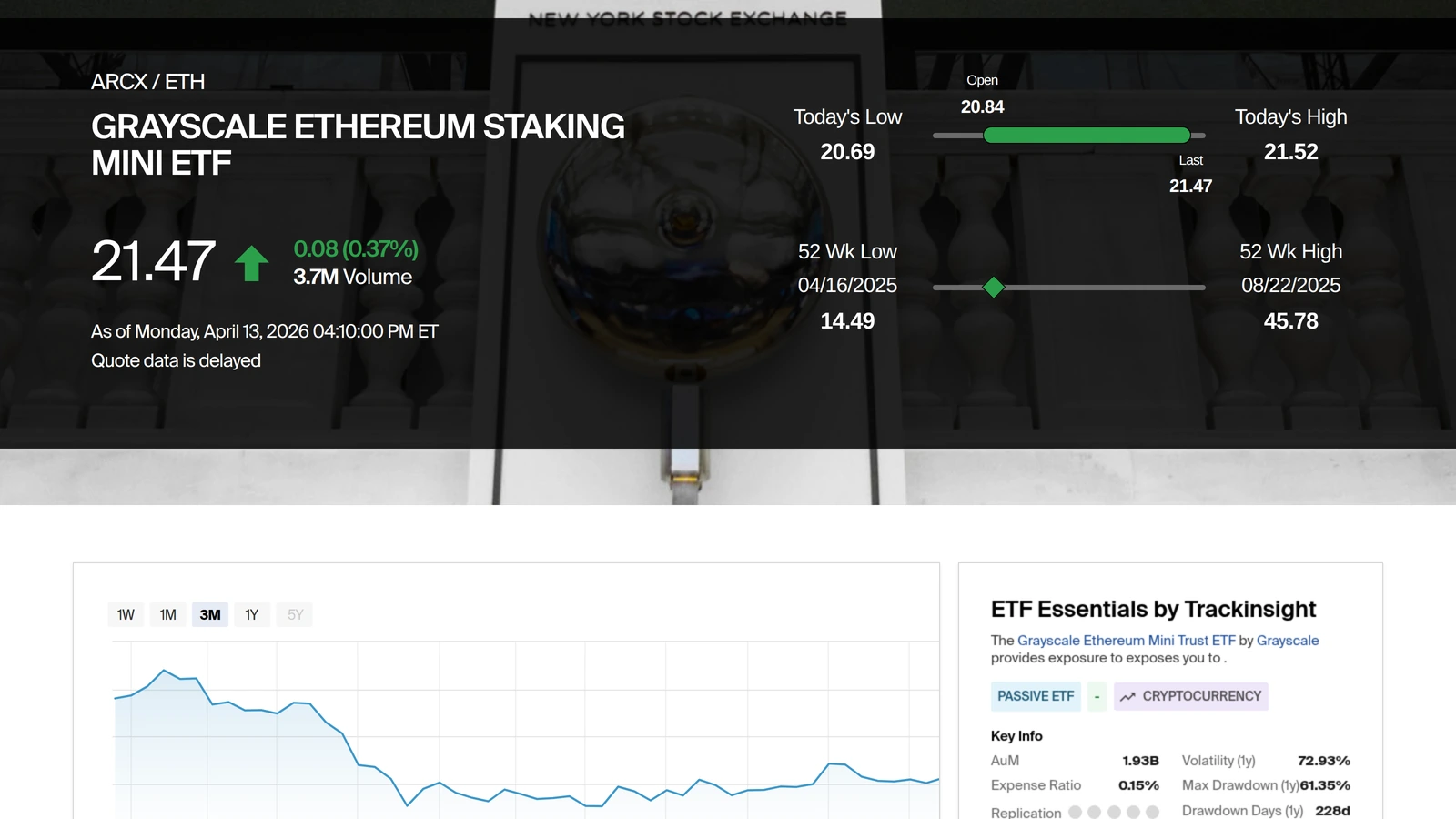
The point is not that one ticker is universally superior. The point is that a search query about ETHE should lead you to current product verification, not an outdated trust definition and a shrug.
What to check before buying ETHE
If you are actually considering a position, here is the checklist that matters more than the headline answer.
If you need a refresher on the asset itself before comparing wrappers, start with our guide to what Ethereum is and why ETH matters. If you are evaluating the asset rather than the vehicle, our market piece on whether buying ETH makes sense right now is the more relevant read.
And if the staking language is what is throwing you off, it also helps to understand how ETH staking works at the asset level before you evaluate the product wrapper around it.
Bottom line
The best 2026 answer is not the old one.
Yes, ETHE is currently presented as an ETF on the live exchange pages reviewed for this update. The reason the internet still debates the question is that the old trust-era explanation lingered everywhere, and many pages never got rebuilt after the structure and market labeling changed.
So if you want the practical answer:
- Do not rely on stale copy.
- Verify the current exchange listing and fund name.
- Compare ETHE with ETH and other Ether-linked products on fees, spreads, and fit for your account.
- Treat ticker verification as the first step, not the last one.
That is the difference between reading a ranking article and making a clean decision with real money.
Frequently asked questions
Is ETHE still the old Grayscale trust?
That is exactly where the confusion comes from. Older content framed ETHE through the trust lens, but the current 2026 exchange pages reviewed for this update identify ETHE as Grayscale Ethereum Staking ETF. Investors should verify the live listing rather than assume the old structure still defines the product.
Why do so many articles still say ETHE is not an ETF?
Because many of them were written during the older trust-era debate and were never fully rewritten. Some pages only changed the headline or date, but not the actual answer.
What is the difference between ETHE and ETH?
They are separate tickers in Grayscale's current Ethereum product lineup. That is why it is important to check the exact fund name, sponsor fee, liquidity, and product structure before buying.
Should I compare ETHE with direct ETH ownership?
Yes. Buying a listed fund through a brokerage account is not the same decision as holding ETH directly onchain or in self-custody. Wrapper convenience, fees, execution, and custody all change the trade-off.
What should I verify before buying ETHE?
At minimum, verify the ticker, venue, current fund name, sponsor fee, spread, liquidity, and how the product fits your account type and investment horizon.