KuCoin Faces Stricter U.S. Crypto Regulations
— By Whatsertrade in Analysis

KuCoin's regulatory hurdle with the CFTC signals tougher rules for offshore exchanges trading with U.S. participants. Learn what's at stake.
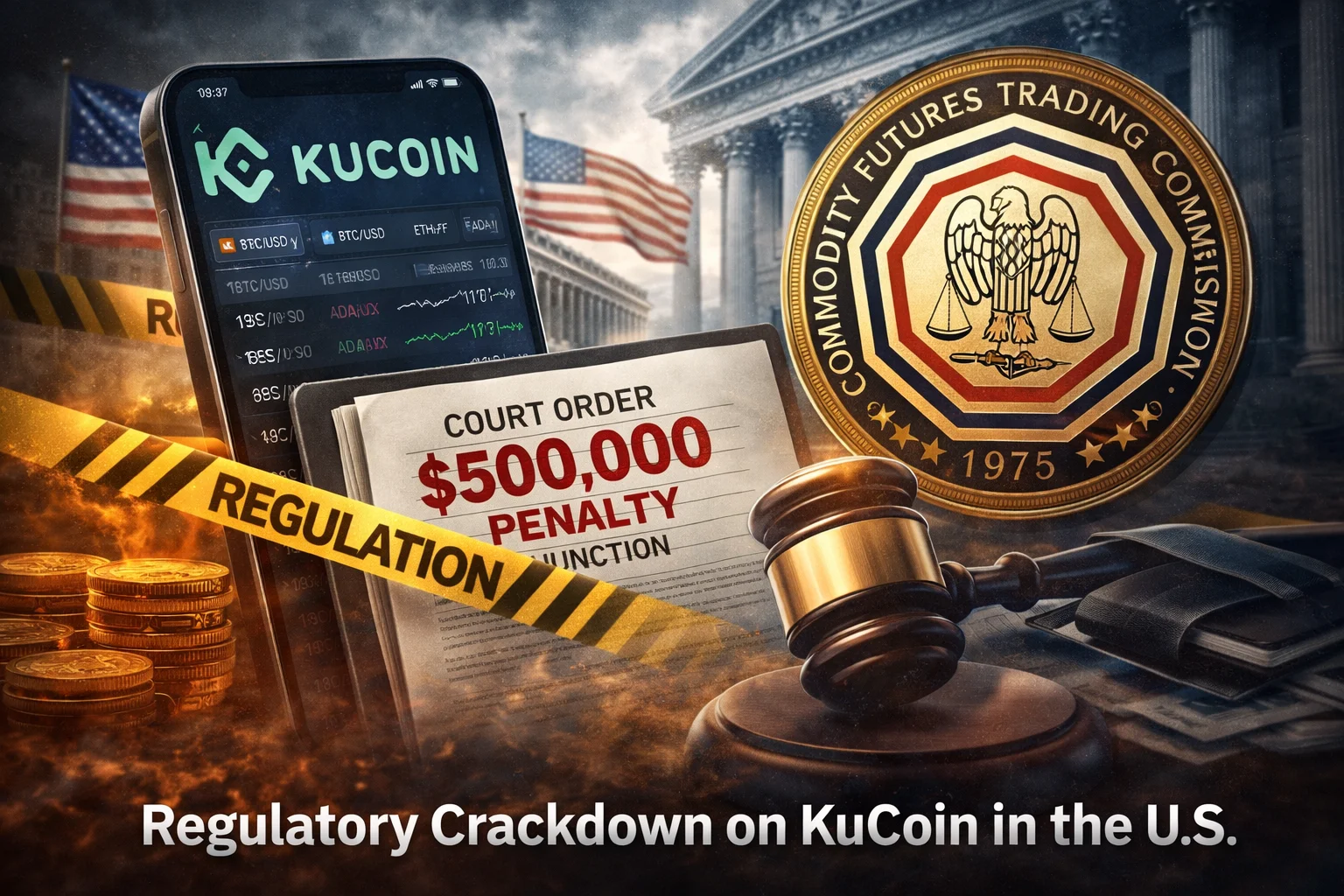
The latest U.S. action against KuCoin is not just another crypto enforcement headline. It is a clear sign that Washington is raising the regulatory bar for offshore exchanges that want access to American users. On March 30, 2026, the CFTC announced that a federal court entered a consent order against Peken Global Limited, the entity operating KuCoin, permanently prohibiting it from allowing U.S. participants to access its electronic trading and order matching system unless it registers as a foreign board of trade. The order also requires Peken Global to pay a $500,000 civil monetary penalty.
For the crypto industry, this matters far beyond KuCoin. The case shows that U.S. regulators are no longer focused only on whether an exchange is physically based in the United States. The more important question is whether American users can reach the platform, trade on it, and use products that fall under U.S. oversight. If the answer is yes, offshore status is no longer much of a shield. That is the real message behind this enforcement wave.
Why the KuCoin case matters
The CFTC’s order is highly specific. According to the consent order, Peken Global was found to have permitted direct access by members or other participants located in the United States to its electronic trading and order matching system without registration by the Commission as a foreign board of trade. In plain English, the issue is not just that KuCoin was large or international. The issue is that U.S. participants were able to trade directly on the platform without the registration framework the regulator says was required.
That makes this case especially important for offshore exchanges. For years, many global crypto platforms operated with a loose assumption that being incorporated abroad, limiting formal U.S. entities, or relying on terms of service could reduce regulatory risk. The KuCoin matter suggests the U.S. approach is becoming more functional and less formalistic. Regulators appear to care less about where the company says it lives and more about what the platform actually allows users to do. This is an inference from the enforcement pattern and the language used by U.S. authorities.
The bigger regulatory context
The CFTC action did not happen in isolation. In January 2025, the U.S. Attorney’s Office for the Southern District of New York announced that Peken Global pleaded guilty to one count of operating an unlicensed money transmitting business. In that criminal case, Peken agreed to pay more than $297 million in penalties and also agreed that KuCoin would exit the U.S. market for at least two years. The DOJ said KuCoin had served about 1.5 million registered U.S. users and earned at least about $184.5 million in fees from those users between 2017 and March 2024.
The criminal case also laid out a broader compliance narrative that matters for every offshore exchange. U.S. prosecutors said KuCoin failed to implement effective AML and KYC programs, failed to report suspicious transactions, and failed to register with FinCEN. The DOJ further said that until at least July 2023, KuCoin did not require customers to provide identifying information, and only later adopted mandatory KYC for some users. That history makes the new CFTC order look less like a one off penalty and more like the continuation of a long regulatory reset.
What the new U.S. bar looks like
The new regulatory standard emerging from this case is simple: offshore exchanges that touch U.S. users must expect U.S. rules to follow them. That does not mean every foreign exchange will face the same outcome, but it does mean the threshold for acceptable cross border ambiguity is getting much lower. The KuCoin order replaces gray area with a bright line. Either the platform keeps U.S. participants out in a real and defensible way, or it registers where the law requires it.
This is why the case matters for the future of crypto derivatives and offshore exchange models. The CFTC’s position suggests that direct market access by U.S. users is a trigger point. For exchanges that have relied on fragmented corporate structures, light geofencing, or selective compliance, that should be a warning. The U.S. is signaling that market access, not just headquarters, determines exposure. This conclusion is an inference grounded in the order and the related criminal filings.
Why offshore exchanges should pay attention now
The KuCoin case also shows how U.S. regulation is becoming more coordinated. One arm of government focused on money transmission, AML, and KYC failures. Another focused on trading access and registration obligations. Together, they form a more complete playbook for going after offshore crypto venues that still benefit from American demand. In other words, the risk is no longer just a fine. The risk is a layered enforcement process that can combine criminal penalties, civil injunctions, forced market exits, and long term operational restrictions.
For investors and industry observers, this has two implications. First, regulatory risk for offshore exchanges is becoming more concrete and easier to price. Second, compliance is moving from a branding issue to a survival issue. Exchanges that want institutional credibility will have to show not only product innovation and liquidity, but also durable controls around jurisdiction, onboarding, reporting, and restricted market access. The KuCoin matter strengthens that trend. This is a reasoned interpretation based on the official actions.
KuCoin’s latest U.S. setback is bigger than a $500,000 penalty. The real story is that the CFTC has helped define a tougher standard for offshore crypto exchanges. If a platform allows Americans to trade directly, U.S. regulators increasingly expect registration, compliance, and accountability. The era when offshore exchanges could treat U.S. exposure as a manageable gray zone looks increasingly over. March 30, 2026 may be remembered as another step toward a much stricter rulebook for global crypto platforms.
Binance Hit by Major Regulatory Fine in Australia Why the UK Bans Crypto Donations and Tightens Rules SEC and CFTC Sign Historic Agreement to Jointly Regulate Crypto US Crypto Regulation Stalls: Is This the Real Risk? US Regulatory Shift Gives Altcoins a Boost