The "Glamsterdam" Era: a pivotal Ethereum upgrade
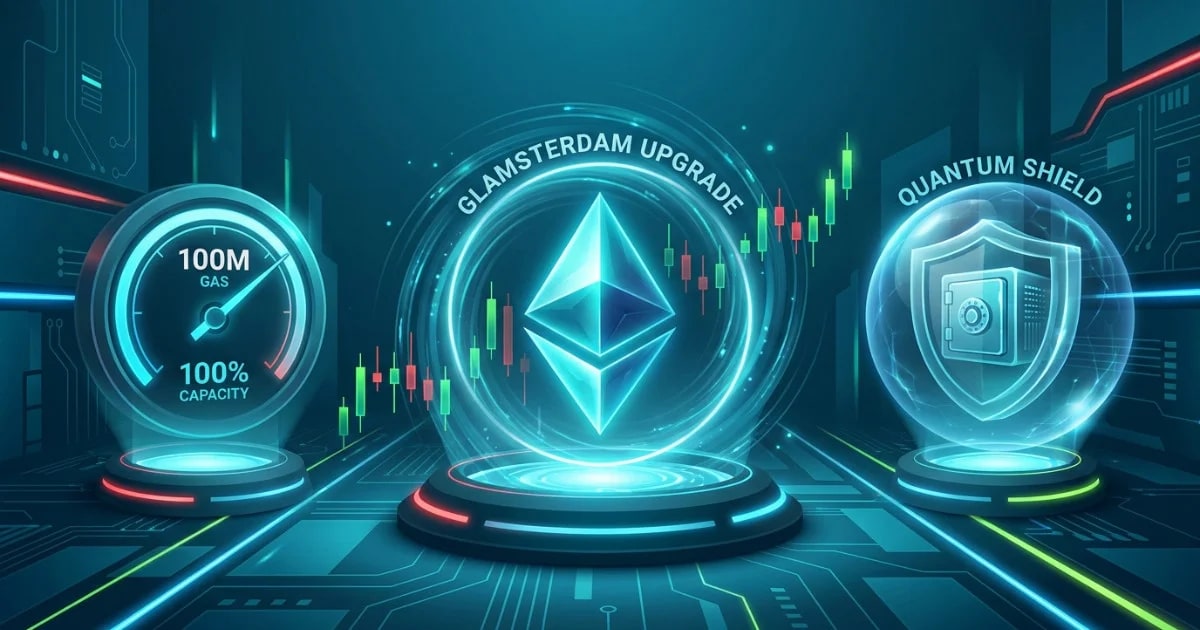
The Ethereum upgrade "Glamsterdam" is here. Discover how 100M gas, quantum resistance, and native smart accounts are transforming the L1 into a global powerhouse.
The "Glamsterdam" Era: Why the Next Ethereum Upgrade Changes Everything
The digital asset landscape has entered a new epoch. In April 2026, the conversation surrounding the world's most programmable blockchain has shifted from "can it scale?" to "how will it dominate?" The Ethereum Foundation has recently been in the spotlight after detailing the final milestones of the Glamsterdam era.
This pivotal Ethereum upgrade, slated for full activation in the first half of 2026, represents more than just a technical patch; it is a fundamental reconfiguration of the network’s computational power, security longevity, and user accessibility.
By moving beyond the limitations of the early 2020s, Ethereum is positioning its main layer (L1) as a high-performance engine capable of processing volume that was once the sole domain of specialized Layer 2 solutions.
Breaking the 100M Gas Barrier: Computational Dominance
The headline achievement of the Glamsterdam period is the massive expansion of the network’s gas limit. For years, the Ethereum community debated the trade-offs between decentralization and throughput. In 2026, those debates have been resolved through the implementation of Enshrined Proposer-Builder Separation (ePBS).
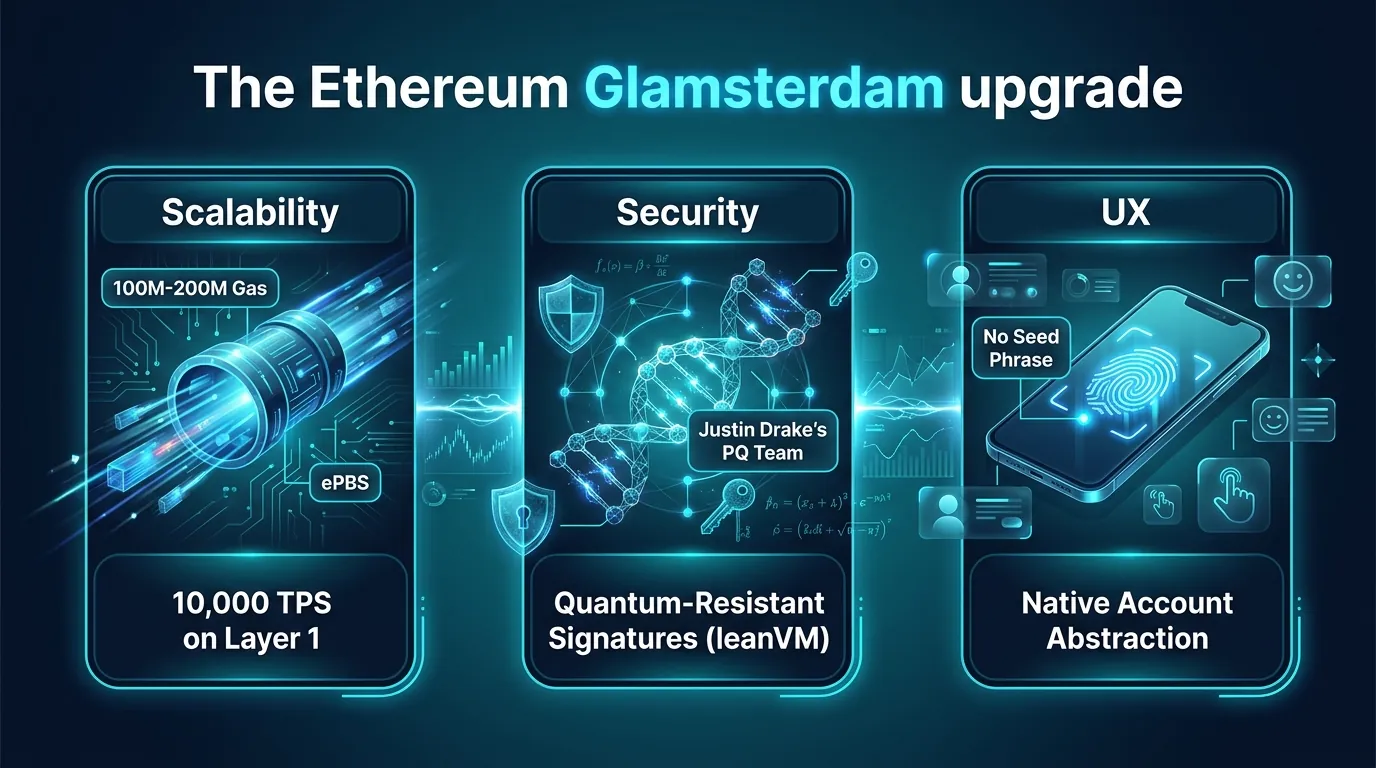
With ePBS, the technical goal has shifted from survival to total market dominance. Active work is now underway to raise the L1 Gas limit toward 100 million units per block. Following the full implementation of ePBS and related data structure improvements, discussions among core developers have even reached targets of 180–200 million gas.
This increase allows for a computational capacity that would enable approximately 10,000 transactions per second (TPS) directly on the base layer. By decoupling the work of block building from block proposing, Ethereum can now handle much larger payloads without straining the hardware of individual validators.
This structural shift ensures that the Ethereum upgrade provides the bandwidth necessary for high-frequency DeFi, large-scale RWA tokenization, and complex AI-agent interactions without the fee spikes that plagued previous cycles.
Future-Proofing Assets: The Rise of Quantum Resistance
- As we move deeper into the mid-2020s, the threat of quantum computing has moved from theoretical physics to a pressing cybersecurity concern. To address this, the Ethereum Foundation officially launched its dedicated Post-Quantum (PQ) Security Team earlier this year.
- Led by renowned researcher Justin Drake, this "public engineering push" is a cornerstone of the Glamsterdam era's security philosophy.
The Ethereum upgrade integrates new signature algorithms: such as hash-based and lattice-based cryptography, designed to be resistant to quantum-level attacks. The team’s primary focus is the development of leanVM, a minimalist zero-knowledge proof (ZKP) virtual machine optimized for quantum-resistant signatures.
By enshrining these PQ-safe defaults into the protocol, Ethereum is ensuring that the trillions of dollars in value secured on the network are cryptographically safe for the next century. This proactive stance has solidified Ethereum’s reputation as the most resilient and forward-thinking ledger in the global financial system.
Native Account Abstraction: A Standard for Global UX
Perhaps the most user-facing change of the 2026 roadmap is the transition to Native Account Abstraction. While previous versions like EIP-7702 were stepping stones, Glamsterdam and the subsequent Hegotá cycle have made smart accounts the "Native Standard."
This Ethereum upgrade allows smart wallets to function natively at the protocol level. For the average user, this means the end of the "seed phrase" era. Wallets now utilize biometric security, social recovery, and hardware-level passkeys to secure funds.
Furthermore, the complexity of gas fees has been abstracted away; users can now pay for their transactions in any token (be it USDC, a meme coin, or even tokenized loyalty points) without needing to hold ETH for gas. This "invisible blockchain" experience is what is finally driving the mass migration of retail users from centralized fintech apps to decentralized protocols.
Key Points to Remember
Scalability: The Glamsterdam era targets a 100M–200M gas limit, rivaling the throughput of L2s on the main layer.
Security: Justin Drake’s PQ team is implementing quantum-resistant signatures to protect assets for 100+ years.
User Experience: Native Account Abstraction removes the need for seed phrases and allows gas payments in any token.
Technological Edge: The Ethereum upgrade realigns gas costs with modern hardware, reducing simple transfer fees by over 70%.
To monitor the DeFi market in an agile and secure way in real-time and trade tokens like those emerging from the Ethereum upgrade cycle with the help of the best crypto tools, you can access DEXTools here and trade with Ethereum blockchain tokens today!
Disclaimer: This article is for informational purposes only and does not constitute investment advice, financial advice, trading advice, or any other kind of advice. DEXTools does not recommend buying, selling, or holding any cryptocurrency or token. Users should conduct their own research and consult with a qualified financial advisor before making any investment decisions. Cryptocurrency investments are volatile and high-risk. DEXTools is not responsible for any losses incurred.