What Is a Rebasing Token? Crypto Balances Explained
— By Whatsertrade in Analysis
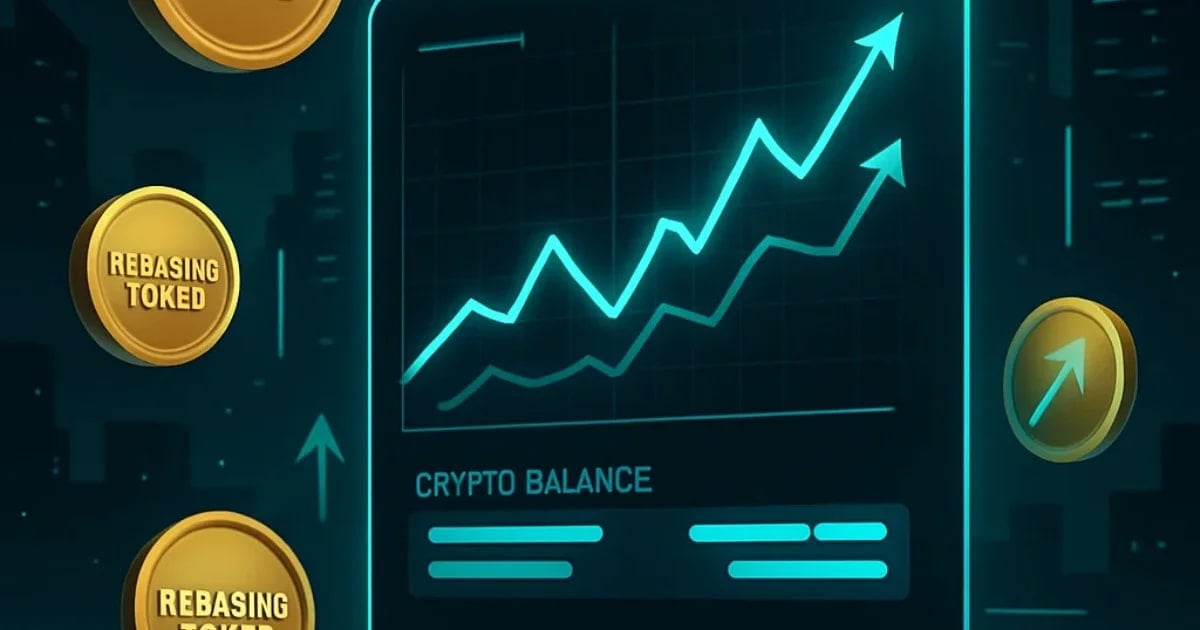
Explore what rebasing tokens are, how they impact crypto balances automatically, and their effects on supply and pricing.
A rebasing token is a type of crypto asset whose supply changes automatically according to rules set by the protocol. Unlike Bitcoin, Ethereum, or most standard tokens, a rebasing token can increase or decrease the number of tokens in your wallet without you buying, selling, or transferring anything. This automation is central to rebasing tokens' appeal.
Many users are surprised the first time they hold one, opening their wallet to see a balance different than the day before. This discrepancy is not due to a bug or hack; instead, it's how the token is designed to function.
Understanding what a rebasing token is essential, as these assets can seem appealing when balances grow automatically. However, an increased token count doesn't always equate to heightened investment value.
Mechanics of Rebasing Tokens
How Rebasing Tokens Operate
A rebasing token adjusts supply through a process called a rebase. During a positive rebase, the protocol increases the number of tokens in circulation, and holders receive more tokens in proportion to their existing holdings. Conversely, a negative rebase reduces the number of tokens, causing holders to see a decrease in their balances.
Key to understanding rebases is that everyone's balance changes proportionally. If you had 1 percent of the supply prior to the rebase, you'll maintain roughly 1 percent afterward. The number of units changes, not your share in the network.
This feature makes rebasing tokens distinct from fixed supply assets, where supply remains constant, and price fluctuates. The token's design shifts supply in reaction to market or protocol conditions.

Why Automatic Balance Changes Occur
Some crypto balances change automatically due to smart contracts updating the token balances directly. The wallet doesn't process a separate payment; the token's recorded balance is modified.
The reasons for this vary by project. Some rebasing tokens aim to maintain a target price, while others use the method to mirror staking rewards or protocol level yield. Regardless, the balance adjustment is part of the monetary design.
Users should note that the number displayed in a wallet might mislead if they focus solely on token count instead of true market value.
Comparing Positive and Negative Rebases
A positive rebase results in an increased wallet balance, which can seem exciting but does not guarantee profit. As the token supply expands, the market price per token may drop enough to negate the increase in quantity.
Conversely, a negative rebase decreases wallet balance, which may initially alarm holders. However, this doesn't necessarily mean your position's value has plummeted. If supply contracts, the market might adjust the token's price.
The real question isn't the token count post-rebase but the actual worth of your holdings.
Advantages and Risks of Rebasing Tokens
Benefits of Rebasing Tokens
Rebasing tokens can enhance tokenomics creatively. They may stabilize price targets, simplify protocol reward distribution, or introduce adaptable supply models that standard tokens cannot provide.
They also prove useful in specific DeFi systems where dynamic supply forms part of the product design, making rebasing a feature instead of an issue.
Risks Involved
The prime risk is confusion. Many investors equate more tokens with more value, which isn't always accurate. A rebasing token might create a growth illusion even when the position's total market value remains stable.
Additionally, rebasing mechanics might be misunderstood by exchanges, portfolio trackers, tax tools, or holders themselves, complicating record-keeping and performance analysis.
Moreover, rebasing tokens can be highly volatile if market expectations and token design clash.
Making Informed Choices
A rebasing token is an asset that alters its supply automatically, leading to rises or falls in wallet balances without direct action from users. This makes these tokens intriguing yet easy to misinterpret.
When considering purchasing a rebasing token, focus not only on the token count in your wallet. Understand how the rebasing mechanism functions, what the token's goals are, and if your position's value is truly increasing. In crypto, the number of tokens and their value don't always align.
How to Bridge Crypto Between Chains: Complete Cross-Chain Tutorial 2026 How to Use 1inch: Complete DEX Aggregator Swap Tutorial (2026) How to Use OKX Web3 Wallet: Multi-Chain DeFi Hub Guide (2026)