What Is Double Spending in Crypto? How Blockchain Prevents It (2026)
— By Tony Rabbit in Tutorials

Learn about double spending in crypto, a risk unique to digital money. Discover how blockchain, through Proof of Work and Proof of Stake, prevents it.
In the world of digital finance, security is paramount. One of the fundamental challenges that cryptocurrencies like Bitcoin were designed to overcome is known as double spending. This concept is crucial for understanding the integrity and reliability of blockchain technology.
Double spending crypto refers to the act of spending the same unit of digital currency more than once. It's a risk unique to digital money because, unlike physical cash, digital data can be easily copied. Imagine if you could photocopy a dollar bill and spend both the original and the copy; that's the digital equivalent of double spending.
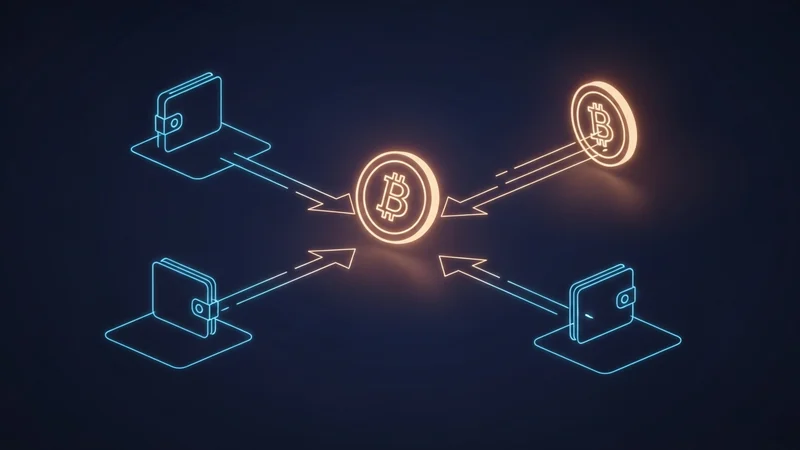
Understanding the Double Spending Problem
The core problem of double spending arises from the nature of digital information. If you have a digital file, you can copy it an infinite number of times without diminishing the original. For digital currency, this means that without a robust prevention mechanism, someone could theoretically send the same coin to two different recipients simultaneously, or in rapid succession, before the network could register the first transaction as final.
In a traditional financial system, banks act as central authorities to prevent this. They maintain ledgers that record every transaction, ensuring that once money is spent from one account, it is no longer available to be spent again from that same account. However, cryptocurrencies aim for decentralization, meaning there's no single bank or central entity to oversee all transactions.
This is where blockchain technology steps in, offering an innovative solution to this age-old digital dilemma. It provides a way to maintain a shared, immutable ledger without relying on a central authority.
How Blockchain Prevents Double Spending
Blockchains prevent double spending through a mechanism called decentralized consensus. Instead of a single entity, a network of participants collectively validates and records transactions. Once a transaction is confirmed and added to a block, and that block is added to the blockchain, it becomes incredibly difficult to reverse or alter.
The prevention of double spending is one of the most significant innovations brought about by blockchain technology. It ensures trust and security in a decentralized environment.
Proof of Work (PoW) and its Role
Bitcoin, the first widely adopted cryptocurrency, uses a consensus mechanism called Proof of Work (PoW). In PoW, miners compete to solve complex computational puzzles. The first miner to solve the puzzle gets to add the next block of transactions to the blockchain.
This process is computationally intensive and requires significant energy. Once a block is added, it's linked cryptographically to the previous block, forming a chain. To double spend using PoW, an attacker would need to rewrite the history of the blockchain, specifically the block containing their first transaction, and then create an alternative, longer chain with their second transaction. This would require re-doing all the computational work for not just one block, but for all subsequent blocks, making it astronomically expensive and practically impossible for a single entity.
Users often wait for a certain number of confirmations before considering a payment final. For Bitcoin, it's common to wait for two to six confirmations. Each confirmation represents a new block added after the one containing your transaction, further cementing its place in the blockchain and increasing the cost to reverse it.
Proof of Stake (PoS) and its Role
Another prominent consensus mechanism is Proof of Stake (PoS). Unlike PoW, where miners expend computational power, PoS relies on validators who 'stake' their own cryptocurrency as collateral. Validators are chosen to create new blocks based on the amount of cryptocurrency they are willing to stake and other factors.
If a validator attempts to cheat, for example, by trying to double spend, they risk losing their staked collateral. This financial incentive aligns the validators' interests with the integrity of the network, making dishonest behavior costly. PoS offers a more energy-efficient alternative to PoW while still maintaining robust security against double spending.

The Threat of a 51 Percent Attack
While blockchains are incredibly secure, the main theoretical way to attempt a double spend is through what's known as a 51 percent attack. This attack scenario applies primarily to Proof of Work networks, though analogous attacks can exist in PoS systems.
A 51 percent attack occurs if a single entity or group gains control of more than 50 percent of the network's total hashing power (for PoW) or staked assets (for PoS). With this majority control, the attacker could theoretically manipulate the blockchain. For example, they could prevent new transactions from being confirmed, reverse their own transactions to enable double spending, or even prevent other miners from adding blocks.
Here's how a 51 percent attack could facilitate double spending:
- The attacker sends currency to a merchant and receives goods or services.
- Simultaneously, using their majority hashing power, they mine a private alternative version of the blockchain where the transaction to the merchant never happened.
- Once their private chain is longer than the public chain, they release it to the network. The network then switches to the longer, attacker-controlled chain, effectively reversing the original transaction and allowing the attacker to spend the same coins again.
However, launching a successful 51 percent attack on established, large cryptocurrencies like Bitcoin would require an immense amount of computational resources and capital, making it extremely impractical and financially unviable. The cost to acquire and maintain such power would far outweigh any potential gains from double spending.
Why Double Spending is a Non-Issue for Most Users
For the average cryptocurrency user, double spending is not a concern they need to actively manage. The security mechanisms built into robust blockchain networks work continuously in the background to prevent it. When you track a token's price or volume on DEXTools, you can trust that the underlying transactions are secure from this fundamental threat.
The strength of the network, whether through the sheer computational power of Proof of Work or the economic incentives of Proof of Stake, ensures that confirmed transactions are final. This reliability is what allows digital currencies to function as a trusted medium of exchange.
- The decentralized nature of blockchain means no single point of failure.
- Consensus mechanisms like PoW and PoS make fraudulent transactions economically unfeasible.
- The continuous addition of new blocks further secures past transactions.
In essence, the entire architecture of a blockchain is designed to solve the double spending problem, enabling a truly digital and decentralized form of money. As blockchain technology continues to evolve, these foundational security principles remain at its core, ensuring the integrity of every transaction.
Frequently Asked Questions
What is double spending in cryptocurrency?
Double spending is the act of successfully spending the same digital currency twice. It's a unique risk for digital money because, unlike physical cash, digital files can be easily duplicated.
Why is double spending a concern for digital currencies?
If double spending were rampant, it would erode trust and devalue the currency, as the supply could be artificially inflated. It's a fundamental problem that blockchain technology was designed to solve for cryptocurrencies.
How does blockchain prevent double spending?
Blockchain prevents double spending by creating an immutable, public ledger of all transactions. Once a transaction is recorded and confirmed on the blockchain, it cannot be altered or reversed, ensuring the funds are spent only once.
What role does Proof of Work (PoW) play in preventing double spending?
Proof of Work (PoW) requires miners to solve complex computational puzzles to add new blocks of transactions to the blockchain. This energy-intensive process makes it extremely difficult and costly for an attacker to alter past transactions and double spend.
How does Proof of Stake (PoS) prevent double spending?
Proof of Stake (PoS) prevents double spending by having validators stake their own cryptocurrency as collateral to verify transactions. If a validator attempts to double spend or act maliciously, they risk losing their staked assets, incentivizing honest behavior.