What Is Kaspa (KAS)? GHOSTDAG and BlockDAG Explained
— By AliceOnChain in Tutorials
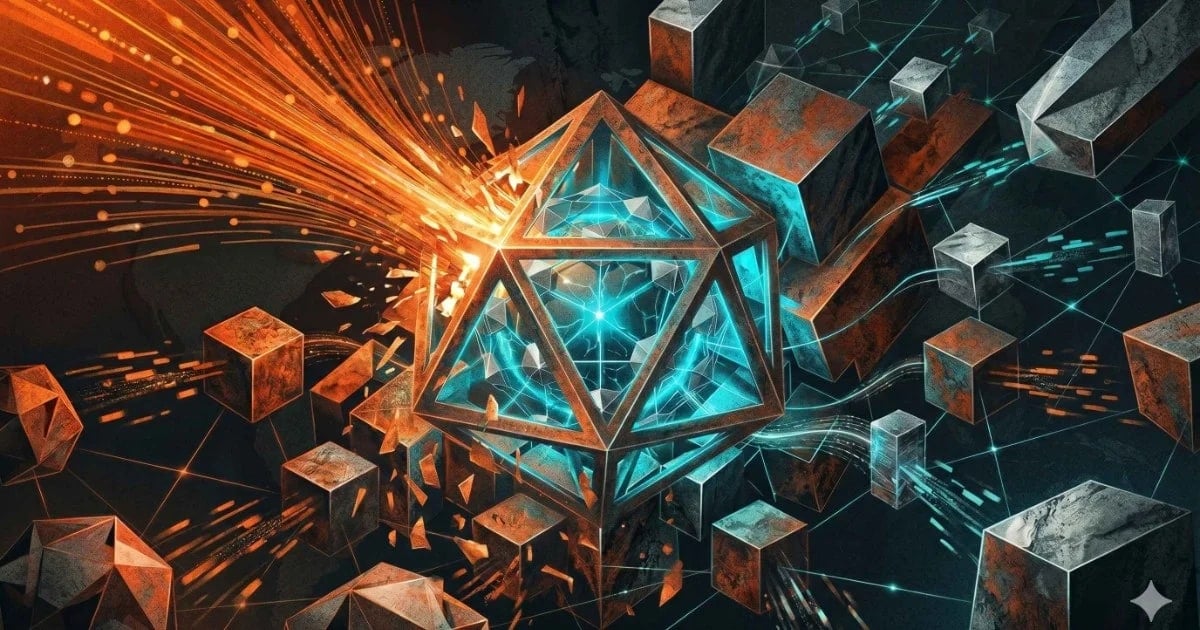
Kaspa (KAS) explained: how GHOSTDAG and BlockDAG work and why KAS aims to pair proof-of-work security with much faster throughput in 2026.
This guide answers what Kaspa is and why BlockDAG matters for proof-of-work speed. It is a protocol explainer, not a mining-profitability calculator.
What is Kaspa (KAS)? GHOSTDAG and BlockDAG Explained
Bitcoin solved the problem of decentralization, but it struggled with speed. For years, the industry thought Proof-of-Work (PoW) was destined to be slow—until this project arrived. If you are wondering what is Kaspa (KAS), the answer lies in its ability to process multiple blocks at once. In 2026, the network has evolved from a simple payment layer into a programmable ecosystem, reaching speeds that rival modern centralized systems while remaining fully decentralized.
For traders using DEXTools to find the next generation of PoW assets, understanding the technical leap of the BlockDAG is essential for accurate market analysis.
Beyond the Chain: How Kaspa Utilizes BlockDAG
To understand the network, you first have to unlearn the concept of a "chain." Traditional blockchains are linear; they can only handle one block at a time. If two miners find a block simultaneously, one is discarded as an "orphan," wasting energy and reducing security.
The protocol uses a BlockDAG (Directed Acyclic Graph) architecture. Instead of a single line, it’s a web of blocks where no valid contribution is wasted.
Parallel Processing: Multiple blocks can coexist and be added to the ledger at the same time. This solves the scalability bottleneck that has plagued PoW for over a decade.
No More Orphans: Every valid block found by a miner is incorporated, increasing the hash rate efficiency and securing the ecosystem against double-spend attacks.
GHOSTDAG and the DAGKnight Evolution
The secret sauce of the technology is the GHOSTDAG consensus. It uses a greedy algorithm to order the blocks in the DAG, ensuring that honest, well-connected blocks are prioritized. However, as the network scaled toward massive throughput in early 2026, the project completed its highly anticipated migration to DAGKnight.
The DAGKnight protocol is a significant upgrade because it is "parameterless." Unlike GHOSTDAG, which required developers to set fixed assumptions about network latency, DAGKnight allows the protocol to adapt automatically to real-time internet conditions. As global internet infrastructure improves, the network inherently becomes faster without needing further hard forks or manual intervention.
100 Blocks Per Second: The 2026 Rust Milestone
A major reason for the project's success in 2026 is the total rewrite of its codebase in Rust. This transition from the original Go implementation allowed for extreme performance optimizations. As of May 2026, the network has shattered its old records. What started as 1 block per second (BPS) has now scaled reliably to 10 BPS on the mainnet, with finality times that occur almost instantly.
The core developers are currently stress-testing the 100 BPS milestone. For a user on DEXTools, this technical achievement translates to a massive shift in utility:
Instant Confirmation: Transactions are confirmed almost as soon as you press send, making it viable for point-of-sale retail payments.
Mining Decentralization: Higher block rates significantly reduce the "variance" in mining rewards. This makes mining more predictable and profitable for small, individual miners rather than favoring large, centralized mining pools.
Smart Contracts and the May Hard Fork
A common question in 2026 is: what is Kaspa (KAS) beyond a simple payment network? On May 5, 2026, the community celebrated a major hard fork that introduced native smart contract support.
By integrating Zero-Knowledge Virtual Machines (ZK-VMs), this infrastructure now offers a unique hybrid: the security of Proof-of-Work with the programmability of a smart contract platform. This allows for:
DeFi on PoW: You can now trade native assets and engage in lending protocols directly on the BlockDAG using specialized exchanges tracked by DEXTools.
Web3 Scalability: Developers are launching complex decentralized applications (dApps) that utilize the sub-second speed of the BlockDAG for real-time applications like gaming and high-frequency trading.
The Native Asset: Scarcity and "Chromatic" Emission
The KAS token is built on a foundation of fairness. It followed a "fair launch" model—meaning there was no pre-mine, no venture capital (VC) allocations, and no initial coin offerings (ICOs). This has built a highly loyal and decentralized community.
Its monetary policy is strictly deflationary, featuring a Chromatic Emission Phase. In this model, mining rewards decrease smoothly every month rather than experiencing the "supply shocks" associated with Bitcoin's four-year halvings. By mid-2026, nearly 95% of the total supply (28.7 billion tokens) is already in circulation. This creates a low-inflation environment where price action is driven primarily by genuine demand and network utility.
Conclusion
When people ask what is Kaspa (KAS) today, the answer is "the ultimate evolution of Satoshi's vision." By combining the battle-tested security of Proof-of-Work with the unprecedented speed of a high-performance DAG, the protocol has proven that decentralization does not have to come at the cost of performance. As we watch the smart contract ecosystem mature through the rest of 2026, the project remains a cornerstone for those who believe in a truly scalable and secure financial future.
How to Bridge Crypto Between Chains: Complete Cross-Chain Tutorial 2026How to Use 1inch: Complete DEX Aggregator Swap Tutorial (2026)
How to Use OKX Web3 Wallet: Multi-Chain DeFi Hub Guide (2026)
Disclaimer: This article is for informational purposes only and does not constitute investment advice, financial advice, trading advice, or any other kind of advice. DEXTools does not recommend buying, selling, or holding any cryptocurrency or token. Users should conduct their own research and consult with a qualified financial advisor before making any investment decisions. Cryptocurrency investments are volatile and high-risk. DEXTools is not responsible for any losses incurred.
Frequently Asked Questions
What is Kaspa (KAS)?
Kaspa is a proof-of-work cryptocurrency that uses a BlockDAG structure instead of a single linear blockchain. Its design aims to keep proof-of-work security while allowing faster block production and higher throughput.
What is a BlockDAG and how is it different from a blockchain?
A BlockDAG, or directed acyclic graph of blocks, lets multiple blocks exist in parallel rather than forcing one block at a time. This can increase throughput while still ordering transactions into a consistent ledger.
How does GHOSTDAG work in Kaspa?
GHOSTDAG is the consensus protocol Kaspa uses to order blocks in its BlockDAG, identifying a main set of well-connected blocks and including others rather than discarding them. This helps maintain security while supporting parallel blocks.
Is Kaspa proof-of-work or proof-of-stake?
Kaspa is a proof-of-work network, meaning miners expend computational work to secure it. Its goal is to combine proof-of-work security with much faster confirmation than traditional proof-of-work chains.