What Is Proof of History? Solana's Cryptographic Clock (2026)
— By Tony Rabbit in Tutorials

Discover Proof of History (PoH), Solana's cryptographic clock. Learn how PoH timestamps and orders transactions for high throughput.
In the fast-paced world of blockchain technology, efficiency and speed are paramount. While many focus on consensus mechanisms like Proof of Work or Proof of Stake, Solana introduced a groundbreaking innovation that operates a layer deeper: Proof of History (PoH). This isn't just another buzzword; it's a fundamental shift in how a blockchain can organize and process information, enabling unprecedented levels of performance.
Understanding Proof of History is key to appreciating Solana's architecture and its ability to handle massive transaction volumes. It's a clever cryptographic tool that solves a critical problem: agreeing on the order of events in a distributed network without constant, heavy communication between all participants. Let's dive into what PoH is, how it works, and why it's so vital for Solana's scalability.
What Exactly Is Proof of History (PoH)?
Proof of History, or PoH, is often misunderstood as a consensus mechanism. To be clear, it is NOT a consensus mechanism itself. Instead, PoH functions as a cryptographic clock that timestamps events on the Solana blockchain. Think of it as a verifiable timeline, a historical record of events that everyone can agree on without needing to communicate back and forth extensively about when each event occurred.
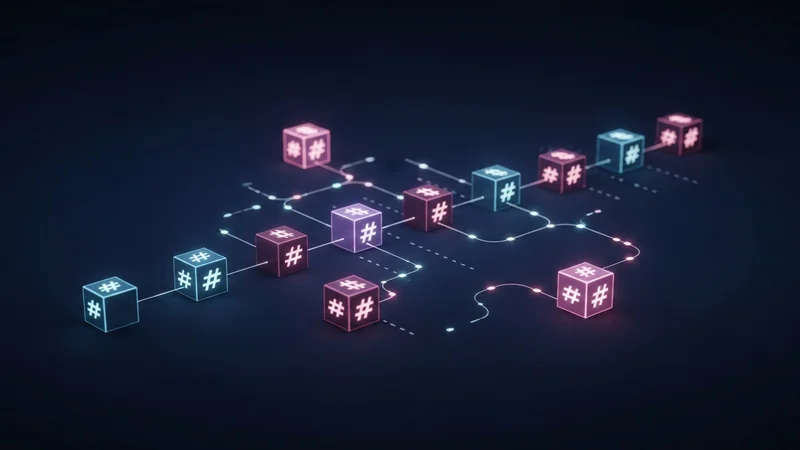
The core of PoH involves a sequential hash chain. This chain is created by repeatedly running a cryptographic function, specifically SHA-256. Each output of this function serves as an input for the next iteration. This continuous, sequential computation creates a unique, ordered sequence of hashes, where each new hash implicitly proves that a certain amount of time has passed since the previous one was computed.
This sequential hashing process acts as a Verifiable Delay Function (VDF). A VDF is characterized by being slow to compute but very fast to verify. This property is crucial for PoH. A validator must spend a predictable amount of time generating the sequence, but any other validator can quickly check if the sequence was correctly generated and thus verify the passage of time and the order of events.
How PoH Orders Transactions Before Consensus
One of the biggest challenges in distributed systems is achieving agreement on the order of events, especially when those events originate from different sources at different times. Traditional blockchains often rely on intensive communication between nodes to establish a global order, which can become a bottleneck as the network scales.
PoH addresses this by providing a reliable, verifiable record of time and sequence before the actual consensus process begins. It runs as a pre-consensus ordering layer. As transactions flow into the network, they are fed into the PoH sequence, effectively getting timestamped and ordered in the cryptographic hash chain. This means that by the time validators need to agree on a block, the transactions within that block are already in a predetermined, verifiable order.
- Sequential Hashing: A continuous stream of data (transactions, network events) is hashed, with each output becoming the input for the next hash.
- Verifiable Timestamps: The output of each hash serves as a timestamp, cryptographically proving that a certain amount of time has elapsed.
- Pre-Consensus Ordering: Transactions are ordered within this hash chain before they are sent to validators for final block agreement.
This pre-ordering capability is a game-changer. It significantly reduces the amount of communication validators need to perform to agree on the state of the ledger. Instead of debating the order of transactions, they simply verify the PoH sequence and then vote on the validity of the block containing those ordered transactions.
PoH's Role in Solana's High Throughput
Solana's reputation for very high throughput is directly linked to its innovative use of Proof of History. By ordering transactions ahead of time, PoH enables several critical optimizations that boost network performance dramatically.
Firstly, with a verifiable global clock and ordered transactions, validators can process transactions in parallel. In many other blockchain architectures, validators must process transactions sequentially to ensure a consistent state. But because Solana's PoH provides a clear, agreed-upon sequence, different parts of the network can work on different segments of the transaction stream simultaneously without conflicts.
Secondly, PoH significantly reduces the overhead associated with establishing transaction order. Less communication means less latency and more efficient use of network resources. This efficiency allows Solana to achieve transaction speeds that rival traditional financial systems.
This combination of pre-ordering and parallel processing is what underpins Solana's ability to handle a massive volume of transactions per second. When you're tracking rapidly moving token pairs or checking volume charts on platforms like DEXTools, the underlying speed and efficiency are largely thanks to PoH's fundamental contributions.

PoH and Solana's Consensus Mechanism
It's crucial to reiterate that Proof of History is not a consensus mechanism. Solana uses a hybrid consensus model that pairs PoH with Proof of Stake (PoS) and a specialized BFT (Byzantine Fault Tolerance) variant called Tower BFT for voting. PoS is responsible for selecting the validators who participate in securing the network and proposing blocks. Tower BFT is the actual voting mechanism that validators use to agree on the state of the ledger.
Here's a breakdown of how they work together:
- Proof of History (PoH): Creates a global, verifiable timeline and orders transactions. It's the clock and the librarian.
- Proof of Stake (PoS): Determines which validators are eligible to participate in the network, based on the amount of SOL they have staked. It's the election process for the network's guardians.
- Tower BFT: A PoH-optimized version of Practical Byzantine Fault Tolerance (PBFT). Validators use this protocol to vote on the validity of blocks and the PoH sequence, reaching final consensus. It's the voting system that confirms the librarian's work.
This layered approach allows Solana to leverage the strengths of each component. PoH provides the efficiency and speed of ordering, while PoS and Tower BFT ensure the security and decentralization of the network through robust consensus. The result is a blockchain capable of high performance without sacrificing security or decentralization.
Comparing PoH to Traditional Timestamping
To fully grasp the innovation of PoH, it's helpful to see how it differs from traditional methods of timestamping and ordering in other blockchain networks. The key distinction lies in the verifiable, trustless nature of PoH's timekeeping.
In traditional blockchains, the timestamp of a block is typically provided by the miner or validator who proposes that block. While there are rules to prevent wildly inaccurate timestamps, there's still a degree of flexibility and potential for minor discrepancies or manipulation. The network then relies on its consensus mechanism to ultimately agree on the block's validity and its place in the chain.
With PoH, the time itself is encoded into the ledger through an undeniable cryptographic sequence. This makes the timestamps immutable and verifiable independently of any single validator's claim. It's a deterministic way to prove that an event occurred before another, without needing to trust a specific entity or engage in extensive network-wide debates about timing.
The Future of Proof of History on Solana
As the blockchain space continues to evolve, the foundational innovations like Proof of History will remain critical. PoH's ability to provide a global, verifiable clock and streamline transaction ordering is a core component of Solana's architecture and its continued pursuit of scalability.
The concept of a cryptographic clock that pre-orders events has profound implications for how decentralized networks can operate efficiently. It moves beyond simply agreeing on a sequence of blocks to agreeing on the sequence of events within those blocks, all before the final consensus vote. This efficiency is what allows Solana to maintain its competitive edge in transaction speed and capacity, supporting a vibrant ecosystem of dApps, DeFi protocols, and NFTs.
Understanding Proof of History isn't just about knowing a technical detail; it's about grasping a fundamental design principle that enables a new class of high-performance blockchain applications. As the digital economy grows, the demand for fast, reliable, and scalable infrastructure will only increase, and PoH stands as a testament to innovative solutions in this space.
Frequently Asked Questions
Is Proof of History a consensus mechanism?
No, Proof of History (PoH) is not a consensus mechanism. It is a cryptographic clock that timestamps and orders events on the Solana blockchain before the consensus process begins. Solana uses Proof of Stake and Tower BFT for its actual consensus.
How does Proof of History work?
PoH works by repeatedly running the SHA-256 cryptographic hash function in a sequential chain. Each output becomes the input for the next hash, creating a continuous, verifiable record where each output proves that a certain amount of time has passed. This acts as a Verifiable Delay Function (VDF).
What problem does PoH solve for Solana?
PoH solves the problem of agreeing on the order and timing of events in a distributed network without heavy communication. By pre-ordering transactions, it allows validators to process data in parallel, significantly increasing throughput and efficiency on the Solana network.
What is the relationship between PoH, Proof of Stake, and Tower BFT?
PoH is the pre-consensus ordering layer that provides a global clock. Proof of Stake (PoS) is used to select validators for the network. Tower BFT is the specific voting mechanism that these PoS-selected validators use to agree on the state of the blockchain, leveraging the ordered timeline provided by PoH.
Why is PoH important for Solana's high transaction speed?
PoH is crucial for Solana's high transaction speed because it enables parallel processing of transactions. By providing a cryptographically verifiable order of events, validators can work on different parts of the transaction stream simultaneously, leading to very high throughput and low latency.