What is Wormhole (W)? Multichain Messaging Explained
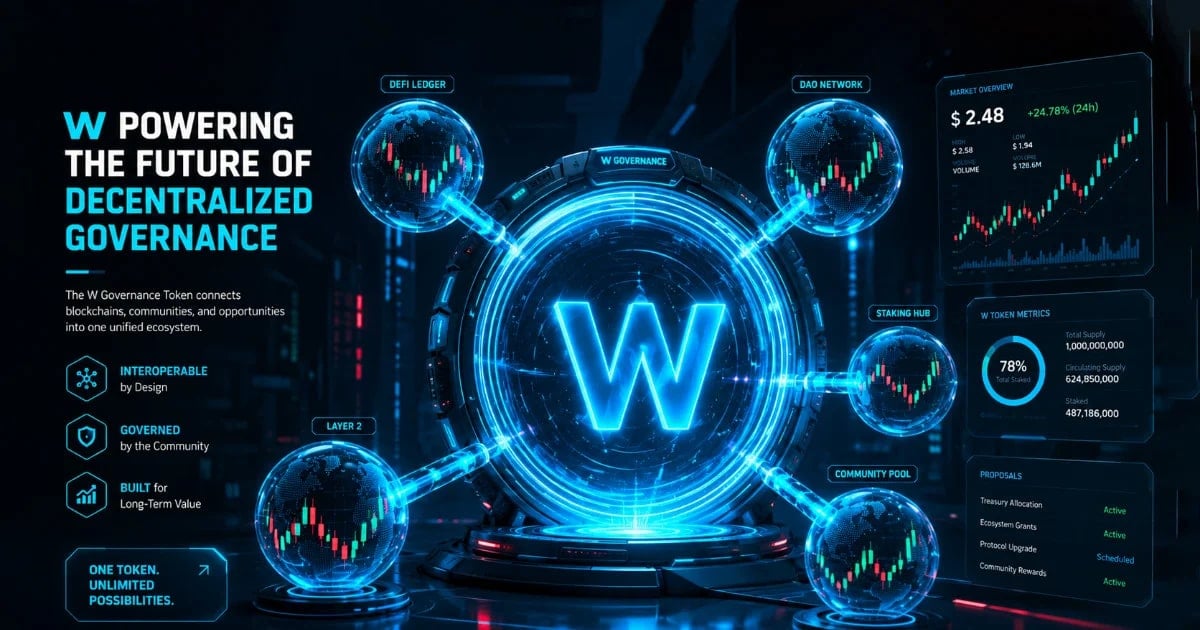
Blockchain silos prevent universal Web3 interoperability. We break down the technical execution of Wormhole's 19 Guardian consensus network and VAA messaging core.
The Web3 Silo Crisis: Beyond Token Bridges
- Public blockchains are engineered as sovereign digital ecosystems. Their default state is isolation; an Ethereum smart contract cannot natively read Solana's state, and a Bitcoin UTXO cannot execute logic on an Arbitrum rollup. While this isolation preserves consensus integrity, it creates massive fragmentation. Early attempts at interoperability were primitive, monolithic asset bridges that relied on centralized multi-sigs to lock capital and mint vulnerable synthetic "wrapped" tokens. These designs generated massive liquidity honeypots, leading to historic exploits totaling billions in lost user funds.
- Wormhole resolves this foundational bottleneck. Moving beyond simple asset routing, Wormhole is a foundational Generic Messaging Protocol that provides the connective tissue for a truly interoperable, multichain Web3. By securely passing decentralized cryptographic proofs between otherwise incompatible networks, Wormhole allows developers to build Omnichain Applications (xApps), dApps where user interfaces, financial logic, and state data remain synchronized across dozens of isolated ledgers simultaneously, powered by unified liquidity and cross-chain governance.
1. Wormhole Core Architecture: Guardians and VAAs
Wormhole's security architecture is built on a distributed verification framework designed to remove reliance on a single centralized party.
The Guardian Network (Security Nodes)
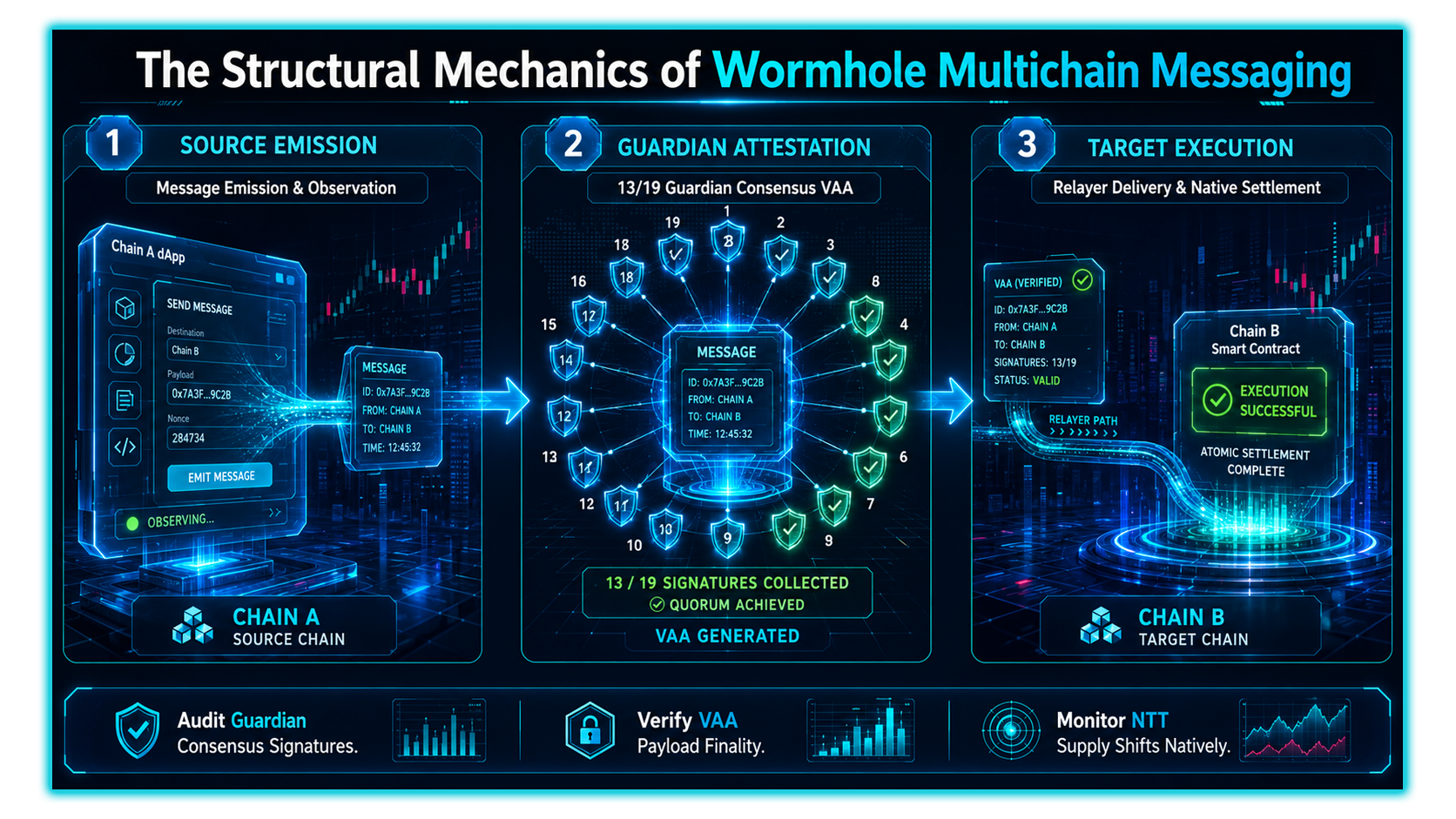
The network's core gatekeepers are the Wormhole Guardians. This is a decentralized council of 19 highly reputable, professional validator and infrastructure organizations, including major entities like Jump Crypto, Figment, and Everstake. Each Guardian independently monitors supported source chains for incoming cross-chain message events.
Verified Action Approvals (VAAs)
- When a Guardian observes a message event (like a cross-chain transfer request), it independently verifies that the event actually occurred and finalized on the native ledger. Once at least 13 out of the 19 Guardians (a simple 2/3 cryptographic majority) reach consensus, they collectively generate and sign a Verified Action Approval (VAA).
- The VAA is the core cryptographic standard of Wormhole. It is a compact, un-falsifiable data packet proving that a specific multi-chain action was authorized by the source chain's consensus. The VAA is then picked up by Relayers (decentralized software agents) that deliver the signed proof to the destination chain's smart contracts for execution.
2. The Native Token Transfers (NTT) Framework
- The biggest threat to cross-chain interoperability is liquidity fragmentation caused by "wrapped tokens." A bridge that locks native USDC in an Ethereum vault and mints synthetic "wormhole-USDC" on Solana creates multiple, non-interchangeable versions of the same asset, confusing users and dilute trading depths.
- To eliminate this bottleneck, Wormhole developed the Native Token Transfers (NTT) framework. NTT is a specialized burn-and-mint architecture that facilitates seamless, 1:1 cross-chain asset migration without utilizing fragmented liquidity pools or vulnerable wrapped layers.
True Native Interoperability
Instead of locking capital, NTT allows the native token to be destroyed on the source chain and instantly recreated as a true, native token on the destination chain. The Wormhole core handles the interchain VAA messaging to ensure the NTT parameters are strictly followed. This allows any project to become natively multichain, ensuring their token retains the exact same properties, utility, and total supply controls across all supported environments.
3. The W Token and Decentralized Governance
The economic and operational stewardship of the Wormhole ecosystem is steered by its native utility and governance asset: the W token.
Launched via an explosive market-focused distribution, W functions strictly as the protocol's decentralized decision-making layer. W holders possess the governance authority to shape the software path:
Protocol Upgrades: Voting on implementing new core software adjustments.
Guardian Elections: Directing the composition and onboarding of the 19 critical security nodes.
Ecosystem Expansion: Approving the addition of new supported blockchains (connecting Solana and Ethereum was a critical milestone).
Tokenomics: Adjusting fee structures and localized utility models.
4. Strategic Integrations and the Tally Alliance
As the interoperability backbone for Web3, Wormhole provides the critical data pipeline for many of the industry's largest protocols.
LayerZero INTEROP Partnership: In early 2026, Wormhole finalized a critical structural alliance, deploying a specialized oracle integration inside the LayerZero INTEROP framework. This integration allows developers building on LayerZero’s Omnichain technology to select the trusted Wormhole Guardian Network as the primary security verifier for their cross-chain messages, merging LayerZero's ease-of-use with Wormhole's institutional-grade consensus.
Tally DAO Governance: To secure its long-term decentralized vision, Wormhole locked its critical protocol decision-making loops (including Guardian onboarding and fee configurations) directly behind the Tally on-chain governance platform. W holders utilize the Tally engine to participate in verifiable, transparent DAO votes, ensuring that the development roadmap is controlled directly by the community.
Generic Messaging Architecture Comparison Matrix
| Feature | Legacy Monolithic Bridges | Wormhole Protocol (Generic Messaging) |
| Data Scope | Static Token Wrappers Only | Generalized Bytes / Arbitrary Code |
| Trust Model | 1 Centralized Multi-Sig | 19 Independent Guardians (2/3 Majority) |
| Asset Type | Fragmented Wrapped Synthetics | Native Token Transfers (NTT) |
| Interoperability | 1-to-1 Specific Networks | Generalized Multi-Chain Connective Tissue |
Monitoring Protocol Metrics via DEXTools Telemetry
- As experimental hybrid token standards and multi-chain ecosystems scale across Layer 1 and scaling environments, tracking live token metrics, liquidity pool tracking, and smart contract health scores across decentralized venues is critical for risk management. Sourcing analytics through advanced decentralized charting architectures like DEXTools gives market participants an essential universal platform to monitor live token behaviors, evaluate pool depths, and inspect contract parameters across all public execution networks.
- By leveraging core features like the Pair Explorer,Live New Pairs dashboard, and the integrated Trade Story or Top Traders diagnostic tools, technical traders can seamlessly audit localized volume trends, track large whale wallet capital reallocations via the Big Swap Explorer, and check automated contract safety scores before initiating any on-chain interactions, ensuring your hardened hardware setup interacts safely with verified market venues.
You can access DEXTools here and start trading today!
Disclaimer: This article is for informational purposes only and does not constitute investment advice, financial advice, trading advice, or any other kind of advice. DEXTools does not recommend buying, selling, or holding any cryptocurrency or token. Users should conduct their own research and consult with a qualified financial advisor before making any investment decisions. Cryptocurrency investments are volatile and high-risk. DEXTools is not responsible for any losses incurred.
Top 5 Whale Tracking Tools in 2026: Large Wallet Monitoring Across Chains Smart Contract Audit Guide: How to Read an Audit Report How to Check a Liquidity Pool Before Buying a Token 2026 How to Check Liquidity Lock Before Buying a Token: Unlock Risk and Locker Verification (2026)