Grok Computer 2026: xAI's PC-Control AI Agent (Fully Tested)
— By Tony Rabbit in Markets
Grok Computer moved back into focus after the May 7 accidental rollout, fresh Grok 4.3 release notes, and new reports around Grok Build. Here is what xAI has effectively confirmed so far.
NEW UPDATE - May 11, 2026
On May 7, 2026, some users unexpectedly saw a live Grok Computer / Grok Build control inside Grok before it was pulled. Since then, the biggest official signal has come from Grok 4.3 release notes, which say Grok can now use a computer to write code, run it, install what it needs, and produce real files. That combination makes Grok Computer feel much closer to a staged rollout than a distant concept.
Grok Computer is now best understood as xAI's emerging computer-use layer: an AI agent designed to operate apps, click buttons, type text, manage files, and complete multi-step workflows on a real machine. The May 2026 shift is important because the evidence is no longer just a hidden flag or a Musk tease. It now includes unexpected user exposure on May 7, insider reports of a desktop app, and official notes describing a live computer-backed workflow inside Grok.
What changed since the previous version of this article
- May 7 accidental exposure: some users briefly saw Grok Computer controls before xAI pulled them back.
- Desktop app reports: early access chatter now points to Grok Build on macOS, Windows, and Linux.
- Official product proof: Grok 4.3 notes say Grok can use a computer to create presentations, documents, spreadsheets, and other real files.
- Roadmap clarity: xAI says the next step is broader access to the internet, files, email, calendar, and connected services.
1. Complete Timeline of Events
enable_grok_computer feature flag in Grok web interface source code. Musk retweets confirming "Coming Out Soon."2. What Is Grok Computer?
Grok Computer is xAI's autonomous AI agent designed to operate computers the way a human would -- by seeing the screen, moving the mouse, clicking buttons, typing into fields, and navigating between applications. Unlike traditional AI assistants that only generate text responses, Grok Computer executes real tasks on your actual desktop.
Industry insiders have nicknamed it "Elon Musk's self-driving office system" -- and the comparison is apt. Just as Tesla's FSD uses cameras and neural networks to navigate physical roads, Grok Computer uses screen capture and neural networks to navigate digital interfaces.

The discovery originated on March 20, 2026, when X platform users found a feature switch named enable_grok_computer in the Grok web interface source code. Musk confirmed the leak by sharing the post with "Coming Out Soon" -- and as of April 13, 2026, the private beta is now live.
What Grok Computer Can Do
Operate Any Application
Opens, navigates, and uses any software on your desktop -- browsers, office suites, terminals, design tools
Multi-Step Workflows
Chains complex sequences: research data, create spreadsheet, format report, send via email -- all autonomously
Form Filling & Data Entry
Reads forms, fills fields, submits data across any web or desktop application interface
Legacy Software Support
Works with ANY software by reading pixels -- no API access needed. Even old programs from the 2000s.
Real-Time Screen Analysis
Continuously processes the last 5 seconds of screen video to understand context and application state
Software Testing
Can test applications by interacting with UI elements, identifying bugs, and generating test reports
3. The Macrohard / Digital Optimus Project
Grok Computer is not a standalone product. It is the consumer preview of a much larger initiative called Macrohard -- a name deliberately chosen to mock Microsoft (Micro-soft vs. Macro-hard). The project was officially unveiled by Musk on March 11, 2026 as a joint Tesla-xAI venture backed by a $2 billion Tesla investment into xAI.
The vision is staggering in scope: Macrohard aims to simulate the operation of entire software companies by managing massive volumes of repetitive administrative work -- emails, data entry, report generation, software testing, customer service, and more. Musk described it as deploying AI "employees" at a fraction of the cost of human workers.
Musk's Vertical Integration Empire
Physical Labor
Tesla Optimus (Gen 3 shipping Q1 2026) -- humanoid robots for manufacturing, warehousing, and physical tasks
Digital Labor
Digital Optimus (Grok Computer) -- AI agents for desk work, computer tasks, office automation
Infrastructure
Tesla AI4 Chip ($650/unit, 300 TeraOps) -- custom silicon running both physical and digital agents at 10x lower cost than Nvidia
4. Dual-System Architecture Explained
Grok Computer's architecture is inspired by the dual-process theory from cognitive science -- the same framework behind Daniel Kahneman's "Thinking, Fast and Slow." The system splits into two components that work in tandem:
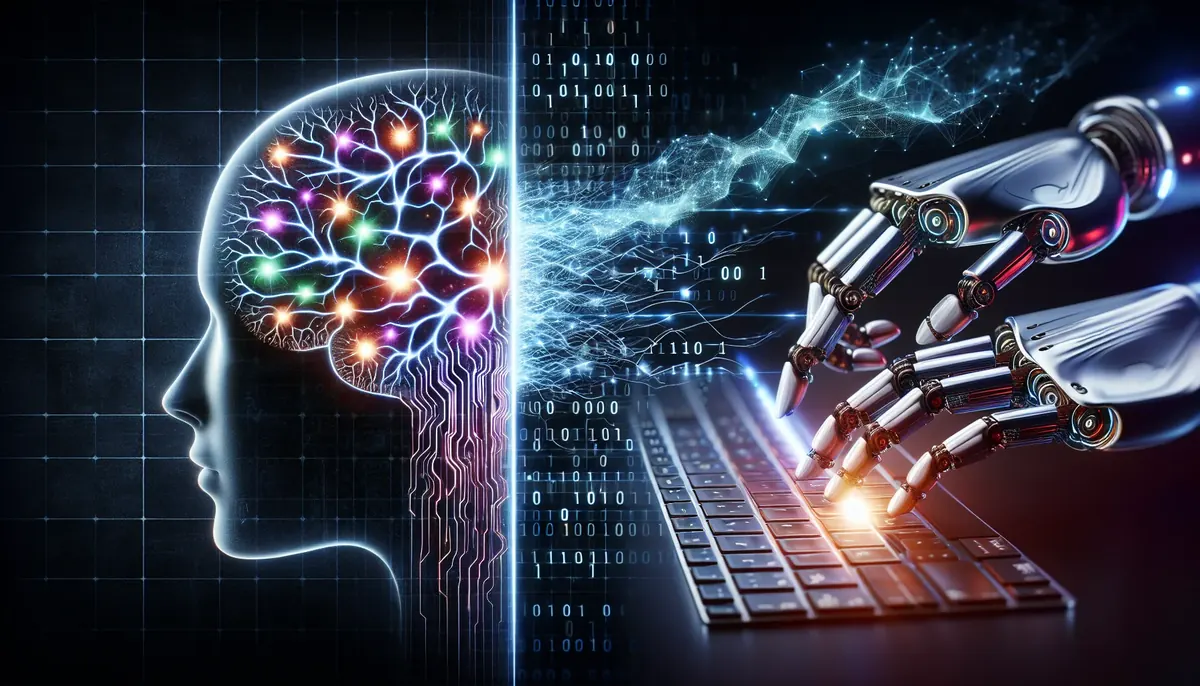
- High-level reasoning and planning
- Understands user intent and context
- Breaks complex tasks into sub-steps
- Decides what needs to be accomplished
- Evaluates progress and adjusts strategy
- Powered by Grok 4.20 (soon Grok 5)
- Real-time physical interaction with the machine
- Processes last 5 seconds of screen video
- Handles mouse movement, clicking, scrolling
- Interprets pixels to understand UI elements
- Fast instinctive execution (sub-second reactions)
- Runs on Tesla AI4 chip (300 TeraOps, $650)
In Musk's own words: "Grok is the master conductor/navigator with deep understanding of the world to direct Digital Optimus, which is processing and actioning the past 5 secs of real-time computer screen video and keyboard/mouse actions."
This follows Tesla's Full Self-Driving methodology applied to desktop automation. Instead of cameras reading road signs and lane markings, the system reads application windows, buttons, form fields, and menus. Instead of controlling steering and acceleration, it controls mouse and keyboard.
5. Beta Testing and Rollout: What We Know (May 2026)
As of May 11, 2026, the cleanest reading is this: Grok Computer is no longer just a rumor, but it is also not broadly available to everyone yet. The strongest public evidence now comes from the May 7 accidental exposure plus xAI's own Grok 4.3 notes describing computer-backed work.
Why this matters for search intent: people looking for Grok Computer now want the rollout answer, not just the concept. The most useful update is that xAI has effectively shown three layers of evidence: leaked interface exposure, insider app access, and official release notes describing real computer-backed work.
Performance context: this still does not prove Grok Computer is already more reliable than Claude Computer Use or Codex-style tools in production. What it does prove is that xAI is much further along than a simple teaser page. Reliability, safety, and broad availability are the pieces that still need clearer public validation.
6. Grok 4.3, Grok 5 and the Model Layer Behind Grok Computer
The biggest change since the earlier version of this article is that xAI has now published official Grok 4.3 release notes. Those notes say Grok 4.3 is rolling out to SuperGrok and Premium+ users, and that Grok can use a computer to create presentations, documents, spreadsheets, and other real files. That makes Grok 4.3 the clearest current software layer behind Grok Computer in public-facing documentation.
In short, the better way to frame Grok Computer in May 2026 is not "wait for Grok 5 and maybe something happens." It is "Grok 4.3 already shows the computer-use direction publicly, and Grok 5 is the potential force multiplier later."
7. Supercharger Compute Hubs: The Infrastructure Play
This is perhaps the most underreported aspect of the entire project. Tesla is not just deploying Grok Computer as software -- they are building physical infrastructure to run it at massive scale.
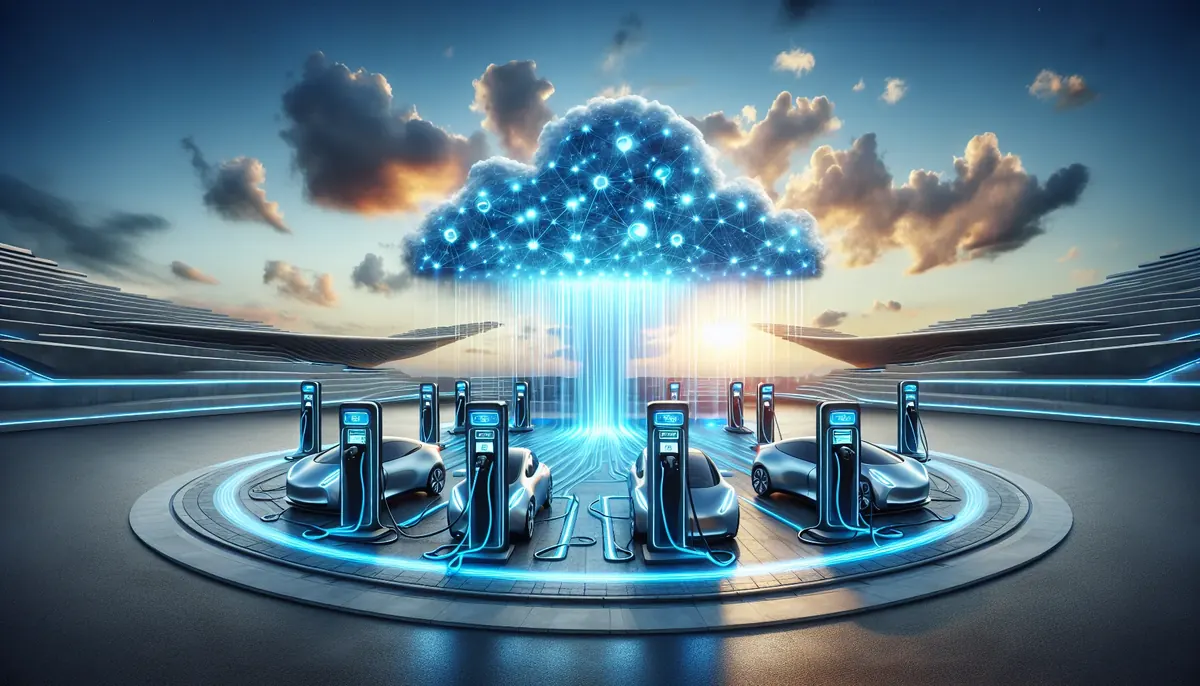
The Supercharger Compute Network
The concept: while your Tesla charges at a Supercharger station, the AI4 chip in your vehicle -- or a dedicated compute unit at the station -- processes Digital Optimus tasks. Your parked car literally does office work while it charges. And Tesla is deploying millions of additional dedicated units to scale this into a distributed computing network that rivals traditional cloud providers.
The economic math is compelling: at $650 per AI4 unit versus thousands of dollars for Nvidia H100 GPUs, Tesla can deploy orders of magnitude more compute per dollar. Combined with 7 GW of existing Supercharger power infrastructure, this creates a distributed AI computing network that no competitor can easily replicate.
8. XChat: The Super-App Distribution Thesis
The XChat angle still matters because Musk wants a WeChat-style super-app that combines messaging, payments, and work. But as of May 2026, the more concrete signal for Grok Computer is no longer a promised launch date. It is the combination of official Grok 4.3 computer-backed workflows and the May 7 accidental exposure.
If XChat becomes the consumer front end, Grok Computer would likely be the action layer behind it: the system that can actually open apps, move through interfaces, fill forms, create files, and hand the result back into a conversation.
That still makes XChat strategically important. But for readers searching Grok Computer right now, the fresher takeaway is that xAI appears to be proving out the underlying agent behavior first, then widening the distribution story around it.
9. The AI Agent Race: Full Comparison (2026)
Every major AI company is racing toward the same finish line: an AI that controls your computer. Here is how they stack up as of May 2026:
Key differentiation: While Claude Cowork leads in reliability and coding precision, and Microsoft Copilot has the deepest OS integration, Grok Computer's unique advantage is the hardware play. No other AI agent has access to millions of $650 compute units deployed at physical infrastructure points. This is a bet that cheap, distributed hardware at scale beats expensive cloud computing for agent workloads.
10. Industry Impact & Job Implications
Grok Computer represents a fundamental shift from AI that answers questions to AI that does things. The implications are enormous.
Roles Most at Risk
Data Entry Clerks
Repetitive form filling and data transfer
QA Testers (Manual)
UI click-testing and regression testing
Administrative Assistants
Email management, scheduling, reporting
Basic Customer Service
Ticket processing, form submissions
Roles That Will Benefit
AI Prompt Engineers
Designing workflows for AI agents
Agent Supervisors
Monitoring and correcting AI agent output
Strategic / Creative Roles
Tasks requiring judgment, empathy, creativity
Developers / Integrators
Building on top of agent platforms
11. The Crypto Angle: Tokens Already Emerging
As with any major tech announcement involving Elon Musk, the crypto community has responded instantly. But the market's clearest early proxy for this narrative is Grok Computer ($COMPUTER) on Solana. In narrative terms, this is one of the most promising early tokens attached to the Grok Computer storyline because it is simple, direct, and easy for traders to understand at a glance. It is already being treated as the first $COMPUTER token tied to the theme, even though it remains completely unofficial and has no affiliation with xAI, Tesla, or Elon Musk. View it on DEXTools.
Right now, $COMPUTER looks like the most promising early market vehicle for traders who want exposure to the Grok Computer narrative. The thesis is simple: if Grok Computer, Macrohard, XChat, and Musk's broader AI push keep pulling attention, traders will naturally look for the cleanest ticker linked to that story, and $COMPUTER currently has that advantage. It is early, it is narrative-driven, and it has the kind of branding that can travel fast across crypto timelines. Still, one point must stay crystal clear: it is not official. It is a community-created token, not a launch from xAI, Tesla, Elon Musk, or the Grok team.
This pattern is familiar in crypto -- real tech narratives spawn speculative meme tokens almost immediately. We have seen it with:
- Lobstar ($LOBSTAR) (view on DEXTools) -- surged to $6.6M market cap in March 2026
- OpenClaw ($OPENCLAW) (view on DEXTools) -- 800%+ pumps from open-source AI hype
For traders researching these tokens, always use tools like DEXTools and DexScreener to analyze liquidity, holder distribution, and trading patterns. Check for honeypots and rug pull red flags before touching any unofficial token.
12. FAQ
Related Guides
Frequently Asked Questions
What is Grok Computer 2026?
Grok Computer 2026 refers to a hypothetical future AI agent developed by xAI that is designed to control a personal computer system.
What are the main features of Grok Computer 2026?
Its primary feature is full PC control, allowing it to operate software, navigate interfaces, and perform tasks typically done by a human user.
How does Grok Computer 2026 differ from current AI?
Unlike current AI assistants that primarily answer queries, Grok Computer 2026 is envisioned to autonomously interact with and manipulate a computer's operating system and applications.
What kind of tasks could Grok Computer 2026 perform?
It could automate complex workflows, manage data, write code, or even assist with creative tasks by directly operating software on a PC.
Is Grok Computer 2026 currently available?
No, Grok Computer 2026 is a conceptual or speculative future development, as indicated by the '2026' in its name.