Hong Kong Stablecoin Licences to Transform Asia
— By Whatsertrade in Analysis

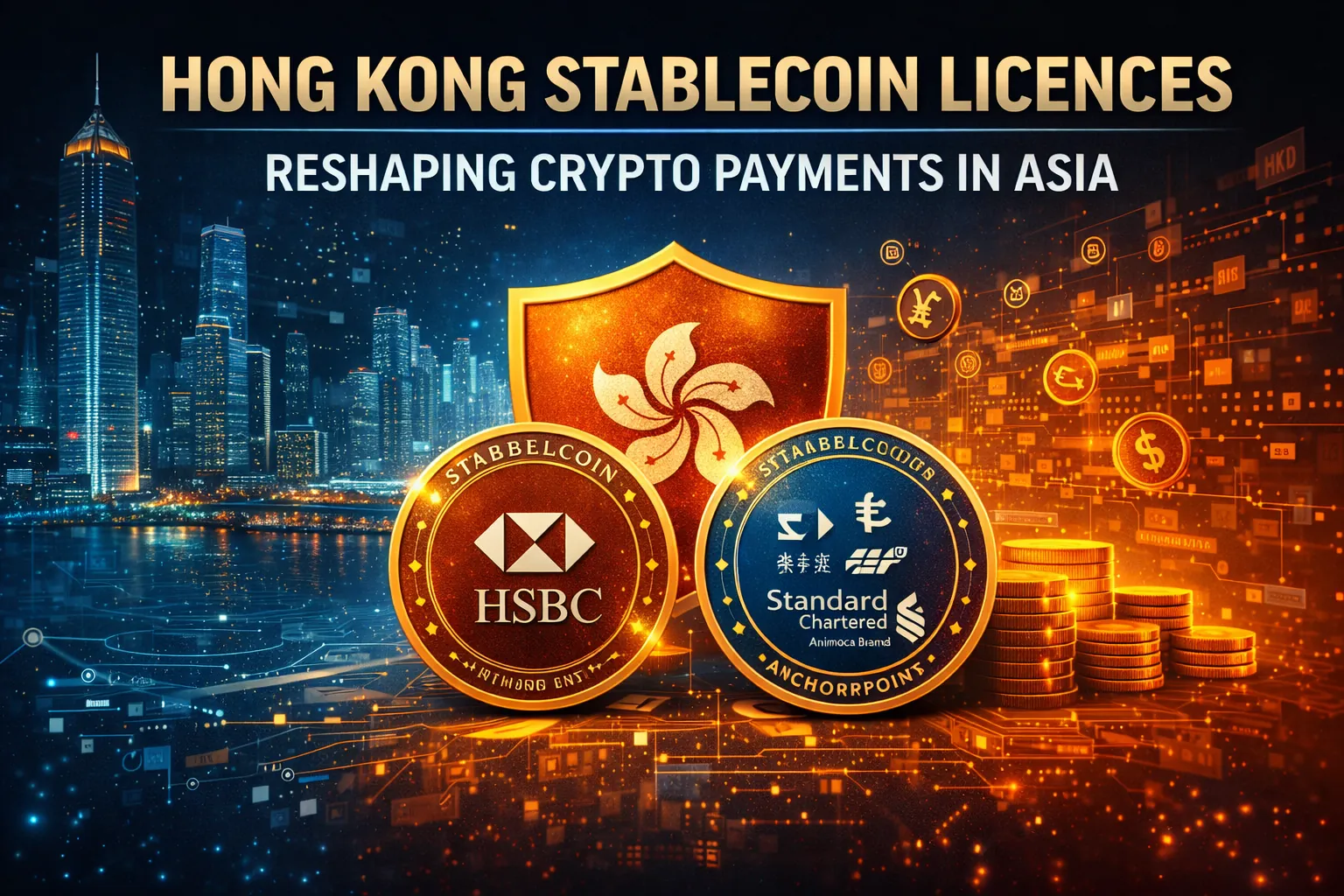
Hong Kong's new stablecoin licences signal a paradigm shift in Asia's digital finance landscape, led by banking giants HSBC and Anchorpoint.
Hong Kong has entered a new phase in digital finance. On April 10, 2026, the Hong Kong Monetary Authority granted its first stablecoin issuer licences under the city's new regime, approving Anchorpoint Financial and The Hongkong and Shanghai Banking Corporation. The licences took effect immediately, marking the first real test of Hong Kong's effort to build a regulated stablecoin market rather than a loosely supervised crypto experiment.
That is why this story matters far beyond Hong Kong. Stablecoins have long been one of the most important products in crypto, but they have mostly been associated with trading, offshore liquidity and dollar based market infrastructure. Hong Kong is trying something different. It is pushing stablecoins into a regulated framework tied to user protection, risk management and clear licensing standards, with a strong focus on practical financial use cases.
What Happened With the First Hong Kong Stablecoin Licences?
The first two licences went to HSBC and Anchorpoint Financial. Anchorpoint is the joint venture formed by Standard Chartered, Animoca Brands and HKT. Under the business plans reviewed by the HKMA, the licensed issuers are expected to complete preparation work and launch in the coming months. Reuters reported that the stablecoins are expected in the second half of 2026 and are aimed at cross border and local payments, as well as digital asset trading.
This is important because Hong Kong did not open the door to a broad wave of approvals. The HKMA received 36 applications in the first batch by the September 30, 2025 deadline, but only two licences were granted in this initial round. The regulator has also said it is open but cautious about further approvals and that any additional licences are likely to be very limited.
Why This Is Bigger Than a Local Regulatory Story
Many crypto regulation stories matter only to lawyers and compliance teams. This one is different because it touches payments, banking, app distribution and the future of digital money in Asia.
Hong Kong's regime for stablecoin issuers took effect on August 1, 2025, and from that date the issuance of fiat referenced stablecoins became a regulated activity requiring a licence. The framework also includes supervision guidance and AML and counter financing requirements, which means the market is being built with bank grade controls from the start.
That changes the narrative. Instead of asking whether stablecoins belong inside regulated finance, Hong Kong is asking which issuers can meet the bar and which use cases are credible enough to scale. The regulator has made clear that risk management capability, commitment to compliance and viable business plans are central to the licensing decision.
Why Banks Are the Real Story Here
The biggest signal is not simply that licences were issued. It is who received them.
The first approvals went to established banking groups and a joint venture anchored by one of the city's major international banks. That suggests Hong Kong wants stablecoins to develop inside a tightly controlled financial perimeter rather than through a free for all led by pure crypto startups. Reuters also reported that earlier plans by Ant Group and JD.com to issue stablecoins in Hong Kong were paused after concerns about privately controlled currencies.
This matters because bank led stablecoins are a very different product from the stablecoins many crypto users are used to. They can be positioned less as speculative market plumbing and more as regulated payment tools tied to existing customer bases, mobile apps and distribution channels.
HSBC's rollout plans show exactly why. Reuters reported that its stablecoin will be available through PayMe and HSBC HK Mobile Banking. Anchorpoint, meanwhile, said it plans to work with selected businesses as distributors to give the public access to its stablecoin. That means the next battle may not be about who mints the token, but who controls the distribution layer and the customer relationship.
What This Means for Crypto Payments in Asia
For years, stablecoin adoption in Asia has often been discussed through the lens of trading volumes, offshore dollar access and crypto market liquidity. Hong Kong's model points in a different direction. The use cases highlighted so far include cross border payments, local transactions and digital asset trading. That opens the door to a broader payments narrative, especially for trade, treasury movement, merchant settlement and app based financial services.
This is where the story becomes especially interesting for SEO and traffic. Search demand around stablecoins is no longer only about price, reserves or which token dominates exchange volumes. More readers are looking for the next phase: regulated stablecoins, bank backed stablecoins, payment rails in Asia and how governments are trying to bring digital money into the financial mainstream.
Hong Kong is now one of the clearest case studies for that shift.
Why Scarcity Could Make These Licences More Valuable
One of the most overlooked details is how selective the process has been. Thirty six entities applied. Two were approved. More approvals may come, but the regulator has already signaled that the number will remain very limited.
That scarcity changes the economics of the market.
A limited licence pool can make each licence more strategically valuable. It can also raise barriers to entry, strengthen trust in the approved issuers and create a more durable moat around distribution, partnerships and infrastructure. For banks and financial platforms, this could make Hong Kong one of the most attractive stablecoin markets in Asia, not because it is the most open, but because it may become one of the most credible.
What Users and Businesses Should Watch Next
The next stage is not the announcement. It is the launch.
The HKMA said the licensees intend to launch business in the coming few months, and Reuters reported that second half 2026 is the target window. That means the market will soon move from licensing headlines to real product questions. Which stablecoins will users actually adopt? Will the biggest demand come from payments, treasury management or trading? Will app based distribution outperform exchange led distribution?
Another issue to watch is trust. The HKMA has already warned the public to stay alert to scams falsely linked to the licensed issuers and reminded users to acquire or use stablecoins only through regulated channels. That warning is more significant than it may seem. Whenever a market moves from concept to launch, opportunists follow. In practical terms, regulated branding may become one of the strongest competitive advantages in this new phase.
Why This Topic Has Strong Traffic Potential
From a content perspective, Hong Kong stablecoin licences combine several high demand search themes in one story: stablecoins, banking, Asia, crypto regulation, cross border payments and the future of digital money.
It also has an unusually strong mix of news value and evergreen relevance. The news hook is fresh, but the bigger questions will keep driving searches long after the first launch wave. People will continue searching for terms like Hong Kong stablecoin licences, HSBC stablecoin, Standard Chartered stablecoin, regulated stablecoins in Asia and bank backed stablecoins.
That makes this topic especially valuable for publishers looking for traffic that is not purely dependent on short lived price action.
Hong Kong's first stablecoin licences matter because they show what the next stage of the stablecoin market may look like.
This is not the old model of crypto growth built around loosely regulated expansion. It is a more selective model shaped by licensing, bank participation, real payment use cases and controlled rollout. The fact that only two issuers were approved from a field of 36 applicants says a lot about where the market is heading.
For crypto users, this could mean safer and more mainstream stablecoin access. For banks, it could open a new digital payment layer. For exchanges and fintech platforms, it creates a new competitive landscape in Asia.
And for anyone watching where stablecoins go next, Hong Kong is no longer a side story. It is now one of the most important markets to watch.
Tokenized Treasuries and RWAs: Transforming Crypto CLARITY Act Advances Crypto Travel Rule for EU Exchanges What Is Paper Trading in Crypto? What Is Ethereum? Complete Beginner GuideFrequently Asked Questions
What is the purpose of Hong Kong's stablecoin licensing regime?
The regime aims to regulate stablecoin activities, mitigate financial stability risks, and protect investors within Hong Kong's financial system.
When did Hong Kong announce its stablecoin regulatory framework?
The Hong Kong Monetary Authority (HKMA) announced its regulatory framework for stablecoins in December 2023.
Which types of stablecoins are covered by the new Hong Kong regulations?
The regulations primarily focus on fiat-referenced stablecoins, which are stablecoins pegged to one or more fiat currencies.
What are some key requirements for stablecoin issuers under Hong Kong's new rules?
Key requirements include robust governance, redemption at par, reserve backing, and regular audits to ensure stability and transparency.
How might Hong Kong's stablecoin licensing impact the broader Asian crypto market?
The framework could set a precedent for other Asian jurisdictions, potentially fostering greater adoption and regulatory clarity for stablecoins in the region.