Malicious AI Routers and Crypto Wallet Security 2026
— By Whatsertrade in Tutorials

Malicious AI routers in DeFi 2026 exploit intent-based DEX aggregators to drain wallets. Learn the attack vectors, real cases, and defenses that work.
Crypto in 2026 looks nothing like crypto in 2020. The simple click, sign, swap flow has quietly been replaced by something far more complex: an AI router (a smart solver or autonomous agent) deciding where your tokens move, how they are priced, and which counterparty fills your order. Most users never see this happen.
That invisibility is the problem. Malicious AI routers are the newest, fastest growing attack surface in decentralized finance (DeFi), and 2025 produced the first confirmed solver-level exploits, signature phishing campaigns disguised as intent execution, and AI agent wallets drained by poisoned routes. SlowMist, CertiK, Forta, and the Coinbase Security team have all flagged intent-based DEX aggregators as the next major drainer vector.
This guide breaks down what an AI router actually is, how the intent and solver economy works, the specific attacks documented in 2025 and 2026, the defenses that genuinely work, and the tools you should install today. By the end you will know exactly how to scan a route before signing, why blind signing a permit2 message is the single most dangerous habit in crypto right now, and how to keep your AI trading agent from approving a malicious solver behind your back.
What Is an AI Router in DeFi?
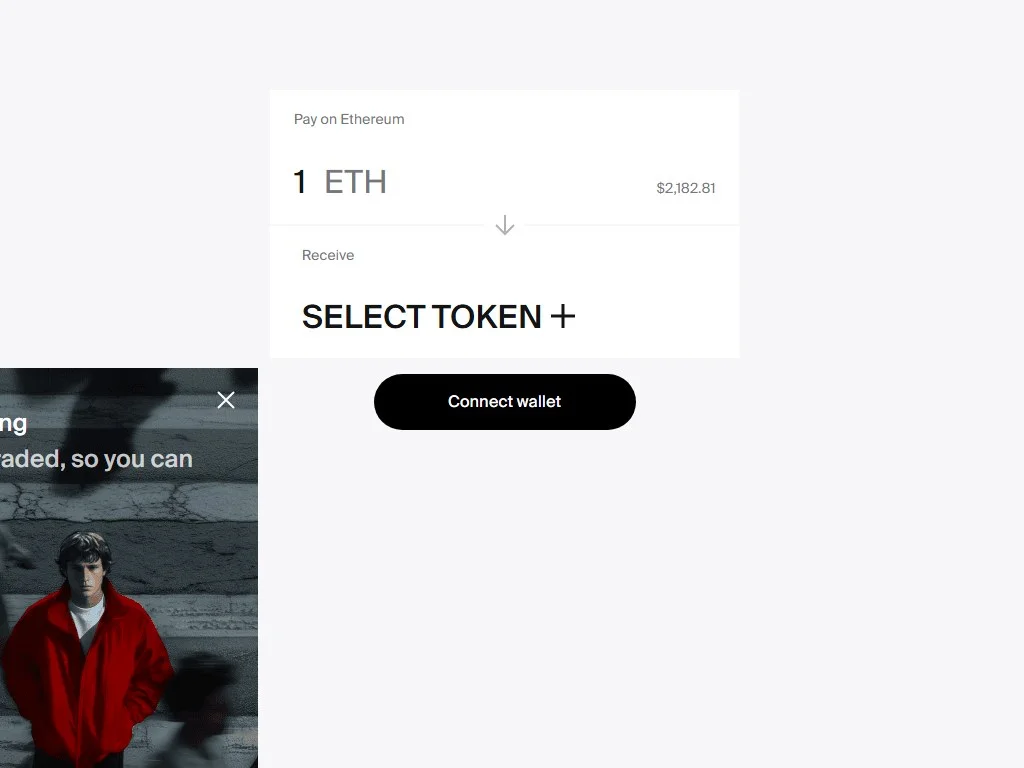
An AI router is an intent-based DEX aggregator powered by autonomous agents (called solvers, resolvers, or executors) that compete off-chain to find the best execution path for your trade. You sign an intent ("I want at least 1.998 USDC for my 1 USDT"), and the winning solver routes, swaps, and settles the transaction on-chain on your behalf, often gaslessly. Examples include CoW Swap, 1inch Fusion, UniswapX, Bebop, ParaSwap Delta, Hashflow, and KyberSwap.
Traditional aggregators like older 1inch versions built routes on-chain from a static algorithm. AI routers do the opposite. They externalize routing to a marketplace of competing bots that bid for the right to execute. The winning bot keeps any positive slippage as profit (the surplus). This solver economy is elegant when everyone plays fair. It becomes catastrophic when a malicious solver wins your order.
A malicious AI router is a compromised or hostile intent-based DEX solver that exploits the gap between signed user intent and on-chain settlement to steal value through fake price improvement, signature theft, allowance abuse, or routing victims into attacker-controlled liquidity pools. The user signs once and the malicious agent does the rest.
From MEV Bots to Intent Solvers: A Short History
To understand why malicious AI routers matter, you need the lineage. The threat did not appear from nowhere. It evolved from a decade of MEV (Maximal Extractable Value) experimentation.
In 2017 and 2018, frontrunning bots monitored the Ethereum mempool and submitted higher-gas duplicates of profitable pending transactions. By 2020, the term MEV was coined and sandwich bots became industrialized. By 2022, Flashbots launched private order flow, splitting MEV between searchers, builders, and proposers. Then in 2023, CoW Protocol popularized the intent-based design: users sign an off-chain message describing what they want, and a batch auction selects the solver that delivers the best fill. UniswapX followed in mid-2023, and 1inch Fusion in late 2023.
By 2025, the design crossed a tipping point. Roughly 35 percent of stablecoin swap volume on Ethereum mainnet was routed through intent-based aggregators. Solvers became sophisticated AI agents, often using reinforcement learning to optimize routing across dozens of venues. The competition for surplus pushed margins so low that some operators started looking for shortcuts. That is when the attacks started.
How the Solver Economy Actually Works
Once you understand the mechanics, the attack surface becomes obvious.
The user gives up control at step 1. Every subsequent step happens in agent territory. If your signed intent contains loose slippage tolerance, a wide deadline, or open routing permission, the winning solver has enormous latitude over what actually happens. A fair solver returns most of the surplus to you. A predatory solver pockets it. A malicious solver may do far worse.
This is fundamentally different from a swap on a traditional Uniswap V4 hook AMM, where the route and price are computed on-chain and the user signs the exact transaction. With intents, the signed object is a promise, not an instruction. Whoever fills the promise writes the instruction.
The Six Documented Attack Vectors in 2025 and 2026
Security firms have catalogued the following attack classes. Each one targets a different layer of the intent stack.
1. Sandwich via Fake Price Improvement
The solver claims your route improved by 0.4 percent versus the quoted reference. In reality the solver itself sandwiched your trade between two of its own swaps in a thin pool, took 1.2 percent, and returned a fake-looking surplus of 0.4 percent. Because the executed transaction looks profitable on the UI, most users never investigate. This was the dominant attack on smaller intent venues throughout 2025 and remains common today.
2. Fake Permit2 Signing
Permit2 (Uniswap's universal token approval contract) lets users sign off-chain messages that grant short-lived spend permissions. A malicious frontend or AI router can request a permit2 signature that looks like a swap permission but actually authorizes draining a much larger balance to an attacker address. Wallet UIs frequently render these messages as opaque hex blobs, and users blind-sign. The drainer Inferno Drainer and its 2025 successor Pink Drainer both ship modules that mimic legitimate intent flows.
3. Allowance Abuse via Blind Sign
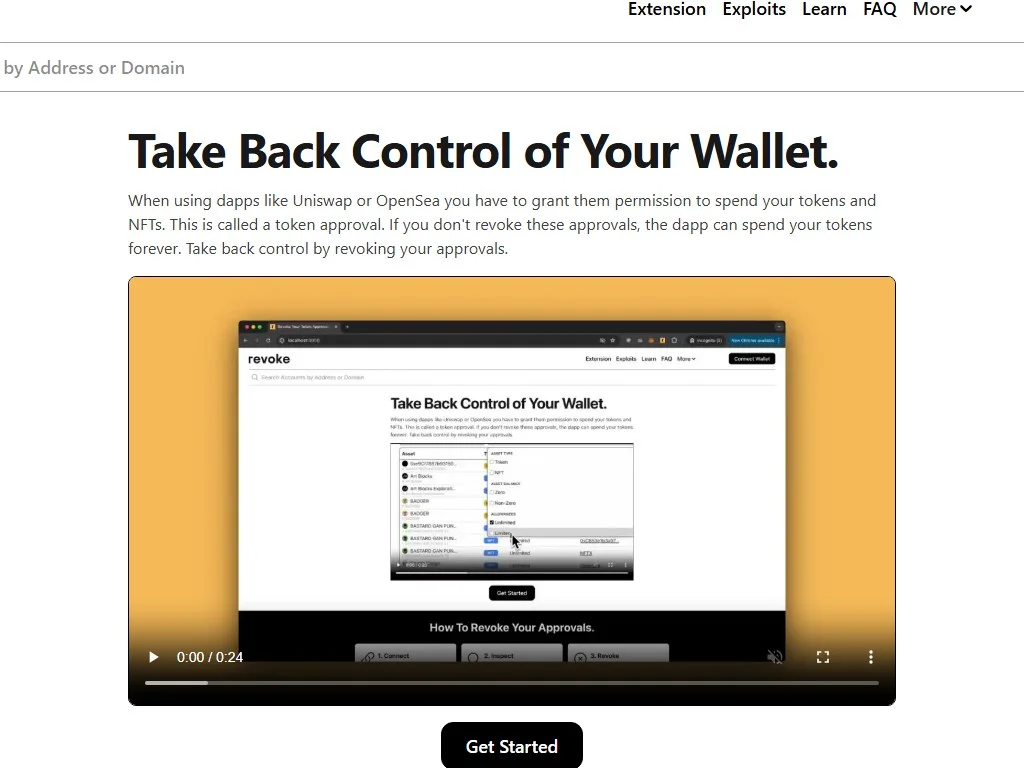
Closely related to permit2 abuse, this attack relies on the user having previously approved an unlimited token spend to a contract that the malicious solver controls or has compromised. The user thinks they are signing a single swap intent. The solver invokes the existing infinite approval to sweep the wallet on a future block. This is why revoking unused approvals is no longer optional.
4. Malicious Solver Routing to Attacker Pool
The attacker deploys a fresh liquidity pool with a single intent: be the cheapest venue on paper for the next 30 seconds. The solver routes the victim's swap through that pool, which secretly charges a 50 percent hidden fee or returns counterfeit tokens with the same name and symbol as the legitimate asset. The victim sees the transaction succeed and only discovers the loss when trying to spend the received tokens.
5. Ice Phishing Variants on Intent Signatures
Classic ice phishing tricked users into signing approve(attacker, infinite) transactions. The 2025 variant uses EIP-712 typed-data signatures formatted as intent objects. Wallets that do not render the full structured data leave users staring at "Sign this intent to swap" while approving something much worse. SlowMist's 2025 phishing report documented over 2.3 million dollars stolen through intent-shaped signatures in Q3 2025 alone.
6. AI Agent Wallet Compromise
Autonomous trading agents (think Eliza framework bots, Virtuals Protocol agents, or custom GPT-based trading copilots) often hold their own hot wallets and execute swaps without human review. A malicious AI router that wins enough auctions for an agent's order flow can poison the agent's strategy, gradually skim funds via tiny surplus theft, or trigger one large drain by exploiting a permit2 callback. Because the agent does not pause to verify, the drain completes before anyone notices.
Case Studies: Confirmed Solver Exploits
The following incidents are publicly documented through SlowMist, CertiK, and on-chain forensics. Names and exact numbers vary slightly across sources.
The NeoBro Solver Drain (March 2025)
A relatively unknown solver operating on a Layer 2 intent venue began winning over 20 percent of order flow for a two week stretch. Forensics later showed the solver routed roughly 60 percent of victim swaps through a private pool that returned tokens 2 to 4 percent below the quoted minimum, blaming the discrepancy on slippage. Estimated cumulative theft exceeded 4.1 million dollars before the solver was delisted. The operators of the venue have since added solver bonding and slashing.
The Permit2 Drainer Wave (July to October 2025)
A coordinated phishing campaign targeted Twitter and Telegram users with fake "claim your airdrop" intents. The signing payload was crafted to look like a CoW Swap intent for a 1 USDC swap, but the actual permit2 batch authorized draining six different stablecoins and four governance tokens to a sweeper contract. Wallet Guard estimated combined losses around 8.6 million dollars across roughly 12,000 victims. The wallets most affected were those without transaction simulation enabled by default.
The AI Agent Wallet Sweep (January 2026)
One of the first documented attacks against an autonomous agent. A trading agent running on a popular framework was configured to swap profit into USDT every six hours via an intent aggregator. A malicious solver registered specifically to win this agent's order flow patterns, returning tokens just inside the agent's slippage tolerance while skimming the surplus. Over four weeks the agent's wallet was bled of approximately 180,000 dollars before the operator noticed the strategy underperformance.
Comparison: Intent Architectures Side by Side
Not every AI router exposes the same attack surface. The design choices each protocol made trade off security, speed, and decentralization.
The pattern is clear. Venues that bond their solvers (CoW Swap) or restrict to vetted market makers (Bebop, Hashflow) have a much smaller attack surface than open auction venues. That does not mean open venues are unusable. It means you need to do more verification when you use them.
Why This Differs From Traditional Drainers
Older crypto drainers relied on tricking users into approving a malicious contract directly. Wallet Drainer kits like Pink, Inferno, and Angel sold for thousands of dollars on dark forums and required a fake mint site, a phishing tweet, and a wallet connect popup. The attack surface was the user's eyeballs.
Intent-based drainers do not need any of that. The victim is already on a legitimate-looking interface. They click swap. They sign what their wallet calls an intent. The hostile solver does the rest. There is no fake site, no obvious approval prompt, no big red warning. The drain happens in agent territory after the signature.
Fake site, fake mint, obvious approve(attacker, infinite) popup. Defeated by careful users and revoke.cash.
EIP-712 typed data signatures granting hidden permissions. Defeated by reading the full signed payload.
Legitimate UI, normal intent, hostile solver. Defeated only by simulation, slippage control, and vetted venues.
Tenderly simulation, hardware wallet, narrow slippage, vetted aggregator, regular revocations.
Step by Step: How to Sign an Intent Safely
This is the single most important section of this guide. Follow this checklist every time you use an intent-based aggregator.
Step 1: Verify the venue. Confirm the URL matches the official domain (cow.fi, app.uniswap.org, app.1inch.io). Most malicious AI routers are deployed on lookalike domains that surface in Google Ads. Bookmark the real URL and never click ads.
Step 2: Set explicit slippage. Do not use the default "auto" slippage on volatile pairs. For stablecoin to stablecoin trades, set 0.1 percent. For major pairs, 0.5 percent. For long-tail tokens, 1 to 2 percent maximum. A loose slippage tolerance is an invitation for surplus theft.
Step 3: Tighten the deadline. Set the deadline to the shortest acceptable value, typically 60 to 180 seconds. Long deadlines let solvers wait for optimal sandwich opportunities. Short deadlines force them to execute or lose the auction.
Step 4: Simulate the transaction. Use Tenderly, BlockSec MetaSleuth, or a wallet with native simulation (Rabby, Frame, recent MetaMask versions). The simulator should show every token entering and leaving your wallet. If anything is unexpected, abort.
Step 5: Read the signed payload. Expand the structured data view in your wallet. Confirm the recipient is your address, the input amount matches, and there is no nested permit2 batch you did not authorize. If your wallet only shows hex, switch wallets.
Step 6: Use a hardware wallet. Sign every intent with a Ledger or Trezor. The device's screen displays the message hash and source contract independently of your computer, which means a compromised browser cannot lie about what you are signing. See our crypto wallet security tips for setup details.
Step 7: Verify the result. After execution, check the transaction on a block explorer. Confirm the actual received amount matches the quote within your slippage tolerance. If you lost more than expected, report the solver to the aggregator's support channel immediately so it can be investigated and slashed.
Tools That Actually Help
The defense stack for intent-based attacks is genuinely different from old phishing defense. Here are the tools to install today.
Lists every active token approval and permit2 grant on your wallet. Revoke anything you do not actively use, especially infinite approvals to old contracts.
Simulates the transaction against a forked state and shows every token transfer. Free tier covers most users. Essential for any signature you are unsure about.
Address reputation and fund-flow tracing. Quickly tells you if a solver address has been involved in past drains or is associated with known malicious clusters.
Browser extension that intercepts signatures, decodes permit2 messages, and warns on high-risk signing. Has caught most major drainer campaigns of 2025.
Real-time signature simulation with focus on EIP-712 typed data. Particularly strong at flagging fake intent payloads that disguise permit2 drainers.
Drop-in MetaMask replacement with built-in transaction simulation, risk scoring, and contract source verification on every signature.
For traders running automation, also consider programmatic transaction simulation through Tenderly's API or Foundry's cast call, integrated as a hard gate before any agent signature.
Best Practices for AI Trading Agents
If you run an autonomous trading agent (or are thinking about it), the malicious router threat changes how you should design the system. The temptation is to maximize speed and minimize human review. That is exactly what attackers exploit.
First, never give an agent infinite approvals. Use permit2 with short expirations (24 hours maximum) and per-transaction signing. Yes, this requires the agent to refresh approvals frequently. That is the point.
Second, run a simulation gate before every signature. The agent should programmatically simulate the proposed transaction against current state, parse the expected output, and abort if the received amount falls below a sanity threshold. This catches surplus theft and routing through poisoned pools.
Third, segregate funds. Your trading agent's hot wallet should never hold more than the size of a single intended trade. Profit should sweep to a cold wallet that the agent has no signing authority over. If you would not let a junior trader manage your entire portfolio without limits, do not let an agent do it either. The burner wallet pattern applies tenfold here.
Fourth, restrict the venue allowlist. Hard-code the aggregators your agent is permitted to use, and prefer those with solver bonding (CoW Swap) or RFQ-vetted market makers (Bebop, Hashflow). Do not let your agent discover new aggregators on its own.
Fifth, log everything. Every quote, every signature, every settlement. Compare expected versus actual on every fill. Anomalies above one basis point should trigger an alert and a pause.
MEV Competition Between Solver Architectures
The competitive dynamic between CoW Swap, UniswapX, and 1inch Fusion is shaping the security landscape in real time. Each protocol has made architectural bets that affect how exposed users are.
CoW Swap runs a uniform-clearing batch auction every twelve seconds. All orders in the batch settle at the same price, and solvers are bonded with on-chain collateral that can be slashed for misbehavior. This makes sandwich attacks structurally impossible inside a batch and gives the protocol legal-style recourse against bad solvers. The tradeoff is latency (you wait up to twelve seconds for inclusion).
UniswapX uses a Dutch auction where the price improves over time until a filler accepts. Fillers are not bonded in the same way and the venue is open to a broader set of participants. This gives faster fills and tighter integration with the Uniswap router, but the surface for surplus skimming is wider.
1inch Fusion takes a hybrid approach with a resolver whitelist that requires KYC for high-volume operators. This filters out anonymous bad actors but introduces centralization. The protocol can also revoke resolver access more quickly than slashing-based systems, which is useful when a resolver is caught misbehaving but slow to slash.
None of these is universally best. For maximum security with low size sensitivity, CoW Swap is the conservative choice. For speed and tight integration with the Uniswap ecosystem, UniswapX is fine if you simulate. For high-volume institutional flow with vetted counterparties, 1inch Fusion or Bebop are preferable.
Regulatory Implications: Who Pays When a Solver Steals?
Intent-based architectures create a genuinely novel legal question that no major regulator has fully answered. When a user signs an intent and a malicious solver fills it dishonestly, who is liable?
The solver, obviously, is the proximate cause. But solvers operate pseudonymously in most cases, with on-chain bonds that may be smaller than the damage. Slashing can recover a fraction. Recovery beyond the bond requires identifying and pursuing the operator through traditional legal channels, which can be impossible.
The aggregator (CoW, 1inch, Uniswap Labs) typically argues it is a software publisher, not a custodian or counterparty. Their terms of service disclaim responsibility for solver behavior. This argument has not been seriously tested in court yet.
The user, in the meantime, bears the full economic loss with no clear recourse. The European Union's MiCA framework (Markets in Crypto-Assets, in force since 2024) does not explicitly address intent-based execution, though some legal scholars argue the protocols would be classified as Crypto-Asset Service Providers if they actively curate solvers. The US SEC and CFTC have signaled interest but issued no specific guidance through Q1 2026.
Until clearer rules emerge, the practical answer is that liability lives with the user. That is exactly why this guide exists.
Common Mistakes That Get Wallets Drained
- Signing permit2 messages without reading the structured data
- Using "auto" slippage on volatile or low-liquidity pairs
- Granting infinite token approvals to routers and never revoking
- Trading on aggregators reached via Google Ads instead of bookmarks
- Letting an AI agent sign without simulation gates
- Storing trading capital on the same wallet as long-term holdings
- Ignoring wallet warnings flagged by Rabby, Wallet Guard, or Pocket Universe
- Signing with a software wallet instead of a hardware device
- Using extended deadlines on intent orders, giving solvers free latitude
- Never checking the actual filled amount on the block explorer
Fix all ten and your exposure to malicious AI routers drops by an order of magnitude. None of these costs more than a few minutes per trade.
Decision Flow: Should You Use an Intent Aggregator?
- Trade size under 1,000 dollars and stable pair: Direct AMM swap on Uniswap or Curve is fine. Aggregator overhead not worth the complexity.
- Trade size 1,000 to 50,000 dollars and major pair: CoW Swap or 1inch Fusion. Set 0.5 percent slippage, 90 second deadline, simulate first.
- Trade size above 50,000 dollars: Bebop or Hashflow RFQ, or split across multiple venues. Avoid open auction systems for large size.
- Long-tail token or recent launch: Use a burner wallet, manual route through a single DEX you trust, tight slippage, no permit2 grants.
- Autonomous agent trading: Hard-coded venue allowlist, simulation gate, no infinite approvals, hot wallet capped at trade size.
Following this flow alone puts you ahead of 95 percent of users active on intent venues today.
Builder Responsibilities
This problem is not just a user problem. If you are building a DeFi product that uses or integrates an intent aggregator, you carry responsibility for what your interface allows.
Default to safe parameters. Auto-set tight slippage based on pair volatility. Set short deadlines. Display permit2 approvals in human-readable form with a default deny. Simulate every transaction before presenting it for signature. Block known malicious solver addresses at the UI layer.
If you operate a solver yourself, publish your routing logic and surplus distribution policy. Bond your operations on-chain where the protocol supports it. Submit to third-party audits and accept slashing without protest when caught misbehaving. The intent ecosystem only works if solvers compete on price and execution, not on extraction.
For projects building autonomous AI agents that touch wallets, treat the agent's signature authority like a smart contract: audit it, restrict it, monitor it, and assume it will be exploited the moment you stop watching. The same discipline applied to permit2 implementations needs to be applied to agent design.
Looking Ahead: What 2026 and 2027 Will Bring
Several trends are accelerating. First, more solver bonding and slashing. CoW Swap pioneered it and others are following because the reputational damage from a high-profile drain outweighs the cost of bonding. Second, decentralized solver networks where multiple independent solvers must agree on the fill price, making collusion harder. Third, on-chain proofs of best execution, where solvers must cryptographically demonstrate that no better path existed.
On the attack side, expect more sophistication. AI-generated phishing intents that pass linguistic analysis. Solver collusion rings that coordinate across multiple venues. Targeted attacks on specific high-value wallets identified through on-chain analytics. The arms race is just beginning.
For ordinary users, the defensive posture will not change much. Hardware wallet, simulation, tight slippage, vetted venues, regular revocations. Master the basics and you will weather most of what comes.
Comparison: Malicious AI Router vs Traditional Threats
Notice the visibility column. Older threats had clear visual signals that careful users could catch. Malicious routers have almost no visual signal at the moment of attack. That is why the defense must be programmatic (simulation, gates, allowlists), not visual.
Solver Economics: Why Bad Actors Show Up
To understand why malicious AI routers are proliferating in 2026, follow the money. The economics of solver competition create powerful incentives for both good and bad behavior, and the gap between them is what attackers exploit.
An honest solver earns revenue from three sources. First, a small per-trade rebate paid by the protocol (typically 0.01 to 0.05 percent of trade size). Second, any positive slippage they can capture by executing slightly inside the quoted price. Third, MEV opportunities discovered while routing the trade, such as cross-DEX arbitrage that becomes profitable mid-execution. On a 100,000 dollar trade with a 0.02 percent rebate, the solver earns roughly 20 dollars before infrastructure costs.
Infrastructure costs are not trivial. A competitive solver runs private RPC nodes, maintains low-latency connections to multiple block builders, subscribes to premium data feeds, and pays engineering salaries. Industry estimates put baseline solver overhead at 30,000 to 100,000 dollars per month. To stay profitable, a solver needs to win enough order flow at sufficient margin to clear those costs.
This creates two divergent paths. Honest solvers compete on efficiency, returning more surplus to users to win more flow over time. Malicious solvers compete by extracting more per trade, accepting that they will be caught and delisted but optimizing for short-term profit before that happens. With bond requirements still modest on most venues (typically 50,000 to 250,000 dollars), the expected value calculation can favor attack if a single successful drain pays multiples of the bond.
The fix is making bonds large enough that no rational operator would risk slashing for a single drain, combined with reputation systems that make rebuilding under a new identity expensive. CoW Swap's slashing has progressively increased and reputation persists across operator wallets. Other venues are slowly catching up. Until they do, choosing well-bonded venues is the single biggest decision a user makes.
Hands-On: Inspecting an Intent Signature
Theory is useful. Practice is better. Here is what to look at the next time your wallet asks you to sign an intent.
First, expand the structured data view. Every modern wallet (Rabby, MetaMask, Frame, Trezor Suite) can render EIP-712 typed data as a tree. The top-level object should match the intent type for your venue: GPv2Order for CoW Swap, ExclusiveDutchOrder for UniswapX, FusionOrder for 1inch. If the type name is unfamiliar or generic, abort.
Second, verify the sellToken and buyToken contract addresses. Cross-check against a trusted source like the official Uniswap token list or CoinGecko's contract registry. Lookalike tokens with the same symbol are a classic poisoned-route trick.
Third, check the receiver field. It should be your own wallet address. If it is anything else, you are about to send your trade output to a third party. This is rare in legitimate flows and almost always indicates an attack.
Fourth, verify the sellAmount and buyAmount (or minBuyAmount) match what the UI quoted. Watch the decimal places carefully. USDC has 6 decimals, ETH has 18, and attackers exploit this by shifting amounts by a few decimal places hoping users will not notice.
Fifth, look for nested permit2 batches. Some intent formats wrap a permit2 message inside the order. The batch should authorize only the sell token, only the swap router contract, and only for the sell amount. Any additional tokens, larger amounts, or unfamiliar spenders are a red flag.
Sixth, check the deadline. It should be a Unix timestamp within the next few minutes. A deadline measured in days or hours gives attackers latitude to wait for optimal sandwich opportunities. If your wallet shows a deadline you did not configure, the frontend may have been tampered with.
This six-point check takes about 30 seconds once you are practiced. It catches the majority of intent-shaped attacks before they cost you anything.
Related Reading for DeFi Users
The intent-based attack landscape is connected to broader DeFi security topics worth studying. Understanding gas price and gwei mechanics helps you spot abnormal solver behavior. Familiarity with nonce handling matters when troubleshooting failed intents. Knowing how to detect fake volume on charts helps you avoid being routed through wash-traded pools. And before you sign anything large, run through our full transaction simulation guide.
Frequently Asked Questions
Q Q Q What exactly is a malicious AI router in crypto?
It is a hostile solver in an intent-based DEX aggregator (such as CoW Swap, UniswapX, 1inch Fusion, Bebop, ParaSwap Delta, Hashflow, or KyberSwap) that uses the gap between your signed intent and on-chain settlement to steal value through hidden fees, fake price improvement, signature theft, or routing your trade through a poisoned liquidity pool.
Q Q Q How is this different from old wallet drainers like Inferno or Pink?
Old drainers required a fake site and an obvious malicious approval. Malicious AI routers operate on legitimate aggregators after the user signs what looks like a normal intent. There is no fake URL, no big red warning, and the drain happens in agent territory after your signature. The defense is programmatic simulation, not eyeball vigilance.
Q Q Q Which intent aggregator is the safest to use right now?
CoW Swap has the strongest design for security thanks to bonded and slashable solvers plus uniform-clearing batch auctions. Bebop and Hashflow are also conservative because they restrict execution to vetted market makers. UniswapX, 1inch Fusion, ParaSwap Delta, and KyberSwap are usable but require tighter slippage, simulation, and venue verification.
Q Q Q Can hardware wallets protect against malicious AI routers?
Hardware wallets protect against signing requests being tampered with by a compromised browser, which is part of the threat. They do not protect against signing a legitimate but loose intent that a malicious solver then exploits. You need a hardware wallet plus transaction simulation, plus tight slippage, plus a vetted venue. No single layer is enough on its own.
Q Q Q What is permit2 and why is it dangerous?
Permit2 is Uniswap's universal token approval contract that lets users sign off-chain messages granting short-lived spend permissions. It is convenient and gas-efficient but dangerous because malicious frontends can craft permit2 signatures that drain far more than the user thinks they are authorizing. Always read the full structured data in your wallet before signing.
Q Q Q Are autonomous AI trading agents at higher risk?
Yes. Agents sign without human review, which is exactly what malicious solvers exploit. The January 2026 documented agent wallet sweep lost about 180,000 dollars to a solver that won the agent's order flow and skimmed the surplus over four weeks. Mitigations include hard-coded venue allowlists, simulation gates before every signature, short permit2 expirations, and fund segregation so the agent never holds more than a single trade size.
Q Q Q How do I check if a solver address is suspicious?
Use BlockSec MetaSleuth or Etherscan tags to look up the solver's address. Check for ties to known drainer clusters, recent funding from mixers, or short operational history. Established solvers on CoW Swap have months of clean execution history and are publicly bonded. Anonymous addresses with no track record should not be filling large orders.
Q Q Q What slippage should I set on intent-based swaps?
For stablecoin pairs, 0.1 percent. For major liquid pairs (ETH, BTC, top 20 tokens), 0.5 percent. For volatile or long-tail tokens, 1 to 2 percent maximum. Never use "auto" or default slippage on aggregators. Loose slippage is the single most exploited parameter by predatory solvers.
Q Q Q Should I stop using AI routers entirely?
No. Intent-based aggregators legitimately deliver better prices, gasless execution, and MEV protection for most users. The right approach is to use vetted venues (CoW Swap, Bebop, Hashflow for conservative use), simulate every transaction, set tight slippage, and revoke unused approvals regularly. The convenience is real. The threats are manageable with discipline.
Q Q Q Who is liable if a malicious solver steals my funds?
Legally this is unresolved. The solver is the proximate cause but often pseudonymous with limited recoverable bond. The aggregator typically disclaims responsibility as a software publisher. Regulatory frameworks like MiCA in the EU have not explicitly addressed intent-based execution. In practice, the user absorbs the loss. That is why prevention matters more than recourse.
Q Q Q What tools should I install today to defend against this?
Minimum stack: Rabby Wallet or recent MetaMask for native simulation, Wallet Guard or Pocket Universe browser extension for signature interception, revoke.cash for ongoing approval hygiene, BlockSec MetaSleuth for address reputation checks, and Tenderly for deep transaction simulation on anything large. Plus a hardware wallet for all signatures. Total cost: about 100 dollars one-time for the hardware.
Q Q Q How often should I revoke token approvals?
Audit your approvals at revoke.cash at least monthly. Revoke anything you have not actively used in 30 days, especially infinite approvals to any router or aggregator. After every large trade, check whether your aggregator left a permit2 grant active and revoke it if you do not plan to trade again soon. This habit alone prevents the majority of allowance abuse attacks.
Conclusion: The New Question to Ask Before Every Signature
Crypto security used to be about not clicking the wrong link. Now it is about understanding what happens after you sign. The malicious AI router threat is not a fringe concern. It is the dominant new attack surface in DeFi for 2026, and the data from SlowMist, CertiK, Forta, and Coinbase Security all point the same direction: more solver-level exploits, more agent wallet compromises, more sophisticated permit2 abuse.
The good news is that defense is well understood. Use vetted intent venues with bonded solvers. Set explicit tight slippage. Simulate every transaction. Sign with a hardware wallet. Read the structured data. Revoke unused approvals. Segregate funds. Restrict your agent's authority. Each of these steps is small. Together they make you a hard target.
The new question to ask before every signature is not just "Is this the real site?" It is "What will the agent on the other side of this signature actually do with it?" Answer that, and you are ahead of the curve.
Stay safe out there, stay paranoid in a productive way, and treat every intent like the open-ended promise it actually is. The convenience of AI-driven DeFi is genuine. The risks are manageable. The users who survive the next two years will be the ones who understood the difference.