The 2026 Crypto Frontier: Six Major Trends
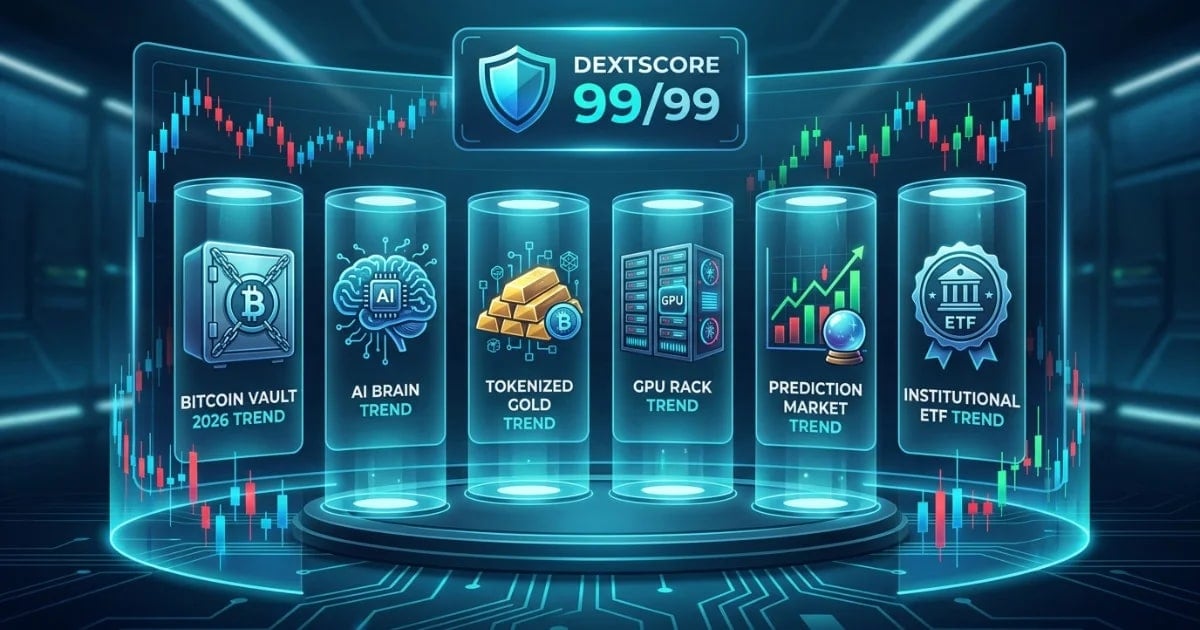
The speculation era is ending. We analyze the six pillars of the 2026 market, including AI agents, DePIN revenue engines, and the institutionalization of crypto ETFs.
Six Major Trends Shaping the Market
Major trends shaping the landscape indicate that, as of May 4, 2026, the cryptocurrency market has transitioned from the "Speculation Era" into a phase of Operational Reality. The volatile "Wild West" days have been replaced by a sophisticated, institutional-grade financial ecosystem. While retail interest remains a vital cultural driver, the structural trends of 2026 are defined by utility, revenue-generation, and the seamless integration of blockchain into global infrastructure.
Current Reality: Institutional inflows into crypto ETPs (Exchange Traded Products) are projected to surpass $400 billion by year-end.
Significance: This trend has effectively capped the extreme volatility of previous years, turning blue-chip assets into mature macro-assets with realized volatility stabilizing around 40-45%.
The "Invisible" Rail: Major payment networks (Visa, Mastercard) are now routing over 10% of cross-border settlements via stablecoins, though the user experience remains identical to traditional banking.
2. Tokenized RWAs: The $24 Billion Liquidity Bridge
The tokenization of Real-World Assets (RWA) has emerged as the primary bridge between traditional finance (TradFi) and DeFi. As of early 2026, the sector has surpassed $24 billion in total value (excluding stablecoins).
Diversification: While US Treasuries remain the largest segment (reaching over $10 billion), the market has expanded into tokenized equities, private loans, and real estate.
Key Players: Platforms like Ondo and xStocks have normalized on-chain stock trading, with tokenized equities officially surpassing the $1 billion mark in March 2026.
The Goal: Blockchain is no longer seen as a replacement for TradFi but as an extension that provides 24/7 liquidity and fractional ownership for previously illiquid assets.
3. AI Agents & "AgentFi": The Machine Economy
Major trends at the intersection of AI and blockchain have moved beyond mere narrative. In 2026, Autonomous AI Agents are the new "power users" of the decentralized web.
Autonomous Settlement: Protocols like x402 now allow AI agents to pay for services (API keys, compute, data) autonomously using stablecoins.
Agentic DeFi: AI agents now manage approximately 20% of yield-farming volume, utilizing Intent-Centric Design to execute complex multi-chain strategies in milliseconds.
Market Growth: Weekly volume for AI-to-AI transactions is expected to exceed $100 million this year, a 10x increase over 2025 levels.
4. DePIN: The Real-World Revenue Engine
Decentralized Physical Infrastructure Networks (DePIN) have become the cleanest way to play the intersection of AI and crypto without relying on "meme" volatility.
Revenue Generation: Leading DePIN networks such as Render (GPU compute) and Hivemapper (mapping), are generating tens of millions in monthly on-chain revenue from real customers.
Market Cap: The sector currently sits near a $10 billion market cap, recently surpassing the oracles sector in total value.
The Flywheel: By turning idle resources (GPU power, dashcam data, storage) into coordinated networks, DePIN provides services that are often cheaper and more accessible than centralized legacy providers.
5. BTCFi: Bitcoin's Programmable Awakening
Bitcoin has successfully shed its "Passive HODL" reputation. In 2026, BTCFi (Bitcoin DeFi) is a thriving ecosystem of Layer-2s and staking protocols.
Staking Maturity: Protocols like Babylon have attracted over $3 billion in staked BTC, allowing holders to earn yield while securing other Proof-of-Stake chains.
L2 Dominance: Layers like Stacks and Bitlayer are facilitating a wave of Bitcoin-native lending and borrowing, mirroring the early growth seen in Ethereum's DeFi summer but with the security of the Bitcoin base layer.
6. Prediction Markets: The New Hedging Standard
Prediction markets (like Polymarket and Kalshi) have matured into essential financial products for hedging against global uncertainty.
Volume Explosion: Weekly volume has grown to nearly $5 billion, with forecasts suggesting a move toward $25 billion per week as non-sports categories (economics, society, and culture) take center stage.
Truth Engine: In 2026, these markets are frequently cited by traditional media as the most accurate "Truth Engines" for geopolitical and economic outcomes, outperforming traditional polling and punditry.
Contract Integrity: Using the DEXTscore to ensure the asset has revoked mint/freeze authorities.
Liquidity Depth: Ensuring that RWA or DePIN tokens have sufficient depth to handle institutional-sized trades.
Audit Status: Checking for verified on-chain audits to protect against "honeypot" traps.
To monitor the DeFi market in an agile and secure way in real-time and trade the 2026 trends with the help of the best crypto tools, you can access DEXTools here.
Disclaimer: This article is for informational purposes only and does not constitute investment advice, financial advice, trading advice, or any other kind of advice. DEXTools does not recommend buying, selling, or holding any cryptocurrency or token. Users should conduct their own research and consult with a qualified financial advisor before making any investment decisions. Cryptocurrency investments are volatile and high-risk. DEXTools is not responsible for any losses incurred.