How to Buy Litecoin (LTC): Beginner Guide 2026
— By Tony Rabbit in Tutorials
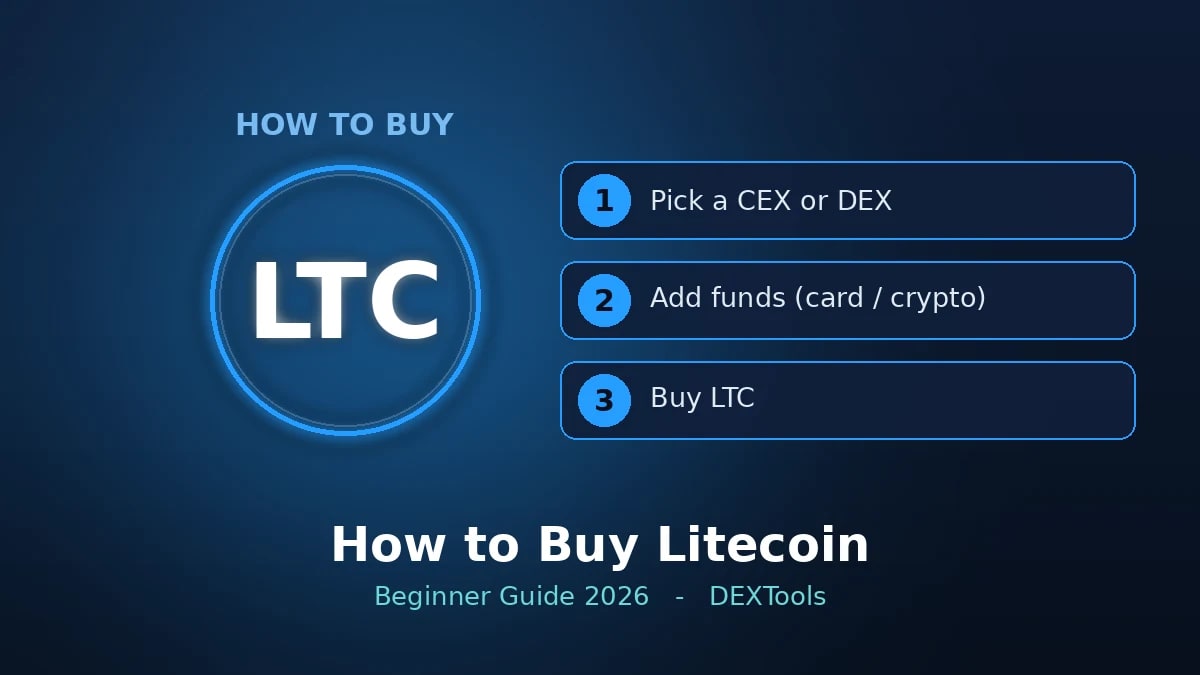
Learn how to buy Litecoin (LTC) with this beginner's guide. Discover exchanges, storage, and key considerations for purchasing LTC.
Are you wondering how to buy Litecoin (LTC)? You've come to the right place. Litecoin is one of the oldest and most established cryptocurrencies, often referred to as 'digital silver' to Bitcoin's 'digital gold.' Acquiring LTC is straightforward and can be done through various platforms, primarily centralized exchanges (CEXs) or decentralized exchanges (DEXs). Before you dive in, remember to keep an eye on the live LTC price above to inform your purchasing decisions.
What Is Litecoin (LTC)?
Litecoin (LTC) is a peer-to-peer cryptocurrency and open-source software project released under the MIT/X11 license. Created by Charlie Lee, a former Google engineer, in 2011, Litecoin was designed to be a 'lighter' version of Bitcoin, offering faster transaction confirmation times and a different hashing algorithm (Scrypt instead of SHA-256). Its primary goal was to provide a robust, decentralized digital currency suitable for everyday transactions.
Key characteristics of Litecoin include:
- Faster Transactions: Litecoin aims for a block generation time of 2.5 minutes, compared to Bitcoin's 10 minutes. This allows for quicker transaction confirmations.
- Larger Supply: Litecoin has a maximum supply of 84 million coins, four times that of Bitcoin's 21 million. This larger supply contributes to its 'digital silver' analogy.
- Scrypt Hashing Algorithm: Unlike Bitcoin's SHA-256, Litecoin uses Scrypt, which was initially designed to be more accessible to ordinary users with CPU/GPU mining, although ASIC mining now dominates.
- Segregated Witness (SegWit): Litecoin was an early adopter of SegWit, a protocol upgrade that improves transaction capacity and paves the way for second-layer solutions like the Lightning Network.
- Lightning Network: Litecoin has also implemented the Lightning Network, a layer-2 scaling solution designed to enable fast, low-cost off-chain transactions.
These features make Litecoin a popular choice for those looking for a digital currency with quick settlement times and a long-standing history in the crypto space.
How to Buy Litecoin: Step by Step
Learning how to buy Litecoin is a simple process, whether you choose a centralized or decentralized exchange. Here's a general step-by-step guide:
- Step. Pick a Reputable Exchange or Wallet: Your first decision is where you want to buy LTC. Centralized exchanges like Binance, Coinbase, or Kraken are popular for beginners due to their user-friendly interfaces and robust security features. Alternatively, if you prefer a decentralized approach, you'll need a self-custody wallet compatible with a DEX.
- Step. Create an Account or Connect a Self-Custody Wallet: If using a CEX, you'll need to sign up for an account, which typically involves providing an email address, creating a password, and completing a Know Your Customer (KYC) verification process. This usually requires submitting identification documents. If you're using a DEX, you'll connect your existing self-custody wallet (e.g., MetaMask, Trust Wallet) directly to the platform.
- Step. Deposit Funds: Once your account is set up (or wallet connected), you'll need to deposit funds. CEXs usually support various fiat payment methods such as bank transfers, debit/credit cards, or even third-party payment processors. Some also allow crypto deposits. For DEXs, you'll need to have existing cryptocurrency (like ETH or stablecoins) in your connected wallet to swap for LTC.
- Step. Buy LTC: Navigate to the trading section of your chosen platform. On a CEX, you'll typically find a 'Buy Crypto' or 'Trade' option. Search for LTC and select the amount you wish to purchase. You can usually buy LTC with fiat currency or by swapping another cryptocurrency. On a DEX, you'll use the 'Swap' function, selecting the cryptocurrency you want to exchange and LTC as the receiving asset.
- Step. Withdraw to Your Own Wallet (Optional but Recommended): While exchanges offer custodial wallets, for long-term holding and enhanced security, it's generally recommended to withdraw your LTC to a self-custody wallet that you control. This could be a software wallet on your phone or computer, or ideally, a hardware wallet for maximum security.
Where to Buy Litecoin
Litecoin is widely available across numerous platforms. Your choice will depend on your preference for centralized versus decentralized services, ease of use, fees, and available payment methods.
Centralized Exchanges (CEXs)
These are the most common entry points for beginners. They act as intermediaries, holding your funds and facilitating trades. They offer a user-friendly experience, often with direct fiat-to-crypto purchases.
- Binance: One of the largest exchanges globally, offering a vast selection of cryptocurrencies, competitive fees, and various trading options.
- Coinbase: Known for its user-friendly interface, making it ideal for beginners. It offers straightforward buying and selling of major cryptocurrencies like LTC.
- Kraken: A long-standing and reputable exchange known for its robust security, advanced trading features, and competitive fees.
- Gemini: Offers a strong focus on security and regulatory compliance, with a user-friendly platform.
- KuCoin: Popular for its wide range of altcoins and advanced trading features.
Decentralized Exchanges (DEXs)
DEXs allow you to trade cryptocurrencies directly from your self-custody wallet, without needing to deposit funds with a third party. They offer greater privacy and control over your assets but can be more complex for new users.
- Uniswap (via wrapped LTC): While Litecoin isn't natively an ERC-20 token, it can be traded on DEXs like Uniswap by using wrapped versions (e.g., wLTC on Ethereum or other chains). This involves bridging your native LTC to another blockchain.
- Pancakeswap (via wrapped LTC on BNB Smart Chain): Similar to Uniswap, you can trade wrapped LTC on the BNB Smart Chain ecosystem.
- Specific DEXs for LTC: Some smaller, specialized DEXs might offer direct LTC trading, but these are less common than general-purpose DEXs for ERC-20 tokens. Always verify the legitimacy of any lesser-known DEX.
How to Buy Litecoin on a DEX
Buying Litecoin on a DEX typically involves a few more steps than a CEX, especially if you're dealing with wrapped versions of LTC. Here's a general outline:
- Step. Set Up and Fund a Compatible Self-Custody Wallet: You'll need a wallet like MetaMask, Trust Wallet, or similar, compatible with the blockchain where the DEX operates (e.g., Ethereum for Uniswap, BNB Smart Chain for PancakeSwap). Fund this wallet with the cryptocurrency you intend to swap (e.g., ETH, BNB, USDT).
- Step. Bridge Your Native LTC (if necessary): If you want to trade native LTC on a DEX that primarily handles wrapped tokens, you'll first need to use a bridge service to convert your native LTC into a wrapped version (e.g., wLTC) on the target blockchain. This step adds complexity and potential fees.
- Step. Connect Your Wallet to the DEX: Go to the DEX's website and click the 'Connect Wallet' button. Select your wallet provider and approve the connection.
- Step. Navigate to the Swap Interface: Find the 'Swap' or 'Exchange' section on the DEX.
- Step. Select Your Tokens: Choose the cryptocurrency you want to swap from (e.g., ETH, USDT, BNB) and select the wrapped LTC token as the asset you want to receive.
- Step. Verify the Token Contract Address: This is crucial. Always double-check that you are swapping for the correct wrapped LTC token. You can often find the official contract address on reliable crypto data sites or by searching for the token on DEXTools. Scammers often create fake tokens with similar names.
- Step. Enter the Amount and Confirm the Swap: Input the amount you wish to swap. The DEX will show you the estimated amount of wrapped LTC you'll receive. Review the transaction details, including any fees (gas fees), and confirm the swap in your wallet.
- Step. Verify the Transaction: Once the transaction is confirmed on the blockchain, your wrapped LTC will appear in your connected wallet.
How Much LTC Should You Buy?
The decision of how much LTC to buy is entirely personal and depends on your financial situation, investment goals, and risk tolerance. There's no single 'right' answer. Here are some considerations:
- Budget: Only invest what you can afford to lose. Cryptocurrency markets are volatile, and prices can fluctuate significantly.
- Investment Goals: Are you looking for a short-term trade or a long-term hold? Your strategy might influence the amount you purchase.
- Dollar-Cost Averaging (DCA): Many investors use DCA, which involves investing a fixed amount of money at regular intervals (e.g., weekly or monthly), regardless of the price. This strategy helps to average out your purchase price over time and reduces the impact of market volatility.
- Market Conditions: While we cannot offer financial advice, observing the live LTC price above can help you understand current market trends.
How to Store Litecoin Safely
Once you've learned how to buy Litecoin, securing your investment is paramount. Leaving large amounts of cryptocurrency on an exchange, while convenient, carries risks. Here are the primary ways to store LTC safely:
- Hardware Wallets (Cold Storage): These are physical devices that store your private keys offline, making them highly resistant to online hacks. Examples include Ledger and Trezor. They are considered the most secure option for long-term storage.
- Software Wallets (Hot Storage): These are applications that run on your computer or smartphone. They are convenient for frequent transactions but are connected to the internet, making them more susceptible to online threats than hardware wallets. Examples include Exodus, Electrum, and Atomic Wallet.
- Paper Wallets: A less common method where your public and private keys are printed on paper. While offline, they require careful handling and secure physical storage.
- Exchange Wallets (Custodial): When you buy LTC on a CEX, the exchange holds your private keys. While convenient, this means you don't have full control over your assets. It's generally recommended to move significant holdings to a self-custody wallet.
Regardless of the wallet type, always back up your seed phrase (a series of words that can restore your wallet). Keep this seed phrase in a secure, offline location, as anyone with access to it can access your funds.
Fees and Things to Watch
When you buy Litecoin, you'll encounter various fees and important considerations:
- Transaction Fees: These are paid to the Litecoin network miners to process and confirm your transaction. They are typically very low for LTC.
- Exchange Fees: CEXs charge fees for buying, selling, and sometimes withdrawing crypto. These can vary significantly between platforms. DEXs charge 'gas fees' to the underlying blockchain network (e.g., Ethereum gas fees for wLTC swaps).
- Withdrawal Fees: Exchanges may charge a small fee when you withdraw LTC to an external wallet.
- Payment Method Fees: Using credit cards or certain payment processors on CEXs can incur higher fees compared to bank transfers.
By understanding how to buy Litecoin, where to store it, and what to watch out for, you can confidently navigate the process and become a part of the Litecoin community.
Frequently Asked Questions
How do I buy Litecoin?
You can buy Litecoin (LTC) on centralized exchanges (CEXs) like Binance, Coinbase, or Kraken, or on decentralized exchanges (DEXs) by swapping other cryptocurrencies, often using wrapped LTC versions.
Where can I buy LTC?
LTC is available on major centralized exchanges such as Binance, Coinbase, Kraken, Gemini, and KuCoin. You can also acquire wrapped LTC on DEXs like Uniswap or PancakeSwap by connecting a self-custody wallet.
What is the cheapest way to buy Litecoin?
The cheapest way to buy Litecoin often involves using bank transfers on centralized exchanges, as credit card purchases usually incur higher fees. Comparing fees across different exchanges is recommended.
Is Litecoin a good investment?
DEXTools does not provide financial advice. The decision to invest in Litecoin, like any cryptocurrency, depends on your personal financial situation, risk tolerance, and investment goals. It's important to conduct your own research and consider market volatility.
How do I store Litecoin safely?
For maximum security, store your Litecoin in a hardware wallet (e.g., Ledger, Trezor). Software wallets (e.g., Exodus, Electrum) offer good security for smaller amounts or frequent use. Always back up your seed phrase securely.
What are the fees for buying Litecoin?
Fees for buying Litecoin can include exchange trading fees, network transaction fees (paid to miners), and withdrawal fees if you move your LTC to an external wallet. Payment method fees may also apply on CEXs.
Can I buy Litecoin with a credit card?
Yes, most centralized exchanges allow you to buy Litecoin using a credit or debit card, though these transactions often come with higher processing fees compared to bank transfers.
What is the difference between Bitcoin and Litecoin?
Litecoin (LTC) was created as a 'lighter' version of Bitcoin (BTC), featuring faster transaction times (2.5-minute blocks vs. 10 minutes), a different hashing algorithm (Scrypt vs. SHA-256), and a larger total supply (84 million LTC vs. 21 million BTC).