North Korea Behind 76% of 2026 Crypto Hack Value, TRM Labs Says
— By Tony Rabbit in Markets

TRM Labs says North Korea-linked hackers accounted for roughly 76% of all crypto value stolen in 2026, achieved with just two major attacks.
Blockchain intelligence firm TRM Labs has reported that North Korea-linked hackers accounted for about 76% of all crypto value stolen in 2026, a figure the firm says was reached with just two major attacks. The finding underscores how a handful of large, well-planned operations can dominate an entire year of losses, even as hundreds of smaller incidents continue to chip away at protocols and users across the market.
The context for that headline number is sobering. Estimates point to roughly $2.1 billion in total crypto losses across many incidents in 2026, and groups tied to the Democratic People's Republic of Korea (DPRK) have repeatedly targeted large protocols. The Drift Protocol exploit, which drained around $285 million, was suspected to be DPRK-linked. When attacks of that scale succeed, they reshape the annual statistics on their own.
What TRM Labs Found
According to TRM Labs, North Korea-linked actors were responsible for approximately 76% of the value stolen in crypto during 2026. The striking detail is the efficiency: that share came from only two major attacks, rather than a steady drip of smaller thefts. In other words, a tiny number of breaches did the overwhelming majority of the financial damage.
This pattern is not new for the firms that track illicit on-chain activity, but the concentration in 2026 stands out. It tells us that the most dangerous threat to large protocols is not necessarily the volume of attempts, but the sophistication and resourcing behind the few attacks that actually land. A year can be relatively quiet in terms of headline-grabbing incidents and still post enormous losses if even one or two operations succeed against high-value targets.
For analysts, the takeaway is that attribution and prevention have to focus on the upper tail of the distribution. Stopping the next nine-figure breach matters far more to the annual figures than blocking a thousand low-value phishing attempts, even though both deserve attention.
Why a Few Attacks Can Dominate the Year
It can seem strange that two incidents could outweigh everything else combined. The math is simpler than it looks. Crypto losses are heavily skewed: most exploits steal modest amounts, but a small set of breaches hit treasuries, bridges, or large protocols that hold enormous sums in a single place. When one of those goes wrong, the loss is measured in hundreds of millions rather than thousands.
Because the distribution is so lopsided, the yearly total is essentially decided by the biggest events. A breach worth $285 million, like the one suspected at Drift Protocol, can outweigh thousands of small phishing scams put together. That is why analysts focus so heavily on the largest incidents when they assess the state of crypto security.
State-Linked Hacking Is a Distinct Threat
There is an important difference between opportunistic exploits and state-linked operations. Opportunistic attackers tend to scan widely for easy targets, exploit a known bug, and grab whatever they can before the window closes. They are often constrained by time, skill, and resources.
State-linked groups, such as the Lazarus Group associated with North Korea, operate differently. They are well-resourced, patient, and able to invest in long reconnaissance, custom tooling, and social engineering campaigns aimed at specific employees or systems. They can spend weeks or months studying a target before acting. That combination of funding and persistence makes them a separate category of threat, and it helps explain why the attacks attributed to them are so large.
How the Stolen Funds Move
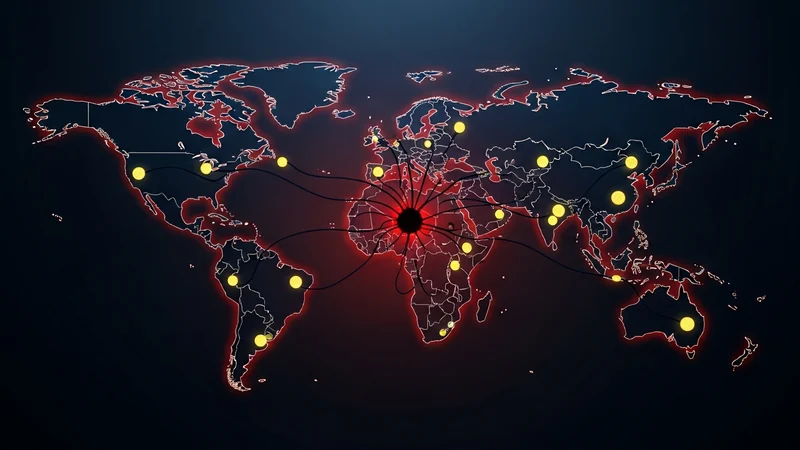
Once funds are taken, the next challenge for these groups is laundering them. State-linked actors typically move stolen assets across multiple chains, using mixers and complex hop patterns designed to obscure the trail. The goal is to break the link between the original theft and the eventual cash-out point.
This cross-chain movement is exactly what blockchain intelligence firms like TRM Labs work to untangle. By tracing transactions through bridges, swaps, and obfuscation services, investigators can sometimes reconstruct the path of stolen funds and attribute an attack to a particular group, even when the attackers try hard to stay hidden. Repeated, recognizable laundering patterns are often part of how analysts connect a new breach to an established group rather than to a one-off attacker.
The laundering stage also matters because it is where some funds can occasionally be frozen or recovered. The more hops and chains involved, the harder that becomes, which is why speed and coordination between exchanges, analytics firms, and protocols can make a meaningful difference after a large theft.

What This Means for Protocols and Users
The concentration of losses in a few large attacks carries a clear lesson for builders. Audits matter, but they are only one layer. Many of the biggest breaches involve operational weaknesses, such as compromised keys, social engineering, or insider access, rather than a single overlooked line of code. Strong operational security, careful access controls, and ongoing monitoring are as important as the code review itself.
For everyday users, the takeaway is caution rather than alarm. Treating wallet keys with care, being skeptical of unexpected messages and links, and understanding that even well-known protocols can be targeted are all reasonable habits. Tools that help users research tokens and on-chain activity, including platforms like DEXTools, can support more informed decisions, though no tool removes risk entirely. None of this is financial advice, and there are no shortcuts to perfect safety.
What to Watch
The figure from TRM Labs is a snapshot of a year defined by a small number of outsized events. The questions going forward are whether protocols can harden the operational and human layers that these attacks exploit, and whether investigators can keep pace as laundering techniques grow more complex. With roughly $2.1 billion in total losses already attributed across 2026 incidents, the pressure on both defenders and on-chain analysts is unlikely to ease soon.
For now, the main message is straightforward. The crypto sector faces a well-resourced, state-linked adversary that does not need many successes to do serious damage. Watching how the largest protocols respond, and how quickly the industry tightens its security culture, will say a great deal about how 2027 unfolds.