What Is ai16z (ElizaOS)? AI Agents Framework on Solana Guide 2026
— By Whatsertrade in Tutorials
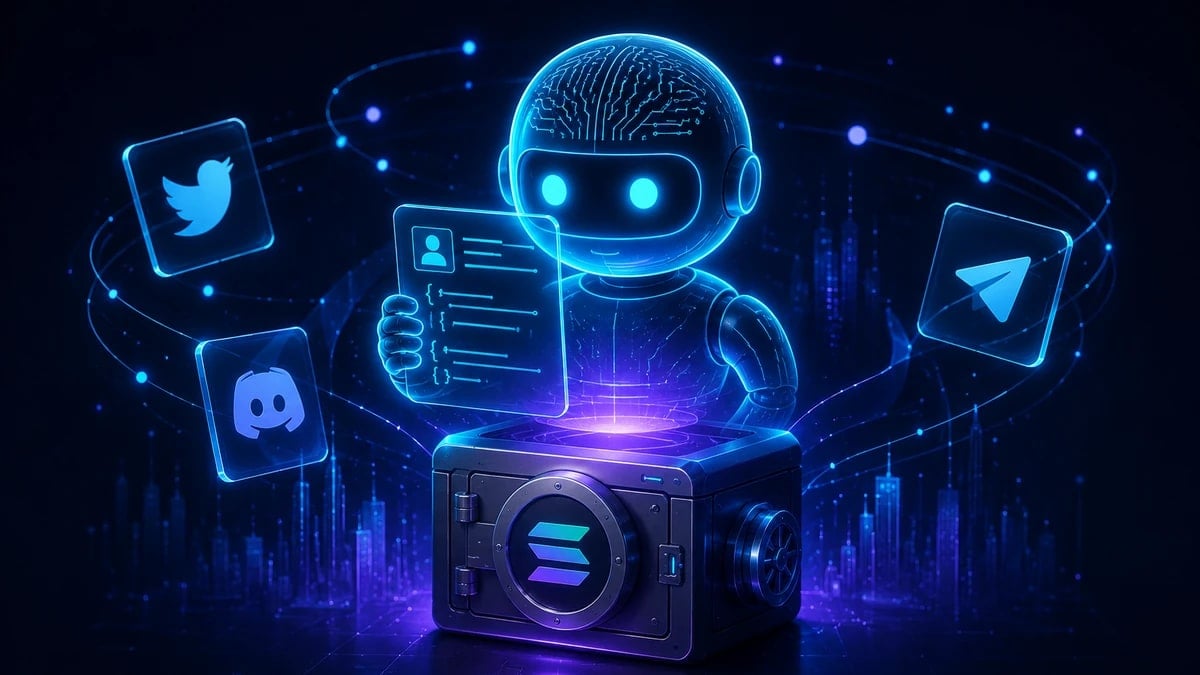
Complete 2026 guide to ai16z and ElizaOS, the open source TypeScript framework powering 50000+ autonomous AI agents on Solana. Learn the rebrand story, token migration, character files, plugins, DAO treasury, and how it compares to Virtuals Protocol.
What Is ai16z (ElizaOS)? The AI Agents Framework Powering Solana DAOs in 2026
If you traded crypto at any point during late 2024 or 2025, you watched a strange new category eat the timeline. Suddenly tokens were not just bets on a chain or an exchange. They were bets on autonomous software characters posting on X, talking back in Discord, swinging trades on Solana, and in some cases voting on which startups should receive capital. The category had a name that confused half the room and amused the other half: AI agents. And at the center of the story sat a project that began as a joke about a famous venture capital firm and ended up running infrastructure used by tens of thousands of agents across the industry.
That project is ai16z, which in early 2025 rebranded to ElizaOS. The name change reflected a deeper shift. What began as a meme about Marc Andreessen and his firm a16z grew into the most adopted open source framework for autonomous on chain agents, with a token, a DAO, a treasury, and a growing roster of teams shipping characters powered by its code. By 2026 the framework powers more than fifty thousand agents and underpins projects with a combined valuation north of twenty billion dollars at peak. It is one of the few crypto narratives that produced both rampant speculation and shippable software.
This guide explains what ai16z and ElizaOS actually are, how the framework works, why the rebrand happened, who is behind it, and what the differences are between this Solana native ecosystem and rivals like Virtuals Protocol on Base. We will walk through character files, plugin architecture, retrieval augmented generation, tokenomics, the DAO that votes on investments, and the honest risks that come with treating autonomous software as both a tool and a financial asset. If you are a developer thinking about shipping an agent, a trader trying to understand the token, or a curious observer trying to make sense of the noise, this is the long version.
FEATURED ANSWER
ai16z, now branded as ElizaOS, is an open source TypeScript framework for building autonomous AI agents that operate on Solana and across multiple platforms including X, Discord, Telegram, Farcaster, and the web. Launched in October 2024 as a parody DAO referencing the venture firm a16z, it evolved into the largest agent framework in crypto, rebranding to ElizaOS on January 28 2025 and migrating its token from $ai16z to $ELIZAOS on February 4 2025. The framework provides character files, plugin architecture, retrieval augmented generation, and secure key management, allowing developers to deploy agents that post, trade, vote, and reason on chain. The associated DAO operates an AI guided venture fund, the first of its kind.
What Is ai16z and ElizaOS in Plain English
At the simplest level, ElizaOS is software you install. It is a TypeScript codebase, freely available on GitHub, that lets you spin up an autonomous character with a name, a personality, a set of beliefs, a memory, and the ability to talk to people and execute on chain transactions. The framework handles the boring infrastructure, things like connecting to language models, managing API keys for X and Discord, remembering past conversations, and signing Solana transactions, so that a developer can focus on what the agent should actually do.
ai16z is the original brand name and also the name of the DAO that funds the project. In late 2024 ai16z was a joke and a serious experiment at the same time. The joke was that the project replicated the structure of Andreessen Horowitz, a famous Silicon Valley venture capital firm known by its abbreviated handle a16z. The serious part was that the DAO actually wanted to do venture investing, just with an AI agent making calls instead of human partners. The native asset on Solana, $ai16z, traded as both a meme and a working governance token. After the rebrand the project kept the DAO under the ai16z label and moved the framework branding to ElizaOS, named after the legendary chatbot from the 1960s.
If you have read our explainer on AI agents in crypto, you already know the high level pitch. Autonomous agents combine a large language model brain with tools, memory, and the ability to act in the world. ElizaOS is one of the most popular implementations of that pattern on a public blockchain. To get the full picture you should also be comfortable with the basics of how Solana works and what a DAO actually does, since both concepts sit at the heart of this project.
The Parody That Became a Movement
The early ai16z story is one of those crypto moments where a joke escapes containment. In October 2024 a developer who goes by Shaw launched a community on X around a deceptively simple idea: what if we built an AI agent that played the role of Marc Andreessen, and what if it ran a venture fund denominated in Solana? The name ai16z was a wink. Replace the human investor with an AI, push the firm onto a public chain, and let the community see every move in real time. The first version of the agent posted irreverent takes, shared opinions on early stage projects, and occasionally pretended to be the human Marc himself, which prompted the real Andreessen to publicly distance the firm from the project.
The launch coincided with a broader wave of interest in AI agents that began in late 2024. A project on Base called Truth Terminal had captured attention earlier that year by inspiring the GOAT memecoin saga. Virtuals Protocol on Base was already gaining traction as a launchpad for agent tokens. On Solana the field was less crowded, and ai16z arrived with a working product, a clear identity, and a charismatic founder who built in public. Within weeks the market capitalization of $ai16z had climbed into the hundreds of millions of dollars and the framework, originally called Eliza, was the most starred AI agent repository on GitHub.
What made ai16z different from a typical memecoin was that the underlying software was useful. Other teams started building on Eliza for reasons that had nothing to do with the meme. They wanted the agent infrastructure: the way it handled memory, the way it plugged into multiple social platforms, the way it could sign transactions on a wallet without exposing keys. The token rode the rising adoption of the framework, and the framework rode the cultural energy of the token. That feedback loop is rare and powerful.

Shaw and the Founding Story
Shaw is the pseudonymous developer credited as the founder of Eliza and ai16z. He is open about being a real person who simply prefers to operate under a handle, and over the course of 2024 and 2025 he became one of the more recognizable voices in the AI agent space on X. Shaw has a background in software engineering and game development, and he has talked openly about earlier attempts at building agent based systems before everything came together with the Eliza codebase.
His public posture has been to ship constantly, document loudly, and treat the project as a community effort rather than a personal company. Decisions on major roadmap items, including the rebrand and the token migration, were debated in the open on the DAO forum and on X. That visibility has helped the project survive cycles where competing frameworks burned out under pressure. It has also created risk, since a single human voice can shift sentiment around an asset that thousands of people hold. The team around Shaw has expanded significantly over time, with core contributors covering plugin development, security review, model integrations, and DAO operations.
Timeline of Key ElizaOS Milestones
Shaw launches the ai16z DAO on Solana with a working agent prototype. Initial token distribution via DAOs.fun. Community forms around the parody concept.
Eliza framework crosses 5000 GitHub stars. First wave of community agents launch on Solana referencing the framework. Token market cap pushes past 1B at peak.
Plugin ecosystem expands rapidly. Twitter, Discord, Telegram, Farcaster, EVM and Solana plugins all reach production quality. AI Marketplace of Trust concept proposed.
Official rebrand from ai16z to ElizaOS announced. Framework now positioned as a neutral developer tool. DAO retains the ai16z identity for governance.
Token migration from $ai16z to $ELIZAOS executes on Solana. One to one swap. Old contract paused, new ticker becomes the canonical governance and economic asset.
Eliza V2 launches with major improvements to memory, tool calling, and multi agent orchestration. Major institutional pilots begin testing the framework.
More than 50000 agents have been built on ElizaOS. Combined ecosystem value exceeds 20B at peaks. Framework supports advanced multi modal agents, vision, voice, and on chain action graphs.
How the Eliza Framework Architecture Works
Under the hood ElizaOS is a TypeScript runtime that sits between a language model and the outside world. When you start an agent, the runtime loads three things: a character file that describes who the agent is, a set of plugins that give the agent tools to act, and a memory store that lets the agent remember conversations and facts across sessions. From that base every action the agent takes flows through a clean loop: receive input, consult memory, decide on an action, possibly use a tool, generate a response, and update memory.
The language model itself is pluggable. You can point ElizaOS at OpenAI, at Anthropic, at a locally hosted Llama model, at Grok, or at any provider that exposes a compatible API. This matters more than it sounds. By treating the model as a swappable component, the framework avoids being captured by any single AI provider and lets developers optimize cost and quality independently. A trading agent that needs sharp reasoning might run on a flagship Claude or GPT model. A simple social poster might run on a cheap open weights model. The character file stays the same.
The Three Step Agent Creation Flow
Define the Character
Write a JSON character file describing the agent's name, bio, lore, style, sample conversations, topics of interest, and behavior guidelines. This file is the agent's soul.
Install Plugins
Add the plugins your agent needs: Twitter for posting, Discord for chat, Solana for trades, EVM for cross chain, plus any custom plugin you write for your use case.
Deploy and Iterate
Run the agent locally for testing, then ship to a server or container in production. Monitor its conversations, tune the character file, and add or remove plugins over time.
In practice a developer with familiar JavaScript skills can have a basic agent online and chatting in Discord within an hour, and online posting and replying on X within a day. Adding on chain actions, like buying tokens or voting in a DAO, takes longer because it involves wallet setup and risk controls, but the framework provides the primitives. That accessibility, more than any single technical achievement, is why the agent count grew so quickly.
Character Files: Defining Agent Personality
The character file is where the soul of an Eliza agent lives. It is a JSON document with a clear schema and it is the single most important artifact a developer creates when shipping an agent. A character file specifies the agent's name and a short bio describing who they are. It includes lore, which are background facts the agent treats as canonical truths about itself, like where it grew up, what it believes about markets, who its allies are. It defines style across three contexts: general style, style when chatting in private conversations, and style when posting publicly on platforms like X.
Beyond identity, the character file describes message examples that the agent should treat as templates, post examples that demonstrate how to write public content, topics the agent is interested in talking about, and adjectives that describe its personality. Together these fields produce a remarkably coherent character. A well written character file makes an agent that feels consistent across thousands of interactions, even though every individual response is freshly generated. A poorly written character file produces an agent that drifts, repeats, or stays bland.
Because character files are plain JSON they are easy to share, fork, and version. Teams routinely publish open source character files for their agents, and the community has built tooling around character file generation, evaluation, and revision. Some of the most interesting work in the ElizaOS ecosystem is happening at the character file layer: people are figuring out how to encode tone, voice, and culture into a structured document, and how to give an autonomous program a personality that holds up under pressure from real users.
The Plugin Ecosystem
Plugins are how Eliza agents touch the outside world. The core framework ships with a growing roster of official plugins covering the platforms developers want immediately: a Twitter and X plugin for posting and replying, a Discord plugin for bot operations, a Telegram plugin for group chat, a Farcaster plugin for the decentralized social network, and a generic web plugin that lets the agent run as a chat widget on a website.
On the blockchain side the Solana plugin gives agents the ability to read balances, send tokens, sign messages, and interact with programs. The EVM plugin extends similar capabilities to Ethereum, Base, and other EVM chains, which is important because not every interesting protocol lives on Solana. There are plugins for image generation, voice synthesis, and video, opening the door to multi modal agents that can produce richer content than text alone. There are plugins for market data feeds, news ingestion, and analytics. Many developers write custom plugins for niche use cases, and the framework makes it straightforward to publish those as npm packages.
A key design choice is that plugins are explicit and opt in. An agent only does what its plugins allow. If you do not install the Solana plugin, the agent cannot accidentally drain a wallet. If you do not install the Twitter plugin, the agent will not post anything publicly. This containment model maps to how most teams want to ship: start narrow, audit each plugin, and expand capability deliberately. For traders following the space, our guide on using DexTools is a good companion since many agents post token signals and you will want to verify them on chain before acting.

Retrieval Augmented Generation Inside Eliza
One of the most consequential design choices in ElizaOS is that retrieval augmented generation, usually abbreviated RAG, is built directly into the runtime. RAG is a technique that lets a language model consult an external knowledge base before producing a response. Instead of relying only on what the model was trained on, the agent searches a vector database of documents, pulls the most relevant snippets, and includes them in the prompt the model sees. This is how an agent stays factual about things its base model never learned, and how it stays consistent over long horizons.
Inside Eliza, every interaction is stored, embedded, and indexed. When the agent receives a new message, the runtime automatically retrieves relevant past memories, relevant facts from the character file, and any other documents the developer has loaded into the knowledge base. Those retrieved snippets are appended to the prompt the language model sees, which means the model is reasoning over both fresh input and a curated memory of what matters. Done well, this produces agents that feel like they actually know you, that recall previous conversations, that maintain a consistent view of the world even as the underlying model rotates.
RAG is also the mechanism that lets ElizaOS power domain expert agents. A team building a trading agent can load thousands of pages of strategy notes, on chain history, and risk rules into the agent's knowledge base. A team building a customer support agent can load every page of their documentation. The agent does not need to be retrained. It just needs the right documents indexed in the right vector store, and the runtime handles the rest. This makes Eliza extremely flexible compared with agent systems that bake knowledge into fine tuned models.
ELIZAOS Tokenomics and DAO Treasury
The $ELIZAOS token is the economic and governance asset of the project. It is a Solana SPL token with a fixed supply, originally distributed in October 2024 as $ai16z and migrated one to one to $ELIZAOS on February 4 2025. Holders use the token to vote on DAO proposals, to share in treasury performance, and in some cases to access advanced features in the developer ecosystem. The fixed supply matters because the value of the token depends on demand outpacing dilution, and a hard cap rules out inflation as a long term overhang.
The DAO treasury holds a combination of $ELIZAOS itself, stablecoins, SOL, and positions in projects the DAO has invested in. Investment decisions historically have been made through a mix of community voting and AI agent recommendations, with the agent providing analysis and the community signing off. Treasury performance is published transparently on chain, which is unusual for venture funds and rare for token treasuries. That visibility lets the community see whether the DAO is actually generating returns or simply hoarding the token. For background on the asset layer, our guide to staking in crypto is useful because $ELIZAOS has at times offered staking style yield mechanisms tied to DAO performance.
Like any token in a high beta sector, $ELIZAOS has experienced dramatic price swings. It launched, ran into the multi billion dollar valuation range, fell sharply during broad market drawdowns, recovered as the framework adoption grew, and continues to trade with significant volatility. Anyone considering exposure should treat the token as a venture style bet on the framework and the ecosystem rather than a stable income source. This is a place where the difference between a memecoin and a productive token matters, and our piece on memecoin trading is relevant context for understanding the speculative dynamics.
AI Marketplace of Trust and Agent Reputation
One of the more ambitious ideas to come out of the ai16z DAO is the AI Marketplace of Trust. The pitch is that as agents proliferate, the bottleneck becomes reputation. There will be tens of thousands of agents offering opinions on tokens, posting trade ideas, claiming to know secrets about projects. How do you sort the credible voices from the bots paid to pump? The Marketplace of Trust proposes that agents stake reputation on their calls. Every recommendation becomes a public, scoreable claim. Over time the agents with strong track records accrue trust scores, and capital can flow to follow them.
Implemented well, this looks like a public, on chain version of FinTwit with quantified accuracy. The agent that called the rotation correctly earns a reputation badge. The agent that flooded the timeline with bad calls gets buried. Because the underlying claims are recorded on Solana, the history is tamper resistant and reviewable. This is one of the more interesting bets in the ecosystem because it tries to use the openness of public chains to fix a problem, signal quality, that closed platforms like X have historically handled poorly.
Of course the same system creates new attack surfaces. Agents can game scoring rules. Reputation farms can manufacture history. The DAO has spent significant effort designing scoring functions that are resistant to obvious manipulation, but no design is perfect, and observers should treat early trust scores as guidance rather than gospel. As with any reputation system, the smart move is to combine the on chain score with your own due diligence, which is one reason we wrote a separate guide on how to avoid common scams tied to social signal manipulation.

ElizaOS vs Virtuals Protocol vs Other Frameworks
ElizaOS does not exist in a vacuum. Several other AI agent frameworks compete for developer attention, and the most prominent comparison is with Virtuals Protocol on Base. The two projects differ in important ways, and the choice between them depends on what a developer or investor cares about. Our dedicated guide to Virtuals Protocol goes deeper, but here is the short version.
ElizaOS is fundamentally an open source framework that any developer can fork, run, and customize. Virtuals Protocol is more of a launchpad and platform where agent tokens are launched and traded under a more constrained set of rules. ElizaOS is chain agnostic but Solana native in its primary settlement and token. Virtuals is EVM native, anchored to Base, and integrates more tightly with the Coinbase ecosystem. ElizaOS emphasizes developer freedom; Virtuals emphasizes economic abstraction and easier go to market for non technical creators.
There are other contenders. Frameworks like ARC Agent Rails, OLAS by Autonolas on Ethereum, MyShell on the AI consumer side, and various proprietary stacks at large AI labs all overlap with parts of what ElizaOS does. ElizaOS distinguishes itself by being the most adopted open source option on a high throughput chain. The decision tree is roughly: pick ElizaOS if you want full control of your stack and a Solana settlement, pick Virtuals if you want easier launch economics on Base, and pick something else only if you have a very specific use case the leaders do not serve. The general background on DeFi and Ethereum is useful here because cross chain agents are increasingly common and the economic logic spans both ecosystems.
Risks and Honest Tradeoffs
Like every emergent crypto category, AI agents come with serious risks that deserve honest discussion. The first and most obvious is hallucination. Language models still produce confident, fluent, completely wrong statements. An ElizaOS agent connected to a Solana wallet can act on a hallucinated market call. The framework provides plumbing for risk controls, but the developer is responsible for using it. Production trading agents typically run with strict position limits, allowlists, and human override.
The second risk is security. An agent that holds private keys is a target. Compromising the host that runs the agent compromises the wallet. ElizaOS provides secure key management primitives, but the practical security depends on operational discipline. Many of the early high profile losses in the agent sector involved compromised hosts, leaked environment files, or naive plugin configurations. Treat agent infrastructure with the same seriousness as any production wallet system, and do not run high value agents on workstations.
The third risk is regulatory. Autonomous software making investment recommendations or executing trades sits in a gray area in most jurisdictions. So far regulators have focused on the human teams behind agents rather than the agents themselves, but that may change. The ai16z DAO has been thoughtful about disclaimers and structure, but the broader category is still being defined. The fourth risk is token concentration and governance capture. Like most DAOs, ai16z faces ongoing tension between large holders and grassroots community participation. Voting outcomes can shift sharply with whale activity.
Pros and Cons at a Glance
Pros
- Most adopted open source agent framework with 50000+ agents
- Strong developer ergonomics in TypeScript
- Pluggable language models avoid vendor lock in
- RAG built into the runtime out of the box
- Solana settlement means cheap, fast on chain actions
- Active community and transparent DAO governance
- Multi platform deployment with one character file
- Real ecosystem value with measurable adoption
Cons
- Token volatility can be extreme
- Hallucinations remain a real risk in production
- Security responsibility falls heavily on operators
- Regulatory landscape for autonomous agents is unsettled
- Reputation systems can be gamed
- DAO governance dominated by large holders
- Setup of advanced agents requires real engineering
- Competition from Virtuals and others limits moat
Best Practices for Developers and Investors
If you are a developer thinking about building on ElizaOS, the highest leverage move is to start with a narrow, useful agent rather than a flashy one. Pick a single problem that benefits from automation and conversation, like answering support questions about a protocol, summarizing on chain activity for a community, or running a focused social account. Write the character file carefully. Install only the plugins you actually need. Test extensively against adversarial prompts before connecting any wallet. Once the agent is stable, layer in capability deliberately.
Treat the agent as production software. Use version control for character files, monitor logs and conversations, and have a clear rollback procedure if behavior drifts. If you will manage funds, segregate the agent wallet from any operator wallet, set hard spending caps, and require human signoff for actions above a threshold. Many of the most successful teams using Eliza in 2025 and 2026 ran with what they called a copilot model, where the agent proposed actions and a human signed the larger ones.
If you are an investor looking at the $ELIZAOS token, treat the exposure as a long horizon bet on the framework rather than a quick trade. Diligence the actual adoption numbers, look at GitHub commit history, check who is shipping plugins, and watch DAO proposals. Token price will swing with the broader cycle, but the underlying signal is whether developers continue to ship and whether real products are using the framework. If you are simply curious, the easiest entry point is to pull the Eliza repo, follow the quickstart, and have a working agent in Discord by the end of an afternoon. The community is welcoming to newcomers and the documentation has improved substantially over the past year.
Frequently Asked Questions
What is ai16z (now ElizaOS) in one sentence?
It is an open source TypeScript framework for building autonomous AI agents that operate on Solana and across major social platforms, originally launched as a parody DAO of the venture firm a16z and now the most widely adopted AI agent framework in crypto.
Why did ai16z rebrand to ElizaOS?
The project outgrew its parody origin. As enterprises and serious developers began evaluating the framework, the ai16z brand became confusing and potentially trademark sensitive. ElizaOS reflects the actual product, an operating system for Eliza agents, and signals neutrality while ai16z remains the DAO and community identity.
What happened in the ai16z to ELIZAOS token migration?
On February 4 2025 the project executed a one to one swap from the legacy $ai16z SPL token on Solana to the new $ELIZAOS SPL token. Holders had a window to migrate through official tooling. Exchanges updated tickers in coordination. The old contract was retired and $ELIZAOS became the canonical asset.
Who is Shaw and what is his role?
Shaw is the pseudonymous founder of Eliza and ai16z. He is the lead architect of the original framework, the most visible public voice of the project, and an active participant in DAO governance. He is a real person who prefers a handle and has been working in software and games for years before launching the project.
How does an AI agent built with Eliza actually work?
It loads a character file, installs plugins that give it tools, connects to a language model, and runs a loop: receive input, retrieve relevant memory, decide on action, generate response, update memory. Plugins handle outside world interactions like posting on X or sending Solana transactions.
What is a character file in ElizaOS?
A character file is a JSON document that defines the agent's identity. It includes name, bio, lore, style guidelines, sample messages, topics, and personality adjectives. It is the single most important artifact a developer authors and it determines how coherent the agent feels.
What plugins does ElizaOS support?
Official plugins cover Twitter and X, Discord, Telegram, Farcaster, web chat, Solana, EVM chains, image generation, voice synthesis, and various market data feeds. The community publishes many more, and writing custom plugins is straightforward for TypeScript developers.
How is ElizaOS different from Virtuals Protocol?
ElizaOS is an open source TypeScript framework primarily settled on Solana with maximum developer freedom. Virtuals Protocol is a more curated launchpad and platform on Base with simpler economics for non technical creators. They overlap on the idea of agent tokens but differ on chain, openness, and philosophy.
What is the ai16z DAO and how does it make investment decisions?
The ai16z DAO is the governance and treasury entity behind the project. It uses a mix of community proposals, token weighted voting, and AI agent analysis. Treasury performance is published transparently on chain, an unusual level of openness for a venture style fund.
Can I make money running an ai16z agent?
Some operators monetize agents through paid services, social engagement, content production, trading strategies, or by issuing their own agent token. Returns are highly variable, dependent on the quality of your character and operations, and tied to broader market conditions. There is no passive income button.
What are the main risks with ai16z and ElizaOS?
Hallucination, security of agent wallets, regulatory ambiguity around autonomous trading, governance capture by large holders, and severe token volatility. The framework is solid software but operating real agents at scale requires disciplined risk management.
Where can I get started building an Eliza agent?
Clone the Eliza repository on GitHub, follow the quickstart, and you can have a Discord agent running in under an hour. The documentation covers character file authoring, plugin installation, and deployment. Joining the developer Discord is the fastest way to get help and see what others are building.
Closing Thoughts
ElizaOS, the framework formerly known as ai16z, sits at one of the more interesting intersections in crypto: a real piece of software, a real community, a real token, a real DAO, and a real ongoing debate about what autonomous agents can and should do. The project started as a joke and matured into infrastructure used by tens of thousands of developers, with measurable ecosystem value and tangible product distribution. It is one of the better case studies in how crypto can take a cultural moment and turn it into shippable software.
For developers, ElizaOS is a serious tool worth learning. For investors, $ELIZAOS is a high beta exposure to the future of autonomous on chain agents on Solana, with both significant upside and significant downside. For observers, the project is a useful lens for understanding the next wave of crypto, where the unit of value is not just a token or a protocol but an autonomous, persistent, accountable software character. The agents are coming. Knowing the framework that powers most of them is a reasonable place to start.
Related Guides
- AI Agents on Crypto: Virtuals, ai16z and Agent Economy
- Solana AI Agents: How to Trade the New "Agentic Economy" (2026)
- ai16z vs Virtuals vs ARC: Best AI Agent Platforms 2026
- What Is OP Stack: Complete Optimism L2 Framework Guide (2026)
- What Is Hardhat: Ethereum Development, Testing and Deployment Framework (2026)