What Is a DAO: Complete Guide to Decentralized Autonomous Organizations (2026)
— By Whatsertrade in Tutorials
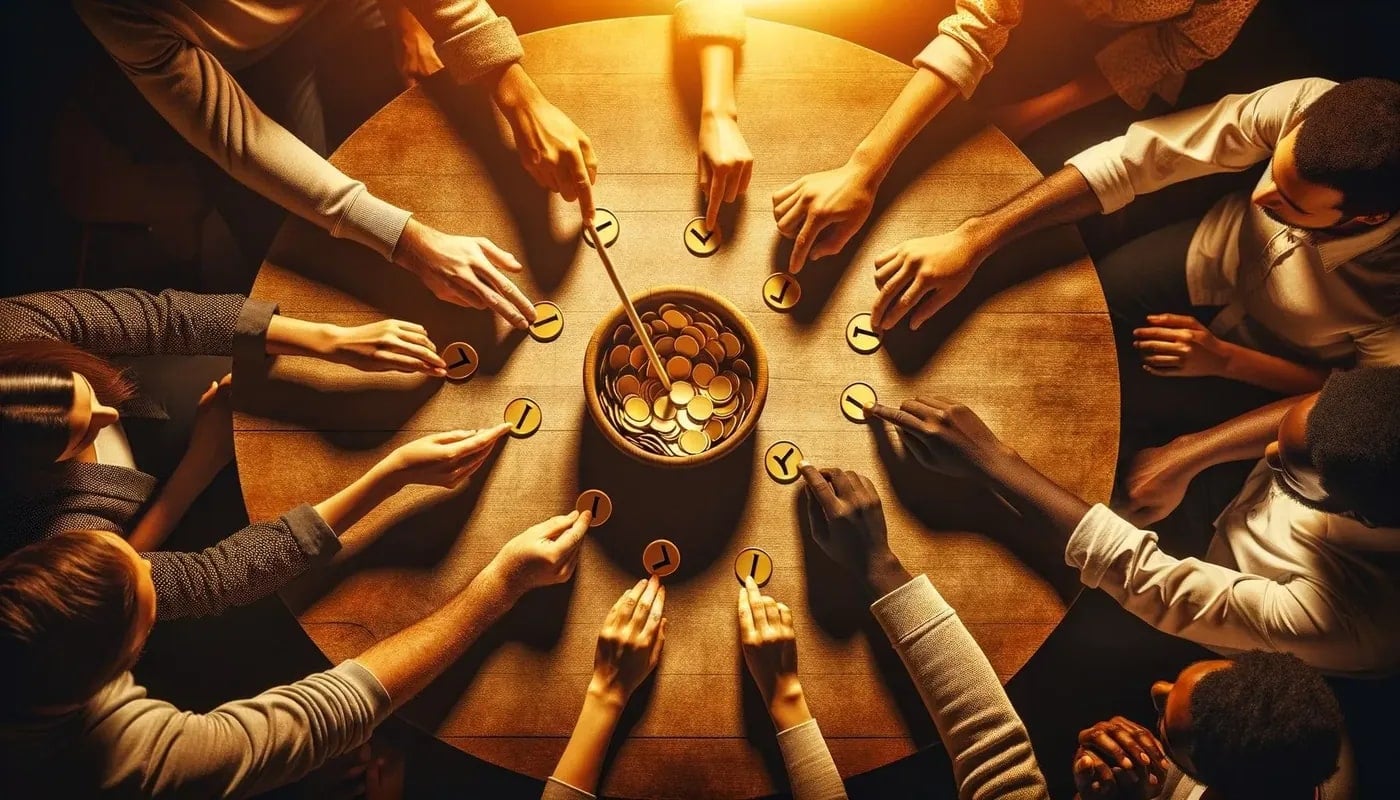
DAOs explained. How decentralized governance works, types of DAOs, how to participate, vote, and understand the largest crypto organizations.
Decentralized Autonomous Organizations (DAOs) represent one of the most transformative innovations in blockchain technology. By replacing centralized leadership with transparent, code-enforced governance, DAOs enable communities to coordinate resources, make collective decisions, and build organizations that operate without traditional hierarchies. In 2026, DAOs manage over $30 billion in treasury assets and govern some of the largest protocols in decentralized finance.
Whether you are a developer looking to launch a DAO, an investor evaluating governance tokens, or simply curious about how decentralized governance works, this guide covers everything you need to know. We will walk through the mechanics, history, major types, tooling, legal landscape, and practical steps for joining or creating a DAO.
What Is a DAO?
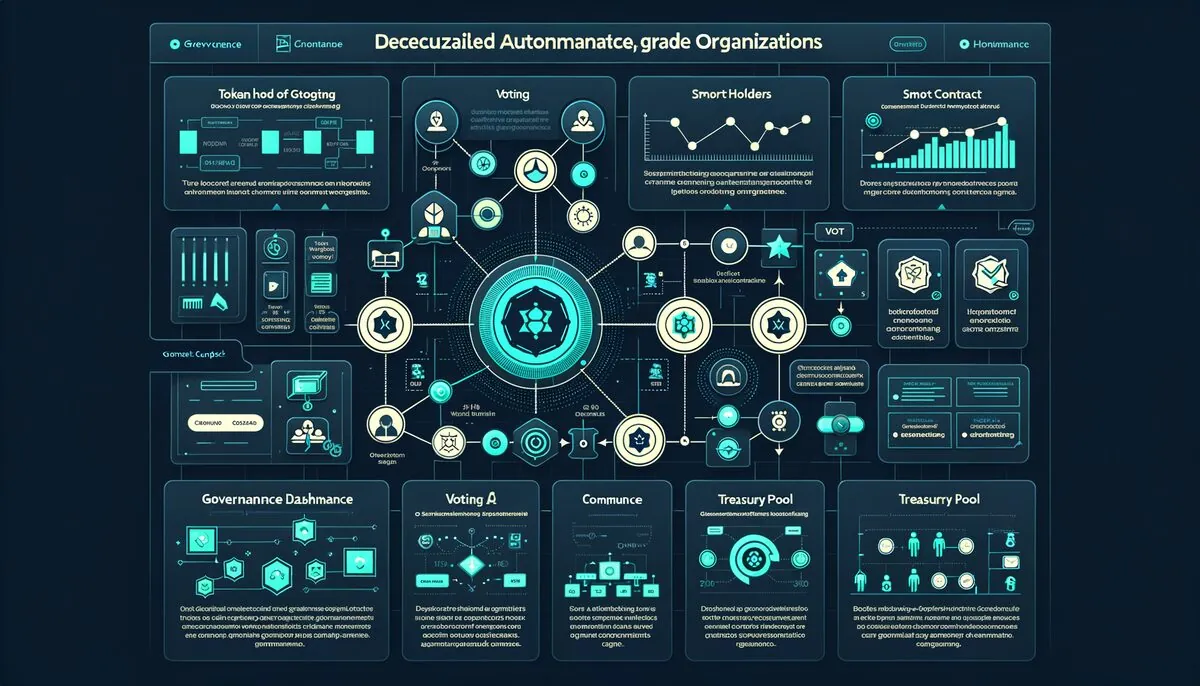
A DAO (Decentralized Autonomous Organization) is an organization governed by smart contracts on a blockchain rather than by a board of directors or executive team. Members hold governance tokens that grant voting rights on proposals ranging from treasury allocations to protocol upgrades. Every vote, every transaction, and every rule is recorded on-chain, making DAOs among the most transparent organizational structures ever created.
The core principle is simple: code replaces bureaucracy. Instead of trusting a CEO to act in shareholders' interests, DAO participants trust audited smart contracts that execute decisions exactly as programmed. If a proposal passes with the required quorum and majority, the on-chain logic executes automatically. No middleman, no delays, no backroom deals.
DAOs differ from traditional organizations in several fundamental ways:
| Feature | Traditional Organization | DAO |
|---|---|---|
| Leadership | Board of directors, CEO | Token holders vote on proposals |
| Transparency | Quarterly reports, audits | All transactions visible on-chain 24/7 |
| Rule Enforcement | Legal contracts, courts | Smart contracts execute automatically |
| Membership | Employment contracts, shares | Open to anyone holding governance tokens |
| Geography | Jurisdiction-bound | Global, borderless participation |
| Speed of Change | Slow (board meetings, approvals) | Proposals can pass in days |
DAOs are not just theoretical constructs. Uniswap DAO governs the largest decentralized exchange with over $5 billion in liquidity. MakerDAO manages the DAI stablecoin, which has maintained its dollar peg through multiple market crashes. Aave DAO controls a lending protocol with billions in deposits. These are real organizations managing real money through decentralized governance.
How DAOs Work
Understanding the mechanics of a DAO requires looking at three interconnected layers: the smart contract layer, the governance layer, and the execution layer. Together, these create a system where collective decisions translate directly into on-chain actions.
Smart Contract Foundation
Every DAO is built on a set of smart contracts deployed to a blockchain (most commonly Ethereum, though Solana, Polygon, and Arbitrum are increasingly popular). These contracts define the rules of the organization: how proposals are created, how votes are counted, what quorum is required, and how approved actions are executed. The most widely used frameworks include OpenZeppelin Governor, Compound Governor Bravo, and Moloch v3.
A typical DAO smart contract architecture includes a governance contract (handles proposals and voting), a timelock contract (adds a delay between vote approval and execution for security), and a treasury contract (holds and distributes funds based on approved proposals).
Governance Token Mechanics
Governance tokens are the backbone of DAO participation. Holding tokens like UNI (Uniswap), AAVE (Aave), or MKR (Maker) grants voting power proportional to your holdings. Some DAOs use a one-token-one-vote model, while others implement quadratic voting (where voting power scales with the square root of tokens held) to reduce the influence of large holders, often called "whales."
Many DAOs also support vote delegation. If you hold governance tokens but lack the time or expertise to evaluate every proposal, you can delegate your voting power to a trusted representative. This mirrors representative democracy and helps improve participation rates, which remain a persistent challenge for most DAOs.
The Proposal Lifecycle
A typical DAO proposal follows this path: (1) Discussion on forums like Discourse or Commonwealth, (2) Temperature check via off-chain poll on Snapshot, (3) Formal on-chain proposal submission, (4) Voting period (typically 3 to 7 days), (5) Timelock delay (typically 24 to 48 hours), and (6) Execution of the approved action. This multi-stage process ensures that proposals receive adequate scrutiny before funds or protocol parameters are changed.

History of DAOs
The concept of decentralized organizations predates blockchain technology. Cypherpunks in the 1990s envisioned organizations that could operate autonomously through cryptographic protocols. However, the practical implementation of DAOs only became possible with the launch of Ethereum in 2015, which introduced programmable smart contracts to the blockchain world.
The Original DAO (2016)
The first major DAO, simply called "The DAO," launched on Ethereum in April 2016. It was a decentralized venture capital fund that raised approximately 12.7 million ETH (worth around $150 million at the time) from over 11,000 investors. The DAO represented approximately 14% of all ETH in circulation at the time.
In June 2016, a critical vulnerability in The DAO's smart contract was exploited, allowing an attacker to drain roughly 3.6 million ETH. This event led to a contentious hard fork of the Ethereum blockchain, splitting it into Ethereum (ETH) and Ethereum Classic (ETC). The DAO hack remains one of the most important events in blockchain history, demonstrating both the promise and the risks of decentralized governance.
Evolution and Growth (2017 to 2026)
After The DAO hack, the ecosystem spent years improving smart contract security and governance frameworks. MolochDAO launched in 2019 with a deliberately simple design focused on Ethereum ecosystem grants. This "minimum viable DAO" approach inspired dozens of forks and variations.
The DeFi summer of 2020 catalyzed a DAO renaissance. Compound introduced governance token distribution through liquidity mining, and Uniswap airdropped UNI tokens to early users, instantly creating one of the largest DAOs by treasury size. By 2021, DAO treasuries collectively held over $16 billion. As of early 2026, that figure has grown to over $30 billion, with thousands of active DAOs spanning finance, social coordination, media, gaming, and real-world asset management.
| Year | Milestone | Impact |
|---|---|---|
| 2016 | The DAO launch and hack | Proved the concept but exposed smart contract risks |
| 2019 | MolochDAO launches | Introduced minimal viable DAO framework |
| 2020 | Compound and Uniswap governance | Governance tokens become mainstream in DeFi |
| 2021 | ConstitutionDAO raises $47M | Demonstrated DAO coordination for real-world assets |
| 2022 | Wyoming DAO LLC recognition | First US state to provide legal framework for DAOs |
| 2023 | Arbitrum DAO airdrop | Largest Layer 2 governance distribution |
| 2024-2025 | RWA DAOs emerge | DAOs begin managing tokenized real-world assets |
| 2026 | $30B+ in DAO treasuries | DAOs become a mature organizational model |
Types of DAOs
DAOs have expanded far beyond their DeFi origins. Today, they cover virtually every type of organizational activity. Understanding the different categories helps clarify where DAOs add the most value and where they still face challenges.
Protocol DAOs
Protocol DAOs govern decentralized protocols, primarily in DeFi. Examples include Uniswap DAO (decentralized exchange), Aave DAO (lending and borrowing), and MakerDAO (stablecoin issuance). These DAOs control protocol parameters like fee structures, collateral requirements, and upgrade paths. They typically have the largest treasuries and the most active governance participation.
Investment DAOs
Investment DAOs pool capital from members to make collective investment decisions. MetaCartel Ventures was an early pioneer, funding early-stage Web3 projects. The LAO (Limited Liability Autonomous Organization) combined DAO mechanics with a legal wrapper to comply with securities regulations. In 2026, investment DAOs have expanded into tokenized real estate, startup equity, and even public market instruments.
Social DAOs
Social DAOs create token-gated communities where membership is determined by token holdings. Friends With Benefits (FWB) pioneered this model, creating an exclusive community of Web3 creators and thinkers. Membership requires holding a minimum amount of FWB tokens, aligning financial incentives with community participation.
Grants DAOs
Grants DAOs distribute funding to projects that benefit a specific ecosystem. Gitcoin DAO has distributed over $60 million in grants to open-source projects using quadratic funding, where small individual contributions are amplified by a matching pool. The Optimism Collective uses a two-chamber governance model (Token House and Citizens' House) to fund public goods on its Layer 2 network.
Collector and Media DAOs
Collector DAOs pool resources to acquire valuable digital and physical assets. PleasrDAO famously purchased the Wu-Tang Clan album "Once Upon a Time in Shaolin" for $4 million. Media DAOs like BanklessDAO produce content and educational materials, distributing revenue to contributors through on-chain compensation systems.
| DAO Type | Primary Function | Key Examples | Treasury Range |
|---|---|---|---|
| Protocol | Govern DeFi protocols | Uniswap, Aave, MakerDAO | $500M - $5B+ |
| Investment | Pool capital for investments | The LAO, MetaCartel Ventures | $10M - $500M |
| Social | Token-gated communities | FWB, Developer DAO | $1M - $50M |
| Grants | Fund ecosystem projects | Gitcoin, Optimism Collective | $50M - $500M |
| Collector | Acquire valuable assets | PleasrDAO, FlamingoDAO | $5M - $100M |
| Media | Content creation and distribution | BanklessDAO, Forefront | $1M - $20M |
Top DAOs in 2026
The DAO landscape in 2026 is dominated by protocol DAOs with massive treasuries, but several newer entrants have gained significant influence. Here are the most impactful DAOs currently operating:
Uniswap DAO remains the largest decentralized exchange governance body, controlling protocol fees, liquidity incentive programs, and cross-chain deployment decisions. With the launch of Uniswap v4 and its hook system, governance decisions now extend to approving custom pool logic and fee structures.
Arbitrum DAO has emerged as one of the most active DAOs, governing the largest Ethereum Layer 2 network by total value locked. Its treasury exceeds $3 billion, and it has funded hundreds of ecosystem projects through its grant programs. The DAO's governance structure includes both short-term incentive programs and long-term protocol development funding.
MakerDAO (Sky) underwent a major rebranding and restructuring, evolving into a system of SubDAOs that manage specific aspects of the protocol. This modular approach has been closely watched as a model for scaling DAO governance beyond single-token voting.
Lido DAO governs the largest liquid staking protocol, controlling the parameters for how staked ETH is managed across Ethereum validators. With over 28% of all staked ETH flowing through Lido, governance decisions here have systemic importance for the entire Ethereum network.
Optimism Collective pioneered the two-house governance model with its Token House (token-weighted voting on protocol upgrades) and Citizens' House (identity-based voting on public goods funding). This separation of concerns has influenced governance design across the industry.
How DAO Governance Works: Step by Step
DAO governance can seem complex from the outside, but the process follows a logical sequence designed to maximize deliberation while enabling decisive action. Here is how a typical governance cycle works in practice.
Step 1: Identify the Need
Governance actions begin when a community member identifies something that needs to change. This could be a protocol parameter adjustment (like changing a fee percentage), a treasury allocation (funding a development team or marketing campaign), a partnership proposal, or a protocol upgrade. Most DAOs maintain active forums where members discuss potential improvements informally before any formal proposal is drafted.
Step 2: Draft a Proposal
The proposer writes a detailed governance proposal that includes the motivation (why this change is needed), the specification (exactly what will change), the implementation plan (how the change will be executed technically), the budget (if treasury funds are involved), and the timeline (key milestones and deadlines). Well-written proposals significantly increase the chances of passing, as they demonstrate thorough preparation and reduce ambiguity.
Step 3: Community Discussion
The proposal is posted on the DAO's governance forum (typically Discourse or Commonwealth) for community feedback. This discussion period usually lasts one to two weeks. During this time, delegates and community members ask questions, suggest modifications, and voice concerns. Many proposals are significantly revised based on this feedback before moving to a vote.
Step 4: Temperature Check
Before committing to an on-chain vote (which costs gas fees), most DAOs conduct an off-chain temperature check using Snapshot. Snapshot votes are gasless, using signed messages instead of on-chain transactions. This step filters out proposals that lack sufficient community support, saving time and resources.
Step 5: On-Chain Vote
If the temperature check passes, the proposal moves to a formal on-chain vote. The proposer (or a delegate with sufficient voting power) submits the proposal to the governance contract. Token holders then vote during a defined voting period, typically lasting three to seven days. Most DAOs require a minimum quorum (percentage of total voting power that must participate) and a majority threshold (typically 50% or higher) for a proposal to pass.
Step 6: Timelock and Execution
Approved proposals enter a timelock period, typically 24 to 48 hours, before execution. This delay serves as a safety mechanism, giving the community time to react if a malicious proposal somehow passes. After the timelock expires, the proposal can be executed, and the smart contract automatically implements the approved changes.

DAO Tools and Infrastructure
A robust ecosystem of tools has emerged to support DAO creation, governance, and operations. Understanding these tools is essential for anyone participating in or building a DAO.
Governance Frameworks
OpenZeppelin Governor is the most widely adopted governance framework, offering a modular and extensible contract system that supports various voting strategies, timelocks, and proposal thresholds. It is fully compatible with the ERC-20 Votes standard and has been audited extensively.
Compound Governor Bravo pioneered on-chain governance for DeFi protocols. While newer frameworks have surpassed it in flexibility, many legacy DAOs still use Governor Bravo, and its design patterns heavily influenced subsequent governance systems.
Moloch v3 (DAOhaus) takes a different approach, emphasizing "ragequit" functionality that allows members to exit with their proportional share of the treasury if they disagree with governance decisions. This mechanism provides a powerful minority protection that traditional governance models lack.
Voting and Delegation Platforms
Snapshot remains the dominant platform for off-chain voting. It supports multiple voting strategies (single choice, weighted, quadratic, ranked choice) and integrates with virtually every major DAO. Votes are gasless, using signed messages verified against on-chain token balances.
Tally provides a comprehensive governance dashboard for on-chain voting. It displays proposal details, voting history, delegate profiles, and real-time vote tracking. Tally supports Governor-compatible contracts across multiple chains.
Treasury Management
Gnosis Safe (Safe) is the standard for DAO treasury management. Multi-signature wallets require multiple signers to approve transactions, adding a layer of security beyond simple smart contract execution. Most DAO treasuries are held in Safe multisigs with governance-controlled signers.
Parcel and Utopia Labs provide payroll and expense management tools designed specifically for DAOs, handling contributor payments, expense tracking, and financial reporting in a decentralized context.
| Category | Tool | Purpose | Chain Support |
|---|---|---|---|
| Governance Framework | OpenZeppelin Governor | On-chain voting contracts | EVM chains |
| Off-chain Voting | Snapshot | Gasless voting and polling | Multi-chain |
| On-chain Dashboard | Tally | Proposal tracking and delegation | EVM chains |
| Treasury | Gnosis Safe | Multi-sig wallet management | EVM chains |
| DAO Creation | DAOhaus / Aragon | No-code DAO deployment | EVM chains |
| Coordination | Coordinape | Peer-based compensation | EVM chains |
| Communication | Discord / Discourse | Community discussion and forums | Platform-agnostic |
| Identity | ENS / Lens Protocol | On-chain identity and profiles | Ethereum / Polygon |
How to Join a DAO
Joining a DAO is more accessible than most people expect. Unlike traditional organizations with application processes, interviews, and hiring committees, most DAOs welcome anyone willing to contribute. Here is a practical guide to getting started.
Step 1: Research and Choose a DAO
Start by exploring DAO aggregators like DeepDAO, which tracks governance activity, treasury sizes, and member counts across thousands of DAOs. Identify DAOs aligned with your interests, whether that is DeFi governance, NFT collecting, content creation, or public goods funding. Read their documentation, browse their governance forums, and join their Discord servers to understand the community culture.
Step 2: Acquire Governance Tokens
Most DAOs require holding governance tokens to participate in voting. You can purchase these tokens on decentralized exchanges like Uniswap or centralized exchanges that list them. Some DAOs also distribute tokens through contributor rewards, airdrops, or participation incentives. The amount of tokens you need varies. Some DAOs allow participation with any amount, while others have minimum thresholds for proposal creation.
Step 3: Start Contributing
The best way to integrate into a DAO is through active contribution. Many DAOs have bounty boards, working groups, and open tasks that newcomers can pick up. Common contribution paths include writing documentation, creating content, building tools, participating in governance discussions, providing translations, and reviewing proposals. Contributors who consistently add value often receive additional token compensation and recognition within the community.
Step 4: Participate in Governance
Once you hold governance tokens, start participating in votes on Snapshot and on-chain governance platforms. Read proposals carefully, engage in forum discussions, and consider delegating your tokens to an active delegate if you cannot follow every vote. Many DAOs track voter participation, and active participants build reputation that can lead to delegate roles, committee positions, and grant funding for their projects.
How to Create a DAO
Launching a DAO has become significantly easier thanks to no-code platforms and standardized frameworks. However, creating a DAO that actually functions well requires careful planning beyond just deploying contracts.
Define Your Mission and Governance Model
Before touching any code, clearly define what your DAO will do, who it serves, and how decisions will be made. Will you use token-weighted voting, quadratic voting, or reputation-based governance? What quorum and majority thresholds will you require? How will the treasury be managed? These design decisions have enormous downstream consequences and should be debated thoroughly with your founding community.
Choose Your Tech Stack
For most new DAOs, using an established framework is far safer than building from scratch. Aragon provides a comprehensive DAO creation platform with customizable governance modules. DAOhaus specializes in Moloch-style DAOs with ragequit functionality. If you need maximum customization, deploying OpenZeppelin Governor contracts directly gives you full control over every parameter.
Your tokenomics design is equally important. Decide on the total supply, distribution mechanism (fair launch, airdrop, gradual vesting), and whether tokens will have utility beyond governance. Many successful DAOs distribute tokens across founding team (with vesting), community treasury, ecosystem incentives, and retroactive rewards for early contributors.
Deploy and Launch
Deploy your governance contracts to a testnet first and run simulated proposals to verify everything works as expected. Conduct a security audit if your DAO will manage significant funds. Once deployed to mainnet, announce your DAO through the channels where your target community gathers. Initial bootstrapping is critical. Focus on attracting a core group of engaged participants rather than maximizing token holder counts.
Iterate and Improve
Governance design is never "finished." The most successful DAOs continuously refine their processes based on real-world experience. Common iterations include adjusting quorum requirements (often lowered when participation rates are unexpectedly low), adding specialized committees or SubDAOs for specific functions, implementing delegation incentives, and upgrading voting mechanisms. Treat your governance framework as a living system that evolves with your community.
Legal Status of DAOs
The legal landscape for DAOs remains one of the most complex and rapidly evolving areas in blockchain regulation. DAOs challenge fundamental assumptions of corporate law, as they often lack centralized management, fixed jurisdictions, and traditional shareholder structures.
United States
Wyoming became the first US state to recognize DAOs as a legal entity type in 2021, allowing DAOs to register as "DAO LLCs" that combine limited liability protection with decentralized governance. Tennessee, Vermont, and several other states have followed with their own DAO legislation. However, there is no federal framework, and the SEC has indicated that many governance tokens may qualify as securities, creating regulatory uncertainty.
International Approaches
The Marshall Islands passed legislation in 2022 explicitly recognizing DAOs as legal entities. Switzerland offers a flexible foundation structure ("Stiftung") that several major DAOs have adopted. Singapore and the Cayman Islands provide corporate structures commonly used as legal wrappers for DAOs operating internationally.
The European Union's MiCA (Markets in Crypto-Assets) regulation, which took effect in phases through 2024 and 2025, does not directly address DAOs but affects how governance tokens are classified and traded within EU markets.
Legal Wrappers
Many DAOs adopt "legal wrappers" to bridge the gap between on-chain governance and real-world legal requirements. Common structures include Cayman Foundation Companies, Wyoming DAO LLCs, Swiss Associations, and Unincorporated Nonprofit Associations (UNAs). The choice of wrapper affects tax obligations, liability protection, the ability to enter real-world contracts, and regulatory compliance requirements.
| Jurisdiction | Legal Structure | Liability Protection | Notable DAOs Using It |
|---|---|---|---|
| Wyoming, USA | DAO LLC | Yes (limited liability) | Various smaller DAOs |
| Cayman Islands | Foundation Company | Yes | ENS, Lido, dYdX |
| Switzerland | Association / Foundation | Yes | Ethereum Foundation, Tezos |
| Marshall Islands | DAO LLC | Yes | Admiralty DAO |
| Panama | Foundation | Yes | Various DeFi DAOs |
Risks and Challenges of DAOs
While DAOs offer significant advantages in transparency and decentralization, they face serious challenges that participants should understand before committing time or capital.
Smart Contract Vulnerabilities
DAOs are only as secure as their underlying code. The original DAO hack demonstrated this risk dramatically, but smart contract exploits continue to affect DAOs. In 2023, Tornado Cash's governance was hijacked through a malicious proposal that granted the attacker control over the DAO's governance contract. Regular audits, formal verification, and bug bounty programs help mitigate these risks but cannot eliminate them entirely.
Voter Apathy and Plutocracy
Most DAOs suffer from extremely low voter participation. Typical turnout ranges from 1% to 10% of eligible voters, meaning that a small number of large token holders often determine outcomes. This "whale governance" problem undermines the democratic ideals that DAOs espouse. Solutions being explored include delegation incentives, quadratic voting, time-weighted voting (where longer-held tokens get more weight), and hybrid governance models that combine token voting with identity-based participation.
Coordination and Speed
Decentralized decision-making is inherently slower than centralized leadership. A typical DAO proposal takes two to four weeks from initial discussion to execution. In fast-moving markets or during security emergencies, this delay can be costly. Many DAOs address this by creating specialized committees or multisig-controlled "emergency" functions that can act quickly within predefined parameters, though this reintroduces elements of centralization.
Regulatory Uncertainty
As discussed in the legal section, DAOs operate in a gray area in most jurisdictions. Token holders may face unexpected tax liabilities, and DAO participants in some jurisdictions could be held personally liable for DAO actions if no legal wrapper is in place. The lack of regulatory clarity also makes it difficult for DAOs to interact with traditional financial and legal systems.
Sybil Attacks and Governance Manipulation
In token-weighted governance, anyone can acquire voting power by purchasing tokens on the open market. Flash loan attacks, where an attacker borrows a large amount of governance tokens for a single block to pass a malicious proposal, have been demonstrated in practice. DAOs mitigate this through snapshot-based voting (tokens must be held at a specific block before the vote), timelock delays, and minimum proposal thresholds.
The Future of DAOs
DAOs are evolving rapidly, and several trends are shaping their future trajectory in Web3 and beyond.
AI-Assisted Governance
Artificial intelligence is beginning to play a role in DAO governance. AI tools can analyze proposals for potential risks, summarize complex technical changes for non-technical voters, model the economic impact of parameter changes, and even draft initial proposals based on community sentiment analysis. While AI will not replace human judgment in governance, it can significantly reduce the information asymmetry that contributes to low participation rates.
Cross-Chain Governance
As protocols deploy across multiple blockchains, governance needs to span chains as well. Cross-chain messaging protocols like LayerZero and Wormhole enable DAOs to coordinate governance across Ethereum, Arbitrum, Optimism, Base, and other networks from a single governance framework. This multi-chain governance capability is becoming essential as DeFi becomes increasingly multi-chain.
Real-World Asset DAOs
One of the most significant trends is DAOs managing tokenized real-world assets (RWAs). From real estate portfolios to carbon credits to intellectual property rights, DAOs are extending beyond purely digital assets. This convergence of on-chain governance with off-chain assets presents unique challenges in legal compliance and enforcement but represents an enormous growth opportunity.
Modular and SubDAO Architectures
Large DAOs are moving toward modular governance architectures where specialized SubDAOs handle specific functions (treasury management, grant distribution, technical development) while a top-level DAO sets overall strategy and parameters. MakerDAO's transition to the "Endgame" structure with multiple SubDAOs is the most prominent example of this trend. This approach allows DAOs to scale governance without overwhelming token holders with every operational decision.
Reputation-Based and Soulbound Governance
The introduction of soulbound tokens (non-transferable tokens that represent credentials, participation history, or reputation) is enabling new governance models where voting power is based on contribution rather than financial stake alone. Optimism's Citizens' House, which uses non-transferable identity tokens for public goods funding votes, demonstrates how reputation-based governance can complement token-weighted systems.
Frequently Asked Questions About DAOs
What is a DAO in simple terms?
A DAO (Decentralized Autonomous Organization) is an internet-native organization where members vote on decisions using blockchain-based tokens instead of having a traditional management hierarchy. Think of it as a digital co-op where the rules are enforced by code rather than by managers or lawyers. Every member can propose changes, vote on proposals, and see exactly how funds are spent through the public blockchain record.
How much money do I need to join a DAO?
The cost varies dramatically depending on the DAO. Some DAOs like BanklessDAO have tokens that cost just a few dollars, making participation very accessible. Large protocol DAOs like Uniswap or Aave require purchasing governance tokens that can range from a few dollars to hundreds per token, though you can participate with even a single token. Many DAOs also offer contribution-based membership where you earn tokens through work rather than purchasing them. Some DAOs have entirely free participation through forum discussions and community involvement.
Are DAOs legal?
DAOs exist in a legal gray area in most jurisdictions. Wyoming, Tennessee, and the Marshall Islands have specific legislation recognizing DAOs as legal entities. In most other places, DAOs are not explicitly illegal but also lack clear legal recognition. Many DAOs adopt legal wrappers (like Cayman Foundation Companies or Wyoming DAO LLCs) to gain legal personality, limited liability protection, and the ability to enter traditional contracts. If you are participating in or creating a DAO, consulting with a lawyer familiar with crypto regulations in your jurisdiction is strongly recommended.
Can a DAO be hacked?
Yes, DAOs can be vulnerable to attacks. Smart contract exploits (like the original DAO hack in 2016), governance attacks (where an attacker acquires enough tokens to pass malicious proposals), and social engineering attacks are all real risks. However, the ecosystem has matured significantly. Modern DAOs employ multiple layers of security including audited smart contracts, timelocked execution, multi-signature treasury controls, proposal thresholds, and bug bounty programs. While no system is completely immune to attack, well-designed DAOs are substantially more secure than early implementations.
What is the difference between a DAO and a regular company?
The key differences are in governance and transparency. A regular company has a CEO, board of directors, and hierarchical management that makes decisions on behalf of shareholders. A DAO replaces this hierarchy with token-based voting where every member can directly participate in decisions. Company financials are shared periodically through reports, while DAO treasuries are visible on-chain in real time. Companies operate within specific legal jurisdictions, while DAOs can have globally distributed members. Companies enforce rules through legal contracts and courts, while DAOs enforce rules through smart contracts that execute automatically.
How do DAO members get paid?
DAO members are compensated through several mechanisms. Active contributors often receive governance tokens or stablecoins through approved treasury proposals. Some DAOs use tools like Coordinape for peer-based compensation, where contributors allocate points to colleagues they believe added the most value. Bounty programs offer fixed payments for completing specific tasks. Core contributors may receive ongoing stream payments through protocols like Sablier or Superfluid. Additionally, holding governance tokens can provide indirect compensation if the token appreciates in value as the protocol grows.
What happens if a DAO makes a bad decision?
Bad decisions in DAOs can be addressed through several mechanisms. If the decision has not been executed yet (still in timelock), a new emergency proposal can potentially cancel it. If executed, the community can pass a new proposal to reverse or mitigate the effects. In Moloch-style DAOs, members who disagree with a decision can "ragequit" and withdraw their proportional share of the treasury before the decision takes effect. For truly catastrophic scenarios, some DAOs have emergency multisig controls that can pause the protocol while governance deliberates a response. Ultimately, the decentralized nature means the community collectively bears the consequences of governance decisions.
Do I need technical knowledge to participate in a DAO?
No, you do not need to be a developer to participate in a DAO. While some roles (smart contract development, protocol engineering) require deep technical expertise, DAOs need people with diverse skills. Non-technical contributions include community management, content creation, translation, marketing, business development, legal analysis, financial modeling, and governance research. You do need basic familiarity with crypto wallets (like MetaMask), how to connect to dApps, and how to sign transactions. Most DAOs have onboarding guides and community members willing to help newcomers get started.
What are the tax implications of DAO participation?
Tax treatment of DAO participation varies by jurisdiction and is still evolving. Generally, tokens received as compensation for DAO work are treated as income and taxed at their fair market value at the time of receipt. Governance token appreciation may trigger capital gains taxes when you sell. Some jurisdictions may classify DAO treasury distributions as dividends. In the US, the IRS has not issued specific guidance on DAOs, creating uncertainty around issues like whether DAO membership creates partnership tax obligations. Given the complexity, consulting with a tax professional experienced in cryptocurrency is highly recommended for active DAO participants.
Related Guides
- How Do DAOs Work? Governance, Treasury and Voting Explained (2026)
- How AI Agents Are Revolutionizing DeFi and Finance
- How to Create an AI Trading Agent on PERPTools: Complete AI Arena Guide 2026
- What Is Vana Protocol Data Sovereignty Dao Token Guide 2026
- What Is Snapshot: Complete DAO Governance Voting Guide (2026)
- DAO