Zcash (ZEC) Crashes ~40% After a Critical Counterfeiting Bug Is Disclosed
— By Tony Rabbit in Markets

Zcash disclosed a critical counterfeiting vulnerability hidden in its Orchard circuit since 2022. ZEC fell more than 38 percent, but there is no evidence the bug was ever exploited on mainnet.
Zcash (ZEC) tumbled sharply on June 5, 2026 after the project disclosed a critical "counterfeiting" vulnerability buried inside its Orchard circuit, the cryptographic component that governs Zcash's shielded, or private, transactions. The flaw had quietly existed since 2022, roughly four years undetected, and in theory could have allowed a malicious actor to mint unlimited counterfeit ZEC inside the shielded pool with no on-chain signature. That is one of the most serious classes of bug a cryptocurrency can face, because it strikes at the integrity of the coin's supply itself.
The token slumped more than 38 percent to roughly 40 percent in the wake of the disclosure as traders digested what an inflation bug of this severity could mean. Importantly, this was a responsible disclosure of a code vulnerability, not a confirmed theft. There is no evidence the bug was ever exploited on mainnet, and no unauthorized value is known to have been created. Still, the news rattled holders and reopened a long running debate about the trade offs between strong privacy and verifiable supply.
What Is a Shielded Pool?
Most blockchains are transparent by default. Anyone can inspect addresses, balances, and the flow of funds. Zcash takes a different approach. Alongside transparent addresses, it offers shielded addresses where the sender, receiver, and amount are hidden using zero knowledge cryptography. The collection of funds held in these private balances is informally called the shielded pool.
The power of a shielded pool is that the network can verify a transaction is valid, meaning the spender actually owns the funds and is not double spending, without revealing any of the underlying details. The Orchard circuit is the engine that makes this possible for newer Zcash transactions. It encodes the rules that every shielded transfer must satisfy. If those rules contain a flaw, the consequences can be severe and, by design, very hard to observe from the outside.
What a Counterfeiting Bug Actually Means
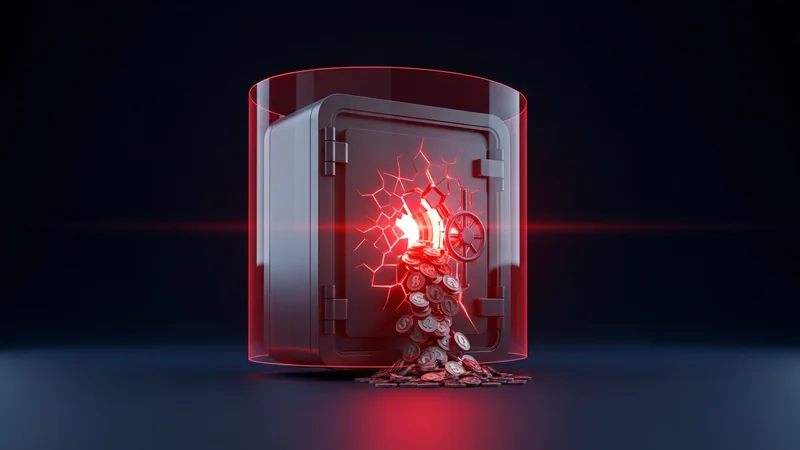
A counterfeiting or inflation bug is a flaw that lets someone create coins out of thin air. In a normal transaction, the math guarantees that the value going in equals the value coming out, minus fees. An inflation bug breaks that guarantee. An attacker could potentially conjure new units that the protocol treats as genuine, quietly expanding the supply beyond what the rules are supposed to permit.
For any cryptocurrency, supply integrity is foundational. The promise that a fixed and predictable number of coins exists is part of what gives an asset its value. If that promise can be broken, even in theory, confidence can erode quickly. That is why this category of vulnerability is treated as a worst case scenario, and why the market reaction was so pronounced even in the absence of any proven exploit.
How the Bug Was Found
The vulnerability was discovered on May 29, 2026 by security engineer Taylor Hornby, who used Anthropic's Opus 4.8 AI model during his analysis. Rather than exploiting the flaw on mainnet, Hornby disclosed it responsibly to Zcash's coordinating development body, giving the team the chance to respond before any details became public. The flaw was then patched via an emergency fix by around June 1.
The use of an advanced AI model to surface a bug that had survived roughly four years of human review is notable in its own right. It points to a shifting landscape in which AI assisted auditing can help uncover deep cryptographic flaws that traditional methods missed. For followers of on chain markets who track tokens and liquidity through platforms like DEXTools, the episode is a reminder that protocol level risk can sit invisibly beneath even mature, well regarded projects.
Can Anyone Prove It Was Never Exploited?
Here lies the uncomfortable nuance at the heart of this story. The very privacy properties that make the shielded pool valuable also make it extremely difficult to audit after the fact. Because shielded transactions hide their details by design, cryptography alone cannot definitively prove whether the bug was ever exploited. There is no transparent ledger entry to point to that would confirm or deny abuse inside the private pool.
What the project can say is that there is no evidence the bug was exploited on mainnet, and no unauthorized value is known to have been created. That is an important distinction. Absence of evidence is not the same as a mathematical proof of safety, and the market appears to be pricing in that lingering uncertainty rather than a confirmed loss.
Market Reaction and Notable Voices
The price action spoke loudly. ZEC fell more than 38 percent to around 40 percent following the disclosure, a steep single move that wiped out a significant chunk of the token's value in short order. The selling reflected both the gravity of the bug class and the difficulty of fully ruling out exploitation given the shielded pool's opacity.
Among the reactions, Arthur Hayes, chief investment officer of Maelstrom, said he sold his entire Zcash position after the disclosure. High profile exits of that kind can amplify sentiment driven moves, signaling to other holders that some sophisticated participants chose to step aside rather than wait for further clarity. None of this constitutes a verdict on Zcash's long term prospects, but it underscores how seriously the market took the news.
Privacy Coins and the Bigger Picture
Privacy coins occupy a distinctive niche. They aim to deliver the confidentiality of cash with the settlement properties of a blockchain. Zcash has long been one of the most technically respected projects in this space, precisely because it leans on advanced zero knowledge cryptography rather than simpler obfuscation tricks. That sophistication is a strength, but it also means the attack surface includes deeply complex circuits that few people can fully audit.
This disclosure illustrates the double edged nature of strong privacy. The same design choices that protect users from surveillance also limit the ability to forensically verify the system after a flaw is found. The episode is likely to feed into ongoing discussions across the industry about how privacy preserving protocols should balance confidentiality against the need for transparent assurances of supply integrity.
What to Watch
The immediate technical risk has been addressed through the emergency patch deployed by around June 1, but several questions remain open for ZEC holders and observers. Watch how the broader market and Zcash community respond to the inability to cryptographically confirm whether the bug was exploited, since that uncertainty may continue to weigh on sentiment. Keep an eye on whether additional details emerge from the coordinating development body about the fix and any follow up reviews of the Orchard circuit.
It is also worth tracking how the use of AI assisted security research, like the Opus 4.8 driven discovery, shapes future audits of complex cryptographic systems. Finally, note the wider conversation around privacy coins and whether this event prompts renewed scrutiny of how shielded designs handle worst case bug scenarios. This article describes a code vulnerability disclosure, not a confirmed theft, and it is not financial advice. None of the above should be read as a price prediction.