Airdrop Farmers vs Real Users: How to Read On-Chain Activity
— By Whatsertrade in Tutorials
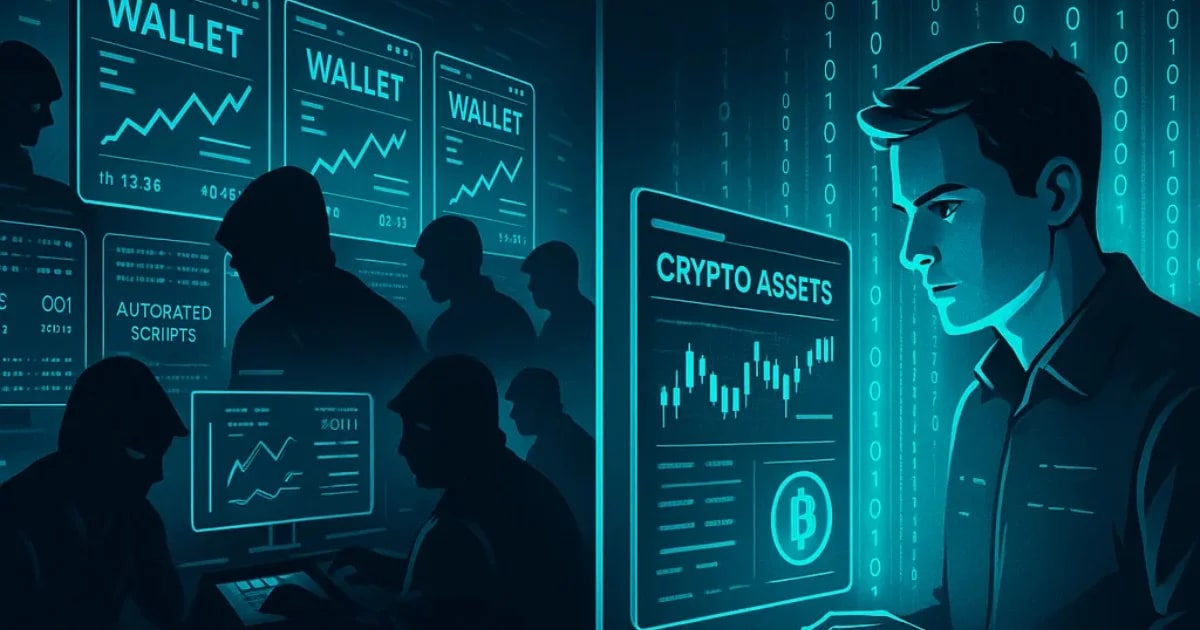
Learn how to separate airdrop farmers from real users by reading wallets, transaction patterns, retention, and misleading pre-token on-chain activity.
This page is about separating airdrop farmers from real users in on-chain data. It is an adoption-quality guide, not a farming tutorial or a wallet-setup page.
Key Takeaways
- What Are Airdrop Farmers?
- What Are Real Users?
- Airdrop Farmers vs Real Users: The Main Difference
- Why Wallet Count Can Be Misleading
- Why Transaction Count Can Be Misleading
- Signs of Airdrop Farming Activity
On chain activity is one of the most powerful signals in crypto, but it can also be misleading. A project may show growing wallets, rising transactions and strong activity before a token launch. At first glance, this can look like real adoption.
But not all activity comes from real users. Some of it may come from airdrop farmers.
Understanding the difference between airdrop farmers and real users is essential for traders who want to evaluate whether a project has genuine demand or inflated metrics.
What Are Airdrop Farmers?
Airdrop farmers are users who interact with crypto protocols mainly to qualify for potential token rewards. They may bridge funds, make swaps, mint assets, use applications or create multiple wallets to increase their chances of receiving an airdrop.
Airdrop farming is not always malicious. Many users explore protocols because incentives are part of crypto culture. The problem begins when activity is mistaken for sustainable demand.
If users are only present for rewards, they may disappear after the airdrop.
What Are Real Users?
Real users interact with a protocol because they need the product. They trade, borrow, lend, stake, bridge, provide liquidity or use applications because the protocol gives them value.
Real users are more likely to return after incentives end. They create deeper demand because their behavior is not only reward driven.
For traders, the quality of users matters more than the raw number of wallets.
Airdrop Farmers vs Real Users: The Main Difference
The main difference is motivation.
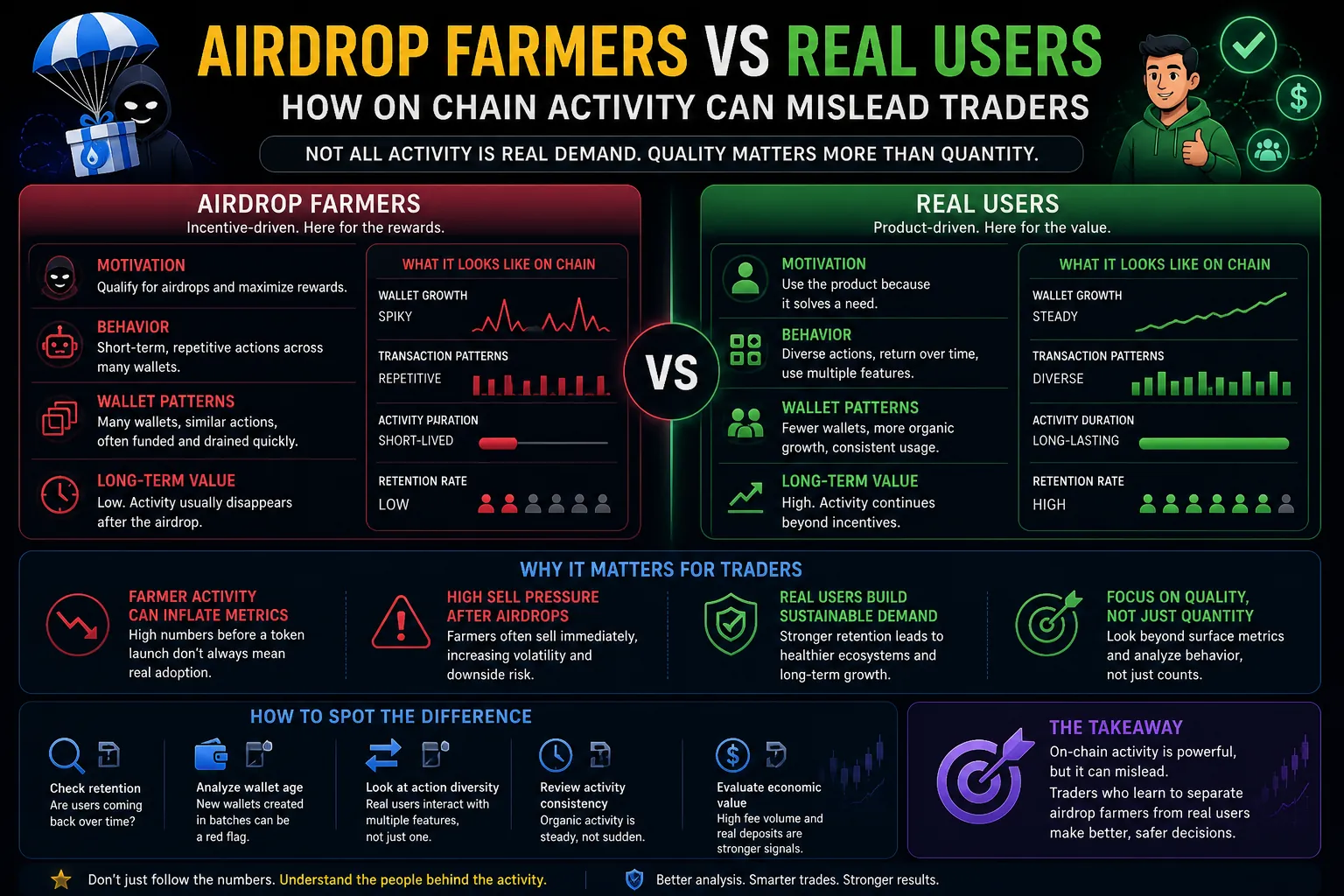
Airdrop farmers are motivated by potential rewards. Real users are motivated by product value.
This difference affects long term token demand. A project with many farmers may look strong before launch but face selling pressure after rewards are distributed. A project with real users may grow more slowly, but its activity can be more durable.
Why Wallet Count Can Be Misleading
Wallet count is one of the easiest metrics to inflate. One person can create many wallets, especially when there is an incentive to appear as multiple users.
If a project reports rapid wallet growth, traders should ask whether those wallets represent unique people or repeated activity from the same farming behavior.
A high number of wallets does not automatically mean strong adoption.
Why Transaction Count Can Be Misleading
Transaction count can also create a false sense of activity. Farmers may perform many small transactions to qualify for airdrops. Bots may also create repetitive activity.
A project with high transaction count but low value per transaction may not have the same quality of demand as a project with fewer but more meaningful interactions.
Traders should compare transaction volume, wallet behavior and economic value instead of relying on one metric.
Signs of Airdrop Farming Activity
Airdrop farming often shows repetitive patterns. Many wallets may perform similar actions, use similar amounts, interact during the same periods or stop activity after a campaign ends.
Another sign is low commitment. If users do the minimum required interaction and never return, the activity may not reflect real demand.
Short bursts of activity around rumored snapshots can also indicate farming behavior.
Signs of Real User Demand
Real user demand tends to be more consistent. Users return over time, interact with multiple features and continue using the product even when rewards are lower.
Real users may also create deeper liquidity, more meaningful transaction sizes and steadier market activity.
For token traders, consistency is often more valuable than sudden spikes.
Why This Matters After an Airdrop
After an airdrop, farmers may sell tokens quickly. This can create strong sell pressure, especially if many users received tokens without long term interest in the project.
Real users may be more likely to hold, stake or continue participating in the ecosystem.
This does not mean every airdrop is bearish. It means traders should understand who received the tokens and why they were active before launch.
How DEXTools Helps Traders Watch Market Reaction
DEXTools can help traders monitor how a token behaves after an airdrop or major distribution event. Price action, liquidity, trading volume and transaction flow can reveal whether recipients are selling aggressively or whether the market is absorbing supply.
This live market behavior can confirm or challenge the story told by pre launch activity metrics.
Airdrop farmers and real users can look similar in raw data, but they create very different market outcomes. Farmers can inflate activity before launch and disappear afterward. Real users can support longer term demand.
For traders, the goal is to look beyond wallet counts and transaction numbers. The better question is whether activity reflects real product usage or reward seeking behavior.
In crypto, more activity is not always better. Better activity is better.
How to Bridge Crypto Between Chains: Complete Cross-Chain Tutorial 2026 How to Use 1inch: Complete DEX Aggregator Swap Tutorial (2026) How to Use OKX Web3 Wallet: Multi-Chain DeFi Hub Guide (2026)Frequently Asked Questions
Q: What is an airdrop farmer?
A: An airdrop farmer is an individual who strategically interacts with multiple blockchain protocols to qualify for potential future token distributions (airdrops). Their primary motivation is to receive free tokens, often with the intent to sell them for profit.
Q: How do real users differ from airdrop farmers in their on-chain activity?
A: Real users typically exhibit more organic and sustained engagement with a protocol, often using its core features for their intended purpose. Their transaction patterns are less predictable and more aligned with genuine usage rather than meeting specific airdrop criteria.
Q: What on-chain metrics can distinguish farmers from real users?
A: Metrics like transaction frequency, variety of interactions, holding period of assets, and the value of assets transacted can help differentiate. Farmers often have many small, repetitive transactions across multiple wallets, while real users might have fewer, larger, or more diverse interactions.
Q: Why do protocols care about distinguishing farmers from real users?
A: Protocols aim to distribute tokens to genuine community members who will contribute to the project's long-term success and decentralization. Farmers can dilute the token distribution and may not be committed to the project's ecosystem.
Q: Can airdrop farmers evolve into real users?
A: While some farmers may initially engage solely for the airdrop, a portion might discover value in the protocol and transition into genuine users. However, their initial motivation is distinct from organic adoption.
Related Guides
- Liquidity Incentive Traps: When Rewards Attract Farmers, Not Real Buyers
- Dark AMMs and Hidden Liquidity: Why Some DEX Activity Is Harder to Read
- Solana Wallet Alerts and Monitoring: How to Track Wallet Activity (2026)
- How to Use Glassnode: Read Bitcoin On-Chain Metrics Better (2026)
- How to Read On-Chain Data: Metrics, Wallet Flows and Dashboards (2026)