Gas Limit vs Gas Price: Ethereum Fees Explained (2026)
— By Tony Rabbit in Tutorials

Demystify Ethereum fees in 2026. Learn the crucial difference between gas limit and gas price, how they impact your transactions, and how EIP-1559 works.
Understanding Ethereum transaction fees is fundamental for anyone interacting with the blockchain, whether you're sending ETH, swapping tokens, or engaging with DeFi protocols. As we navigate 2026, the core mechanics remain crucial, even with network upgrades and evolving market conditions.
At the heart of these fees are two key concepts: gas limit and gas price. While often discussed together, they represent distinct components that determine how much you pay and how your transaction is processed. Getting them right means efficient, successful transactions; getting them wrong can lead to costly failures.
The Core Concepts: Gas Limit and Gas Price Explained
Let's break down the foundational elements of Ethereum fees. Think of gas as the 'fuel' needed to power operations on the Ethereum network. Every action, from a simple transfer to a complex smart contract execution, requires a certain amount of computational effort, and this effort is measured in units of gas.
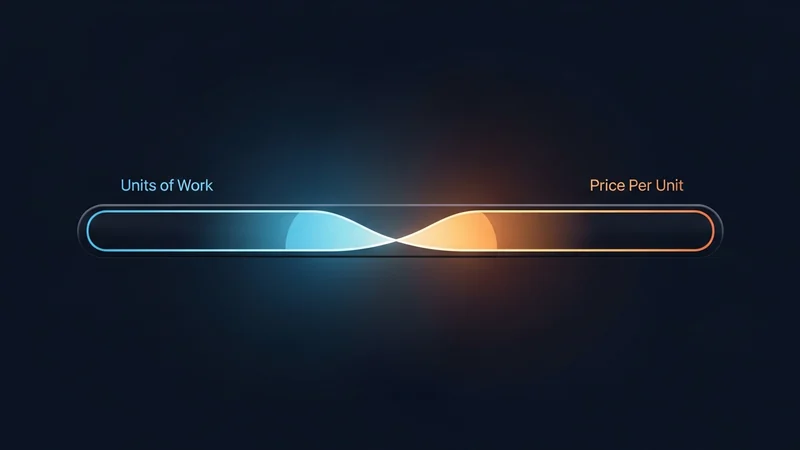
The total fee you pay for an Ethereum transaction is a direct product of the amount of gas your transaction consumes and the price you're willing to pay for each unit of that gas. This simple formula, Total Fee = Gas Used x Gas Price, is the bedrock of Ethereum's fee structure.
What is Gas Limit? The Work Authorization
The gas limit is the maximum amount of gas units you are willing to authorize for a particular transaction. It's essentially your budget for the computational work involved. When you initiate a transaction, you tell the network, 'I'm willing to spend up to X units of gas for this operation.' The network then processes your transaction, consuming gas units as it performs the required computations.
For a standard ETH transfer, the gas limit is fixed at 21,000 gas units. This is because transferring ETH is a very simple operation with a predictable computational cost. However, interacting with smart contracts, such as swapping tokens on a decentralized exchange or minting an NFT, involves more complex operations, and thus requires a higher gas limit.
What is Gas Price? How Much You Pay Per Unit
Gas price, on the other hand, determines how much you pay for each unit of gas, and it is denominated in gwei. Gwei is a smaller denomination of Ether, where 1 ETH equals 1,000,000,000 gwei (10^9 gwei). So, if the gas price is 100 gwei, you are paying 100 gwei for every single unit of gas consumed by your transaction.
The gas price you set directly influences how quickly your transaction is picked up and included in a block by validators. A higher gas price signals to validators that you are willing to pay more, making your transaction more attractive to include, especially during periods of high network congestion. Conversely, a lower gas price might mean your transaction takes longer to confirm, or could even get stuck if network demand surges.
Let's look at a simple example to illustrate: If a standard ETH transfer uses 21,000 gas and the current gas price you set is 100 gwei, your total fee would be 21,000 gas x 100 gwei = 2,100,000 gwei. Converting this to ETH, that's 0.0021 ETH.
EIP-1559 and the Evolution of Ethereum Fees
The introduction of EIP-1559 in August 2021 significantly changed how Ethereum calculates and processes fees. Before EIP-1559, fees were a simpler 'first-price auction' model, where users simply bid a gas price, and validators picked the highest bids. EIP-1559 brought more predictability and a burning mechanism to the network.
Under EIP-1559, the fee structure splits into two main components for the user, managed by a new system:
- Base Fee: This is a dynamic, protocol-set fee that is adjusted block by block based on network congestion. The base fee is burned, meaning it is removed from circulation, making ETH a deflationary asset over time. This burning mechanism helps manage network capacity and provides a clearer signal of current network demand.
- Priority Fee (Tip): This is an optional 'tip' you pay directly to the validator who includes your transaction in a block. A higher priority fee incentivizes validators to prioritize your transaction, especially during peak network activity.
When you set a transaction, you typically specify a maxFeePerGas, which is the maximum total amount you are willing to pay per unit of gas (base fee + priority fee). The network then calculates the actual fee based on the current base fee and your specified priority fee, ensuring you never pay more than your maxFeePerGas.
maxFeePerGas acts as a ceiling for the total fee per unit of gas.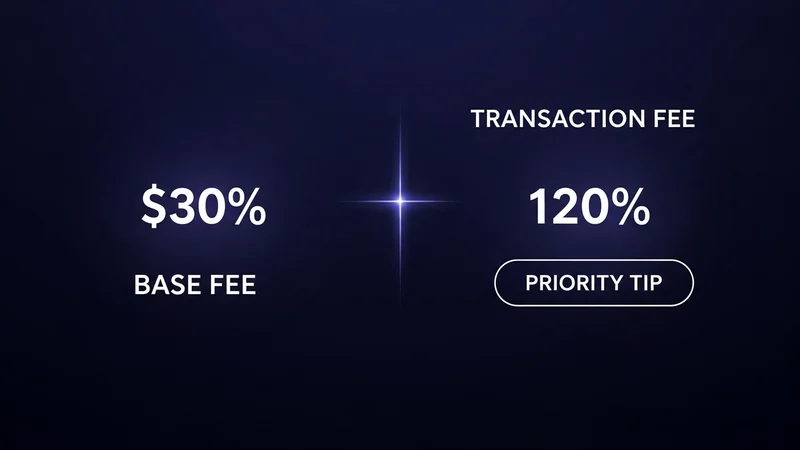
Navigating Gas Fees in Practice (2026)
Even in 2026, with ongoing network improvements, managing gas fees remains a practical skill. Here's how you can approach it:
- Monitor Network Conditions: Gas prices fluctuate constantly based on network demand. Tools and wallets often provide real-time gas price estimates. Checking these before initiating a transaction can save you significant fees.
- Understand Transaction Complexity: Simple ETH transfers are cheap. Token swaps, liquidity provisioning, or complex DeFi interactions will require higher gas limits and thus higher potential fees. Always be aware of the type of transaction you're performing.
- Adjust Priority Fee: If your transaction isn't time-sensitive, you can opt for a lower priority fee. If it's urgent, a slightly higher priority fee can ensure faster confirmation.
When you're tracking specific token pairs or analyzing volume, platforms like DEXTools provide invaluable insights into market activity. While DEXTools itself doesn't directly set gas fees, understanding the underlying fee structure is essential for anyone actively trading or managing assets on Ethereum, as transaction costs directly impact your profitability and execution strategy.
Comparing Gas Limit and Gas Price
To solidify your understanding, let's look at a direct comparison of these two critical components:
Looking Ahead: The Future of Ethereum Fees
As Ethereum continues to evolve, particularly with the ongoing roadmap for scalability and efficiency, the underlying principles of gas limit and gas price will remain relevant. While Layer 2 solutions and sharding aim to reduce transaction costs and increase throughput, the base layer's fee mechanism will still dictate the economics of interacting directly with the mainnet.
Understanding these concepts empowers you to make informed decisions about your transactions, optimize your costs, and navigate the Ethereum blockchain with confidence. Whether you're a long-term hodler, a DeFi enthusiast, or a day trader, mastering gas fees is an indispensable part of your crypto education.
Always remember to balance the need for a sufficient gas limit to ensure transaction success with a competitive gas price to ensure timely confirmation, all while keeping an eye on the current network conditions.
Frequently Asked Questions
What is the difference between gas limit and gas price?
Gas limit is the maximum amount of computational work (in units of gas) you allow for a transaction. Gas price is how much you pay for each unit of that gas, denominated in gwei. Gas limit determines if your transaction can complete, while gas price affects how fast it gets confirmed and the total cost.
What happens if my gas limit is too low?
If your gas limit is set too low, your transaction will run out of gas before it can complete. It will fail, but you will still lose the gas that was consumed up to the point of failure. This means you pay for a transaction that didn't go through.
How does EIP-1559 affect gas fees?
EIP-1559 splits the fee into a base fee (which is burned and dynamically adjusted by the network) and a priority fee (a tip to validators for faster inclusion). Users set a maximum fee per gas, and the actual fee is based on the current base fee plus their priority fee, never exceeding the maximum.
Why would I pay a higher gas price?
Paying a higher gas price, specifically a higher priority fee, incentivizes validators to include your transaction in a block faster. This is particularly useful during periods of high network congestion when many transactions are competing for block space, ensuring your transaction is processed quickly.
What is a typical gas limit for an ETH transfer?
A standard Ethereum (ETH) transfer typically uses a fixed gas limit of 21,000 gas units. More complex interactions with smart contracts, like token swaps or DeFi operations, will require significantly higher gas limits.