暗号資産はどう機能するか:技術ガイド (2026)
— By Tony Rabbit in Tutorials
暗号資産の仕組み技術ガイド。
Cryptocurrencies have gone from a niche experiment to a trillion-dollar asset class, yet most people still struggle to explain how they actually work under the hood. If you have ever wondered what happens when you send Bitcoin or why Ethereum charges gas fees, this guide breaks down every technical layer in plain language. By the end, you will understand distributed ledgers, consensus mechanisms, transaction lifecycles, smart contracts, and much more.

What Is a Distributed Ledger?
At the heart of every cryptocurrency sits a blockchain, which is really just a specific type of distributed ledger. Think of a ledger as a giant spreadsheet that records every transaction ever made. In traditional finance, a single company (your bank) controls that spreadsheet. In crypto, thousands of independent computers around the world each hold an identical copy.
These computers are called nodes. When a new transaction occurs, every node receives it, checks that it is valid, and updates its own copy of the ledger. Because no single entity owns the ledger, there is no central point of failure and no single authority that can censor or reverse transactions. This property is called decentralization, and it is the foundational idea behind how cryptocurrencies work.
Picture a classroom where the teacher keeps the only gradebook. If the teacher makes an error or changes a grade unfairly, students have no recourse. Now imagine every student holds an identical copy of the gradebook, and any change requires a majority of students to agree. That is essentially how a distributed ledger operates.
Consensus Mechanisms Compared
Low energy use
Fast finality
ETH, SOL, ADA
Nodes and Their Roles
Not all nodes are created equal. There are several types you will encounter across different networks:
- Full nodes store the complete history of the blockchain and independently verify every transaction and block. They are the backbone of network security.
- Light nodes (also called SPV nodes) only download block headers instead of entire blocks. They rely on full nodes for deeper verification but require far less storage and bandwidth.
- Archive nodes store everything a full node does, plus every historical state of the blockchain. Developers and analytics platforms use these to query past data.
- Validator nodes (in proof-of-stake systems) actively participate in creating new blocks by staking cryptocurrency as collateral.
Anyone with the right hardware and software can run a full node. On the Bitcoin network, the entire blockchain currently takes up roughly 600 GB. Ethereum's full node requires about 1 TB of fast SSD storage. This openness is what keeps these networks permissionless.

How Consensus Works
If thousands of independent computers hold copies of the same ledger, they need a way to agree on which transactions are legitimate and in what order they occurred. This agreement process is called a consensus mechanism, and it is one of the most important concepts in understanding how proof of work and proof of stake operate.
🔑 Key Point
Understanding this concept is fundamental to navigating the crypto ecosystem. Take your time with each section before moving on.
🔑 Key Point
Understanding this concept is fundamental to navigating the crypto ecosystem. Take your time with each section before moving on.
Proof of Work (PoW)
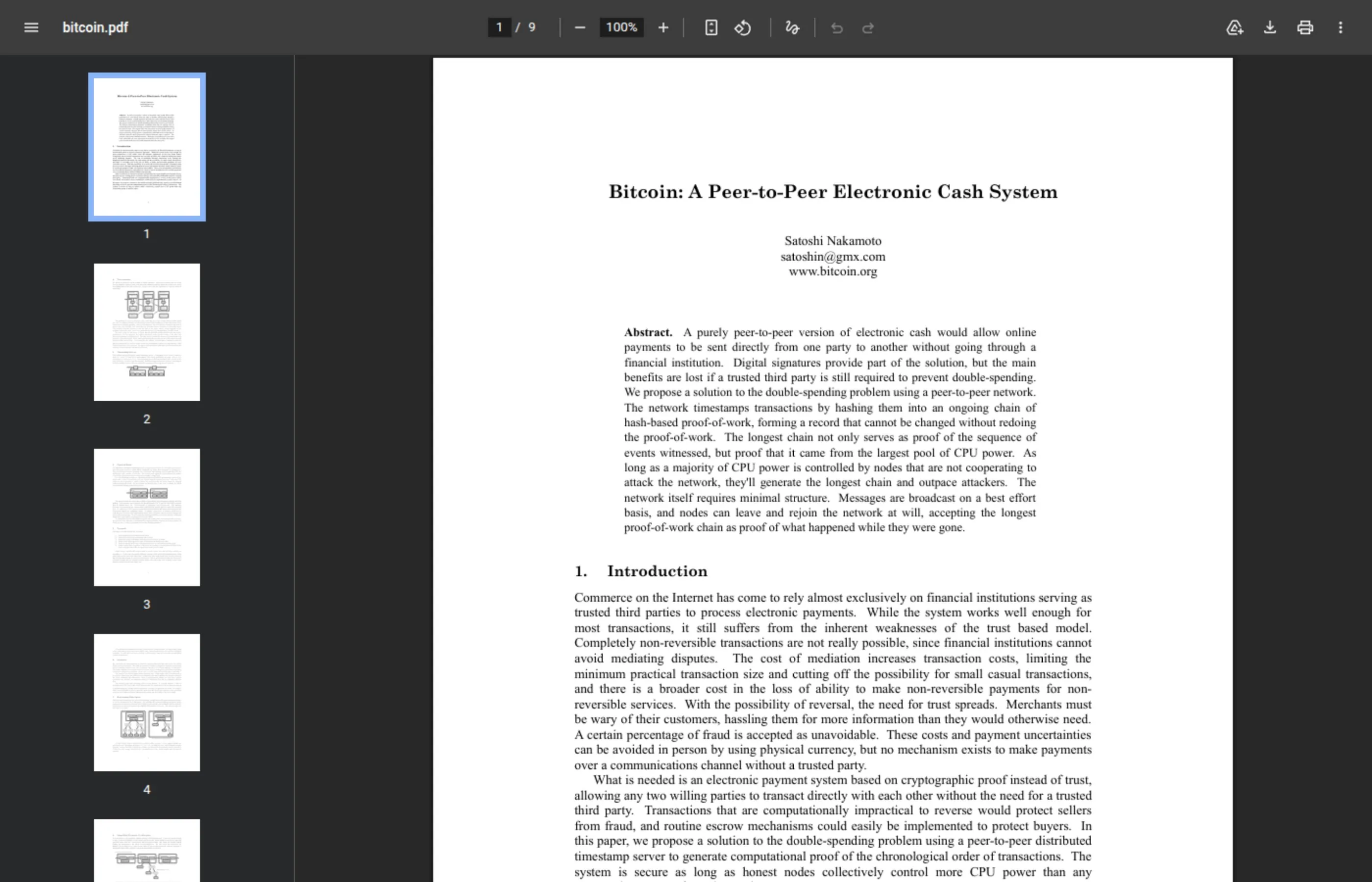
Bitcoin introduced proof of work in 2009. In PoW, specialized computers called miners compete to solve a cryptographic puzzle. The puzzle involves finding a number (called a nonce) that, when combined with the block's data and run through a hash function, produces a result below a certain target. This requires enormous computational effort, but verifying the solution is trivially easy for other nodes.
The first miner to find a valid solution broadcasts the new block to the network, earns a block reward (currently 3.125 BTC after the 2024 halving), and the process restarts. The difficulty of the puzzle adjusts automatically every 2,016 blocks (roughly two weeks) so that blocks are produced approximately every 10 minutes regardless of how much computing power joins or leaves the network. To learn more about this process, read our guide on how to mine cryptocurrency.
Proof of Stake (PoS)
Proof of stake replaces computational competition with economic commitment. Instead of burning electricity to solve puzzles, validators lock up (stake) cryptocurrency as collateral. The protocol selects validators to propose new blocks based on factors like the size of their stake and randomization. If a validator behaves dishonestly, a portion of their staked funds is destroyed in a process called slashing.
Ethereum completed its transition from PoW to PoS in September 2022 during an event called The Merge. Validators must deposit 32 ETH to participate directly, though services exist that let you stake Ethereum with smaller amounts through pooling. PoS consumes roughly 99.95% less energy than PoW, which has been a major argument in its favor.
Other Consensus Mechanisms
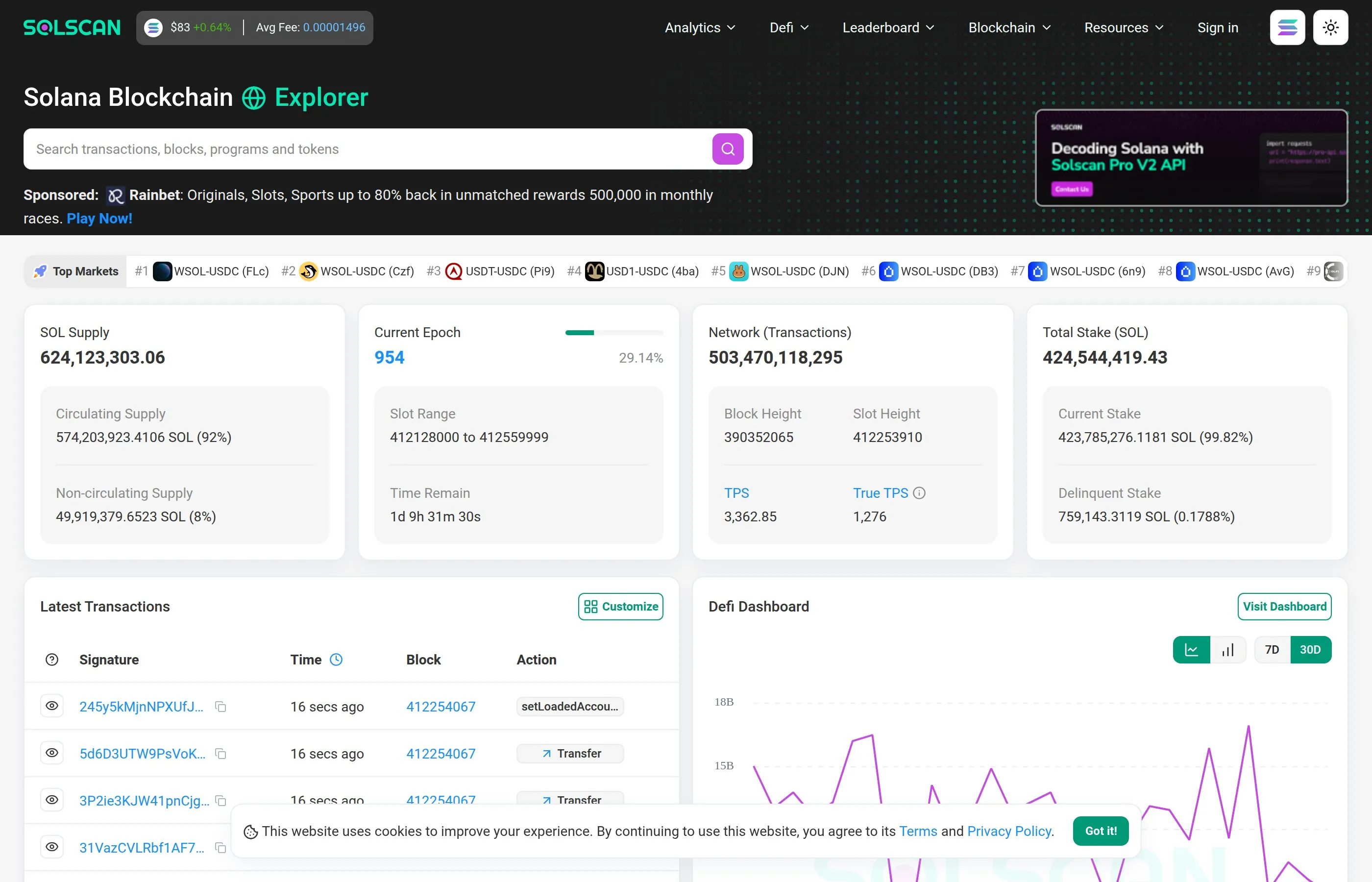
Beyond PoW and PoS, several alternative approaches exist. Delegated Proof of Stake (DPoS) lets token holders vote for a limited number of delegates who produce blocks. Proof of Authority (PoA) relies on a set of pre-approved validators, trading decentralization for speed. Proof of History (used by Solana) creates a verifiable sequence of timestamps to order transactions before consensus, dramatically increasing throughput.
🔑 Key Point
The crypto ecosystem moves fast. What matters is understanding the fundamentals - those do not change regardless of market conditions.
The Lifecycle of a Cryptocurrency Transaction
Understanding how a single transaction moves from your wallet to permanent confirmation on the blockchain is crucial. Here is the step-by-step process:

Step 1: Initiation
You open your wallet app and specify a recipient address, the amount to send, and a transaction fee. Your wallet software constructs a transaction message containing the sender address, recipient address, amount, fee, and a timestamp.
🔑 Key Point
The crypto ecosystem moves fast. What matters is understanding the fundamentals - those do not change regardless of market conditions.
Step 2: Digital Signing
Your wallet uses your private key to create a digital signature for the transaction. This signature mathematically proves that you own the funds being sent without revealing the private key itself. Anyone on the network can verify the signature using your corresponding public key.
Step 3: Broadcasting to the Mempool
The signed transaction is broadcast to the network, where it enters the mempool (memory pool). The mempool is essentially a waiting room where unconfirmed transactions sit until a miner or validator picks them up. Each node maintains its own mempool, and transactions with higher fees typically get prioritized.
Step 4: Validation
Nodes that receive your transaction perform several checks. They verify that the digital signature is valid, confirm that the sender has sufficient balance, ensure the transaction format is correct, and check that the same funds have not already been spent (preventing double-spending).
🔑 Key Point
This is where most people stop reading. If you made it this far, you understand more than 90% of crypto users. The next step is to actually try it with a small amount.
Step 5: Block Inclusion
A miner (in PoW) or validator (in PoS) selects your transaction from the mempool and includes it in a new block along with dozens or hundreds of other transactions. The block is then proposed to the network.
Step 6: Confirmation
Once the network accepts the new block and it is added to the chain, your transaction has one confirmation. Each subsequent block added on top further confirms it. Bitcoin transactions are generally considered final after six confirmations (about 60 minutes). Ethereum transactions are considered final after the block is finalized by the Casper FFG mechanism, which takes about 12 to 15 minutes.
Think of this process like sending a registered letter. You write it (initiation), seal it with your unique stamp (signing), drop it at the post office sorting facility (mempool), the postal service verifies the stamp and address (validation), a mail carrier picks it up for delivery (block inclusion), and the recipient signs for it (confirmation).
Public Keys, Private Keys, and Addresses
Cryptographic key pairs are the foundation of cryptocurrency ownership. Understanding them is essential to grasping how cryptocurrencies work.
🔑 Key Point
This is where most people stop reading. If you made it this far, you understand more than 90% of crypto users. The next step is to actually try it with a small amount.
A private key is a randomly generated 256-bit number. In hexadecimal form, it looks something like: 5HueCGU8rMjxEXxiPuD5BDku4MkFqeZyd4dZ1jvhTVqvbTLvyTJ. This key must remain secret because anyone who possesses it can spend the associated funds.
From the private key, an elliptic curve multiplication (using the secp256k1 curve in Bitcoin) generates a corresponding public key. This is a one-way mathematical function: you can always derive the public key from the private key, but you cannot reverse-engineer the private key from the public key.
A wallet address is then derived from the public key through one or more rounds of hashing (SHA-256 followed by RIPEMD-160 in Bitcoin). Addresses are what you share publicly so others can send you funds. The layered derivation process provides an extra security buffer: even if elliptic curve cryptography were somehow broken, the hashing layer would still protect funds in unused addresses.
Here is a simplified flow: Private Key -> (elliptic curve math) -> Public Key -> (hashing) -> Wallet Address. Each arrow represents a one-way operation that cannot be reversed with current technology.
How Mining Works in Detail
Mining is the process that secures proof-of-work blockchains. When we say miners "solve a puzzle," here is what actually happens technically:
- The miner gathers pending transactions from the mempool and assembles them into a candidate block.
- The miner constructs a block header containing: the previous block's hash, a Merkle root (a hash representing all transactions in the block), a timestamp, the current difficulty target, and a nonce field.
- The miner runs the block header through the SHA-256 hash function (twice, in Bitcoin's case) to produce a 256-bit hash output.
- If the resulting hash is numerically below the difficulty target, the block is valid. If not, the miner increments the nonce and tries again.
- Miners perform trillions of these hash calculations per second. The network's combined hash rate in 2026 exceeds 800 exahashes per second (EH/s).
The difficulty target adjusts so that the entire network, on average, finds one valid block every 10 minutes. If more miners join and hash power increases, the target becomes harder. If miners leave, it becomes easier. This self-regulating mechanism keeps block production steady.
Mining hardware has evolved from CPUs to GPUs to FPGAs and finally to ASICs (Application-Specific Integrated Circuits), which are chips designed solely for one hashing algorithm. A modern Bitcoin ASIC can compute over 200 terahashes per second while consuming around 3,000 watts of power. Check out our full breakdown on cryptocurrency mining for hardware comparisons and profitability calculations.
How Staking Works in Detail
In proof-of-stake systems, the block creation process looks very different. On Ethereum, for example:
- A validator deposits 32 ETH into the deposit contract, activating their validator client.
- Every 12 seconds (one slot), the protocol randomly selects a validator to propose a new block.
- A committee of validators is randomly assigned to attest to the validity of the proposed block.
- Once enough attestations accumulate, the block is added to the chain.
- Every 32 slots (one epoch, roughly 6.4 minutes), the chain creates a checkpoint. After two consecutive justified checkpoints, the earlier one becomes finalized, meaning it can never be reverted.
Validators earn rewards for proposing blocks and providing attestations. They lose funds (get slashed) if they sign contradictory messages or go offline for extended periods. The economic incentive structure is designed so that honest behavior is always more profitable than attempting to attack the network. For a step-by-step walkthrough, see our guide on how to stake Ethereum.

Smart Contracts Explained
A smart contract is a program that runs on a blockchain and executes automatically when predefined conditions are met. The term was coined by Nick Szabo in 1994, but Ethereum, launched in 2015, was the first blockchain to implement them at scale.
Think of a smart contract like a vending machine. You insert the correct amount (meet the condition), and the machine dispenses your item (executes the action) without any human intermediary. The rules are transparent, and the outcome is deterministic.
On Ethereum, smart contracts are written in a language called Solidity and compiled into bytecode that runs on the Ethereum Virtual Machine (EVM). When you interact with a smart contract, you send a transaction to the contract's address with specific instructions (called function calls). Every node on the network executes the same code with the same inputs and must arrive at the same result. This deterministic execution is what makes smart contracts trustworthy.
Smart contracts power virtually all of decentralized finance (DeFi): lending protocols, decentralized exchanges, stablecoins, yield farming, insurance products, and much more. They also enable NFTs, DAOs (Decentralized Autonomous Organizations), gaming applications, and supply chain tracking.
Limitations of Smart Contracts
Smart contracts are not perfect. They cannot access off-chain data on their own (they need oracles like Chainlink). Once deployed, their code typically cannot be changed (unless designed with upgradeability patterns). Bugs in smart contract code have led to hundreds of millions of dollars in losses. Every line of code must be carefully audited before deployment.
Understanding Gas Fees
If you have ever used Ethereum, you have encountered gas fees. Gas is a unit that measures the computational effort required to execute a transaction or smart contract operation on the network.
Every operation in the EVM has a gas cost. A simple ETH transfer costs 21,000 gas. Interacting with a DeFi protocol might cost 200,000 to 500,000 gas. Complex operations like deploying a new smart contract can cost millions of gas units.
The total fee you pay is calculated as: Gas Used x Gas Price. Since Ethereum's EIP-1559 upgrade (August 2021), the gas price has two components: a base fee that is algorithmically determined by network demand and burned (destroyed), and an optional priority fee (tip) that goes to the validator to incentivize faster inclusion.
When the network is congested, base fees rise, making transactions more expensive. When demand is low, fees drop. During peak periods in past bull markets, simple token swaps have cost over $100 in gas fees. During quiet periods, the same operation might cost less than $1. This is one of the key problems that Layer 2 solutions aim to solve.
Bitcoin's UTXO Model vs. Ethereum's Account Model
Different blockchains handle balances and transactions in fundamentally different ways. The two dominant models are Bitcoin's UTXO model and Ethereum's account model.
UTXO (Unspent Transaction Output)
Bitcoin does not have "accounts" with "balances" in the way a bank does. Instead, it tracks individual chunks of bitcoin called UTXOs. When you receive 0.5 BTC in one transaction and 0.3 BTC in another, your wallet controls two separate UTXOs.
When you want to send 0.6 BTC, your wallet selects UTXOs that cover the amount (both the 0.5 and 0.3 BTC UTXOs, totaling 0.8 BTC), creates a transaction that spends them entirely, sends 0.6 BTC to the recipient, and returns 0.2 BTC to yourself as "change" in a new UTXO. The original UTXOs are destroyed and two new ones are created.
Imagine paying for a $6 item with a $5 bill and a $3 bill. The cashier takes both bills, gives the item, and hands back $2 in change. The original bills are gone, replaced by the item and the change. That is the UTXO model in a nutshell.
Advantages of UTXOs include better privacy (each transaction can use fresh addresses), easier parallel processing, and simpler verification. The downside is increased complexity for developers building applications.
Account Model
Ethereum uses an account model similar to traditional banking. Each address has a balance, and transactions directly debit the sender and credit the receiver. There are two types of accounts: Externally Owned Accounts (EOAs) controlled by private keys, and Contract Accounts controlled by smart contract code.
The account model is more intuitive for developers and makes smart contract interactions simpler. However, it requires careful handling of transaction ordering (nonces) to prevent replay attacks and can be less private since the same address accumulates a visible history of transactions.
Blockchain Forks Explained
A fork occurs when a blockchain splits into two or more divergent paths. There are two main types:
Soft Forks
A soft fork is a backward-compatible upgrade. Nodes running the old software can still validate blocks produced under the new rules. An example is Bitcoin's SegWit upgrade in 2017, which changed how transaction data is structured but remained compatible with older nodes.
Hard Forks
A hard fork is a non-backward-compatible change that permanently splits the blockchain. Nodes must upgrade to the new software or they will follow the old chain. When the community disagrees on a hard fork, both chains can continue to exist independently.
Notable hard forks include Ethereum Classic (ETC), which split from Ethereum in 2016 after a dispute over reversing The DAO hack, and Bitcoin Cash (BCH), which forked from Bitcoin in 2017 over block size disagreements. In each case, holders of the original token received an equal amount of the new token at the moment of the split.
Planned hard forks (network upgrades where the entire community agrees) happen regularly. Ethereum's Shanghai upgrade in 2023, which enabled staking withdrawals, was a coordinated hard fork with no chain split.
Scalability: Layer 1 vs. Layer 2
Scalability is one of the biggest challenges in cryptocurrency. The so-called "blockchain trilemma" states that a blockchain can optimize for only two of three properties: decentralization, security, and scalability.
Layer 1 (L1) Solutions
Layer 1 refers to the base blockchain itself. L1 scaling approaches include increasing block size (as Bitcoin Cash attempted), reducing block time, sharding (splitting the network into parallel chains that process transactions simultaneously), and optimizing the virtual machine.
Bitcoin processes roughly 7 transactions per second (TPS). Ethereum handles around 15 to 30 TPS on its base layer. Compare this to Visa's capacity of roughly 65,000 TPS, and the scaling gap becomes clear. Different L1 blockchains like Solana (up to 65,000 theoretical TPS), Avalanche, and others take different architectural approaches to achieve higher throughput.
Layer 2 (L2) Solutions
Layer 2 solutions are protocols built on top of a Layer 1 blockchain that process transactions off-chain while inheriting the security of the underlying chain. The main types include:
- Rollups bundle hundreds of transactions into a single L1 transaction. Optimistic rollups (like Arbitrum and Optimism) assume transactions are valid and only verify them if challenged. Zero-knowledge rollups (like zkSync and StarkNet) generate cryptographic proofs that validate transaction batches mathematically.
- State channels (like Bitcoin's Lightning Network) let two parties conduct unlimited transactions off-chain and only settle the final result on L1.
- Sidechains are independent blockchains with their own consensus that connect to the main chain via a bridge. Polygon PoS is a well-known example.
L2s can reduce gas fees by 10x to 100x while maintaining security guarantees from the L1. In 2026, the majority of Ethereum transactions occur on L2 networks rather than the base layer.
Interoperability: Connecting Different Blockchains
Each blockchain is essentially its own isolated network. You cannot natively send Bitcoin to an Ethereum address or use Solana tokens on Avalanche. Interoperability solutions aim to bridge this gap.
Bridges
Cross-chain bridges lock tokens on one chain and mint equivalent wrapped tokens on another. For example, Wrapped Bitcoin (WBTC) is an ERC-20 token on Ethereum that represents BTC locked in a custodial bridge. Bridges can be centralized (trusted custodians), decentralized (smart contract-based with validators), or trustless (using cryptographic proofs).
Bridges have historically been major targets for hackers. The Wormhole bridge exploit ($325 million) and the Ronin bridge hack ($625 million) demonstrated the security risks of cross-chain infrastructure.
Cross-Chain Protocols
Protocols like Cosmos (using the Inter-Blockchain Communication protocol), Polkadot (using its relay chain and parachains), and LayerZero (using ultra-light nodes and oracles) take different approaches to enabling cross-chain communication. These protocols aim to create an interconnected ecosystem where assets and data flow freely between chains.
Privacy Coins and Privacy Techniques
Contrary to popular belief, most cryptocurrencies are not truly anonymous. Bitcoin and Ethereum transactions are pseudonymous: addresses are not directly tied to identities, but the entire transaction history is publicly visible. Blockchain analytics firms can often trace transactions back to individuals.
Privacy-focused cryptocurrencies use advanced cryptographic techniques to obscure transaction details:
- Monero (XMR) uses ring signatures (mixing your transaction with decoys), stealth addresses (one-time addresses for each transaction), and RingCT (hiding transaction amounts).
- Zcash (ZEC) uses zk-SNARKs (zero-knowledge proofs) that allow the network to verify transactions without revealing the sender, receiver, or amount. Users can choose between transparent and shielded transactions.
- Dash offers an optional CoinJoin mixing feature called PrivateSend.
On non-privacy chains, tools like Tornado Cash (on Ethereum) have been used to mix transactions and break the on-chain trail, though this has faced significant regulatory scrutiny.
Tokenomics: The Economics of Crypto
Every cryptocurrency has a set of economic rules governing its supply, distribution, and incentive structures. This field is called tokenomics, and it heavily influences a token's long-term value proposition.
Key tokenomics factors include:
- Maximum supply: Bitcoin has a hard cap of 21 million coins. Other tokens have no cap (inflationary) or have mechanisms that burn tokens to reduce supply (deflationary).
- Emission schedule: How quickly new tokens are created. Bitcoin's block reward halves roughly every four years, reducing new supply over time.
- Distribution: How tokens were initially allocated. Were they fairly launched through mining, sold in an ICO, distributed via airdrop, or allocated to insiders and venture capitalists?
- Utility: What the token is used for. Payment, governance, staking, gas fees, access to services, or collateral.
- Burn mechanisms: Ethereum's EIP-1559 burns a portion of every transaction fee. Binance Coin (BNB) conducts periodic burns based on trading volume.
- Vesting schedules: Tokens allocated to teams and investors are often locked for months or years and released gradually to prevent market dumps.
How Different Blockchains Compare
Here is a high-level comparison of how several major blockchains work:
Bitcoin: PoW consensus, SHA-256 hashing, 10-minute blocks, 7 TPS, UTXO model, limited scripting. Prioritizes security and decentralization above all.
Ethereum: PoS consensus (Beacon Chain), 12-second slots, 15-30 TPS on L1, account model, full smart contract support via EVM. The largest smart contract platform by total value locked.
Solana: Proof of History combined with PoS, 400ms block times, up to 65,000 theoretical TPS, account model. Prioritizes speed but has faced multiple outages.
Cardano: Ouroboros PoS, extended UTXO model (combining UTXO benefits with smart contract capability), 20-second blocks. Takes a research-first, peer-reviewed approach to development.
Avalanche: Snowball consensus protocol, sub-second finality, supports multiple customizable subnets. Each subnet can define its own rules and virtual machines.
Pros and Cons of How Cryptocurrencies Work
Advantages
- Decentralization: No single entity controls the network, reducing censorship and single points of failure.
- Transparency: All transactions are publicly verifiable on the blockchain.
- Permissionless access: Anyone with an internet connection can participate without needing approval.
- Programmability: Smart contracts enable complex financial instruments and applications without intermediaries.
- 24/7 operation: Crypto networks never close, unlike traditional markets and banks.
- Global and borderless: Transactions can be sent anywhere in the world in minutes.
- Predictable monetary policy: Rules governing supply and issuance are transparent and immutable.
Disadvantages
- Scalability limitations: Base layer throughput remains far below centralized systems like Visa.
- Energy consumption: Proof-of-work networks consume significant electricity, though PoS has largely addressed this.
- Complexity: The technical learning curve deters mainstream adoption.
- Irreversible transactions: Sending funds to the wrong address or losing your private key means permanent loss.
- Volatility: Price swings make many cryptocurrencies impractical for everyday payments.
- Regulatory uncertainty: Legal frameworks vary widely and continue to evolve across jurisdictions.
- Smart contract risk: Bugs in code can lead to permanent, unrecoverable loss of funds.
- Bridge vulnerabilities: Cross-chain bridges have been the target of some of the largest hacks in crypto history.
Video Explainer
Watch this video for a visual walkthrough of the concepts covered above.
Frequently Asked Questions
How do cryptocurrencies work in simple terms?
Cryptocurrencies use a network of computers to maintain a shared digital ledger. When you send crypto, your transaction is broadcast to the network, verified by multiple nodes, grouped into a block, and permanently recorded on the blockchain. Cryptographic keys prove ownership, and consensus mechanisms ensure everyone agrees on the state of the ledger without needing a central authority.
What is the difference between proof of work and proof of stake?
Proof of work requires miners to solve computational puzzles using specialized hardware and electricity to create new blocks. Proof of stake requires validators to lock up cryptocurrency as collateral, and the protocol selects them to create blocks based on their stake. PoS uses dramatically less energy and does not require specialized mining equipment.
Why do crypto transactions have fees?
Transaction fees serve two purposes. They compensate miners or validators for the computational resources spent processing and securing transactions. They also prevent spam by making it costly to flood the network with junk transactions. On Ethereum, gas fees reflect the computational complexity of each operation.
Can cryptocurrency transactions be reversed?
In general, no. Once a transaction is confirmed and added to the blockchain, it is permanent. This is by design, as immutability is a core feature of blockchain technology. In extremely rare circumstances, a network could theoretically coordinate a hard fork to reverse specific transactions (as Ethereum did after The DAO hack in 2016), but this requires broad community consensus and is highly controversial.
What happens if I lose my private key?
If you lose your private key and do not have a backup (such as a seed phrase), your funds are permanently inaccessible. There is no "forgot password" option in decentralized cryptocurrency. This is why securely backing up your seed phrase is critical. It is estimated that millions of Bitcoin are permanently lost due to forgotten or misplaced private keys.
How do smart contracts work?
Smart contracts are self-executing programs stored on a blockchain. They contain conditional logic: when predefined conditions are met, the contract automatically executes the specified actions. For example, a lending smart contract might automatically liquidate collateral if its value drops below a certain threshold. All execution is transparent and verifiable.
What are Layer 2 solutions and why do they matter?
Layer 2 solutions are protocols built on top of existing blockchains that process transactions off the main chain to improve speed and reduce costs. They matter because base layer blockchains have limited throughput. L2s like Arbitrum, Optimism, and the Lightning Network can process thousands of transactions per second at a fraction of the cost while inheriting the security of the underlying L1.
Are all cryptocurrencies anonymous?
No. Most cryptocurrencies like Bitcoin and Ethereum are pseudonymous, not anonymous. Transactions are publicly visible on the blockchain, and analytics firms can often link addresses to real-world identities. Privacy coins like Monero and Zcash use advanced cryptography to hide transaction details, offering much stronger privacy guarantees.
What is DeFi and how does it relate to how crypto works?
Decentralized finance (DeFi) is an ecosystem of financial applications built on smart contracts. It uses the programmability of blockchains like Ethereum to recreate traditional financial services (lending, borrowing, trading, insurance) without centralized intermediaries. DeFi is essentially the most prominent practical application of smart contract technology.
How do cryptocurrency wallets work?
Wallets do not actually "store" cryptocurrency. Your coins exist on the blockchain. A wallet stores your private keys and provides an interface to sign transactions and interact with the network. Hot wallets (software) stay connected to the internet for convenience. Cold wallets (hardware devices) keep your private keys offline for maximum security.
What is tokenomics and why should I care?
Tokenomics refers to the economic design of a cryptocurrency: its supply, distribution, inflation rate, utility, and incentive mechanisms. Understanding tokenomics helps you evaluate whether a token's value is likely to increase or decrease over time. A token with uncapped supply and heavy insider allocation has very different dynamics than one with a fixed supply and fair distribution.
How does Bitcoin mining difficulty adjustment work?
Every 2,016 blocks (approximately two weeks), the Bitcoin network recalculates the mining difficulty. If blocks were produced faster than the 10-minute target, difficulty increases. If blocks were slower, difficulty decreases. This ensures consistent block production regardless of how much computing power is on the network. The adjustment algorithm is one of Bitcoin's most elegant features.
What is a blockchain fork?
A fork is a divergence in the blockchain. Soft forks are backward-compatible upgrades that tighten the rules. Hard forks change the rules in ways that are not backward compatible, potentially splitting the chain into two. When the community disagrees on a hard fork, both chains can continue independently, creating a new cryptocurrency (like Bitcoin Cash forking from Bitcoin).
Final Thoughts
Understanding how cryptocurrencies work at a technical level gives you a significant edge as an investor, developer, or informed participant in the space. From the distributed ledger that eliminates centralized control, to the consensus mechanisms that keep thousands of nodes in agreement, to the cryptographic keys that prove ownership, every component serves a specific purpose in creating trustless, permissionless digital money.
The technology continues to evolve rapidly. Layer 2 solutions are making transactions faster and cheaper. Zero-knowledge proofs are enabling new forms of privacy and scalability. Cross-chain protocols are breaking down the walls between isolated networks. As you explore further, use the linked guides throughout this article to dive deeper into each topic, from blockchain fundamentals to DeFi applications and beyond.