How to Buy Chainlink (LINK): Beginner Guide 2026
— By Tony Rabbit in Tutorials
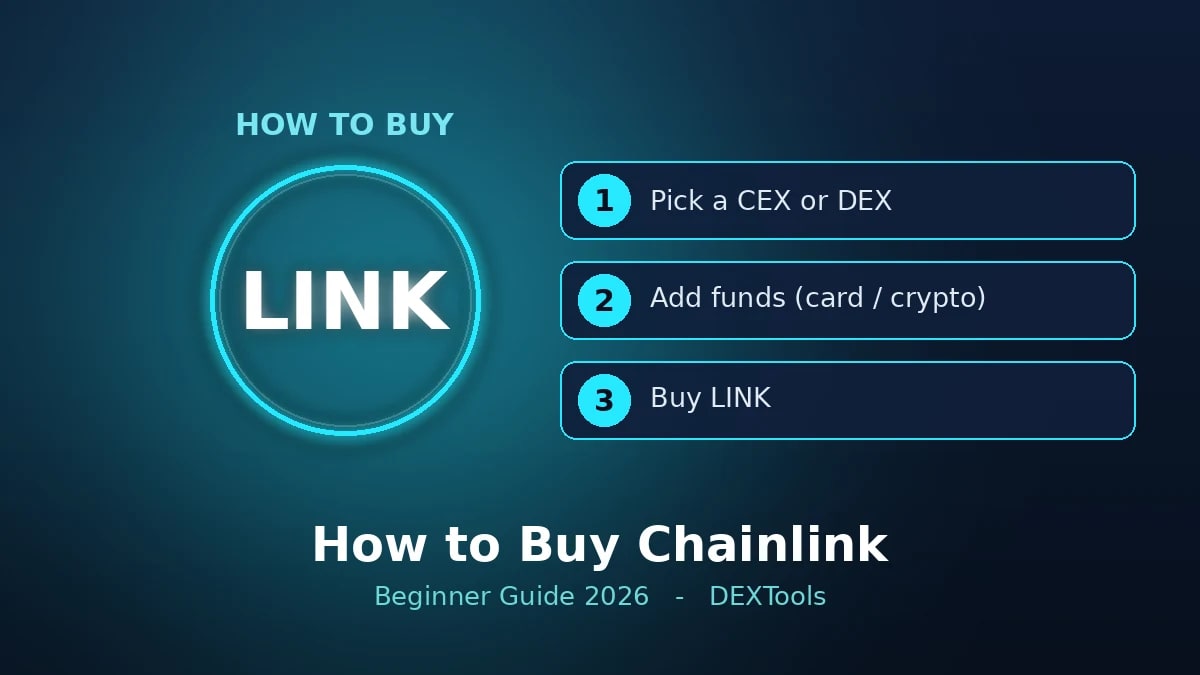
Learn how to buy Chainlink (LINK) with this beginner's guide. Discover where to buy LINK, how to store it safely, and essential tips.
Are you wondering how to buy Chainlink (LINK)? You've come to the right place. Chainlink is a decentralized oracle network that provides real-world data to smart contracts on the blockchain. Its native cryptocurrency, LINK, is essential for its operation, used to pay for oracle services and stake within the network.
You can buy LINK on a centralized exchange (CEX) or a decentralized exchange (DEX). Before you dive in, remember to check the live LINK price above to stay informed about its current market value.
What Is Chainlink (LINK)?
Chainlink is a groundbreaking decentralized oracle network (DON) that aims to bridge the gap between smart contracts on the blockchain and real-world data, events, and payments. Smart contracts, by their nature, are deterministic and operate within the confines of their blockchain. They cannot directly access information from outside their network.
This is where Chainlink comes in. It provides a secure and reliable way for smart contracts to interact with off-chain data feeds, web APIs, and traditional bank payments. This capability unlocks a vast array of new use cases for smart contracts, from decentralized finance (DeFi) applications that require real-time price feeds to insurance products that need external event verification.
The LINK token is integral to the Chainlink ecosystem. It serves multiple purposes:
- Payment for Oracle Services: Node operators who provide data to smart contracts are compensated in LINK.
- Staking: Node operators can stake LINK as collateral to ensure the reliability and honesty of the data they provide. This mechanism incentivizes good behavior and penalizes malicious actors.
- Governance: While Chainlink's governance model is evolving, LINK holders are expected to play a role in the network's future direction.
Chainlink's robust architecture and widespread adoption across various blockchain networks make it a foundational piece of the decentralized web infrastructure.
How to Buy Chainlink: Step by Step
Buying Chainlink (LINK) is a straightforward process, whether you choose a centralized or decentralized route. Here's a general step-by-step guide:
- Step. Pick a Reputable Exchange or Wallet. Decide whether you want to use a centralized exchange (CEX) like Binance, Coinbase, or Kraken, or a decentralized exchange (DEX) with a self-custody wallet like MetaMask or Trust Wallet. CEXs are generally easier for beginners, while DEXs offer more control over your assets.
- Step. Create an Account or Connect a Self-Custody Wallet. If using a CEX, you'll need to sign up, complete KYC (Know Your Customer) verification, and set up two-factor authentication for security. If using a DEX, you'll simply connect your existing self-custody wallet.
- Step. Deposit Funds. On a CEX, you can typically deposit fiat currency (USD, EUR, etc.) via bank transfer, credit/debit card, or other payment methods. You can also deposit other cryptocurrencies. For a DEX, you'll need to have another cryptocurrency (like ETH or stablecoins) in your connected wallet to swap for LINK.
- Step. Buy LINK. Navigate to the trading section of your chosen platform. Search for the LINK/USD (or LINK/ETH, LINK/USDT) trading pair. Enter the amount of LINK you wish to buy or the amount of fiat/crypto you want to spend. Review your order and confirm the purchase.
- Step. Withdraw to Your Own Wallet (Optional but Recommended). While CEXs offer convenience, storing your LINK in a self-custody wallet (especially a hardware wallet) gives you full control over your assets and reduces counterparty risk.
Where to Buy Chainlink
The choice of where to buy Chainlink (LINK) depends on your experience level, preference for control, and geographical location.
Centralized Exchanges (CEXs)
CEXs are typically the easiest entry point for beginners due to their user-friendly interfaces, fiat on-ramps, and customer support. Some of the most popular CEXs where you can buy LINK include:
- Binance: One of the largest exchanges globally, offering a wide range of trading pairs and features.
- Coinbase: Known for its user-friendly interface and strong regulatory compliance, making it popular for beginners.
- Kraken: A long-standing and reputable exchange with competitive fees and advanced trading options.
- KuCoin: Offers a vast selection of cryptocurrencies and various trading features.
When using a CEX, remember that you do not hold the private keys to your cryptocurrency until you withdraw it to your own wallet.
Decentralized Exchanges (DEXs)
DEXs offer a more decentralized way to buy LINK, allowing you to trade directly from your self-custody wallet without giving up control of your funds to a third party. They are often preferred by more experienced users. Popular DEXs include:
- Uniswap: A leading DEX on the Ethereum blockchain, offering a wide array of ERC-20 tokens, including LINK.
- Sushiswap: Another popular DEX with similar functionalities to Uniswap, often offering additional features.
- Pancakeswap: A prominent DEX on the Binance Smart Chain (BSC), where you can also find wrapped versions of LINK.
When using a DEX, ensure you have sufficient gas fees (e.g., ETH for Ethereum-based DEXs) in your wallet to cover transaction costs.
How to Buy Chainlink on a DEX
Buying Chainlink (LINK) on a decentralized exchange offers a direct, peer-to-peer trading experience from your self-custody wallet. Here's how:
- Step. Connect Your Wallet. Go to your chosen DEX (e.g., Uniswap, Sushiswap). Click on the "Connect Wallet" button, usually in the top right corner. Select your wallet provider (e.g., MetaMask, WalletConnect) and approve the connection.
- Step. Select Your Tokens. In the swap interface, choose the cryptocurrency you want to trade from (e.g., ETH, USDC) and then select LINK as the token you want to receive.
- Step. Verify the Token on DEXTools. Before confirming any swap, it's crucial to verify the correct LINK token contract address, especially on DEXs where anyone can list tokens. Use a reliable tool like DEXTools to search for Chainlink (LINK) and find its official contract address. Copy this address and paste it into the DEX's token selection field to ensure you're swapping for the legitimate LINK token.
- Step. Enter Amount and Swap. Enter the amount of LINK you wish to buy or the amount of your existing crypto you want to spend. The DEX will show you the estimated amount of LINK you'll receive. Review the transaction details, including any slippage tolerance and gas fees.
- Step. Confirm Transaction. Confirm the swap within the DEX interface, and then approve the transaction in your connected wallet. You'll need to pay a network fee (gas fee) for the transaction to be processed on the blockchain.
How Much LINK Should You Buy?
Determining how much LINK to buy is a personal decision based on your financial situation, investment goals, and risk tolerance. It's crucial to conduct your own research and never invest more than you can afford to lose.
Consider these points:
- Investment Strategy: Are you looking for a short-term trade or a long-term investment? Your strategy will influence the amount you consider.
- Dollar-Cost Averaging (DCA): Many investors use DCA, which involves investing a fixed amount of money into an asset at regular intervals (e.g., weekly or monthly), regardless of the price. This strategy helps to average out your purchase price over time and reduces the impact of market volatility.
- Risk Tolerance: Cryptocurrencies are volatile assets. Understand the risks involved before committing capital.
- Current Price: Keep an eye on the live LINK price above to inform your purchasing decisions, but remember that past performance is not indicative of future results.
Ultimately, there's no magic number for how much LINK you should buy. Start with an amount you're comfortable with and gradually increase your position if it aligns with your financial plan.
How to Store Chainlink Safely
Once you've acquired Chainlink (LINK), securing your assets is paramount. While leaving LINK on a reputable centralized exchange might be convenient for small amounts or active trading, for larger holdings, it's highly recommended to transfer them to a self-custody wallet.
Self-Custody Wallets
Self-custody wallets give you complete control over your private keys, meaning you are the sole owner of your funds. There are several types:
- Hardware Wallets (Cold Storage): These are physical devices designed to store your private keys offline, making them the most secure option against online threats. Examples include Ledger and Trezor. They are ideal for long-term storage of significant amounts of LINK.
- Software Wallets (Hot Wallets): These are applications or browser extensions that run on your computer or smartphone. They are more convenient for frequent transactions but are connected to the internet, making them slightly more vulnerable than hardware wallets. Examples include MetaMask, Trust Wallet, and Exodus.
Fees and Things to Watch
When you buy Chainlink (LINK), you'll encounter various fees and important considerations to ensure a smooth and secure transaction.
Fees to Expect:
- Trading Fees: Centralized exchanges typically charge a percentage fee on each trade. These can vary based on your trading volume and the exchange.
- Network Fees (Gas Fees): When you transfer LINK on the Ethereum network (or other networks Chainlink operates on), you'll pay a network fee to the miners/validators. These fees can fluctuate based on network congestion.
- Withdrawal Fees: CEXs often charge a small fee when you withdraw LINK from their platform to your self-custody wallet.
- Spread: On some platforms, especially those offering instant buys, you might pay a slightly higher price due to the spread (the difference between the buy and sell price).
By understanding these fees and precautions, you can navigate the process of how to buy Chainlink more effectively and securely.
Frequently Asked Questions
How do I buy Chainlink?
You can buy Chainlink (LINK) on centralized exchanges (CEXs) like Binance, Coinbase, or Kraken, or on decentralized exchanges (DEXs) like Uniswap or Sushiswap using a self-custody wallet.
Where can I buy LINK?
LINK is available on major centralized exchanges such as Binance, Coinbase, Kraken, and KuCoin. You can also find it on decentralized exchanges like Uniswap and Sushiswap.
What is the cheapest way to buy Chainlink?
The cheapest way to buy Chainlink often involves using a centralized exchange with low trading fees and making a bank transfer for fiat deposits. However, always compare fees across different platforms, including network and withdrawal fees.
Is Chainlink a good investment?
Chainlink is a well-established decentralized oracle network with significant adoption. However, whether it's a 'good investment' depends on individual financial goals and risk tolerance. It's crucial to conduct your own research and understand the inherent volatility of cryptocurrency markets.
How do I store Chainlink safely?
The safest way to store Chainlink (LINK) is in a self-custody wallet, particularly a hardware wallet (cold storage) like Ledger or Trezor. For smaller amounts or active trading, software wallets like MetaMask or Trust Wallet can be used.
What are the fees for buying Chainlink?
Fees for buying Chainlink typically include trading fees on exchanges, network (gas) fees for transactions on the blockchain, and potential withdrawal fees if you transfer LINK from an exchange to your personal wallet.
Can I buy Chainlink with fiat currency?
Yes, most centralized exchanges allow you to buy Chainlink (LINK) directly with fiat currencies like USD, EUR, or GBP using methods such as bank transfers, credit/debit cards, or other payment options.
How can I verify the correct Chainlink token on a DEX?
Always verify the official Chainlink (LINK) token contract address. You can find this on reputable crypto data sites or by using tools like DEXTools to search for Chainlink and confirm its legitimate contract address before making any swaps on a DEX.