How to Buy Pepe (PEPE): Beginner Guide 2026
— By Tony Rabbit in Tutorials
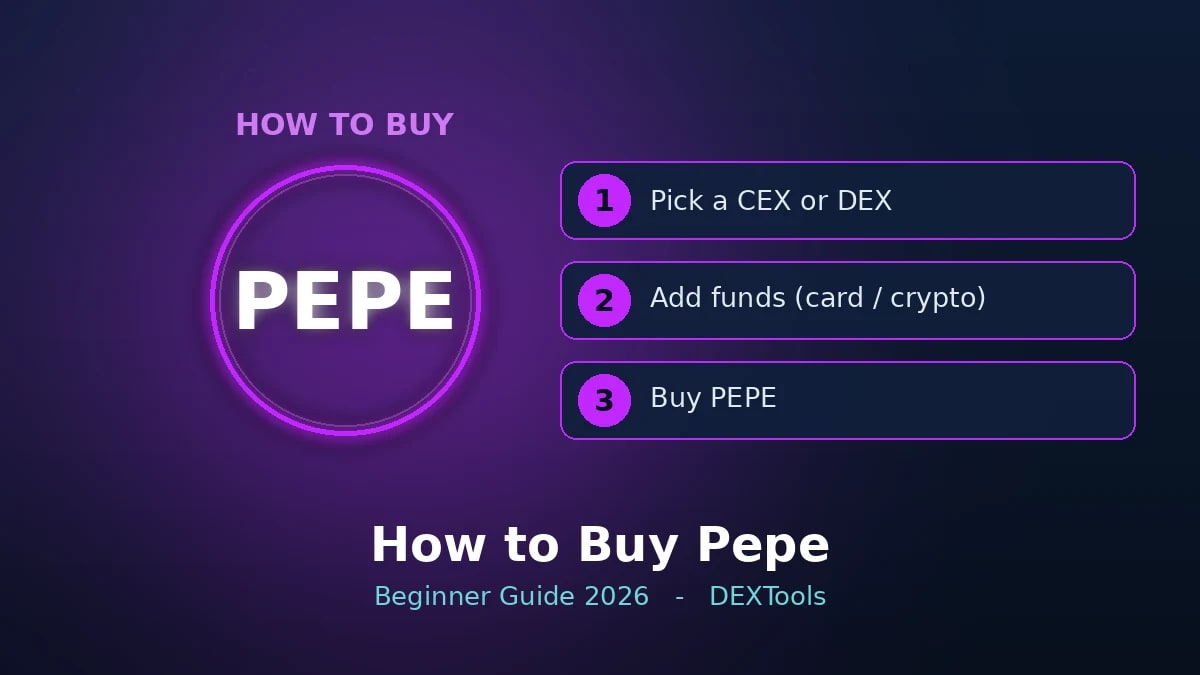
A beginner's guide on how to buy Pepe (PEPE) coin. Learn where and how to purchase PEPE safely on CEXs and DEXs.
Are you looking for how to buy Pepe (PEPE)? You can purchase PEPE easily on both centralized exchanges (CEXs) and decentralized exchanges (DEXs). Before you dive in, remember to always check the live PEPE price above to stay updated on its current value.
What Is Pepe (PEPE)?
Pepe (PEPE) is a prominent memecoin launched in April 2023 on the Ethereum blockchain. It quickly gained significant traction due to its association with the popular internet meme, Pepe the Frog. Unlike many other cryptocurrencies, PEPE was launched with a focus on being a pure memecoin, with no underlying utility or complex tokenomics beyond its cultural relevance. The project famously launched with a 'no tax' policy, meaning no transaction fees are levied on buys or sells, and no presale was conducted, aiming for a fair launch for all participants. Its rapid rise in popularity cemented its place as a notable player in the memecoin space, attracting a large community of enthusiasts.
How to Buy Pepe: Step by Step
Buying Pepe (PEPE) is a straightforward process, whether you choose a centralized or decentralized platform. Here's a general guide:
- Step. Pick a reputable exchange or wallet. Decide whether you prefer a centralized exchange (CEX) for ease of use or a decentralized exchange (DEX) for more control. Popular CEXs include Binance, Coinbase, and Kraken, while common DEXs include Uniswap.
- Step. Create an account or connect a self-custody wallet. If using a CEX, you'll need to create an account and complete KYC (Know Your Customer) verification. For a DEX, you'll connect a compatible self-custody wallet like MetaMask or Trust Wallet.
- Step. Deposit funds. On a CEX, you can typically deposit fiat currency (like USD, EUR) via bank transfer, credit/debit card, or P2P trading. Alternatively, you can deposit other cryptocurrencies. For a DEX, you'll need to have Ethereum (ETH) in your connected wallet to cover the PEPE purchase and gas fees.
- Step. Buy PEPE. Once your funds are ready, navigate to the trading section of your chosen platform. Search for PEPE and execute a buy order. On a CEX, you might place a market order (to buy immediately at the current price) or a limit order (to buy at a specific price). On a DEX, you'll use the swap function to exchange ETH for PEPE.
- Step. Withdraw to your own wallet (optional but recommended). For CEX purchases, it's often recommended to withdraw your PEPE to a personal, self-custody wallet for greater security and control over your assets.
Where to Buy Pepe
PEPE is widely available across various platforms. Your choice depends on your preference for convenience, fees, and control.
- Centralized Exchanges (CEXs): These are user-friendly platforms that act as intermediaries. They offer a simple interface, fiat-to-crypto on-ramps, and customer support. Major CEXs where you can buy PEPE include Binance, Coinbase, Kraken, KuCoin, and Gate.io. Always check if PEPE is listed in your specific region on these platforms.
- Decentralized Exchanges (DEXs): These platforms allow peer-to-peer trading directly from your self-custody wallet without an intermediary. DEXs offer more privacy and control over your assets. The primary DEX for PEPE is Uniswap, given its presence on the Ethereum blockchain.
How to Buy Pepe on a DEX
Buying PEPE on a decentralized exchange like Uniswap offers a direct and often more private way to acquire the token. Here's how:
- Step. Connect your wallet. Ensure you have a compatible self-custody wallet (e.g., MetaMask, Trust Wallet) installed and funded with enough Ethereum (ETH) to cover both the PEPE purchase and network gas fees. Navigate to the DEX (e.g., Uniswap) and connect your wallet.
- Step. Swap ETH for PEPE. In the swap interface, select ETH as the token you want to swap from and PEPE as the token you want to receive. Enter the amount of ETH you wish to spend. The interface will show you the estimated amount of PEPE you will receive.
- Step. Verify the token on DEXTools. Before confirming any transaction, it is crucial to verify the correct PEPE contract address. You can easily do this by searching for PEPE on DEXTools and copying the official contract address. Paste this address into the DEX's token selection field to ensure you are trading the legitimate PEPE token and not a scam imitation.
- Step. Confirm the transaction. Review the transaction details, including the amount of PEPE, the ETH spent, and the estimated gas fees. Confirm the transaction in your wallet. Once confirmed on the blockchain, your PEPE tokens will appear in your connected wallet.
How Much PEPE Should You Buy?
Deciding how much PEPE to buy is a personal financial decision. There is no one-size-fits-all answer, and it's important to only invest what you can afford to lose. Consider your overall investment goals, risk tolerance, and financial situation. Many investors use a strategy called dollar-cost averaging (DCA), where they invest a fixed amount of money at regular intervals, regardless of the PEPE price above. This approach can help mitigate the impact of market volatility. Remember, the cryptocurrency market is highly volatile, and prices can fluctuate significantly.
How to Store Pepe Safely
Once you've acquired PEPE, securing your assets is paramount. Here are common storage methods:
- Hardware Wallets (Cold Storage): These are physical devices that store your private keys offline, offering the highest level of security against online threats. Examples include Ledger and Trezor. This is generally recommended for larger holdings.
- Software Wallets (Hot Storage): These are applications that run on your computer or smartphone. While convenient for frequent transactions, they are connected to the internet and thus more susceptible to online attacks. Examples include MetaMask, Trust Wallet, and Exodus.
- Exchange Wallets: When you buy PEPE on a CEX, your tokens are held in the exchange's wallet. While convenient, you don't have full control over your private keys. It's generally advised to move significant holdings to a self-custody wallet.
Fees and Things to Watch
When you're learning how to buy Pepe, it's important to be aware of potential costs and risks:
- Transaction Fees: On CEXs, you'll encounter trading fees (buy/sell) and withdrawal fees. On DEXs, you'll pay network gas fees (in ETH) for every transaction, which can vary significantly based on network congestion.
- Slippage: When buying on a DEX, especially with larger amounts or volatile tokens, you might experience slippage. This is the difference between the expected price of a trade and the price at which the trade is executed. You can often adjust your slippage tolerance in the DEX settings.
- Volatility: Memecoins like PEPE are known for extreme price volatility. The value can change rapidly, leading to significant gains or losses. Always refer to the live PEPE price above for the most current data.
- Scams and Fake Tokens: The popularity of PEPE has led to numerous scam tokens and phishing attempts. Always double-check the contract address of PEPE on reliable sources like DEXTools or the official project website before making any purchase.
Frequently Asked Questions
How do I buy Pepe?
You can buy Pepe (PEPE) on centralized exchanges (CEXs) like Binance, Coinbase, or Kraken, or on decentralized exchanges (DEXs) like Uniswap. The process typically involves creating an account, depositing funds, and then executing a buy order for PEPE.
Where can I buy PEPE?
PEPE is available on major centralized exchanges such as Binance, Coinbase, Kraken, and KuCoin. You can also purchase PEPE on decentralized exchanges, primarily Uniswap, by swapping Ethereum (ETH) for PEPE.
What is the cheapest way to buy Pepe?
The cheapest way to buy Pepe can vary. Centralized exchanges often have lower trading fees but may have withdrawal fees. Decentralized exchanges have variable gas fees (paid in ETH) that can be high during network congestion. Comparing fees across platforms at the time of purchase is recommended.
Is Pepe a good investment?
DEXTools does not provide financial advice. Whether Pepe is a 'good investment' depends on your personal financial goals, risk tolerance, and market analysis. PEPE is a memecoin and is known for high volatility and speculative nature. Always conduct your own research before investing.
Can I buy Pepe with USD?
Yes, you can typically buy Pepe with USD on most centralized exchanges that list PEPE. These platforms allow you to deposit USD via bank transfer, credit/debit card, or other payment methods, which you can then use to purchase PEPE.
What wallet should I use for Pepe?
For self-custody, popular software wallets like MetaMask or Trust Wallet are suitable for storing PEPE. For enhanced security, especially for larger holdings, a hardware wallet like Ledger or Trezor is recommended.
How do I find the correct PEPE contract address?
You can find the official PEPE contract address by searching for PEPE on DEXTools. Always verify the address on a reputable data platform or the official project website to avoid fake tokens.
What are the risks of buying Pepe?
The risks of buying Pepe include extreme price volatility, potential for significant losses, exposure to scams (fake tokens, phishing), and smart contract vulnerabilities (though PEPE's contract is relatively simple). As a memecoin, its value is largely driven by community sentiment and speculation.