How to Buy Sui (SUI): Beginner Guide 2026
— By Tony Rabbit in Tutorials
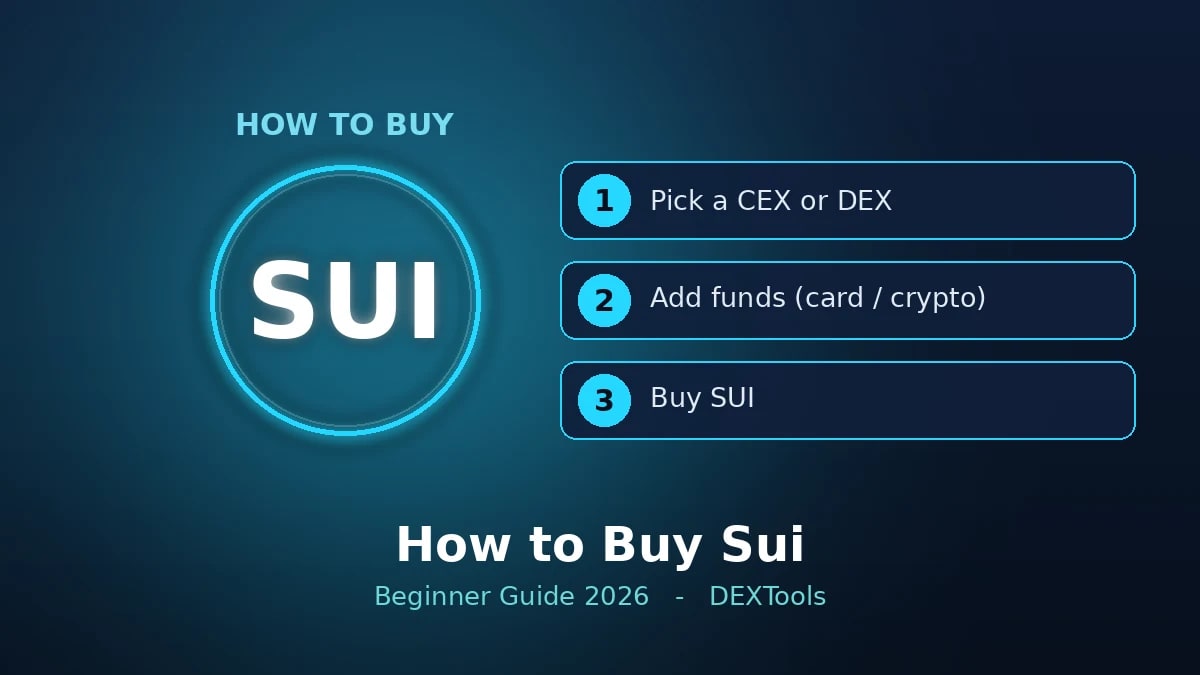
Learn how to buy Sui (SUI) on centralized and decentralized exchanges, understand its technology, and store it safely.
If you're looking to understand how to buy Sui (SUI), you've come to the right place. Sui is a fast, secure, and scalable Layer 1 blockchain designed to power the next generation of web3 applications. You can acquire SUI tokens on both centralized exchanges (CEXs) and decentralized exchanges (DEXs). Before you dive in, remember to check the live SUI price above to stay updated on its current market value.
What Is Sui (SUI)?
Sui is a groundbreaking Layer 1 blockchain developed by Mysten Labs, a team composed of former lead architects of Meta's Diem blockchain project. It stands out due to its unique object-centric model and parallel execution capabilities, which allow it to achieve incredibly high transaction throughput and low latency.
Unlike traditional blockchains that process transactions sequentially, Sui processes many transactions in parallel, particularly those involving independent assets. This innovative approach makes Sui highly scalable and efficient, suitable for a wide range of applications from DeFi to gaming and social platforms.
The native cryptocurrency of the Sui network is SUI. It serves several crucial functions within the ecosystem:
- Gas Fees: SUI is used to pay for transaction processing and storage on the Sui network.
- Staking: SUI holders can stake their tokens with validators to participate in the network's Proof-of-Stake consensus mechanism, helping to secure the network and earn rewards.
- Governance: SUI may eventually be used for on-chain governance, allowing token holders to vote on important protocol upgrades and changes.
- Storage Fund: SUI contributes to a storage fund that compensates future validators for storing previously committed on-chain data.
Sui's underlying technology, including its Move programming language (a Rust-based language optimized for secure asset management), and its Narwhal and Bullshark consensus mechanisms, position it as a strong contender in the competitive Layer 1 blockchain space.
How to Buy Sui: Step by Step
Here's a general guide on how to buy Sui tokens, whether you choose a CEX or a DEX. We'll cover both methods, but the initial steps are similar.
- Step. Pick a Reputable Exchange or Wallet: Your first decision is where you want to buy SUI. For beginners, a centralized exchange (CEX) like Binance, Coinbase, or Kraken is often the easiest route. If you prefer more control and decentralization, you'll need a self-custody wallet that supports the Sui network, such as Sui Wallet, Martian Wallet, or Trust Wallet, to interact with a decentralized exchange (DEX).
- Step. Create an Account or Connect a Self-Custody Wallet:
- For CEX: You'll need to create an account, which typically involves providing an email address, setting a password, and completing Know Your Customer (KYC) verification. This usually requires submitting a government-issued ID and sometimes proof of address.
- For DEX: If you're using a self-custody wallet, ensure it's set up and funded. You'll then connect this wallet directly to the DEX platform.
- Step. Deposit Funds:
- For CEX: Once your account is verified, you can deposit funds. Most CEXs allow deposits via bank transfer, debit/credit card, or by transferring other cryptocurrencies (like USDT, USDC, or ETH) from another wallet or exchange.
- For DEX: Your self-custody wallet needs to be funded with a cryptocurrency that can be swapped for SUI. This is typically a stablecoin like USDC or USDT, or another major crypto like ETH, on a network that the DEX supports.
- Step. Buy SUI:
- For CEX: Navigate to the trading section of the exchange. Search for the SUI trading pair (e.g., SUI/USDT, SUI/USD). Enter the amount of SUI you wish to buy or the amount of fiat/crypto you want to spend. Review the order details and confirm your purchase.
- For DEX: Go to the swap interface on the DEX. Select the cryptocurrency you want to swap from (e.g., USDC) and select SUI as the cryptocurrency you want to receive. Enter the amount, review the transaction details (including gas fees), and confirm the swap through your connected wallet.
- Step. Withdraw to Your Own Wallet (Recommended for CEX purchases): While you can leave your SUI on a CEX, it's generally recommended to withdraw your tokens to a self-custody wallet for greater security and control. This is often referred to as 'not your keys, not your crypto.' Ensure you select the correct network (Sui network) when withdrawing and double-check the wallet address.
Where to Buy Sui
Sui is available on a wide range of platforms, catering to different preferences for buying crypto.
Centralized Exchanges (CEXs)
CEXs are the most common entry point for many new crypto investors due to their user-friendly interfaces and robust security features (though they do hold your private keys). Some of the top exchanges where you can buy SUI include:
- Binance: One of the world's largest exchanges, offering high liquidity and various trading pairs for SUI.
- Coinbase: A popular choice for beginners, known for its ease of use and regulatory compliance in many regions.
- Kraken: Respected for its security and professional trading features.
- KuCoin: Offers a wide selection of cryptocurrencies, including SUI, and various trading options.
- Bybit: A fast-growing exchange popular for derivatives trading but also offers spot trading for SUI.
Always check if SUI is available in your specific region on these exchanges, as offerings can vary.
Decentralized Exchanges (DEXs)
DEXs allow you to trade cryptocurrencies directly from your self-custody wallet, offering more privacy and control over your assets. To buy SUI on a DEX, you'll need a wallet compatible with the Sui network. Examples of DEXs where you might find SUI include those built natively on the Sui blockchain, such as Cetus, Turbos Finance, or other cross-chain DEXs that support Sui.
How to Buy Sui on a DEX
Buying SUI on a DEX provides a different experience, emphasizing self-custody and direct interaction with the blockchain. Here's a quick overview:
- Step. Connect Your Wallet: Go to the website of a Sui-compatible DEX. Click on the 'Connect Wallet' button, usually found in the top right corner. Select your Sui-compatible wallet (e.g., Sui Wallet, Martian Wallet) from the options and approve the connection.
- Step. Select Tokens for Swap: In the swap interface, choose the token you want to trade from (e.g., USDC, USDT, or another crypto already in your wallet) and select SUI as the token you want to receive.
- Step. Enter Amount and Swap: Input the amount of the token you wish to swap. The DEX will automatically calculate the equivalent amount of SUI you will receive, factoring in current prices and fees.
- Step. Verify the Token on DEXTools: Before confirming, it's a good practice to verify the SUI token's contract address on a platform like DEXTools. This helps ensure you're swapping for the legitimate SUI token and not a scam or fake version.
- Step. Confirm Transaction: Review all details, including the exchange rate, slippage, and estimated gas fees. Confirm the transaction in your wallet. Once confirmed, the SUI tokens will be sent directly to your connected wallet.
How Much SUI Should You Buy?
The decision of how much SUI to buy is entirely personal and depends on your financial situation, risk tolerance, and investment goals. It's crucial to only invest what you can afford to lose. Cryptocurrency markets are volatile, and prices can fluctuate significantly.
You can use the live SUI price above as a reference point to understand its current valuation. Many investors employ a strategy called Dollar-Cost Averaging (DCA), where they invest a fixed amount of money at regular intervals (e.g., weekly or monthly) regardless of the price. This strategy helps to mitigate the impact of market volatility and averages out your purchase price over time.
Remember that investing in SUI, like any cryptocurrency, carries inherent risks. Conduct your own research and consider consulting with a financial advisor.
How to Store Sui Safely
Once you've learned how to buy Sui, securing your assets is paramount. Storing your SUI safely is crucial to protect your investment from hacks, scams, or loss.
- Hardware Wallets (Cold Storage): These are physical devices that store your private keys offline, making them highly resistant to online threats. Ledger and Trezor are popular brands, and it's essential to check if they support the Sui network directly or via a compatible third-party wallet interface. This is considered the most secure method for long-term storage.
- Software Wallets (Hot Storage): These are applications that run on your computer or smartphone. Examples include the official Sui Wallet, Martian Wallet, Trust Wallet, or MetaMask (if it supports the Sui network directly or via a custom RPC). While convenient for frequent transactions, they are connected to the internet and thus carry a higher risk than hardware wallets. Always download software wallets from official sources.
- Exchange Wallets: When you buy SUI on a CEX, your tokens are held in the exchange's wallet. While convenient, you don't control the private keys. If the exchange is hacked or faces issues, your funds could be at risk. For this reason, it's generally recommended to move significant amounts of SUI to a self-custody wallet.
Regardless of the wallet type, always back up your seed phrase (a series of 12 or 24 words) and store it in a secure, offline location. This phrase is the master key to your funds.
Fees and Things to Watch
When you're learning how to buy Sui, it's important to be aware of the associated costs and potential pitfalls.
- Trading Fees: CEXs charge fees for buying and selling SUI, which can vary based on your trading volume and the exchange's fee structure. DEXs also have trading fees, often called 'swap fees,' which go to liquidity providers.
- Network (Gas) Fees: Transactions on the Sui network incur gas fees, paid in SUI. These fees compensate validators for processing and securing transactions. When withdrawing SUI from a CEX or performing a swap on a DEX, you'll pay these network fees.
- Withdrawal Fees: CEXs may charge a separate fee for withdrawing SUI to an external wallet.
- Slippage: On DEXs, especially with less liquid pairs or large orders, the executed price might differ slightly from the quoted price. This is called slippage. You can often set a maximum slippage tolerance in your wallet or on the DEX interface.
By understanding these factors, you can make more informed decisions when purchasing and managing your SUI tokens.
Frequently Asked Questions
How do I buy Sui?
You can buy Sui (SUI) on centralized exchanges (CEXs) like Binance, Coinbase, or Kraken, or on decentralized exchanges (DEXs) using a self-custody wallet like Sui Wallet or Martian Wallet.
Where can I buy SUI?
SUI is available on major centralized exchanges such as Binance, Coinbase, Kraken, KuCoin, and Bybit. It can also be purchased on decentralized exchanges built on the Sui network, like Cetus or Turbos Finance.
What is the cheapest way to buy Sui?
The cheapest way to buy Sui can vary. Centralized exchanges often have lower trading fees for larger volumes, while DEXs might have variable gas fees depending on network congestion. Comparing fees across platforms and considering dollar-cost averaging can help reduce overall costs.
Is Sui a good investment?
Sui is a promising Layer 1 blockchain with unique technology and a strong development team. However, like all cryptocurrencies, it carries significant risk due to market volatility. This is not financial advice, and you should conduct your own research before investing.
What wallet can I use for Sui?
You can use self-custody wallets specifically designed for the Sui network, such as the official Sui Wallet or Martian Wallet. Some multi-chain wallets like Trust Wallet may also support SUI.
Do I need KYC to buy Sui?
If you buy Sui on a centralized exchange (CEX), you will almost certainly need to complete Know Your Customer (KYC) verification, which involves submitting personal identification. Buying on a decentralized exchange (DEX) typically does not require KYC.
How do I store my Sui safely?
The safest way to store Sui is in a hardware wallet (cold storage) like Ledger or Trezor, where your private keys are kept offline. Alternatively, a reputable software wallet (hot storage) like the Sui Wallet or Martian Wallet offers good security for active use.
What are the fees for buying Sui?
Fees for buying Sui include trading fees on exchanges, network (gas) fees for transactions on the Sui blockchain, and potentially withdrawal fees if you move SUI from a centralized exchange to a private wallet.