암호화폐 투자 방법: 2026년 전략
— By Tony Rabbit in Tutorials

암호화폐 투자 전략 2026.
Learning how to invest in cryptocurrency is one of the most valuable financial skills you can develop in 2026. Unlike short-term trading, crypto investing focuses on building long-term wealth through strategic asset allocation, patience, and disciplined risk management. Whether you are starting with $100 or $100,000, the principles remain the same: understand the market, diversify your holdings, and never invest more than you can afford to lose.
This guide walks you through everything you need to know about investing in cryptocurrency, from choosing the right assets and platforms to building a balanced portfolio that matches your risk tolerance. We will cover proven strategies like dollar-cost averaging, portfolio rebalancing, staking for passive income, and how to navigate both bull and bear markets with confidence.
Investing vs Trading: Understanding the Difference
Before you invest a single dollar, it is critical to understand the difference between investing and trading. These are fundamentally different approaches with different goals, timeframes, and skill requirements.
Investing means buying and holding assets for months or years, focusing on long-term growth. Investors care about fundamentals: the technology behind a project, its adoption rate, the team, the tokenomics, and where the asset might be in 3 to 5 years. Investing requires patience and the ability to ignore short-term price noise.
Portfolio Allocation by Risk Level
ETH: 25%
Stablecoins: 15%
ETH: 25%
Altcoins: 25%
Stables: 10%
ETH: 20%
Altcoins: 40%
Memes: 15%
Stables: 5%
Trading means buying and selling assets over short periods (minutes, hours, days, or weeks) to profit from price volatility. Traders rely heavily on technical analysis and chart reading to time entries and exits. Trading demands constant attention and is far riskier for beginners.
The key differences at a glance:

- Time horizon: Investing is months to years. Trading is minutes to weeks.
- Effort: Investing requires periodic check-ins. Trading requires daily (sometimes hourly) attention.
- Risk profile: Investing spreads risk over time. Trading amplifies risk through frequent decisions.
- Tax implications: Long-term holdings often qualify for lower capital gains tax rates, while short-term trades are taxed as ordinary income.
- Success rate: Studies consistently show that the vast majority of active traders lose money over time, while patient investors in quality assets tend to see positive returns across full market cycles.
If you are new to crypto, investing is the smarter starting point. You can always learn to trade later once you understand the market dynamics.
💡 Golden Rule
Never invest more than you can afford to lose. Start with small amounts ($50-100) and use Dollar Cost Averaging to reduce risk.
💡 Golden Rule
Never invest more than you can afford to lose. Start with small amounts ($50-100) and use Dollar Cost Averaging to reduce risk.
How Much Should You Invest in Cryptocurrency?
The most common question beginners ask is: "How much money should I put into crypto?" The answer depends entirely on your financial situation, risk tolerance, and investment goals.
The 5% Rule
Most financial advisors recommend allocating no more than 5% to 10% of your total investment portfolio to cryptocurrency. This is sometimes called the "5% rule" for high-risk assets. The reasoning is straightforward: crypto remains one of the most volatile asset classes, and even the strongest projects can experience 50% to 80% drawdowns during bear markets.
If your total investment portfolio is $50,000, that means allocating $2,500 to $5,000 to crypto. This amount gives you meaningful exposure to potential upside while limiting your downside risk to a manageable portion of your overall wealth.
Assessing Your Risk Tolerance
Before deciding on an amount, ask yourself these questions:
- Do you have an emergency fund covering 3 to 6 months of expenses?
- Are you carrying high-interest debt (credit cards, personal loans)?
- Can you afford to lose 100% of what you invest in crypto without impacting your lifestyle?
- How would you react emotionally if your crypto portfolio dropped 50% in a week?
- Is your investment timeline at least 2 to 3 years?
If you answered "no" to any of the first three questions, you should focus on building financial stability before investing in crypto. Pay off high-interest debt first, build your emergency fund, and only then consider crypto allocation.
🔑 Key Point
The crypto ecosystem moves fast. What matters is understanding the fundamentals - those do not change regardless of market conditions.
Starting Small and Scaling Up
There is no minimum amount required to invest in cryptocurrency. You can buy cryptocurrency with as little as $10 on most exchanges. Starting small has a significant advantage: it lets you learn how the market works, experience volatility firsthand, and develop emotional discipline before larger sums are at stake.

A practical approach for beginners: start with $50 to $200 per month using a dollar-cost averaging (DCA) strategy, then increase your contribution as you gain knowledge and confidence.
🔑 Key Point
The crypto ecosystem moves fast. What matters is understanding the fundamentals - those do not change regardless of market conditions.

Cryptocurrency Investment Strategies
Having a clear strategy is what separates successful investors from those who panic sell at the bottom. Here are the three most proven approaches for crypto investing.
Dollar-Cost Averaging (DCA)
Dollar-cost averaging is the practice of investing a fixed amount of money at regular intervals, regardless of price. For example, investing $200 into Bitcoin every Monday, no matter whether the price is $60,000 or $90,000.
DCA works exceptionally well in crypto because:
💡 Portfolio Check
Review your allocation: Is more than 50% in one coin? Are you taking profits on winners? Do you have a stablecoin reserve for dips? If not, rebalance today.
- It removes emotion from investment decisions
- It automatically buys more when prices are low and less when prices are high
- It eliminates the stress of trying to time the market
- Historical data shows DCA into Bitcoin has been profitable over any 3+ year window
DCA is the single best strategy for beginners and even experienced investors who want a hands-off approach. Learn how to set it up in our complete guide on how to dollar-cost average in crypto.
Lump Sum Investing
Lump sum investing means deploying all your capital at once. If you have $10,000 to invest, you put it all in immediately rather than spreading it over weeks or months.
Research across traditional markets shows that lump sum investing outperforms DCA roughly two-thirds of the time because markets tend to trend upward. However, in crypto, the extreme volatility makes this approach riskier. If you invest a lump sum right before a 40% crash, you will need a 67% gain just to break even.
Lump sum works best when:
💡 Portfolio Check
Review your allocation: Is more than 50% in one coin? Are you taking profits on winners? Do you have a stablecoin reserve for dips? If not, rebalance today.
- You have strong conviction that prices are currently undervalued
- You have a long time horizon (5+ years) and can weather drawdowns
- You have done thorough research (DYOR) and understand the risks
Value Averaging
Value averaging is a more sophisticated approach where you adjust your investment amount each period to hit a target portfolio value. If your target growth is $500 per month and your portfolio grew by $300 naturally, you invest only $200. If it dropped by $200, you invest $700.
This strategy forces you to invest more when prices are low and less when prices are high, which can produce better returns than standard DCA. The downside is it requires more active management and can demand larger investments during significant downturns when cash might be tight.
How to Build a Crypto Portfolio: Allocation Strategies
Building a well-diversified crypto portfolio is essential for managing risk. Not all cryptocurrencies carry the same level of risk, and your allocation should reflect your personal risk tolerance.
Conservative Portfolio (70/20/10)
A conservative allocation is ideal for risk-averse investors, those new to crypto, or anyone investing a significant portion of their savings:
- 70% Large-cap (BTC and ETH): Bitcoin and Ethereum are the most established, liquid, and least volatile cryptocurrencies. They are the closest thing to "blue chips" in crypto.
- 20% Mid-cap established projects: Solana, Chainlink, Avalanche, Polygon, and other projects with proven track records, active development, and real adoption.
- 10% Small-cap/Growth: Smaller projects with higher risk but potentially higher reward. These could include newer Layer 1s, DeFi protocols, or infrastructure plays.
This allocation provides solid exposure to crypto upside while limiting your risk to established, battle-tested projects.
Moderate Portfolio (50/30/20)
A moderate allocation suits investors with some crypto experience who can stomach larger drawdowns:
- 50% Large-cap (BTC and ETH): Still the foundation, but with more room for growth-oriented holdings.
- 30% Mid-cap projects: A broader selection of established altcoins across different sectors (DeFi, infrastructure, gaming, AI).
- 20% Small-cap/Growth: More exposure to emerging projects and new narratives, with the understanding that some may fail entirely.
Aggressive Portfolio (40/30/30)
An aggressive allocation is for experienced investors with high risk tolerance and a long time horizon:
- 40% Large-cap (BTC and ETH): Still the largest allocation, providing stability as an anchor.
- 30% Mid-cap projects: Significant allocation to proven altcoins that could outperform BTC and ETH in a bull market.
- 30% Small-cap/Growth: Maximum exposure to high-risk, high-reward opportunities. This is where 10x to 100x returns can happen, but also where total losses are most common.
Regardless of which allocation you choose, never put all your eggs in one basket. Even if you are extremely bullish on a single project, limiting any single position to 20% to 25% of your portfolio protects you from project-specific risks (hacks, regulatory action, team failures).
Which Cryptocurrencies Should You Invest In?
Choosing the right assets is the most important decision you will make as a crypto investor. Here is how to think about different categories.
Bitcoin (BTC): The Foundation
Bitcoin remains the cornerstone of any serious crypto portfolio. It has the longest track record, the deepest liquidity, the widest institutional adoption, and the strongest network effect. Bitcoin ETFs have brought billions of dollars in institutional capital, and its fixed supply of 21 million coins creates a compelling scarcity narrative.
For most investors, Bitcoin should represent 30% to 50% of their crypto portfolio. It will not deliver the explosive returns of smaller altcoins, but it is the least likely to go to zero and historically recovers from every bear market to reach new all-time highs.
Ethereum (ETH): The Platform Play
Ethereum is the leading smart contract platform, powering the vast majority of DeFi, NFTs, and decentralized applications. With the transition to proof-of-stake complete and Layer 2 scaling solutions maturing, Ethereum is positioned for continued growth. You can also stake your ETH to earn passive yield while holding it long-term.
Solana (SOL) and Other Blue-Chip Altcoins
Beyond BTC and ETH, there are several established altcoins worth considering for the mid-cap portion of your portfolio. Solana has emerged as a serious competitor with fast transaction speeds and a growing ecosystem. Other projects like Chainlink (LINK), Avalanche (AVAX), and Polkadot (DOT) each serve different roles in the broader crypto infrastructure.
When evaluating altcoins, always do your own research. Look at the team, the technology, the tokenomics, the community, real usage metrics, and the competitive landscape.
Stablecoins: Your Strategic Reserve
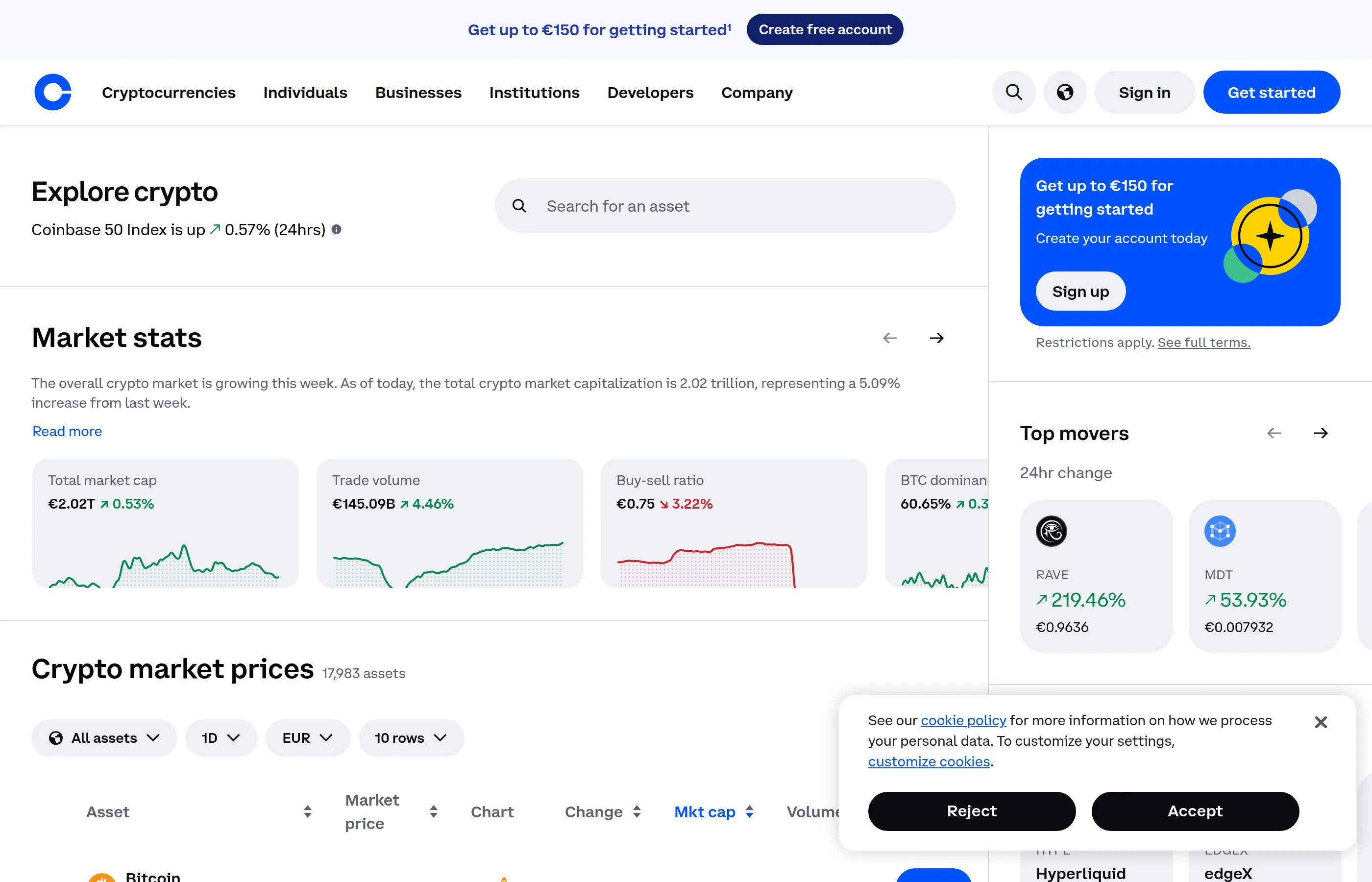
Holding 5% to 15% of your portfolio in stablecoins (USDC, USDT, DAI) is not just playing it safe. It is a strategic move. Stablecoins give you dry powder to deploy during market crashes when assets are at their cheapest. They also let you take partial profits without converting to fiat and dealing with bank transfers.
Crypto ETFs: Investing Without Holding Crypto Directly
If you prefer a more traditional investment vehicle, crypto ETFs offer exposure to cryptocurrency through your existing brokerage account, retirement fund, or investment platform.
Bitcoin ETFs
Spot Bitcoin ETFs were approved in early 2024 and have since attracted enormous inflows from institutional and retail investors alike. These funds hold actual Bitcoin and track its price, minus management fees (typically 0.2% to 0.5% annually). Major issuers include BlackRock (IBIT), Fidelity (FBTC), and others.
Bitcoin ETFs are ideal for investors who want Bitcoin exposure without dealing with wallets, private keys, or exchange accounts. They also make it possible to hold Bitcoin in tax-advantaged accounts like IRAs and 401(k)s.
Ethereum ETFs
Spot Ethereum ETFs followed Bitcoin ETFs to market and provide direct exposure to ETH price movements. These are a solid option for investors who believe in Ethereum's long-term value proposition but want the simplicity and regulatory protections of a traditional investment fund.
ETF vs Direct Holding: Pros and Cons
ETFs offer convenience, regulatory protection, and tax-advantaged account compatibility. However, holding crypto directly gives you true ownership, the ability to use your assets in DeFi, staking rewards, and no ongoing management fees. Many serious crypto investors use a combination: ETFs in retirement accounts and direct holdings in personal wallets for active use.
Staking as an Investment Strategy
Staking is one of the most compelling aspects of crypto investing because it allows you to earn passive yield on assets you are already holding for the long term. Think of it as earning interest on your savings, except the rates are typically much higher than traditional banks offer.
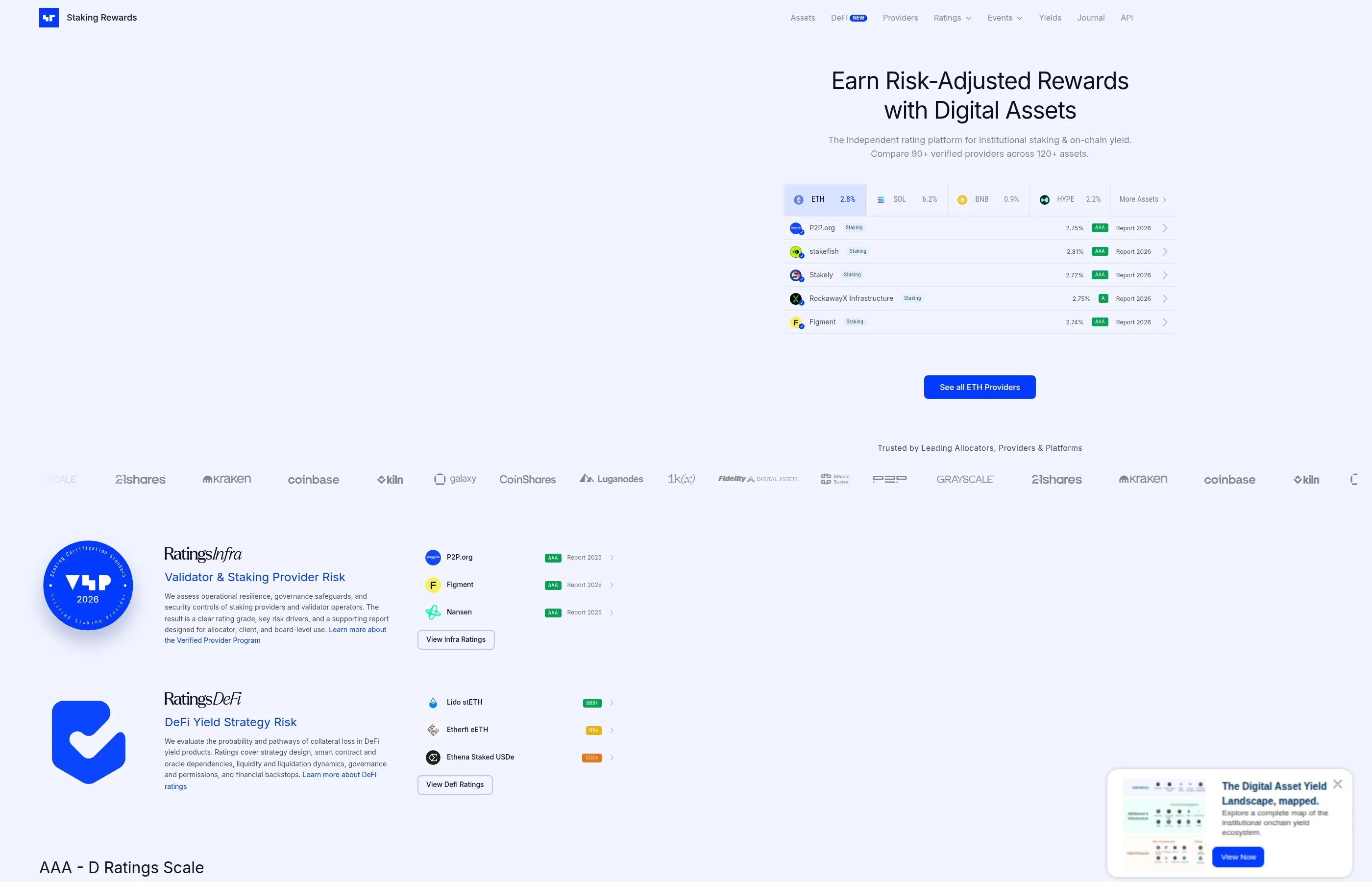
When you stake a cryptocurrency, you lock up your tokens to help secure the network and validate transactions. In return, you receive staking rewards, usually paid in the same token you staked. Current staking yields vary by network:
- Ethereum (ETH): approximately 3% to 5% APY
- Solana (SOL): approximately 6% to 8% APY
- Polkadot (DOT): approximately 10% to 14% APY
- Cosmos (ATOM): approximately 15% to 20% APY
Staking compounds your returns over time. If you hold ETH for 5 years and stake it, you earn price appreciation plus 3% to 5% annually on your holdings. Over a full market cycle, those staking rewards can add up to a significant portion of your total return.
Explore all the ways to generate yield in our guide on top crypto passive income strategies.
Where to Invest: Choosing the Right Platform
Where you buy and hold your crypto matters. Different platforms offer different advantages depending on your investment style, experience level, and geographic location.
Centralized Exchanges (CEXs)
Centralized exchanges are the easiest on-ramp for new investors. They handle custody, offer fiat on-ramps (buy crypto with bank transfers or credit cards), and provide user-friendly interfaces.
Coinbase is the go-to platform for beginners, especially in the United States. It offers a clean interface, strong regulatory compliance, and insurance on custodied funds. Read our full walkthrough on how to use Coinbase to get started.
Binance is the largest exchange globally by trading volume, offering the widest selection of cryptocurrencies and some of the lowest fees in the industry. It is the preferred platform for more experienced investors who want access to a broader range of assets. Check out our Binance guide for a complete walkthrough.
Other reputable exchanges include Kraken (known for security and advanced features), OKX, and Bybit.
Decentralized Exchanges and DeFi
As you gain experience, you may want to explore decentralized finance (DeFi) for additional investment opportunities. DeFi platforms let you lend, borrow, provide liquidity, and earn yield without intermediaries. However, DeFi carries additional risks including smart contract vulnerabilities, impermanent loss, and no customer support if something goes wrong.
DeFi is best suited for experienced investors who understand the technology and can evaluate smart contract risks. Start with well-established protocols and never invest in DeFi what you cannot afford to lose.
Security: Protecting Your Investment
Security is non-negotiable when investing in cryptocurrency. Unlike a bank account, crypto transactions are irreversible. If you lose access to your wallet or fall victim to a hack, your funds are gone permanently.
Cold Storage: The Gold Standard
For any amount you are holding long-term, a cold wallet (hardware wallet) is the safest option. Hardware wallets like Ledger and Trezor store your private keys offline, making them immune to online hacks, phishing attacks, and exchange failures.
The general rule: keep your trading funds on exchanges and your investment holdings in cold storage. If you are holding $5,000 or more in crypto for the long term, a $70 to $150 hardware wallet is a tiny cost for peace of mind.
Essential Security Practices
- Enable two-factor authentication (2FA) on every exchange account, preferably using an authenticator app rather than SMS
- Never share your seed phrase or private keys with anyone, for any reason
- Store your seed phrase on metal or paper in a secure physical location, not digitally
- Use unique, strong passwords for each crypto platform
- Be extremely cautious of phishing emails, fake apps, and social engineering scams
- Consider a dedicated email address for crypto accounts
- Bookmark exchange URLs and always verify you are on the correct site before logging in
Portfolio Rebalancing: Keeping Your Allocation on Track
Over time, market movements will cause your portfolio allocation to drift from your target. If you started with 50% BTC and 30% ETH, a strong Bitcoin rally might shift your portfolio to 65% BTC and 20% ETH. Rebalancing is the process of selling overweight positions and buying underweight ones to restore your target allocation.
How Often to Rebalance
There are two common approaches:
- Time-based rebalancing: Rebalance on a fixed schedule (monthly, quarterly, or annually). Quarterly is the most common for crypto investors.
- Threshold-based rebalancing: Rebalance whenever any position drifts more than 5% to 10% from its target allocation. For example, if your BTC target is 50% and it grows to 60%, you rebalance.
Rebalancing forces you to systematically sell high and buy low, which is exactly what every investor wants to do but few have the discipline to execute. It also ensures you are consistently taking profits from winners and adding to underperformers (which may be undervalued).
Tax Considerations When Rebalancing
Every time you sell a crypto asset, it is a taxable event in most jurisdictions. Factor in potential tax liabilities before rebalancing. In some cases, it might be more tax-efficient to rebalance by directing new investment capital into underweight positions rather than selling overweight ones. Our crypto tax guide covers everything you need to know about reporting and optimizing your tax position.
When to Take Profits
One of the hardest skills in crypto investing is knowing when to take profits. The temptation to hold forever ("HODL") is strong, but failing to take profits means watching unrealized gains evaporate during the next downturn.
Profit-Taking Strategies
- Percentage-based targets: Sell a fixed percentage (10% to 25%) of a position every time it doubles in value. For example, sell 20% at 2x, another 20% at 4x, and so on.
- DCA out: Just as you dollar-cost average into positions, you can DCA out by selling a fixed amount on a regular schedule during euphoric market phases.
- Rebalancing as profit-taking: Regular rebalancing naturally takes profits from winners. This is a disciplined, systematic approach that removes emotion.
- Goal-based selling: Set specific financial goals (down payment on a house, paying off debt, funding education) and sell when your portfolio value hits those targets.
The best approach often combines multiple strategies. You might DCA out a portion, keep a core position for the long term, and rebalance quarterly. The key is having a plan before the market gets euphoric, because rational thinking goes out the window when your portfolio is up 300%.
Tax-Loss Harvesting in Crypto
Tax-loss harvesting is an advanced but powerful strategy where you sell losing positions to realize capital losses, then use those losses to offset capital gains from your winning positions. This reduces your overall tax bill without necessarily changing your portfolio exposure.
Here is how it works in practice:
- You bought ETH at $4,000 and it dropped to $2,500. You have a $1,500 unrealized loss.
- You also took $3,000 in profits from selling some Bitcoin.
- You sell the ETH, realizing the $1,500 loss.
- You immediately buy ETH back (crypto does not have the same wash sale rules as stocks in many jurisdictions, though this may change).
- The $1,500 loss offsets part of your $3,000 gain, reducing your taxable amount to $1,500.
Tax-loss harvesting is most effective during bear markets when you have unrealized losses to capture. Consult a tax professional familiar with cryptocurrency to ensure you are complying with the latest regulations in your jurisdiction. For more details, visit our complete crypto tax guide.
Common Mistakes New Crypto Investors Make
Learning from others' mistakes is far cheaper than making them yourself. Here are the most costly errors new investors make and how to avoid them.
1. Investing Without Research
Buying a token because someone on social media said it would "moon" is gambling, not investing. Every investment decision should be backed by thorough fundamental research (DYOR): What problem does the project solve? Who is on the team? What does the tokenomics look like? Is there real adoption?
2. Going All In on One Asset
Concentration is the fastest path to both massive gains and total ruin. Even if you are convinced a project is the next big thing, limit any single position to 20% to 25% of your portfolio. Diversification is not exciting, but it keeps you in the game.
3. Emotional Decision Making
Fear and greed are the two most destructive forces in crypto investing. Panic selling during crashes and FOMO buying during rallies are the surest ways to destroy wealth. Having a written investment plan and sticking to it through volatility is essential.
4. Ignoring Security
Keeping large amounts on exchanges, reusing passwords, or storing seed phrases in notes apps has cost investors billions. Take security seriously from day one.
5. Over-Leveraging
Using borrowed money or margin to invest in crypto amplifies both gains and losses. In a market that routinely sees 30% to 50% corrections, leverage can wipe you out entirely. Invest only with capital you own outright.
6. Chasing Past Performance
The coin that did 50x last cycle is unlikely to repeat that performance. Past returns are not indicative of future results. Focus on fundamentals and future potential rather than historical price charts.
7. Neglecting Taxes
Crypto transactions are taxable events in most countries. Failing to track your cost basis and report your gains can result in penalties, interest, and legal trouble. Use portfolio tracking tools and keep detailed records from the start.
8. No Exit Strategy
Many investors never define when they will take profits. Without an exit plan, you ride the roller coaster up and all the way back down. Set targets before you invest and honor them.
Bull vs Bear Market Strategies
Your investment approach should adapt to market conditions. What works in a bull market can destroy you in a bear market, and vice versa.
Bull Market Strategy
During bull markets, the primary focus shifts to profit management and risk reduction:
- Take profits incrementally: Do not wait for the top. Nobody can time it perfectly. Sell in tranches as the market rises.
- Reduce risk exposure: As prices climb to extreme valuations, shift more of your portfolio into BTC, ETH, and stablecoins. Reduce your small-cap exposure.
- Rebalance more frequently: In fast-moving bull markets, your allocation can drift dramatically in days. Consider monthly rebalancing.
- Set trailing stop-losses: Protect your gains by setting stop-losses at 20% to 30% below recent highs for altcoin positions.
- Resist the urge to add new money at highs: If you missed the bottom, do not chase. Wait for pullbacks to add positions.
Bear Market Strategy
Bear markets are where wealth is built for the next cycle. The focus shifts to accumulation and preservation:
- Increase your DCA: If prices are significantly below all-time highs, increase your regular buying amount. Bear markets are when DCA is most powerful.
- Focus on quality: Stick to BTC and ETH for the majority of new purchases. Many altcoins from the previous cycle will not survive the bear market.
- Harvest tax losses: Bear markets present the best opportunities for tax-loss harvesting.
- Learn and research: Use the quiet bear market period to deepen your knowledge. Study chart patterns, explore new technologies, and build your watchlist for the next cycle.
- Stake your holdings: While prices are depressed, stake your ETH and other proof-of-stake assets to accumulate more tokens at lower prices.
- Build your stablecoin reserves: If you have profits remaining, keep dry powder ready for when sentiment reaches maximum fear.
2026 Market Outlook for Crypto Investors
As we move through 2026, several macro trends are shaping the crypto investment landscape:
Institutional adoption continues to accelerate. Bitcoin and Ethereum ETFs have normalized crypto as an asset class for traditional investors. Pension funds, endowments, and sovereign wealth funds are gradually increasing their allocations. This broadening of the investor base provides deeper liquidity and helps reduce volatility over time.
Regulatory clarity is improving. Major jurisdictions including the United States, European Union, and parts of Asia have implemented clearer frameworks for crypto assets. While regulation adds compliance costs, it also brings legitimacy and makes institutional investors more comfortable deploying capital.
The Bitcoin halving effect. The most recent Bitcoin halving reduced the block reward once again, tightening new supply at a time when demand from ETFs and institutional buyers remains strong. Historically, the 12 to 18 months following a halving have produced significant price appreciation, though past performance does not guarantee future results.
Real-world adoption is expanding. DeFi, tokenized real-world assets (RWAs), stablecoin payment infrastructure, and blockchain-based identity solutions are seeing growing adoption. Projects with genuine utility and real revenue are increasingly distinguishable from speculative tokens, making fundamental analysis more relevant than ever.
AI and crypto convergence. The intersection of artificial intelligence and blockchain technology is creating new investment opportunities in decentralized compute, AI agent infrastructure, and data marketplaces. This emerging sector is attracting significant venture capital and developer talent.
For investors in 2026, the key takeaway is that crypto is maturing as an asset class. The wild-west era is not completely over, but the market is increasingly driven by fundamentals, institutional flows, and real adoption metrics rather than pure speculation. This favors patient, research-driven investors over short-term speculators.
Pros and Cons of Investing in Cryptocurrency
Pros
- High growth potential: Crypto has outperformed every other asset class over the past decade, and the market is still in its relatively early stages.
- 24/7 market access: Unlike stocks, crypto markets never close. You can buy, sell, or rebalance at any time.
- Low barriers to entry: You can start investing with as little as $10. No minimum account balances or accredited investor requirements.
- Passive income through staking: Earn yield on your holdings while you wait for long-term appreciation.
- Portfolio diversification: Crypto has a relatively low correlation with traditional assets, making it a useful diversifier.
- Global and permissionless: Anyone with internet access can participate, regardless of location or banking status.
- Transparent and verifiable: Blockchain transactions are public and auditable, providing transparency that traditional finance often lacks.
- ETF access: You can now gain crypto exposure through traditional investment vehicles in retirement and brokerage accounts.
Cons
- Extreme volatility: 30% to 50% drawdowns are common, even in bull markets. This can be psychologically challenging and financially devastating without proper risk management.
- Regulatory uncertainty: While improving, regulations can change quickly and negatively impact specific assets or the market as a whole.
- Security risks: Hacks, scams, and phishing attacks are prevalent. Loss of private keys means permanent loss of funds.
- Complexity: Understanding blockchain technology, tokenomics, DeFi protocols, and wallet management has a steep learning curve.
- Tax complexity: Tracking cost basis across multiple exchanges and wallets is challenging, and tax obligations can be confusing.
- Market manipulation: The crypto market, especially for smaller tokens, is susceptible to manipulation by large holders (whales).
- Project risk: Many crypto projects fail completely, resulting in total loss. Even established projects can suffer from hacks, team departures, or technological obsolescence.
- No guaranteed returns: Past performance is not indicative of future results. The entire market could underperform other asset classes over extended periods.
Building Your Crypto Investment Plan: Step by Step
Now that you understand the strategies, risks, and opportunities, here is a practical step-by-step plan to start investing in cryptocurrency:
- Assess your financial position: Ensure you have an emergency fund, no high-interest debt, and money you can afford to lose.
- Decide your allocation: Determine what percentage of your total portfolio to dedicate to crypto (start with 5% if uncertain).
- Choose your portfolio strategy: Select a conservative, moderate, or aggressive portfolio allocation based on your risk tolerance.
- Set up your exchange account: Create an account on a reputable exchange like Coinbase or Binance. Complete identity verification.
- Purchase your first crypto: Follow our guide on how to buy cryptocurrency to make your first purchase.
- Set up a DCA schedule: Configure automatic recurring buys to implement your DCA strategy.
- Secure your holdings: Purchase a hardware wallet and transfer long-term holdings to cold storage.
- Set up staking: Stake eligible assets to start earning passive income.
- Track your portfolio: Use a portfolio tracker to monitor your allocation, gains, losses, and cost basis for tax purposes.
- Set profit targets and stop-losses: Write down your exit strategy before emotions take over during market extremes.
- Rebalance regularly: Review your portfolio monthly or quarterly and adjust positions back to your target allocation.
- Stay educated: Follow reputable crypto news sources, join communities, and continue learning about the technology and market dynamics.
Video Explainer
Watch this video for a visual walkthrough of the concepts covered above.
Frequently Asked Questions
Is cryptocurrency a good investment in 2026?
Cryptocurrency can be a good investment as part of a diversified portfolio. Bitcoin and Ethereum have strong fundamentals, growing institutional adoption, and improving regulatory clarity. However, crypto remains volatile and risky. Whether it is a good investment for you depends on your risk tolerance, time horizon, and financial situation. Most financial advisors recommend limiting crypto to 5% to 10% of your total portfolio.
How much money do I need to start investing in crypto?
You can start investing in cryptocurrency with as little as $10 on most major exchanges. There is no minimum required amount. Many successful investors started by dollar-cost averaging $50 to $100 per month. The most important thing is to start with an amount you can afford to lose entirely without impacting your financial stability.
What is the safest cryptocurrency to invest in?
Bitcoin (BTC) is widely considered the safest cryptocurrency investment due to its longest track record, deepest liquidity, strongest brand recognition, widest institutional adoption, and simplest monetary policy. Ethereum (ETH) is the second safest choice. No cryptocurrency is truly "safe" in the traditional sense, as all carry significant volatility and risk.
Should I invest in Bitcoin or Ethereum?
Most experienced investors hold both. Bitcoin is the better store of value and inflation hedge, while Ethereum offers exposure to the broader crypto ecosystem (DeFi, NFTs, smart contracts) and generates staking yield. A common starting allocation is 60% BTC and 40% ETH, adjusted based on your convictions and risk tolerance.
Are crypto ETFs better than buying crypto directly?
It depends on your needs. Crypto ETFs are ideal for tax-advantaged accounts (IRAs, 401(k)s), convenience, and regulatory protection. Direct holding gives you true ownership, staking rewards, DeFi access, and no management fees. Many investors use both: ETFs in retirement accounts and direct holdings in personal wallets.
How do I avoid losing money in crypto?
You cannot eliminate risk entirely, but you can manage it: diversify across multiple assets, use dollar-cost averaging instead of lump sum investing, never invest more than you can afford to lose, secure your holdings in cold storage, set profit targets and stop-losses, and avoid leverage and emotional trading. Having a written investment plan and sticking to it is the single most important thing you can do.
What is dollar-cost averaging and why is it recommended?
Dollar-cost averaging means investing a fixed amount at regular intervals regardless of price. It is recommended because it removes emotional decision-making, automatically buys more when prices are low, and has historically been profitable for Bitcoin over any 3+ year period. It is the simplest and most effective strategy for beginners. Learn how to set it up in our DCA guide.
How often should I check my crypto portfolio?
For long-term investors, checking once a week is more than enough. Daily price checking leads to emotional decision-making and unnecessary stress. Set up your DCA, review your allocation quarterly, rebalance when needed, and avoid obsessing over short-term price movements. The best investors are often the ones who check their portfolios the least.
When should I sell my cryptocurrency?
Sell when your predetermined profit targets are hit, when your investment thesis has changed, when you need the money for a planned life goal, or during portfolio rebalancing. Never sell purely out of fear during a market crash or because someone on social media says to. Having a written exit strategy before you invest is critical.
Do I have to pay taxes on crypto investments?
In most jurisdictions, yes. Selling crypto, swapping one crypto for another, and spending crypto are all taxable events. Long-term capital gains (held over one year) are typically taxed at lower rates than short-term gains. Staking rewards and airdrops may be treated as income. Read our comprehensive crypto tax guide and consider consulting a tax professional familiar with digital assets.
What is the best strategy for a beginner crypto investor?
Start with a conservative allocation (70% BTC/ETH, 20% established altcoins, 10% small-caps), implement a DCA strategy with a fixed monthly amount, use a reputable exchange like Coinbase, secure your holdings with a hardware wallet, and commit to a minimum 3-year time horizon. Do not try to time the market or chase hot tips.
Can I invest in crypto through my retirement account?
Yes. Bitcoin and Ethereum ETFs can be purchased through traditional brokerage accounts, IRAs, and some 401(k) plans. Some specialized crypto IRA providers also offer direct crypto holding within tax-advantaged accounts. This is one of the most tax-efficient ways to invest in crypto for the long term.
How do I research a cryptocurrency before investing?
Follow a systematic DYOR (do your own research) process: read the project whitepaper, evaluate the team and their track record, analyze the tokenomics (supply, distribution, inflation), check real adoption metrics (active users, transaction volume, revenue), assess the competitive landscape, review the development activity on GitHub, and examine the community and governance structure. Our DYOR guide walks you through this process step by step.
Is it too late to invest in Bitcoin?
People have been asking this question at every price level since Bitcoin was $100. While past returns will not be repeated (going from $1 to $100,000 is a different story than $100,000 to $10 million), many analysts and institutions believe Bitcoin still has significant upside potential driven by institutional adoption, ETF inflows, and its role as digital gold. The key is to invest an appropriate amount, use DCA, and think long-term.
What are the biggest risks of investing in cryptocurrency?
The biggest risks include market volatility (30% to 80% drawdowns), regulatory changes that could negatively impact prices or access, security threats (hacks, scams, lost keys), project failure (especially with smaller altcoins), liquidity risk during extreme market events, and the psychological challenge of holding through severe downturns. Understanding these risks and planning for them is what separates successful investors from failed ones.
Should I invest in altcoins or just stick to Bitcoin?
A Bitcoin-only strategy is a perfectly valid and conservative approach. Altcoins offer potentially higher returns but with significantly higher risk. If you do invest in altcoins, keep them as a smaller percentage of your portfolio (20% to 30%) and focus on established projects with proven track records. Never invest in altcoins you have not thoroughly researched. As a general rule, the smaller the market cap, the higher the risk.