How to Send Crypto from Bybit to Rabby Wallet Safely in 2026
— By Tony Rabbit in Tutorials
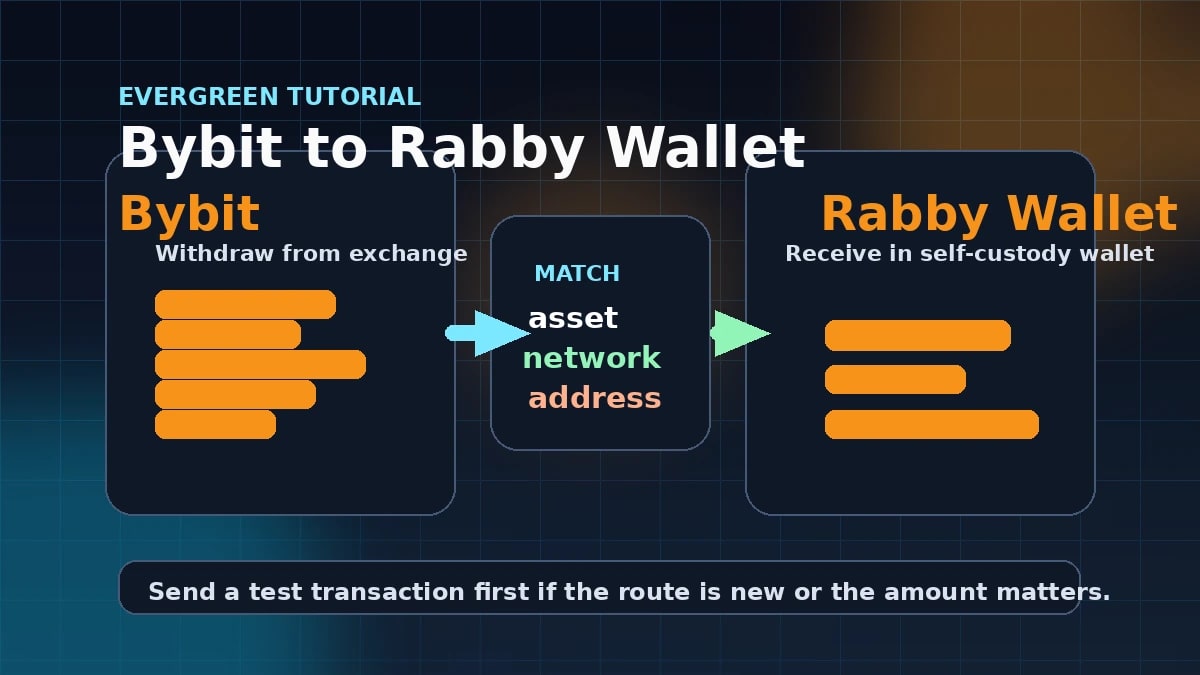
Step-by-step guide to send crypto from Bybit to Rabby Wallet safely in 2026, including network matching, test withdrawals, fees, and troubleshooting.
Sending crypto from Bybit to Rabby Wallet sounds simple, but most mistakes happen before the transaction is even broadcast. The real job is not copy, paste, send. It is choosing the correct Rabby Wallet destination first, then matching the exact withdrawal route on Bybit so the asset, network, and address all line up.
This guide is built around the exact search intent users have in 2026: how to send crypto from Bybit to Rabby Wallet. If you follow the sequence carefully, this is a straightforward transfer. If you rush the chain or wallet setup, it becomes an avoidable support nightmare.
Quick answer
- Open Rabby Wallet first and copy the receive address from the exact network you plan to use.
- On Bybit, treat the asset, destination address, and network as one combined decision.
- If this is a new route or a meaningful amount, do a small test withdrawal before sending the full size.

Why Users Move Crypto from Bybit to Rabby Wallet
Bybit is useful for buying, selling, and managing exchange balances. Rabby Wallet is useful when the user wants direct wallet control, access to onchain apps, and a cleaner separation from exchange custody. That makes this route a classic exchange-to-wallet move, not just an internal transfer between apps.
If you need the broader platform walkthrough first, read How to Use Bybit Exchange - Complete Trading Tutorial 2026. If you need the wallet setup first, read our Rabby Wallet tutorial.
Bybit to Rabby Wallet rulebook
Step 1: Prepare Rabby Wallet Before You Touch the Withdrawal Screen
The safest order is wallet first, exchange second. Open Rabby Wallet, unlock it, switch to the chain you want to use, and only then copy the receive address. That order matters because wallet setup should define the route. The exchange withdrawal screen should never be where the user starts thinking about network logic for the first time.
Rabby Wallet uses the same interface for many networks, which is convenient, but convenience can create false confidence. The wallet may look familiar even when the route you are about to choose on Bybit is not the one you actually want.
Step 2: Copy the Correct Rabby Wallet Receive Address
After Rabby Wallet is ready, copy the address directly from the wallet. Do not rely on an old clipboard entry, a saved screenshot, or a chat message where someone pasted it earlier. Wallet transfers fail less from complicated technology than from casual operational mistakes.
For many EVM routes the visible address format may look identical across networks, which is exactly why users get careless. Even if the address looks familiar, the important question is still the same: is Bybit withdrawing on the exact chain I intend to use in Rabby Wallet?
Step 3: Configure the Withdrawal on Bybit
This is where most avoidable mistakes happen. On Bybit, the address field feels important, but the real decision is the route itself. The destination address, the selected asset, and the selected network only make sense together. Break that relationship and the user creates confusion fast.
On Bybit, pay extra attention to the final withdrawal confirmation flow, supported chains, and any address security checks. Those checks can slow the process down, but they are still better than rushing a multi-chain withdrawal and fixing confusion later.
What to review before confirming on Bybit
Step 4: Use a Test Withdrawal for Meaningful Amounts
A small test transfer is still the cleanest risk-management habit in self-custody. If the first small amount lands correctly in Rabby Wallet, most of the uncertainty disappears before the full balance moves. This matters even more for assets that exist across several chains or for users who do not move funds from Bybit very often.
Bybit to Rabby Wallet flow
Step 5: Verify the Funds in Rabby Wallet
After Bybit marks the withdrawal as sent, confirm the funds inside Rabby Wallet before you relax. Start with simple checks: is Rabby Wallet on the right network, is the token visible, and does the tx hash confirm the route you chose? Many missing-funds stories are visibility problems or chain confusion, not real loss events.
If the transaction confirms onchain and the route details were correct, the next step is usually to verify the wallet network and token visibility before assuming the funds are gone.
Fees, Timing, and Confirmation Expectations
Users asking this keyword do not only want to know if the transfer works. They also want to know what it costs and how long it should take. The practical answer is that the total experience depends on the live withdrawal fee shown on Bybit, the chain you choose, and whether account-level security checks slow the request down.
The cheapest route is not always the best route. If a lower fee pushes the user onto the wrong chain for their Rabby Wallet setup, the cheap option becomes the expensive one. The right question is not just which route costs less. It is which route is correct, supported, and low-friction for the wallet setup in front of you.
What users should expect before sending size
Common Bybit to Rabby Wallet Mistakes to Avoid
Mistakes that hurt users over and over
What to Do If the Transfer Does Not Show Up
If Bybit says the withdrawal is complete but Rabby Wallet does not show the balance right away, do not jump straight to worst-case conclusions. Confirm the withdrawal status and tx hash on Bybit, then check Rabby Wallet on the correct network. If needed, add the token view or confirm the asset contract before assuming anything disappeared.
Most of the time, the fix is boring rather than dramatic: wrong network selected in the wallet, token not added to view, or user memory mixing up the intended chain. That is exactly why a test withdrawal is such a strong habit. It turns a scary unknown into a controlled verification.
Frequently Asked Questions
Can I send USDT from Bybit to Rabby Wallet?
Yes, but you need to match the network exactly because USDT exists on multiple chains. The right answer is whatever chain your Rabby Wallet setup is expecting for that transfer.
How long does it take to send crypto from Bybit to Rabby Wallet?
It depends on the asset, network congestion, and any security review on Bybit. Some routes are quick, but slower does not automatically mean something is wrong.
What if the transfer does not show up in Rabby Wallet right away?
Start with the basics: confirm the withdrawal status on Bybit, verify the tx hash, then make sure Rabby Wallet is on the correct network and token view.
Should I do a test withdrawal from Bybit to Rabby Wallet first?
Yes. For a new route, a large amount, or any multi-chain asset, a test transaction is the safest move.
What fee should I expect when withdrawing from Bybit to Rabby Wallet?
The cost depends on the asset and network shown on the live Bybit withdrawal screen. Always check the exact route-specific fee before confirming.
Related reading
Disclaimer: This article is for educational purposes only and does not constitute investment, tax, or legal advice. Exchange withdrawal options, wallet support, and live network availability can change over time. Always confirm the live asset, chain, and destination details before moving funds.
Beyond the Basics: Understanding Rabby's Transaction Simulation and Security Model
While the step-by-step guide covers the mechanics of sending crypto, a deeper dive into Rabby Wallet's unique security features, particularly its transaction simulation, offers invaluable protection for users. Unlike many wallets that simply display raw transaction data, Rabby actively analyzes potential interactions before you sign them. This proactive approach significantly mitigates risks associated with malicious smart contracts or unexpected outcomes, especially crucial in the evolving DeFi landscape of 2026.
This simulation engine isn't just a fancy display; it's a critical layer of defense against phishing attacks, rug pulls, and accidental approvals. By presenting a clear, human-readable summary of what a transaction will actually do to your assets (e.g., "You will send 1 ETH to Address X, and receive 100 USDT from Pool Y"), Rabby empowers users to make informed decisions, even when interacting with complex DeFi protocols.
The Mechanics of Pre-Transaction Analysis
- Asset Change Preview: Rabby simulates the transaction on a private fork, showing the exact asset changes in your wallet before you commit. This includes token balances, NFTs, and even changes to staked positions.
- Risk Warnings: The wallet flags potential risks such as approvals to unverified contracts, interactions with known scam addresses, or unusually high gas fees for a given operation.
- Contract Interaction Clarity: For smart contract interactions, Rabby decodes the function calls, translating cryptic hexadecimal data into understandable actions like "approve token spending" or "deposit into liquidity pool."
- Gas Fee Optimization: Beyond just displaying the estimated gas, Rabby's simulation can sometimes offer insights into whether the gas limit is appropriate, helping avoid failed transactions due to insufficient gas.
- Protection Against Blind Signatures: By providing a clear outcome, Rabby prevents users from "blindly signing" transactions, a common vulnerability exploited by attackers.