How to Use Token Terminal: Fees, Revenue and Crypto Fundamentals (2026)
— By Tony Rabbit in Tutorials
Learn how to use Token Terminal to compare protocol fees, revenue, active users and valuation metrics so you can analyze crypto projects with better fundamentals in 2026.
Token Terminal helps users analyze crypto projects like businesses, focusing on fundamental metrics beyond price. It measures protocol fees, revenue, active users, usage growth, and valuation ratios across various protocols and sectors, allowing for comparisons and insights into a project's underlying health and sustainability.
Token Terminal is one of the best tools for people who want to analyze crypto like a business instead of just a chart. Most platforms are built around price, momentum, and headlines. Token Terminal is different. It helps you compare protocol fees, revenue, active users, valuation metrics, and multi-period trends across major crypto projects.
That makes it useful when you want to answer harder questions: is this protocol actually generating usage, or is the token only moving because of narrative? Are fees growing? Is revenue sticky? Are users coming back? Those are the kinds of questions that matter when the market starts rewarding fundamentals again.
What Token Terminal Helps You Measure
- Protocol fees and revenue
- Active users and usage growth
- Valuation ratios across protocols and sectors
- Whether a narrative is supported by real business traction
Why Token Terminal matters in 2026
Crypto narratives move fast, but the projects that hold value through multiple cycles usually have something underneath the hype. Sometimes that is network usage. Sometimes it is treasury strength. Sometimes it is a clear ability to turn activity into fees or revenue. Token Terminal is useful because it gives you a cleaner way to compare those fundamentals across chains, apps and sectors.
That does not mean fundamentals replace price action. It means fundamentals can filter your watchlist before you start charting entries. If a project has strong narrative momentum and improving business metrics, it deserves more attention than a project moving only on hype.
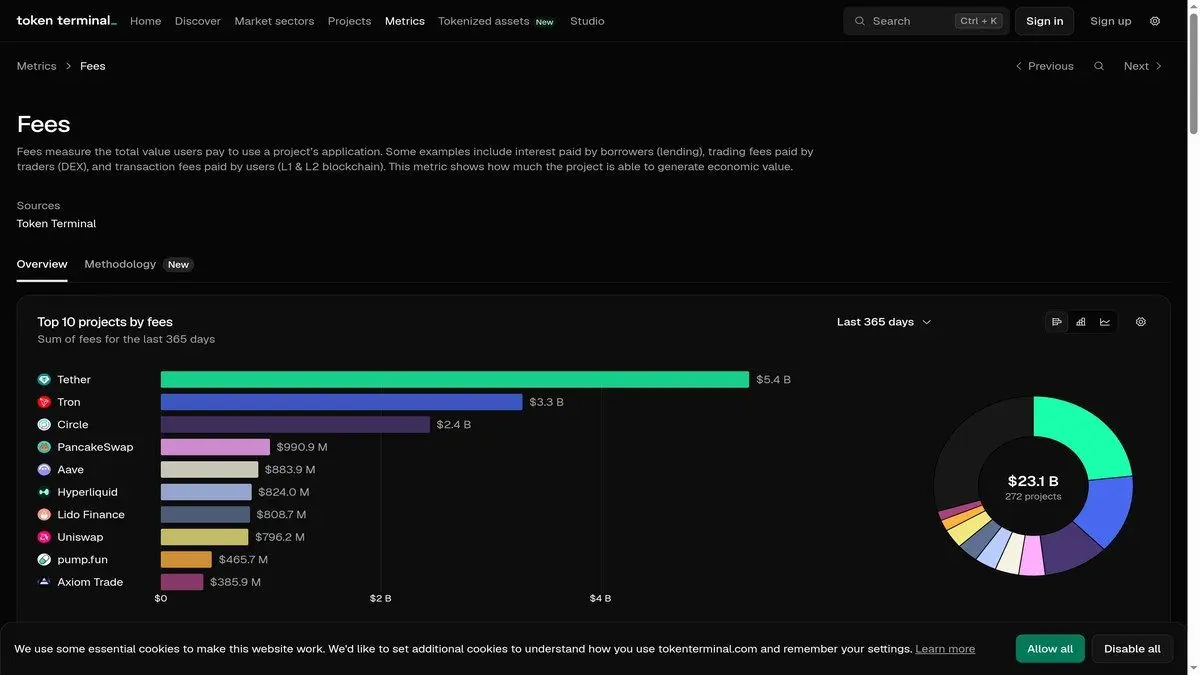
Start with fees and revenue
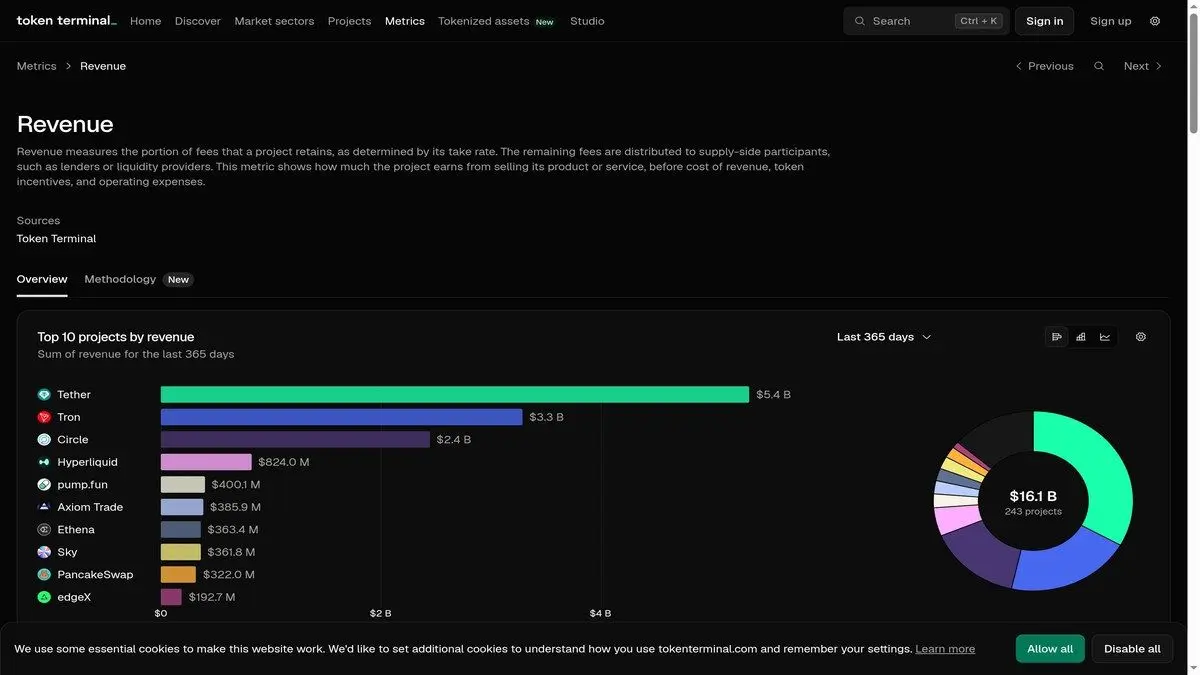
The cleanest starting point on Token Terminal is fees and revenue. Fees tell you how much economic activity the protocol is capturing. Revenue tells you more about what is actually retained by the protocol after passing incentives or payouts through to others. Those are not the same thing, and confusing them is one of the easiest ways to misread a business model.
A protocol can generate large fees but retain little real revenue. Another can show smaller gross numbers but much cleaner economics. That is why Token Terminal is valuable. It helps separate activity from retained value.
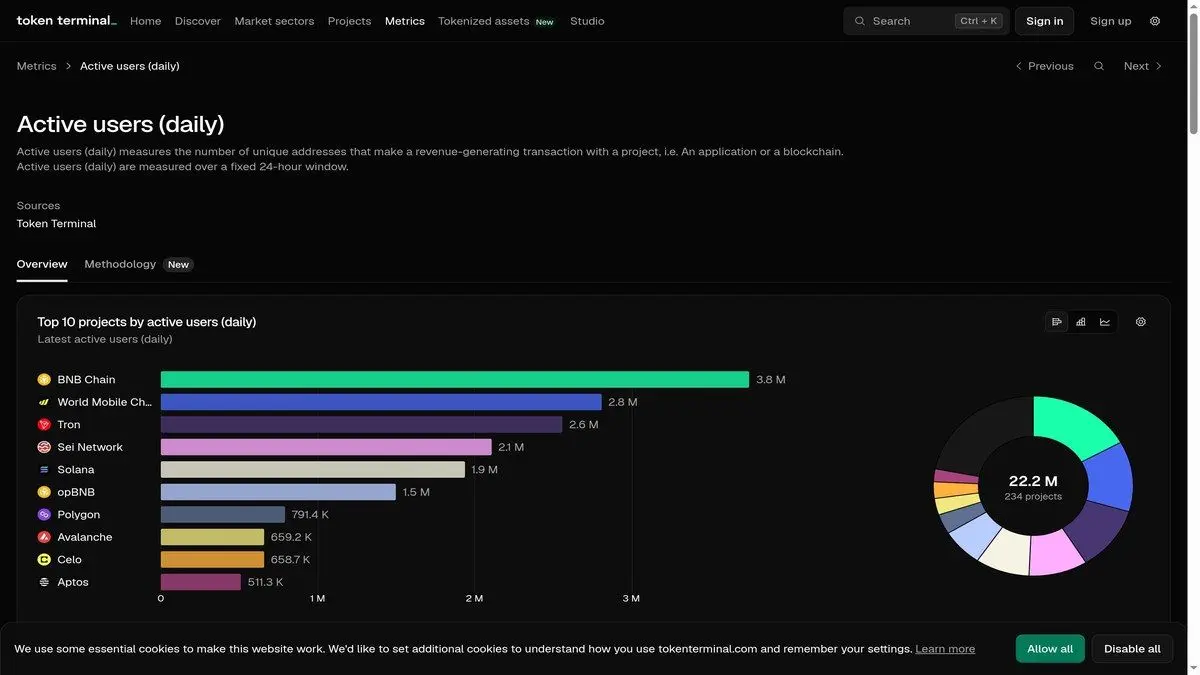
Then compare active users and growth quality
Fees and revenue are powerful, but they are even more useful when you compare them with user growth. If active users are rising, fees are stable or improving, and valuation is not already stretched, the setup gets more interesting. If users spike but monetization stays weak, the market may be chasing activity that is not converting into durable economics.
This is why Token Terminal works best as a comparison tool. Looking at one protocol in isolation is helpful. Looking at several protocols in the same sector is where the edge improves. You can quickly see which projects are growing faster, monetizing better, or trading at meaningfully different multiples.
Valuation ratios are where context matters most
Beginners often treat valuation ratios like magic truth. They are not. A protocol trading at a lower multiple is not automatically cheap. A protocol trading at a higher multiple is not automatically expensive. The right interpretation depends on growth, sector positioning, business quality, and whether the market is pricing current reality or future expansion.
Token Terminal helps because it puts those ratios next to the operating metrics that support them. That gives you a much better starting point than looking at token price alone.
How to build a practical workflow
A strong workflow looks like this:
- Use Token Terminal to shortlist protocols with improving fees, revenue or user trends
- Use Dune or DefiLlama for deeper on-chain or sector confirmation
- Use DEXTools for pair-level structure, liquidity and actual trade timing
- Use price action to decide execution, not to replace the underlying research
Common mistakes to avoid
- Confusing fees with protocol revenue
- Using valuation ratios without comparing growth rates
- Looking at a protocol alone instead of against direct competitors
- Ignoring token emissions or incentive dependence
- Treating fundamentals as a replacement for market structure and execution
Frequently Asked Questions
Related Tutorials
Token Terminal is useful because it slows you down in the right way. It makes you ask whether a protocol is generating real economic activity before you assume the market is pricing it rationally. In a space full of noisy narratives, that is a serious advantage.
Related Guides
- Fee Revenue per Active Wallet vs Total Fees: Which Shows Real dApp Monetization?
- Utilization Rate vs TVL: The DeFi Metric That Matters
- Spot Real Demand vs Frenzy With On-Chain Metrics
- How to Use Glassnode: Read Bitcoin On-Chain Metrics Better (2026)
- How to Read On-Chain Data: Metrics, Wallet Flows and Dashboards (2026)