Is Ripple the Same as XRP? Key Differences Explained (2026)
Ripple is the company, XRP is the cryptocurrency. Learn the full 2026 difference: XRPL, RLUSD, SEC case, ETFs, validators, escrow and use cases.
If you have spent any time inside a crypto exchange or a news feed in the last twelve years, you have almost certainly seen the words Ripple and XRP used as if they meant the same thing. They do not. Treating them as interchangeable is one of the most common and costly misunderstandings in digital finance. By May 2026, with the spot XRP ETF live in the United States, the SEC case behind us, and Ripple operating as a global financial infrastructure firm, the distinction matters more than ever.
Here is the short, snippet-ready answer this guide will unpack. Ripple is a private, for-profit software company headquartered in San Francisco that builds payment, custody, and stablecoin products for banks and enterprises. XRP is an open-source, decentralized cryptocurrency that lives on the XRP Ledger (XRPL), a public blockchain launched in 2012. Ripple uses XRP inside some of its products and holds a large portion of the supply in escrow, but the company does not own, mint, or control the asset. Anyone in the world can run a validator, send XRP, or build on the XRPL without Ripple's permission.
This 2026 guide covers the company, the asset, the ledger, the founders, the SEC case outcome, the launch of RLUSD, the XRPL EVM Sidechain, CBDC pilots in Bhutan and Palau, the spot ETF landscape, and the use cases that actually drive volume today. By the end you will know what is different between Ripple and XRP, and why that difference is the entire foundation of how the ecosystem works.
The Quick Answer: Ripple vs XRP in 60 Seconds
Ripple is a company. XRP is a coin. The XRP Ledger is a blockchain. Those three concepts get mashed together in casual conversation, but each one has its own founders, governance, balance sheet (or lack of one), and legal status. Confusing them is like confusing Visa, the US dollar, and Fedwire. They interact every day, but no serious analyst would treat them as the same entity.
Ripple Labs Inc. is a private corporation with offices in San Francisco, London, Dubai, and Singapore, selling software and services for cross-border payments, digital asset custody, and stablecoin issuance. XRP is a decentralized cryptocurrency with a fixed supply of 100 billion units. The XRPL is an open-source blockchain maintained by independent validators worldwide. Ripple is the largest holder of XRP and an active developer on the XRPL, but the ledger would keep running and XRP would keep transferring if Ripple ceased to exist tomorrow.
Private fintech founded in 2012. Builds payment software, custody platforms, and the RLUSD stablecoin. Sells to banks, payment providers, and central banks. CEO: Brad Garlinghouse.
Decentralized cryptocurrency. Fixed supply of 100 billion. Native asset of the XRP Ledger. Used as a bridge currency, anti-spam fee, and unit of account on the network.
Open-source public blockchain. Launched in 2012. Uses a federated consensus protocol, not mining. Maintained by an independent validator network around the world.
Hold on to that three-box mental model. Everything that follows in this guide, from the SEC case to the ETF, from RLUSD to the CBDC pilots, sits on top of those three distinct ideas. If you remember nothing else, remember that Ripple, XRP, and the XRPL are three separate things that share a history.
A Short History: How One Project Became Three
To understand why people still confuse Ripple and XRP in 2026, you have to go back to the original team. The story begins around 2011 with Jed McCaleb, the developer who had previously launched the Mt. Gox exchange. McCaleb wanted to build a digital payment network that did not rely on Bitcoin's energy-intensive mining. He brought in Arthur Britto and David Schwartz as co-founders of the protocol, and together they designed what would become the XRP Ledger. The genesis block was created in 2012, and the entire fixed supply of 100 billion XRP was minted at that moment. No mining, no premine debate, no inflation schedule.
Around the same time, Chris Larsen joined the founders, and the company that we now call Ripple was formed (initially OpenCoin, then Ripple Labs, then simply Ripple). The founders gifted 80 billion XRP to the company to fund development, with the remaining 20 billion split between McCaleb, Larsen, Britto, and Schwartz. This planted the seed of confusion. From day one, the same name covered the company, the network, and the token, and the community even called the asset "ripples" with a lowercase r for several years.
David Schwartz is still the CTO of Ripple in 2026 and remains one of the most respected voices in the XRPL community. Brad Garlinghouse became CEO in 2017 and still holds that role. Chris Larsen serves as Executive Chairman. Jed McCaleb left in 2013 to co-found Stellar, a separate blockchain that started as a fork of the original Ripple codebase. In 2018, after years of public confusion, the community pushed for a clean rebrand: the token was officially renamed XRP, the company kept the name Ripple, and the network was formally called the XRP Ledger, or XRPL.
Ripple Labs: What the Company Actually Sells
People often think Ripple is a crypto company that "makes XRP." It is not. Ripple is an enterprise software firm that sells products to financial institutions, and XRP is one of several tools it uses inside those products. To understand the company, look at its actual product catalogue in 2026.
The flagship offering is Ripple Payments, formerly marketed as On-Demand Liquidity or ODL. This is a software platform that lets a bank in country A send value to a bank in country B without holding pre-funded accounts in foreign currencies. It is used by hundreds of payment providers worldwide to settle cross-border transactions in seconds rather than days, routing value through XRP, RLUSD, or direct fiat corridors depending on which path is cheapest at that moment.
The second product line is Digital Asset Custody. After acquiring Metaco in 2023 and Standard Custody in 2024, Ripple became one of the largest providers of institutional custody technology in the world. Banks use Ripple Custody to hold Bitcoin, Ethereum, XRP, and tokenized real-world assets, with bank-grade integration into core banking systems and support for hardware security modules and multi-party computation.
The third leg of the stool is RLUSD, the Ripple USD stablecoin launched in late 2024. RLUSD is fully reserved one-to-one with US dollars and short-term Treasuries, issued on both the XRP Ledger and Ethereum. RLUSD is a Ripple product, not an XRP feature. It exists alongside XRP on the same ledger but is legally a separate financial instrument. Ripple also runs validators on the XRPL, contributes engineering to the open-source codebase, and operates the RippleX division for builders. For broader context on stablecoins, our explainer on USDT and the stablecoin landscape is a useful companion read.
XRP: What the Asset Actually Is
XRP is a digital bearer asset. If you hold the private key to an XRPL account that contains XRP, you control that XRP. There is no issuer, no central party that can freeze your balance, and no inflation schedule. The supply is fixed at 100 billion XRP forever, and a tiny amount is burned with every transaction, making XRP very slightly deflationary.
XRP has three core functions on the XRP Ledger. The first is bridge liquidity: because XRP quotes against virtually every fiat and major crypto, it is ideal as the middle leg in a cross-currency trade. The second is anti-spam fees, where every transaction burns a fraction of an XRP to prevent bots from flooding the ledger. The third is the reserve requirement: every account must hold a small XRP reserve to keep its state objects (trust lines, offers, escrows) alive.
Beyond those native functions, XRP is held as a speculative asset, as collateral inside XRPL-based DeFi protocols, and as the base currency in many trading pairs. With the XRPL Automated Market Maker amendment that went live in 2024, XRP can now be deposited directly into on-ledger liquidity pools, allowing holders to earn trading fees in a way structurally similar to Uniswap v4 hooks on Ethereum. XRP transactions settle in 3 to 5 seconds with immediate finality, no waiting for confirmations, which is exactly why it works as a payments bridge.
The XRP Ledger (XRPL): The Blockchain Underneath
The XRP Ledger is where the magic actually happens. It is a public, permissionless, open-source blockchain that has been running continuously since 2012 without ever halting or being rolled back. The codebase is called rippled and is maintained on GitHub under a permissive license. Anyone can read the code, fork it, run a node, or propose changes.
The XRPL does not use proof of work like Bitcoin or proof of stake like modern Ethereum. Instead, it uses the XRP Ledger Consensus Protocol, sometimes called federated consensus. Each validator publishes a list of other validators that it trusts (its Unique Node List, or UNL). Every few seconds, validators exchange their proposed sets of transactions, and once a supermajority of trusted validators agree on a set, that set becomes the next ledger. There is no mining, no slashing, no staking yield. Validators run for the public good, often funded by exchanges, universities, foundations, or companies that depend on the network.
This is the point where the "Ripple controls XRP" myth falls apart. As of 2026, the default validator list (the dUNL maintained by the XRP Ledger Foundation, not by Ripple) includes around 35 to 40 validators distributed across exchanges, universities, independent developers, and corporate operators. Ripple operates a small number of those validators (about 6 to 8 percent of the total). If Ripple turned off all of its validators tomorrow, the XRPL would continue running without a hiccup. This is qualitatively different from a Layer 1 where the founding company runs a majority of nodes.
The XRPL also has native features that most blockchains require external smart contracts to provide. It has a built-in decentralized exchange that has operated since launch. It has native support for issued assets (called "issued currencies" or IOUs), which is how stablecoins like RLUSD live directly on the ledger without needing an ERC-20 style contract. It has native escrow, payment channels, multi-signature accounts, an automated market maker, and a native NFT standard (XLS-20). The amendments process lets validators vote in or out new features without requiring a hard fork.
The XRPL EVM Sidechain and Smart Contracts
For years, one of the loudest critiques of the XRPL was that it did not support Turing-complete smart contracts. That critique no longer applies. The XRPL EVM Sidechain launched in 2025 and is now in full production: a separate chain that runs an Ethereum Virtual Machine, secured by its own validator set, with XRP as the gas token. Developers can deploy standard Solidity contracts and bridge assets back to the main XRP Ledger via a trust-minimized bridge.
This unlocks a huge surface area for builders. You can now run Uniswap-style AMMs, lending markets, perpetuals, and structured products on a chain that uses XRP as its base asset, with the same tooling and wallets that Ethereum developers already know. Many of the most interesting projects launching on the sidechain in 2026 have no affiliation with Ripple at all. They treat the XRPL stack the way any team treats Ethereum or Solana: as a neutral platform to build on. For broader Layer 1 context, see our guide to Ethereum.
The Big Comparison Table
Here is the side-by-side reference that every reader should bookmark. This is the cleanest way to keep the three concepts straight when you read news, parse a research report, or evaluate a trade.
The Escrow: 55 Billion XRP Locked Up
One of the most misunderstood facts about XRP is the escrow. In December 2017, Ripple cryptographically locked 55 billion XRP into on-ledger escrow contracts that release 1 billion XRP per month, with unspent amounts re-escrowed for a future date. This was done specifically to address market concerns that the company could dump its entire holdings at will.
The escrow is not a promise or a press release. It is enforced by the XRP Ledger itself. The 55 billion XRP cannot be moved by Ripple, any executive, or anyone else until the on-ledger conditions are met. You can verify balances and release schedules directly on any XRPL explorer. In practice, Ripple typically uses only a portion of the released XRP each month, selling some over-the-counter, using some for grants, and re-escrowing the remainder. The exact figures are published quarterly in Ripple's XRP Markets Report. The key point is that the escrow is a feature of Ripple's XRP holdings, not of the asset itself. Anyone could lock their own XRP into a similar escrow.
The SEC Case: What Actually Happened
In December 2020, the SEC filed a complaint against Ripple, Brad Garlinghouse, and Chris Larsen, alleging that the company had conducted an unregistered securities offering by selling XRP. The case became the most watched crypto litigation in US history. The turning point came in July 2023, when Judge Analisa Torres of the Southern District of New York ruled that XRP, in itself, is not a security. The ruling drew an important distinction: Ripple's direct sales of XRP to institutional buyers under written contracts did constitute an investment contract under the Howey Test, but XRP itself, when sold programmatically on public exchanges to retail buyers, did not.
The case was effectively closed in 2024, and by 2026 the regulatory picture has clarified further with broader US crypto market structure legislation. Major US exchanges that had delisted XRP have since relisted it, institutional desks treat XRP as a digital commodity, and the spot XRP ETF was approved alongside the spot Bitcoin and Ethereum products. The critical takeaway is that the SEC case targeted Ripple's sales activity, not the underlying asset. The judge's distinction between the asset and the actions of a particular seller is exactly the company-versus-asset distinction this guide keeps emphasizing. For broader context, our guides to market makers and long and short positions are useful background.
The XRP Spot ETF and Institutional Access
The spot XRP ETF approval in 2026 is one of the most important developments in the asset's history. Multiple US-listed ETFs now hold XRP directly with cash creations and redemptions, just like the Bitcoin and Ethereum spot products that came before. This unlocks XRP exposure for every investor who can buy a stock through a regular brokerage account, including IRAs, 401(k) plans, and registered investment advisors who could not previously touch direct crypto positions.
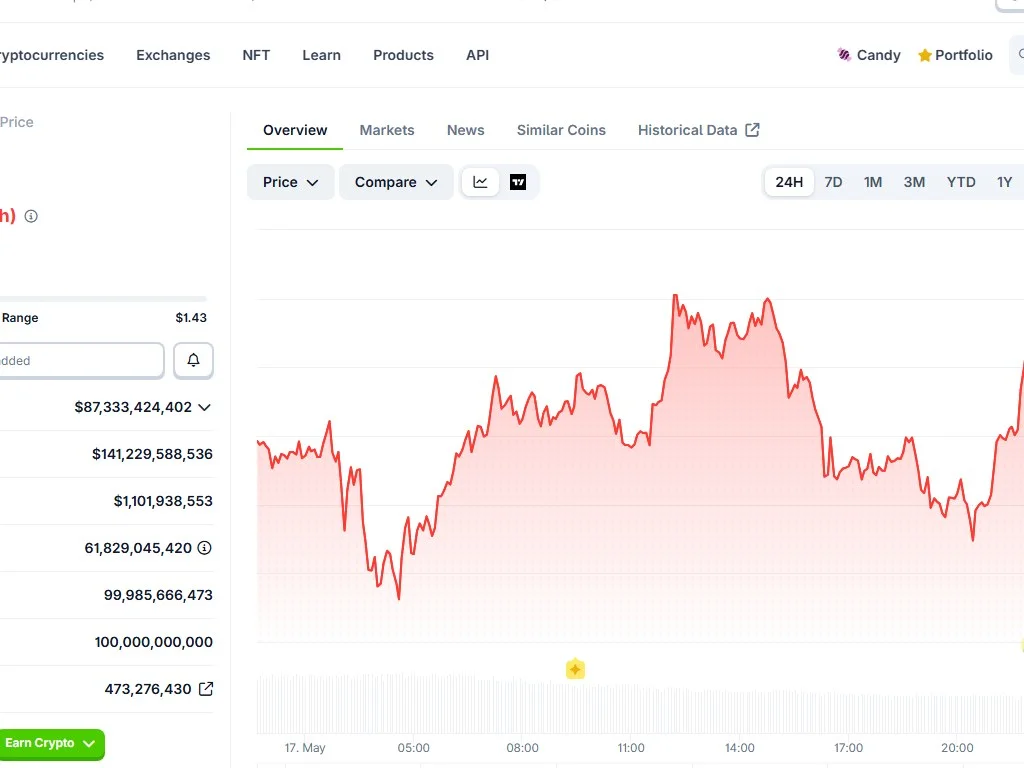
The on-chain XRP held by ETF custodians is growing every week, creating a structural buy-side bid that did not exist before. Trading volume in XRP futures on regulated venues has increased as market makers hedge their ETF exposure. None of this changes the fundamental nature of XRP. The ETF is just a regulated wrapper that gives traditional finance an approved way to hold the asset. For a deeper look, see our article on what an XRP ETF is and why it matters, and our guide on XRP market cap and how it is calculated for valuation context.
Real Use Cases: Where the Ecosystem Lives
Beyond price and politics, XRP and the XRPL are used for real economic activity in 2026. The strongest categories are cross-border payments, stablecoin settlement, central bank pilots, and on-ledger trading.
Ripple Payments routes value through XRP or RLUSD to settle business-to-business transactions in seconds, replacing the multi-day SWIFT and correspondent banking flow.
RLUSD lives natively on the XRPL alongside XRP. Institutions settle dollar-denominated obligations on-chain with near-instant finality and very low fees.
Central banks in Bhutan, Palau, and Montenegro have run digital currency pilots on private XRPL deployments using Ripple's CBDC Platform technology.
The XRPL has a native order book DEX and a native automated market maker. Traders quote XRP, RLUSD, issued IOUs, and tokenized assets directly on-chain.
The cross-border payments use case is the original product-market fit. Banks and payment providers care about three things: speed, cost, and certainty. Traditional correspondent banking can take 2 to 5 days, costs $20 to $50 per transaction in fees, and offers no real-time visibility into where the money is. Settling through Ripple Payments using XRP or RLUSD as the bridge takes seconds, costs cents, and shows the full transaction on a public ledger. For corridors where regulatory rails support it, this is now the default flow.
The CBDC pilots are smaller in volume but strategically important. The Royal Monetary Authority of Bhutan, the Republic of Palau, and the Central Bank of Montenegro have all run digital currency pilots on private deployments of XRPL technology. The pilots use Ripple's CBDC Platform, which is a software product, with a permissioned ledger that behaves like the public XRPL but is operated by the central bank's chosen validators. These pilots are not necessarily long-term commitments, but they demonstrate that the underlying technology can serve sovereign issuance use cases.
For traders who want to interact with the XRPL ecosystem directly, the public DEX and AMM are open to anyone with a wallet. You can browse on-ledger liquidity, place orders, deposit into AMM pools, and earn fees in XRP. If you are new to managing on-chain risk, our walkthrough on crypto wallet security is essential reading before you put real funds into any self-custody setup.
Validators: Who Really Runs the Network
The single most important fact about XRPL governance in 2026 is that Ripple does not control the validator set. The default Unique Node List, the trusted set most node operators follow, is maintained by the XRP Ledger Foundation, an independent non-profit registered in the United Kingdom. The Foundation curates the dUNL based on uptime, geographic distribution, and operator diversity.
Today's dUNL includes validators run by major exchanges (Bitstamp, Bitso, Coil), universities (MIT, Korea University), independent technology operators, payment companies that depend on the XRPL, the XRP Ledger Foundation itself, and Ripple (a small minority). By 2026, no single operator, including Ripple, controls a supermajority of trusted validators. Critics still raise reasonable questions about how the dUNL is curated, but the empirical picture is one of broad distribution rather than corporate control.
Simple Analogies for the Three-Part Model
If you are still trying to internalize the company-versus-asset distinction, two analogies tend to work for most readers. The first is Visa and the US dollar. Visa is a private company that operates a payment network. The US dollar is a unit of value that moves across that network. The two are governed by completely separate institutions. Ripple is like Visa, XRP is like the dollar, and the XRPL is like the Visa network rails.
The second is Coinbase and Bitcoin. Coinbase is a public company that builds products for Bitcoin holders. Bitcoin is a decentralized asset on a decentralized network. Coinbase holds a lot of Bitcoin and contributes engineering work, but it does not control Bitcoin, and Bitcoin would keep existing if Coinbase went out of business. The Ripple to XRP relationship has many parallels, with the key difference that Ripple has a much larger XRP treasury position than Coinbase has Bitcoin.
Common Misconceptions to Retire in 2026
There are five claims about Ripple and XRP that are still repeated in casual conversation and that are factually wrong in 2026. Knowing how to correct them is a fast way to demonstrate that you understand the topic.
How XRP Compares to Other Networks
The XRPL competes for attention with every other Layer 1 in crypto. Compared to Bitcoin, the XRPL is much faster (seconds instead of minutes) and cheaper (fractions of a cent), but it does not aim to be a store of value with the same monetary credibility. Compared to Ethereum, the XRPL has lower fees and faster finality but historically had less programmability, a gap that the XRPL EVM Sidechain has now largely closed. For broader context on the DeFi landscape, see our guide to decentralized finance.
Compared to Solana, NEAR, or Sui, the XRPL is older, more conservative, and more focused on the payments and tokenization use case rather than general-purpose smart contracts. Our explainers on Sui and NEAR are good starting points. Compared to Stellar, the closest cousin because of the shared McCaleb heritage, the two have similar foundations but have evolved separately for over a decade, with Stellar leaning more into anchored fiat issuance and the XRPL focused on institutional payments and EVM compatibility.
Honest Risks and Tradeoffs
Any guide that tries to be useful has to be honest about the criticisms. The first concern is the Ripple concentration question. Even with the escrow, Ripple is by far the largest single holder of XRP, and the monthly releases create a structural source of supply that does not exist on networks with more distributed initial allocations. Ripple's behavior and treasury management affect XRP price expectations to a degree that does not have a clean parallel on a network like Bitcoin.
The second is the validator centralization debate. The dUNL is curated by the XRP Ledger Foundation, which is independent of Ripple but is still a single curating entity. Compared to permissionless networks where anyone can join the validator set, the XRPL's federated model places more weight on social trust in the curators. The third is competition with stablecoins: as RLUSD, USDC, and others gain ground for cross-border payments, the case for using XRP as a bridge currency may weaken, although in 2026 the two are increasingly used together rather than as substitutes. Finally, trading XRP carries general market risk. If you trade on a DEX or in leveraged products, understanding liquidation zones and fake volume detection will protect you from avoidable losses.
How to Verify Everything Yourself
One of the best parts of public blockchains is that you do not have to trust anyone. You can verify the entire structure of the XRPL ecosystem with a few clicks. Here is a short checklist that lets you confirm the claims in this article without relying on Ripple or any third party.
livenet.xrpl.org or xrpscan to view live ledger activity, validator lists, and account balances.What This Means for Different Readers
The Ripple-versus-XRP distinction has different practical implications depending on what you are trying to do. If you are a retail investor or trader, the most important takeaway is that you are buying XRP, not buying Ripple. You cannot purchase Ripple shares on a crypto exchange because Ripple is a private company whose equity is held by venture investors and employees. XRP price is driven by supply, demand, sentiment, and broader crypto cycles. Ripple's performance influences that sentiment but is not directly reflected the way company performance affects a stock.
If you are a builder, you can build on the XRPL or the EVM Sidechain without any relationship with Ripple. The codebase is open source and the developer tooling has matured significantly. If you are an institutional allocator, you can now access XRP through spot ETFs, regulated futures, custody providers, and direct on-chain holdings. RLUSD is available as a regulated dollar stablecoin and Ripple Custody is one of several options for safekeeping.
Best Practices When Researching XRP
First, always check whether a piece of news is about the company or about the asset. A story about Ripple winning a bank partnership is corporate news. A story about a major exchange listing XRP perpetuals is asset news that moves price directly. Second, use the public ledger as your source of truth for on-chain claims. If someone says Ripple moved 100 million XRP, you can verify that directly on xrpscan in under a minute. The same goes for escrow releases, validator votes, and RLUSD supply figures.
Third, separate price movement from fundamental change. XRP price moves on macro sentiment, ETF flows, options positioning, and broader crypto cycles. The fundamentals of the XRPL change much more slowly than the chart suggests. Fourth, use real-time analytics like the XRPL dashboard on DEXTools to track live pairs, liquidity, and trading activity. Real-time visibility is the single biggest edge any independent trader has.
Frequently Asked Questions
Q Q Is Ripple the same as XRP?
No. Ripple is a private software company headquartered in San Francisco. XRP is a decentralized cryptocurrency that runs on the XRP Ledger. Ripple is a major holder and developer in the XRP ecosystem, but the asset is open-source, has its own independent network of validators, and would continue to exist if Ripple ceased to operate.
Q Q Who founded Ripple and XRP?
The XRP Ledger and XRP were created in 2012 by David Schwartz, Jed McCaleb, and Arthur Britto. Chris Larsen joined them and the company that became Ripple was formed shortly after. Brad Garlinghouse became CEO in 2017 and still leads the company in 2026.
Q Q Does Ripple control the XRP Ledger?
No. The XRP Ledger is maintained by an independent network of validators distributed across exchanges, universities, payment companies, and independent operators. Ripple runs only a small minority of validators (roughly 6 to 8 percent of the default trusted set), and the dUNL is curated by the XRP Ledger Foundation, not by Ripple.
Q Q How much XRP does Ripple own?
Ripple holds a substantial portion of the total XRP supply, with the majority locked in on-ledger escrow contracts that release 1 billion XRP per month. The escrow originally locked 55 billion XRP in 2017, and unspent monthly releases are typically re-escrowed. Exact current holdings are published in Ripple's quarterly XRP Markets Report.
Q Q Was XRP ruled a security by the SEC?
No. In July 2023, Judge Analisa Torres ruled that XRP itself is not a security. The court did find that certain direct institutional sales of XRP by Ripple constituted unregistered investment contracts, but the asset itself, when sold programmatically on public exchanges, was not a security. The case was effectively concluded in 2024.
Q Q What is RLUSD and how is it different from XRP?
RLUSD is a fully reserved, fiat-backed US dollar stablecoin issued by a Ripple subsidiary on both the XRP Ledger and Ethereum. It is designed for institutional dollar settlement. XRP is a decentralized digital asset with a fixed supply that is not backed by any external reserves and is not issued by any company. Both can move on the XRPL, but they are economically and legally distinct.
Q Q Is there an XRP ETF?
Yes. Spot XRP exchange-traded funds were approved and launched in the United States in 2026, joining the spot Bitcoin and Ethereum ETFs that came before them. The ETFs hold XRP directly with regulated custodians and trade on major US exchanges, giving investors access to XRP exposure through standard brokerage accounts.
Q Q How does the XRP Ledger reach consensus without mining?
The XRPL uses a federated consensus protocol. Each validator publishes a list of other validators it trusts, and every few seconds the network exchanges proposed transaction sets. Once a supermajority of trusted validators agree on a set, that becomes the next ledger. There is no proof of work, no mining, no slashing, and no staking yield. Energy use is minimal.
Q Q What is the XRPL EVM Sidechain?
The XRPL EVM Sidechain is a separate blockchain that runs an Ethereum Virtual Machine and uses XRP as its gas token. It launched in 2025 and lets developers deploy standard Solidity smart contracts in the XRPL ecosystem. Assets can be bridged between the main XRP Ledger and the EVM Sidechain through a trust-minimized bridge.
Q Q Can I buy shares in Ripple?
No, not on a public exchange. Ripple is a private company. Its equity is held by venture capital investors, employees, and early backers. There have been periodic secondary market transactions among accredited investors, but Ripple has not conducted an IPO. To get exposure to the broader ecosystem, retail investors buy XRP itself or hold the spot XRP ETF.
Q Q How fast and cheap are XRP transactions?
XRP transactions settle in 3 to 5 seconds with finality once included in a ledger. Fees are fractions of a cent under normal conditions and are burned by the network rather than paid to validators. The XRPL can sustain around 1,500 transactions per second in its current configuration, with higher throughput possible through future amendments and Layer 2 designs.
Q Q What happens to XRP if Ripple goes out of business?
XRP and the XRP Ledger would continue to operate. The XRPL is maintained by an independent network of validators, the codebase is open source under a permissive license, and the XRP Ledger Foundation would continue to coordinate ecosystem development. Ripple's holdings would be subject to bankruptcy or wind-down proceedings, but the asset and network would not be affected at the protocol level.
Bottom Line: Three Things to Remember
One: Ripple is a company that sells payment, custody, and stablecoin software to institutions. When you read about a Ripple acquisition or lawsuit, you are reading corporate news. Two: XRP is a decentralized cryptocurrency with a fixed supply of 100 billion units that live on the XRP Ledger. It is a bearer asset whose rules and operation are independent of any single company. Three: The XRP Ledger is the open-source public blockchain that hosts XRP, RLUSD, and a growing ecosystem of issued assets, DEXs, AMMs, NFTs, and EVM-compatible smart contracts. It is governed by independent validators and curated by the non-profit XRP Ledger Foundation, not by Ripple.
With this three-part mental model in place, the rest of the XRP universe becomes much easier to navigate. You can read regulatory news, ETF flows, and price action with a clear sense of which layer is being affected. For real-time data on XRP and the XRPL ecosystem, including live pairs, liquidity, and trading activity, the XRPL dashboard on DEXTools is one of the most powerful tools available. Trade with clarity, verify everything yourself, and remember: Ripple is the company, XRP is the asset, and the XRPL is the ledger that holds it all together.
Disclaimer: This article is for informational purposes only and does not constitute investment advice, financial advice, trading advice, or any other kind of advice. DEXTools does not recommend buying, selling, or holding any cryptocurrency or token. Users should conduct their own research and consult with a qualified financial advisor before making any investment decisions. Cryptocurrency investments are volatile and high-risk. DEXTools is not responsible for any losses incurred.
Related Guides
- Take Profit vs Stop Loss in Crypto: Key Differences, Trigger Logic and Fill Risk (2026)
- EMA vs SMA in Crypto: Key Differences, Signals and Best Uses (2026)
- CBDCs vs Stablecoins: Key Differences for Crypto Users
- XRP to USD: Live Ripple Price Converter & Guide 2026
- Who Owns XRP? Founders, Ripple & Supply Dynamics