Top Memecoin Categories: Animal, Politics, AI, and Cultural
— By AliceOnChain in Tutorials

An analytical deep dive into the four pillars of the memecoin market-Animal, Politics, AI, and Cultural tokens. Discover the on-chain metrics that define these sectors and how to use professional tools to navigate their unique volatility.
Memecoin categories segment the market into distinct sectors like Animal, Politics, AI, and Cultural. These categories, once simple internet jokes, now represent a complex multi-billion dollar asset class within decentralized finance (DeFi). Understanding these sectors helps traders recognize differences in liquidity, community longevity, and market sentiment, moving beyond just following hype.
Top Memecoin Categories: Animal, Politics, AI and Cultural
The evolution of the decentralized finance (DeFi) landscape has transformed memecoins from simple internet jokes into a complex multi-billion dollar asset class. While early iterations were often dismissed as fleeting trends, the modern on-chain environment reveals a sophisticated ecosystem segmented into distinct memecoin categories. For traders navigating this space, understanding these specific memecoin market sectors is not just about following the "hype"-it is about recognizing the fundamental differences in liquidity patterns, community longevity, and market sentiment.
Trading memecoins on TON? Not.Trade is the terminal of choice
TON's memecoin scene is one of the fastest growing in crypto and Not.Trade is the fastest terminal on TON for catching launches early. Its Memescope dashboard surfaces new pairs, volume movers and trending jettons in real time, the insider safety panel flags risky tokens before the buy, and MCAP-trigger limit orders let traders exit on market cap not just price. Multi-wallet sniping and MEV protection ship by default.
Explore Not.Trade in depth →To trade effectively within these memecoin categories, one must move beyond the surface-level aesthetics and dive into the data. Using tools like DEXTools, we can categorize these assets based on their underlying narratives and the on-chain behavior of their participants.
The Foundation: Animal-Themed Memecoin Categories
Animal-themed tokens, led by the legacy of Dogecoin and Shiba Inu, remain the most saturated and recognizable of all memecoin categories. Traditionally centered around dogs (canines), this sector has expanded to include cats, frogs, and more exotic mascots.
Understanding the "First Mover" Dynamics
In the animal-themed memecoin sectors, market dominance often follows a "leader-laggard" relationship. When a primary token like $DOGE or $PEPE experiences a significant surge in volume, it frequently triggers a rotation into micro-cap tokens within the same memecoin sub-categories. On-chain analysts monitor the DEXTools Pair Explorer to identify these shifts in real-time, looking for an influx of capital into secondary pairs when the primary "blue-chip" asset begins to consolidate.
On-Chain Characteristics of Animal Tokens
These specific memecoin categories often boast the highest number of unique holders but are also prone to extreme dilution. When analyzing these assets, it is crucial to examine the Holder Analysis tool. A healthy animal memecoin typically shows a decentralized distribution, whereas a "bottlenecked" supply-where a few wallets hold more than 5-10% of the circulating supply-can signal significant sell-side pressure.
The Rise of PolitiFi: Political Memecoin Categories
The emergence of "PolitiFi" represents a shift toward memecoin categories that derive value from real-world political cycles, elections, and public figures. Unlike animal tokens, which rely on general internet culture, political tokens are highly sensitive to news cycles and scheduled events.
Trading the News Cycle in PolitiFi
Political memecoin market sectors often exhibit "buy the rumor, sell the news" price action. For instance, tokens associated with specific candidates historically see increased volatility leading up to debates or election nights. Traders utilize DEXTools Price Alerts to stay ahead of these sharp movements, as the reaction time in these memecoin categories is often measured in seconds rather than minutes.
Risk Management in Political Sectors
The primary risk in this category is the "expiration date." Once a political event concludes, the narrative may lose its momentum, leading to a sharp decline in liquidity. Analyzing the Liquidity Tracking feature on DEXTools is vital here. If the liquidity-to-market-cap ratio begins to thin out while the price is still climbing, it may indicate that this specific memecoin category is becoming overextended.
The Convergence of Tech and Culture: AI Memecoin Categories
The AI category is one of the newest and most technically intriguing memecoin categories. These are not just tokens with "AI" in the name; many are linked to "AI Agents"-autonomous or semi-autonomous programs that interact with social media or manage their own treasuries.
Narrative-Driven Liquidity in AI Tokens
AI-based memecoin categories often attract a more tech-savvy demographic, which can lead to different on-chain patterns. We often see longer "accumulation phases" compared to the explosive but short-lived bursts of animal tokens. Using the DEXTools Charts, analysts look for periods of low-volatility consolidation paired with a gradual increase in the number of holders-a classic sign of organic growth within this memecoin sector.
Technical Validation of AI Narratives
Because AI is a "buzzword," these memecoin categories are susceptible to low-effort clones. On-chain verification becomes the trader's best defense. Before interacting with an AI-themed pair, smart traders check the Contract Audit section on the Pair Explorer to ensure there are no malicious functions, such as "honeypots" or "minting" capabilities that could compromise the liquidity pool of these memecoin categories.
Cultural and Lifestyle Memecoin Categories
Cultural tokens represent the broadest and most nuanced of the memecoin categories. These tokens are built around internet subcultures, specific brands, memes, or even "meta" concepts about the crypto industry itself.
The Strength of Community Sentiment
Cultural memecoin categories thrive on "mindshare." Their value is directly proportional to their presence on social platforms and their ability to maintain a consistent narrative. On DEXTools, the Social Links and community activity metrics provide a window into whether a specific memecoin category is maintaining its relevance or if interest is waning.
Identifying Whale Activity in Cultural Sectors
In cultural memecoin categories, a few large-scale traders often drive the initial momentum. By using the Top Traders feature on DEXTools, you can see which wallets were early to the position and, more importantly, whether they are slowly offloading their tokens. A sudden exit by several top traders in these memecoin categories often precedes a broader market correction.
Technical Analysis Across Memecoin Categories
Regardless of the specific memecoin categories you choose to trade, certain analytical principles apply across the board. Success in the memecoin market requires a blend of traditional technical analysis (TA) and deep on-chain scrutiny.
Support, Resistance, and RSI
Even the most volatile memecoin categories respect basic technical levels. When a token is in price discovery (all-time highs), the RSI (Relative Strength Index) can help identify overbought conditions. Conversely, during a correction, identifying previous "consolidation zones" on the DEXTools chart can provide clues as to where buyers might step back into these memecoin categories.
Volatility Management in Memecoin Trading
Volatility is a double-edged sword across all memecoin categories. While it provides the opportunity for significant gains, it can also lead to rapid drawdowns. Professional traders often use "partial profit-taking" strategies. Monitoring Real-time Trades on DEXTools allows you to see the "size" of the sells; if you see a barrage of small retail buys being offset by large "whale" sells, it is often a sign of distribution within that memecoin category.
The Role of Bubblemaps in Category Analysis
Understanding the "social graph" of a token is a high-level strategy for evaluating different memecoin categories. Through DEXTools' integration with tools like Bubblemaps, you can visually inspect if wallets are interconnected. If a group of top holders all received their tokens from the same source, it suggests a centralized "cabal" supply, which significantly increases the risk for any memecoin category.
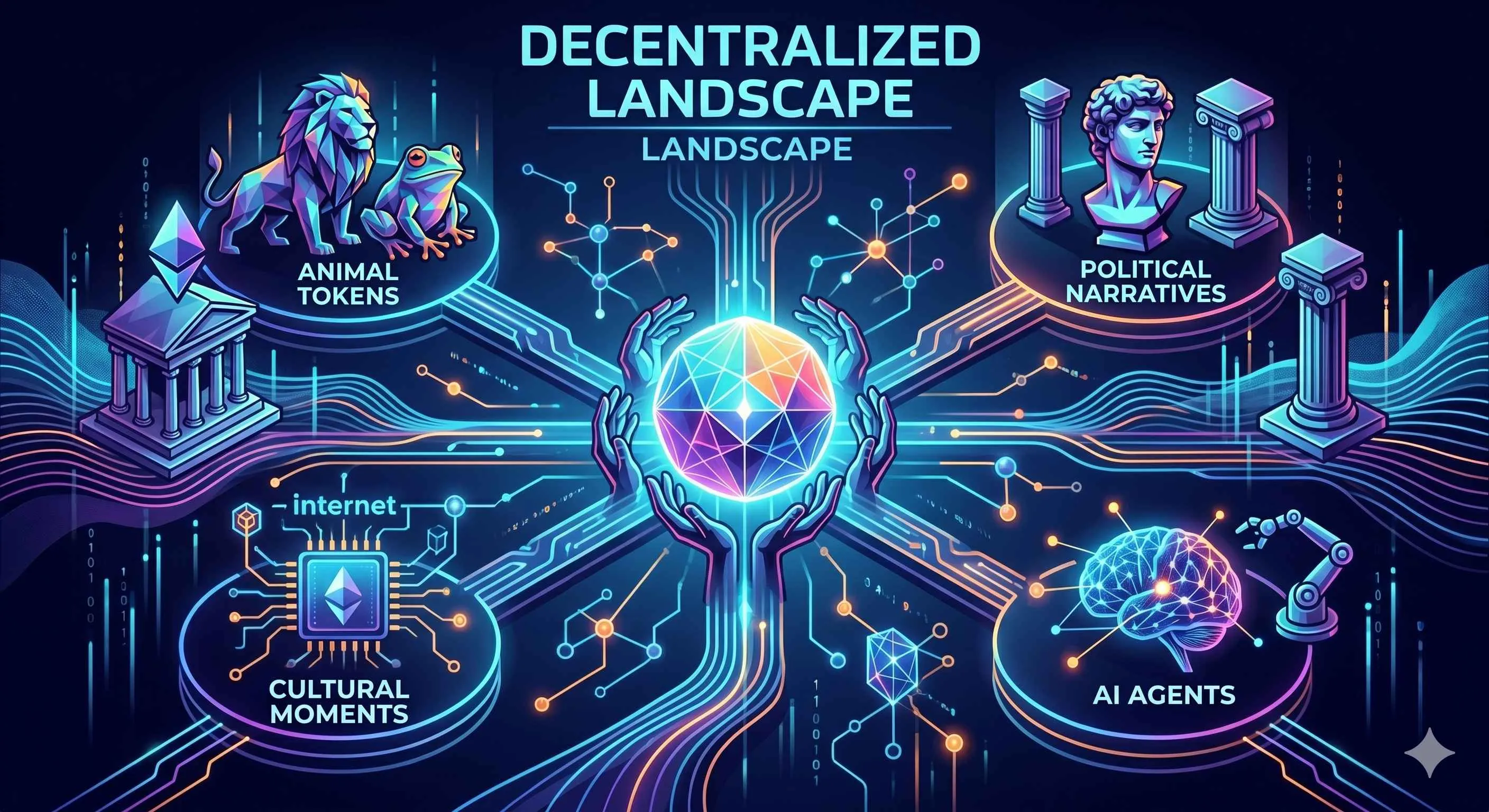
Conclusion: Navigating the Memecoin Categories
The memecoin market is no longer a monolith. It is a fragmented landscape where Animal, Political, AI, and Cultural memecoin categories each follow their own internal logic and liquidity cycles. By categorizing tokens, traders can better understand the risks and opportunities inherent in each narrative.
The key to longevity in on-chain trading is not just finding the next "winner," but utilizing professional-grade tools like DEXTools to verify liquidity, audit contracts, and monitor whale activity across all memecoin categories. In a market driven by sentiment, data is the only objective anchor.
- How to Bridge Crypto Between Chains: Complete Cross-Chain Tutorial 2026
- How to Use 1inch: Complete DEX Aggregator Swap Tutorial (2026)
- How to Use OKX Web3 Wallet: Multi-Chain DeFi Hub Guide (2026)
Disclaimer: This article is for informational purposes only and does not constitute investment advice, financial advice, trading advice, or any other kind of advice. DEXTools does not recommend buying, selling, or holding any cryptocurrency or token. Users should conduct their own research and consult with a qualified financial advisor before making any investment decisions. Cryptocurrency investments are volatile and high-risk. DEXTools is not responsible for any losses incurred.
Related Guides
- Meme Coin Attention Economy Explained (2026)
- Altcoins vs Meme Coins: defining the Categories
- What Is Turbo Coin (TURBO)? AI Memecoin Created with ChatGPT in 2026
- What Is TRUMP Coin: Official Trump Memecoin Guide (2026)
- What Is Toshi (TOSHI)? Base Memecoin from Coinbase CEO's Cat Explained in 2026
Frequently Asked Questions
What are the main memecoin categories?
Memecoins are often grouped into themes such as animal, politics, AI, and cultural tokens. These categories reflect the meme or narrative that drives community attention around each coin.
What drives the value of memecoins?
Memecoin value is driven mostly by community attention, virality, and speculation rather than underlying utility. As a result, prices can be highly volatile and sentiment-driven.
What on-chain metrics help analyze memecoins?
Useful metrics can include holder distribution, liquidity, trading volume, and how concentrated ownership is among top wallets. Reviewing several metrics together gives a clearer picture than any single figure.
Are all memecoins the same?
No, memecoins vary by theme, community, chain, and tokenomics even though they share a meme-driven nature. Categories like animal or AI tokens can attract different audiences and narratives.