What Is Algorand (ALGO)? Pure Proof of Stake Explained
Learn what Algorand is, how Pure Proof of Stake works, and why ALGO stands out for fast finality, low fees, and real-world blockchain utility in 2026.
This guide explains what Algorand is and how Pure Proof of Stake works. It is a chain explainer, not a general staking-yield comparison.
A Technical Analysis of Pure Proof of Stake and Institutional Utility
- Algorand has established itself as a specialized infrastructure for high-throughput institutional applications and post-quantum cryptographic research. Founded by Turing Award winner Silvio Micali, the network was designed to solve the "Blockchain Trilemma": achieving security, decentralization, and scalability simultaneously. In the current 2026 market, Algorand has moved past its early identity as an "Ethereum alternative" to become a leading rail for digital commodities and autonomous AI commerce.
- Following the joint classification of $ALGO as a digital commodity by U.S. regulators in March 2026, the network has seen a renewed influx of risk-averse institutional players, consolidating its position with a market cap of approximately $1.07 billion and a circulating supply of 8.91 billion ALGO.
1. The Core Mechanism: Pure Proof of Stake (PPoS)
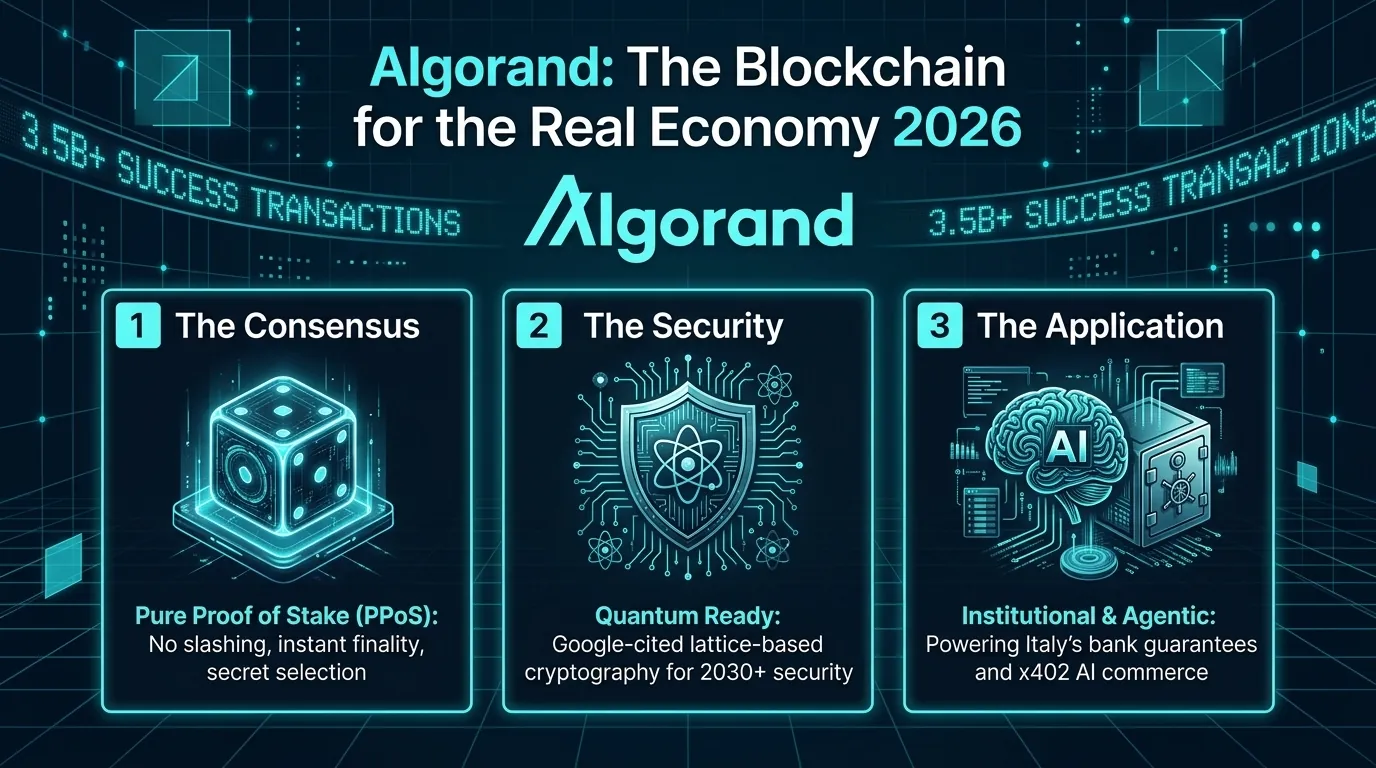
At the heart of Algorand is its Pure Proof of Stake (PPoS) consensus mechanism. Unlike traditional Proof of Stake, which often requires large minimum stakes or delegates (DPoS), PPoS allows every single token holder to participate in consensus proportionally to their stake.
The Math of Verifiable Random Functions (VRFs)
Algorand uses a unique selection process where a secret committee of users is chosen to validate each block. This is achieved via a Verifiable Random Function (VRF). The probability P of a user being selected for the committee is directly proportional to their stake s divided by the total stake S:
No Slashing, No Forking
One of the most distinct features of Algorand is the absence of slashing. In most PoS networks, stakers can lose their principal if their node misbehaves. In Algorand, malicious or offline nodes are simply removed from consensus without their funds being confiscated. Furthermore, Algorand offers instant finality, meaning blocks are finalized in one round, and the chain cannot fork.
2. Algorand Ecosystem Architecture: ASA Tokens and Smart Contracts
Algorand’s architecture is split between Layer 1 (for performance) and Layer 2 (for complex logic).
ASA (Algorand Standard Assets): Tokens like USDC, USDT, and NFTs are built directly into the Layer 1 protocol. This means they inherit the same security and speed as ALGO itself, without the need for complex and potentially vulnerable smart contracts for basic transfers.
AVM (Algorand Virtual Machine): Now in version 10 as of 2026, the AVM supports high-performance smart contracts written in Python and Logic Signatures. The network currently handles over 10,000 Transactions Per Second (TPS) with sub-cent fees.
3. Governance and Staking in 2026: The Shift to Consensus
The governance model in 2026 has transitioned from the "passive" lock-up rewards of previous years to a Consensus-based reward system.
Staking Rewards: To earn rewards in 2026, accounts must actively participate in consensus by running a node and bringing their ALGO "online." Eligible accounts (minimum 30,000 ALGO) receive a portion of transaction fees plus a Foundation-funded supplementary bonus.
xGov Program: The Extended Governance (xGov) program has evolved into a community-driven funding mechanism. It focuses on retroactive grants for ecosystem builders, where the community votes on-chain to allocate treasury funds to specific technical projects.
4. Real-World Use Cases: The 2026 Landscape
In May 2026, Algorand is distinguished by its focus on "The Real Economy" rather than purely speculative DeFi.
Institutional Adoption: Italy’s "Digital Guarantees" platform, which moved to Algorand in 2024, now processes billions in tokenized bank and insurance guarantees.
Agentic Commerce (x402): The new x402 standard allows autonomous AI agents to own wallets and execute payments on-chain. This is currently being utilized for automated subscription services and AI-to-AI data marketplaces.
Post-Quantum Security: In late March 2026, Google’s Quantum AI team cited Algorand’s lattice-based cryptography as a benchmark for real-world quantum-resistant blockchain deployments.
Technical Trade-offs and Market Realities
Strengths
Technical Excellence: Zero downtime since launch (3.5+ billion transactions) and instant finality.
Regulatory Clarity: Commodity status in the U.S. reduces compliance risk for institutions.
Sustainability: One of the few carbon-negative blockchains, using a fraction of the energy of its peers.
Challenges
Ecosystem Liquidity: Despite its technical speed, Algorand's total value locked (TVL) lags significantly behind Ethereum and Solana.
Market Awareness: Rank 65 by market cap indicates that while the technology is robust, retail and developer mindshare remains a competitive hurdle.
Tokenomics: The transition from Foundation-led rewards to fee-based rewards is still in an experimental phase to ensure long-term validator sustainability.
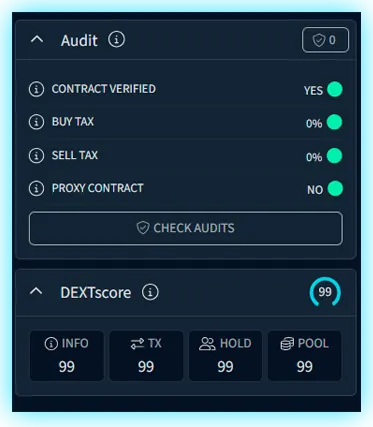
Verification and Security via DEXTools
In the 2026 "Agentic Economy" era, the risk of interacting with unverified AI-generated tokens or "imposter" ASAs is persistent. DEXTools is the optimal tool for analyzing the market, finding early crypto gems, and avoiding scams within the Algorand ecosystem.
To monitor the DeFi market in an agile and secure way in real-time and trade with the help of the best crypto tools, you can access DEXTools here.
Disclaimer: This article is for informational purposes only and does not constitute investment advice, financial advice, trading advice, or any other kind of advice. DEXTools does not recommend buying, selling, or holding any cryptocurrency or token. Users should conduct their own research and consult with a qualified financial advisor before making any investment decisions. Cryptocurrency investments are volatile and high-risk. DEXTools is not responsible for any losses incurred.
Related Guides
- What is Staking? Proof of Stake Beginner Guide
- What Is Proof of Work vs Proof of Stake: Complete Guide (2026)
- What Is a Validator in Crypto: Complete Proof-of-Stake Guide (2026)
- What Is Lofty AI? Fractional Real Estate Tokenization on Algorand Explained in 2026
- Crypto Mining Explained: Proof of Work, ASICs and Profitability (2026)
Frequently Asked Questions
What is Algorand and how does it work?
Algorand is a blockchain network designed for high-throughput institutional applications, utilizing a consensus mechanism called Pure Proof of Stake (PPoS) that allows all token holders to participate in consensus based on their stake.
What are the main features of Algorand's Pure Proof of Stake?
Algorand's Pure Proof of Stake mechanism enables every token holder to participate in block validation without the risk of slashing, ensuring that malicious nodes are simply excluded from consensus.
How does Algorand ensure security and scalability?
Algorand achieves security and scalability through its unique consensus mechanism and by processing over 10,000 transactions per second with instant finality, making it suitable for institutional applications.
What is the governance model of Algorand in 2026?
In 2026, Algorand's governance model has shifted to a consensus-based reward system, requiring participants to actively run nodes and engage in decision-making for rewards.
What real-world applications does Algorand support?
Algorand is used in various real-world applications, including Italy's Digital Guarantees platform for tokenized bank guarantees and the new x402 standard for autonomous AI commerce.