What Is Baby Doge Coin (BabyDoge)? BSC Reflection Memecoin Guide 2026
— By Whatsertrade in Tutorials
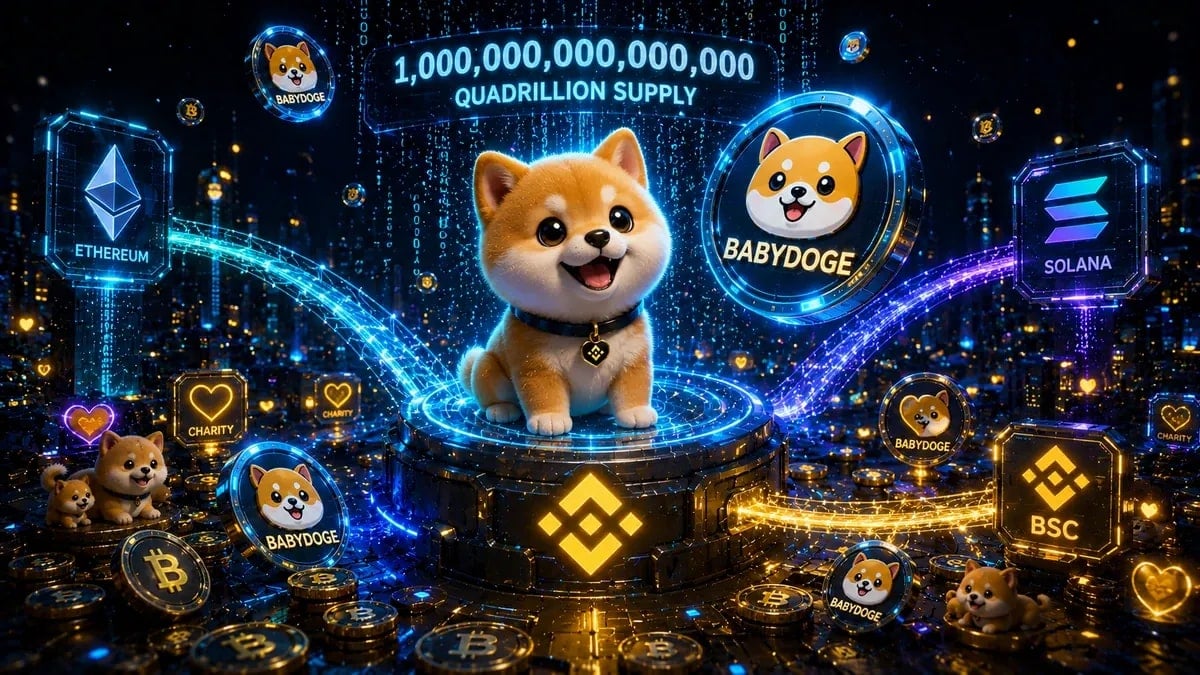
Baby Doge Coin (BabyDoge) is a BEP-20 reflection memecoin on BNB Chain launched June 2021 that surged 130% after an Elon Musk tweet and grew to 22+ million holders. Full 2026 guide: tokenomics, the burn-and-reflection mechanism, BabyDoge Swap DEX, animal welfare program, comparison vs SHIB, DOGE and FLOKI, and the DailyCoin ponzi controversy.
What Is Baby Doge Coin (BabyDoge)? BSC Reflection Memecoin Guide 2026
Memecoin lore is full of family trees. Dogecoin sired Shiba Inu. Shiba Inu sired half of the canine memes that flooded Ethereum in 2021. Buried inside that lineage is one of the most peculiar tokens of the cycle, a project that styled itself as the literal offspring of Doge but was actually built much more like a baby Shiba Inu. Baby Doge Coin launched on Binance Smart Chain on June 1, 2021, surged 130 percent twenty-two days later after a single Elon Musk tweet, and grew to more than twenty-two million all-time holders across BSC and Ethereum.
If you only know BabyDoge from a price chart you have probably written it off. The unit price in dollars is microscopic, in billionths or trillionths depending on cycle. That looks like a joke to anyone used to large-cap valuations, but the joke is on the people who never bothered to read the contract. Baby Doge Coin is a deflationary reflection token, which means every transaction burns part of the supply and redistributes another part to holders as passive rewards. That mechanism, combined with one of the most aggressive viral marketing playbooks in memecoin history, pushed the project from a one-week joke into a five-year ecosystem with its own DEX, a KOL program, and an animal welfare donation track.
This guide walks you through every angle of Baby Doge Coin in 2026. The June 2021 launch and the Elon Musk pump. The tokenomics that make it more similar to Shiba Inu than to Dogecoin. The reflection and burn mechanics that distinguish it from a vanilla BEP-20. How BabyDoge Swap works as a DEX. The KOL of the Year program. The animal welfare brand pillar. The honest comparison against SHIB, FLOKI and DOGE. And the elephant in the room: the DailyCoin "viral or ponzi" article that forced the project to address tokenomics concerns publicly. By the end you will know exactly what BabyDoge is, what it is not, and what kind of risk you take if you hold it.
FEATURED SNIPPET
Baby Doge Coin (BabyDoge) is a BEP-20 deflationary reflection memecoin launched on Binance Smart Chain on June 1, 2021. Each transaction triggers a small burn that permanently reduces supply and a reflection that distributes tokens to existing holders, mechanics borrowed from the Shiba Inu and SafeMoon era rather than from Dogecoin. The token surged 130 percent on June 23, 2021 after Elon Musk tweeted a Baby Shark reference. By 2026 the project reports more than twenty-two million all-time holders, runs its own BabyDoge Swap DEX, operates a KOL of the Year ambassador program, and channels a portion of community marketing into animal welfare donations. BabyDoge is closer to Shiba Inu than to Dogecoin in code and culture, and was the subject of a widely cited DailyCoin "viral or ponzi" investigation into its tokenomics.
What Is BabyDoge in Plain English
Strip away the marketing and Baby Doge Coin is a BEP-20 token on BNB Chain (formerly Binance Smart Chain) that uses a custom transfer function. BEP-20 is the BNB Chain equivalent of Ethereum's ERC-20 token standard, so at a structural level BabyDoge behaves like any other fungible token in the BSC ecosystem: it lives at a contract address, it can be held in MetaMask, Trust Wallet, or any wallet that supports BNB Chain, and it can be swapped on decentralized exchanges. If you want a deeper primer on the standard itself, our BEP-20 token standard guide walks through exactly what a BEP-20 contract does and how it differs from BEP-2 or ERC-20.
Where BabyDoge departs from a vanilla BEP-20 is in the transfer logic. The contract is built on top of a fee-on-transfer pattern, meaning that whenever someone sends BabyDoge to anyone else, including in a swap on a DEX, the contract takes a percentage of the transaction and redirects it. Part of that percentage is sent to a dead address, permanently reducing the circulating supply. Part of it is redistributed to existing holders pro rata, so that the more BabyDoge you hold, the more BabyDoge you passively accumulate over time without doing anything. Part of it funds liquidity and marketing operations.
That single design choice is what makes BabyDoge a Shiba Inu spiritual descendant rather than a Dogecoin one. Dogecoin has no transfer tax, no burn, no reflection. It is a straightforward inflationary proof-of-work coin that mints a fixed amount of new DOGE every block. Shiba Inu, by contrast, launched as an ERC-20 with a massive initial supply, a portion famously burned by Vitalik Buterin, and a culture obsessed with reducing the float over time. BabyDoge inherited the Shiba Inu mindset and added the reflection mechanic that was popular among 2021 BSC tokens like SafeMoon. The name says baby Doge, but the DNA is closer to baby Shib.
The June 2021 Launch and the BSC Memecoin Moment
Baby Doge Coin was deployed on Binance Smart Chain on June 1, 2021. To understand why the launch worked you have to remember what BSC looked like that summer. Ethereum gas fees were sitting at fifty to two hundred dollars per swap depending on network congestion. Memecoin traders were getting priced out of the action on mainnet because a ten-dollar speculative buy could not survive a hundred-dollar gas fee. BSC, with its sub-cent transaction costs and Binance-aligned liquidity, became the natural overflow venue.
The platform itself, then known as Binance Smart Chain, was the EVM-compatible smart contract layer Binance launched in 2020 to compete with Ethereum on cost. It has since been rebranded as BNB Chain and reorganized to combine with the older BNB Beacon Chain. Our guide to BNB Chain covers the full architecture and the rebrand timeline. What matters for BabyDoge is that in mid-2021, BSC was the cheapest and most accessible place for a community memecoin to bootstrap, especially one targeting retail traders who had just discovered crypto in the post-Dogecoin Reddit wave.
The deployment was anonymous, as is typical for memecoins of that era. The contract was uploaded by an unnamed developer group that branded itself as the Baby Doge Coin team, which has since evolved into a more formal organization with public-facing community managers. The puppy mascot was chosen to position the token as the next-generation version of the original Doge, with the deflationary tokenomics that the 2021 BSC season had popularized.
The Elon Musk Tweet: 130 Percent in 24 Hours
Twenty-two days after launch, on June 23, 2021, Elon Musk tweeted a line that read like a joke but landed like rocket fuel: he wrote something to the effect of "Baby Doge, doo, doo, doo, doo, doo," riffing on the viral Baby Shark children's song. He did not name Baby Doge Coin, did not link to a contract address, did not endorse anything. He simply said the words "Baby Doge" in a tweet to his hundred-million-plus following.
That was enough. The Baby Doge Coin price surged roughly 130 percent in the following twenty-four hours according to coverage at the time from Bloomberg, Yahoo Finance and Analytics Insight. Trading volume exploded on PancakeSwap, the dominant BSC DEX, and the token transitioned from a niche BSC memecoin to a globally trending search term overnight. For a project that was twenty-two days old, the inflection was extreme. Musk later confirmed in subsequent tweets that he was aware of Baby Doge Coin as a meme even if he was not personally invested, and the project leaned into the association in all its subsequent marketing.

This is the moment that defines BabyDoge's market psychology more than any other. Many holders entered during that 130 percent move, and many were stuck holding much smaller positions after the inevitable cool-off. For the next several years the token would oscillate, but the Musk tweet remained the cultural origin story that the community returned to whenever Baby Doge Coin reentered the news cycle. Every Musk crypto mention since then has triggered speculative flows into BabyDoge, even when the mention was about something entirely unrelated to the token itself.
Why BabyDoge Is More Similar to Shiba Inu Than to Dogecoin
The branding is misleading. Despite the name and the puppy mascot, Baby Doge Coin has almost nothing in common with Dogecoin at a technical level. Dogecoin is a proof-of-work cryptocurrency with its own dedicated blockchain, an inflationary issuance schedule of roughly five billion new DOGE per year, no smart contracts, no token reflections, and no burn mechanic. It is, in essence, a fork of Litecoin from 2013 with a Shiba Inu logo glued on top. Our Dogecoin DOGE meme coin guide walks through the original technical design and history in detail.
Shiba Inu is the much more relevant comparison. SHIB launched in August 2020 as an ERC-20 token on Ethereum with an initial supply of one quadrillion, a deliberate deflationary culture, and a thesis that scarcity could be manufactured by burning vast quantities of the float. Half the original supply was sent to Vitalik Buterin as a marketing stunt, and he famously burned roughly ninety percent of his allocation and donated the rest to COVID relief. SHIB then built an ecosystem around itself: ShibaSwap, the Shibarium L2, NFT collections, a stablecoin. Our Shiba Inu SHIB token guide covers the full ecosystem evolution.
BabyDoge cloned the spiritual playbook. It launched with a massive supply, deliberately positioned itself as a deflationary asset, built reflection and burn into the contract, and slowly expanded into adjacent products (its own DEX, NFT collections, marketing programs) the way Shiba Inu had done a year earlier. The puppy branding gestures at Dogecoin lineage, but the actual on-chain behavior is a BSC remix of the SHIB formula. Calling it baby Doge is poetic license. Calling it baby Shib on BSC would be technically more accurate.
BabyDoge Tokenomics: Reflection and Burn Explained
The core mechanic that distinguishes BabyDoge from a vanilla BEP-20 is the dual-fee transfer. Every time BabyDoge moves between addresses, the contract intercepts a percentage of the amount and splits it into two streams. A reflection stream is distributed proportionally across all existing holder addresses based on their share of supply. A burn stream is sent to a dead address that no human can ever access, permanently destroying those tokens.
The numerical percentages have been adjusted over time as the project has evolved its tokenomics, but the structure has remained consistent. The reflection rate is meaningful enough that long-term holders genuinely see their balance grow over time without ever staking or claiming anything. Open your wallet six months after buying, and the BabyDoge balance is larger than what you originally bought, assuming the contract has seen normal transfer volume. This is the passive reward mechanism that the marketing emphasizes: hold BabyDoge and you accumulate more BabyDoge simply because other people trade it.
The burn rate works the opposite direction. Each transaction shrinks the total supply, which means that even without price appreciation, your share of the total supply grows over time. Combined with reflection, the effect is meant to create a slow deflationary pressure where holders who do nothing end up owning a larger fraction of a smaller total pie. This is the same conceptual structure that powered SafeMoon and other 2021 reflection tokens, with the difference being that BabyDoge has actually survived where most of those projects collapsed.
Critically, the reflection-and-burn structure is not free. The fee charged on every transaction is paid by the person executing the trade, which means buyers and sellers both effectively pay a tax to support the holders. From a microeconomic standpoint, BabyDoge is a token where active traders subsidize passive holders. That is the design, and it is also why the token's mechanics have been controversial in some analytical pieces, including the DailyCoin investigation we will discuss later.
22+ Million Holders and the Distribution Strategy
One of the most quoted numbers in BabyDoge marketing is the holder count. The project reports more than twenty-two million all-time holder addresses across BNB Chain and the bridged Ethereum version of the token. That is an enormous number by any memecoin standard. For context, even Shiba Inu and Dogecoin, which dwarf BabyDoge in market capitalization, do not always show distinct holder counts of that magnitude on a single chain.
The all-time holder figure deserves some skepticism. On-chain holder counts include any address that has ever held the token, including burn addresses, abandoned wallets, dust drops, and airdrop recipients who never sold or transferred. The active holder count, meaning addresses that are still nonzero and have moved in the last few months, is meaningfully smaller. That said, even the active number is large by memecoin standards, and the sheer breadth of distribution is one of BabyDoge's structural advantages. Coverage from CoinMarketCap, KuCoin Learn, and Invezz has consistently flagged the holder count as one of the standout features of the project.
Wide distribution matters because memecoins live and die on community participation. A token with a million holders has a million potential evangelists. A token with twenty-two million addresses, even if a large fraction are inactive, still has a much wider top-of-funnel for any marketing campaign than a token concentrated in a few thousand wallets. The trade-off is that whale concentration becomes harder to measure, because the distribution is spread across so many addresses that traditional on-chain analysis tools struggle to give a clean picture of where actual capital sits.
BabyDoge Swap: The Native DEX
In 2022 the project launched BabyDoge Swap, a native decentralized exchange built around the BabyDoge ecosystem. The DEX runs as an automated market maker, similar in structural terms to PancakeSwap or Uniswap, but with the BabyDoge token integrated as a core asset. The selling point for BabyDoge Swap is that it consolidates trading activity inside the BabyDoge ecosystem itself, which feeds back into the reflection and burn mechanism by ensuring that every swap on the platform triggers the standard transfer fee distribution.
From a user experience standpoint BabyDoge Swap looks like any other AMM. You connect a wallet, select an input token and an output token, see the expected slippage and fee structure, and execute the swap. The platform supports a wide range of BSC tokens, not only BabyDoge, and aggregates liquidity from multiple pools. The differentiator is the rewards layer: trading on BabyDoge Swap routes a portion of fees back into BabyDoge holder rewards, which is meant to incentivize BabyDoge holders to use the platform over PancakeSwap or Uniswap on Ethereum.

Whether you should actually use BabyDoge Swap depends on what you are trying to do. For someone already deep in the BabyDoge ecosystem, who wants to swap between BabyDoge and other BSC memecoins while contributing to the holder reward pool, it makes sense. For someone who needs the deepest possible liquidity on a specific pair, PancakeSwap typically wins because its overall trading volume on BSC is orders of magnitude higher. As with any niche DEX, BabyDoge Swap is best treated as a complement to the major BSC venues, not a replacement.
The BabyDoge KOL of the Year Program
One of the more unusual community initiatives is the BabyDoge KOL of the Year program. KOL stands for Key Opinion Leader, which is industry shorthand for crypto influencer. The program operates as a structured ambassador competition where influencers, content creators and Twitter accounts can register, generate content about BabyDoge, and compete for a public ranking and tangible rewards. Winners receive recognition, prizes and elevated visibility within the BabyDoge community.
As marketing infrastructure, this is meaningfully different from the standard memecoin playbook of paying individual influencers for one-off promotional tweets. By turning the influencer relationship into an ongoing tournament with a year-long arc, BabyDoge generates a continuous flow of organic-looking content from accounts that have a structural incentive to keep producing. The KOL program has been credited in coverage from CoinGabbar and other outlets with helping the project maintain marketing momentum well after the initial 2021 viral moment had cooled.
From an investor perspective the KOL program is double-edged. On one hand it creates a self-sustaining marketing engine that does not depend on any single voice. On the other hand it inevitably produces content that is more promotional than analytical, and new buyers should weight KOL content accordingly. If you find yourself in a sentiment vacuum where every BabyDoge mention you can find is from a registered KOL, that is a sign you need to look outside the program to find genuinely independent analysis. Independent coverage like the kind found on DailyCoin, Bloomberg, Yahoo Finance, KuCoin Learn and Analytics Insight is the counterweight to the in-house ambassador content.
The Animal Welfare Donation Track
From early in the project's history, the Baby Doge Coin team has positioned animal welfare as a brand pillar. The official messaging emphasizes that a portion of community marketing budgets and team allocations is directed to animal welfare nonprofits, dog shelters, and rescue organizations. The donation thesis fits the puppy branding, gives community members an emotionally appealing reason to participate, and provides a positive cause-marketing angle that distinguishes BabyDoge from the average pump-and-dump memecoin.
In practice the donation track has been documented through several public partnership announcements over the years, where BabyDoge donations to animal rescues are announced on social media and sometimes accompanied by photos or receipts. Specific dollar amounts have varied with cycles and have been the subject of debate. Critics have argued that the donation marketing dramatically outpaces the actual donation flow when measured against total community marketing spend. Supporters point out that even modest donations from a memecoin community are more philanthropic activity than the average crypto project generates, which is a fair counter.
The animal welfare angle is genuinely one of the things that separates BabyDoge from peers culturally. SHIB has its own NFT and ecosystem-building thesis, FLOKI has its own education and DeFi push, but BabyDoge specifically owns the rescue-puppy brand. Whether you treat that as marketing or as substance depends on how generously you read the actual donation flows, which holders should examine with the same skepticism they apply to any other project's claimed impact metrics.
BabyDoge vs SHIB vs DOGE vs FLOKI: Honest Comparison
The most useful frame for understanding BabyDoge is placing it next to the three other dog-themed memecoins it is most often compared with. Each has a different chain, a different tokenomic model, and a different cultural position. Mistaking one for another is one of the most common errors new buyers make.
Own proof-of-work blockchain, launched 2013, no smart contracts, inflationary issuance of 5 billion DOGE per year, no burn, no reflection. The original Shiba Inu meme coin and the largest by market cap.
ERC-20 on Ethereum, launched 2020, 1 quadrillion initial supply, deflationary culture, dedicated ecosystem with ShibaSwap and Shibarium L2. The pioneer of the Shiba-as-DOGE-rival narrative.
BEP-20 on BNB Chain (with bridged Ethereum version), launched June 2021, reflection and burn mechanics on every transfer, BabyDoge Swap DEX, KOL program, animal welfare donations. 22+ million all-time holders.
Multi-chain (Ethereum and BSC), launched 2021 named after Elon Musk's dog, more aggressive utility push including Valhalla MMO and education platforms, professional marketing operation including Premier League stadium sponsorships.
The cleanest mental model is to think of the four as a generational tree. DOGE is the grandfather, the proof-of-work original that proved a joke coin could outlive the joke. SHIB is the second-generation Ethereum upgrade, smart-contract native and ecosystem-building. BabyDoge and FLOKI are both third-generation projects launched in the 2021 wave, with BabyDoge leaning BSC-native and reflection-heavy, while FLOKI leans multi-chain and utility-marketed.

For a buyer choosing between them, the differences map cleanly onto different theses. If you want maximum brand recognition and the deepest liquidity, DOGE is the default. If you want exposure to the canonical Ethereum-native memecoin ecosystem, SHIB is the answer. If you want a BSC-native reflection token that pays passive rewards and has built a wide retail holder base, BabyDoge is the play. If you want a more utility-flavored, marketing-heavy multi-chain memecoin with mainstream sponsorships, FLOKI fits. These are not interchangeable. The whole memecoin category sits inside a broader framework you can study in our memecoin trading guide.
How to Buy BabyDoge on BSC: Step by Step
There are two clean paths to BabyDoge: a centralized exchange route through KuCoin, Binance, Gate.io or several others that list the token, and a decentralized route through PancakeSwap or BabyDoge Swap on BNB Chain. Most beginners should start with the centralized route to skip the wallet and bridging overhead. Active traders prefer the DEX route for direct on-chain settlement and access to the reflection mechanism.
STEP 1
Fund your exchange or wallet
If using a CEX, deposit USD, EUR or USDT. If going the DEX route, fund a self-custody wallet like MetaMask or Trust Wallet with BNB on BNB Chain. You can buy BNB directly on Binance or bridge from another chain using a standard cross-chain bridge.
STEP 2
Locate the canonical BabyDoge pair
On a CEX, search BabyDoge or BABYDOGE and verify the network shows BSC before depositing. On PancakeSwap or BabyDoge Swap, switch network to BNB Chain and import the contract address directly from CoinMarketCap, CoinGecko or DexTools. Never trust the first result a ticker search returns.
STEP 3
Execute the swap and self-custody
Set slippage to a level that accounts for the transfer tax. For BabyDoge, slippage often needs to be set to 10-12 percent or higher on a DEX because the reflection-and-burn fee will otherwise cause swaps to revert. After buying, consider self-custody for full control of the reflection rewards that accumulate over time.
The slippage point in step three is the single most common mistake new buyers make. Because BabyDoge has a fee-on-transfer structure, the DEX router calculates output amounts assuming no fee, then the contract takes its cut, then the trade fails because the actual output is lower than the slippage tolerance allows. Setting slippage too low is the classic reason a BabyDoge swap reverts. If you want a deeper walk-through of how slippage works across DEXes, our DexTools complete guide covers how to read on-chain pool data when sizing trades.
As with any low-cap memecoin, always verify the contract address before transacting. Multiple copycat BabyDoge-named tokens have been deployed on BSC, Ethereum, Solana and other chains. Some are legitimate cross-chain bridges of the original. Many are scams that ride the brand. Pull the contract address from a reputable aggregator like CoinMarketCap, CoinGecko or DexTools, paste it into your wallet, and double-check the first and last six characters. The crypto address poisoning guide explains how this scam pattern works and how to avoid it.
The DailyCoin "Viral or Ponzi" Controversy
No serious guide to Baby Doge Coin can skip the most cited piece of critical journalism the project has faced. In 2021, shortly after the post-Musk-tweet surge, DailyCoin published an investigative piece framed around the question of whether Baby Doge Coin was "viral or ponzi." The article walked through the tokenomics, the reflection-and-burn mechanic, the holder count claims, and the founding team's anonymity, and concluded with serious skepticism about the long-term sustainability of the structure.
The core criticism in that piece was structural. Reflection tokens, the argument goes, redistribute existing supply rather than generating any external value. The "passive rewards" that long-term holders accumulate are paid by the people actively trading the token, in the form of the transfer tax. If trading volume eventually dries up, the reflection flow stops, the burn slows down, and the entire structure quietly deflates. From a strict economic standpoint this is not a Ponzi in the legal sense, because there is no promise of returns from a central operator, but it shares the characteristic that early holders are paid by later activity rather than by underlying cash flow.
The Baby Doge Coin team and community pushed back hard. The defense was that BabyDoge had transparently published its tokenomics from day one, that the burn permanently removed tokens regardless of who paid the fee, and that the project had built genuine adjacent products (the DEX, the NFTs, the donation track) that gave it more substance than a pure reflection token like SafeMoon. They also pointed to the holder count and the sustained activity over multiple cycles as evidence that the project was not behaving like a typical short-lived scheme.
Both sides have valid points. The DailyCoin critique is a useful frame for understanding the structural risks of any reflection-based token. The BabyDoge defense is correct that the project has materially outlived most of its 2021 contemporaries. A reasonable position for a 2026 buyer is to take the critique seriously as a structural warning, take the longevity seriously as evidence of community resilience, and size positions accordingly. The honest takeaway is that BabyDoge is a memecoin with unusual tokenomics, not a stablecoin and not a yield-generating DeFi protocol, and should be evaluated as such.
Risks and Honest Tradeoffs
Baby Doge Coin is a memecoin with a custom transfer function. That combination produces a specific risk profile worth understanding before you put any capital in.
First, narrative dependency. BabyDoge's biggest historical price moves have been triggered by external events, most famously the Elon Musk tweet. The project has built infrastructure since then, but the speculative demand still tends to spike around Musk mentions and broader memecoin season rotations. Between those catalysts the price can drift sideways or down for extended periods.
Second, the reflection token structural critique. As DailyCoin and other analytical outlets have pointed out, reflection tokens redistribute value rather than generate it. If trading volume drops materially, the rewards mechanism slows down, and the deflationary pressure weakens. This applies to every reflection token, but it matters when modeling long-term holds.
Third, smart contract risk. BabyDoge's custom transfer logic is more complex than a vanilla BEP-20. More complexity means more potential surface area for bugs, and reflection-token contracts historically have had unusual edge cases around DEX interactions and bridge transfers. The contract has been live for years, which is the strongest argument that any major bugs have been found and patched.
Fourth, copycat and scam risk. The name BabyDoge has been imitated on every major chain. Many of those copies are outright scams with admin keys that drain liquidity after a brief pump. Always source the contract address from a primary aggregator and cross-check against official channels. Our rug pull spotting guide walks through the patterns, and the broader DeFi guide covers security hygiene for token interactions on BSC or Ethereum.
Fifth, slippage and transaction reverts. Because BabyDoge has fee-on-transfer mechanics, swaps require higher slippage tolerance than vanilla tokens. New buyers regularly burn gas on reverted transactions because they set slippage too tight.
Sixth, regulatory ambiguity. Memecoins in the US sit in an unsettled regulatory zone. Reflection tokens with active marketing operations and KOL programs are arguably more exposed than pure community memes because the structure can be characterized as more centrally promoted. This is a tail risk, not a base case.
Seventh, your own behavior. Memecoin volatility is severe, and the unit price denominated in dollars makes percentage moves feel exaggerated. A token that goes from 0.000000001 to 0.000000002 has doubled, and going back to entry feels like a fifty percent loss. Position sizing should reflect that cognitive friction.
BabyDoge: Pros and Cons at a Glance
PROS
Reflection mechanism pays passive rewards to holders
Deflationary burn permanently reduces supply
22+ million all-time holders, wide distribution
Native BabyDoge Swap DEX in operation
KOL program sustains marketing momentum
Animal welfare donations provide cause-marketing
Survived multiple cycles since 2021, multi-year track record
CONS
Reflection redistributes value, does not generate it
DailyCoin and others have raised ponzi-structure concerns
Custom transfer logic adds smart contract complexity
Price still highly correlated to Elon Musk mentions
Fee-on-transfer causes swap reverts at low slippage
Active holder count much lower than all-time figure
Copycat scams on every chain target the BabyDoge name
Best Practices for Holding BabyDoge in 2026
If you decide to take a position in BabyDoge after weighing the structural critique and the long-term track record, a handful of habits separate the holders who survive multiple cycles from the ones who panic out at the bottom of a drawdown.
Start with a position size you would not regret losing entirely. A reasonable starting point is to treat aggregate memecoin exposure as one to five percent of liquid crypto, split across two or three names. The newer dog-meme cousins like our Neiro coin Dogecoin successor guide walk through how to think about generational rotation inside the dog meme category specifically.
Use a dedicated wallet for memecoins. Do not connect your main savings wallet to random DEX interfaces or sign blind transactions from social links. Keep your meme wallet small, replenish from cold storage on a schedule, and never sign a transaction you do not understand.
Set slippage correctly the first time. For BabyDoge specifically, ten to twelve percent is a typical safe starting point on a DEX because the transfer tax eats into the expected output. Increase incrementally if a swap reverts rather than blindly maxing slippage and exposing yourself to sandwich bots.
Track the reflection accumulation. Your BabyDoge balance grows quietly even when the price is flat. Check your wallet at consistent intervals and note the BabyDoge accumulated through reflections. If reflections stop arriving entirely, that is a meaningful signal about ecosystem health, separate from the price chart.
Diversify across narratives, not just dog memes. Holding BabyDoge, SHIB and FLOKI is not real diversification because all three depend on the broader memecoin sector remaining hot. True diversification spreads across themes and chains. Take partial profits on rallies, because memecoin holders who never sell at any price tend to ride round trips back to entry.
Frequently Asked Questions About Baby Doge Coin
What is Baby Doge Coin in one sentence?
Baby Doge Coin (BabyDoge) is a BEP-20 deflationary reflection memecoin launched on Binance Smart Chain on June 1, 2021, where every transaction triggers an automatic burn and a holder reward distribution, making its tokenomics closer to Shiba Inu than to Dogecoin despite the name.
When was BabyDoge launched?
BabyDoge launched on Binance Smart Chain (now BNB Chain) on June 1, 2021. The contract was deployed by an anonymous team that has since evolved into a more public-facing community organization. The project's biggest historical price spike came twenty-two days after launch when an Elon Musk tweet referencing Baby Doge triggered a roughly 130 percent surge in twenty-four hours.
Is BabyDoge more like Dogecoin or Shiba Inu?
BabyDoge is technically much closer to Shiba Inu than to Dogecoin. Dogecoin runs on its own proof-of-work blockchain with no smart contracts and no burn or reflection mechanism. BabyDoge is a smart-contract token on BNB Chain with deflationary burn and reflection, mechanics that mirror the Shiba Inu and SafeMoon-era playbook. The puppy branding gestures at Doge lineage but the actual code descends from the Shib family.
How does the BabyDoge reflection mechanism work?
Every transfer of BabyDoge triggers a small fee that the contract splits into two streams. A reflection portion is distributed pro rata to all existing holder addresses, which means holders see their balance grow over time without staking or claiming. A burn portion is sent to a dead address and permanently destroyed, reducing the total supply. The net effect is meant to create slow deflationary pressure that benefits long-term holders.
How big was the Elon Musk pump?
On June 23, 2021, twenty-two days after the BabyDoge launch, Elon Musk tweeted a "Baby Doge, doo doo doo" line riffing on the Baby Shark song. The token surged approximately 130 percent within twenty-four hours, as documented by Bloomberg, Yahoo Finance, Analytics Insight and other mainstream financial outlets at the time. The tweet became the cultural origin story of the project.
How many holders does BabyDoge have?
The project reports more than twenty-two million all-time holder addresses across BNB Chain and the bridged Ethereum version. This is an all-time count that includes addresses that have ever held the token, so the active holder count is meaningfully smaller. Even so, the breadth of distribution is one of the standout features of the project relative to most other memecoins of its era.
What is BabyDoge Swap?
BabyDoge Swap is the project's native decentralized exchange, launched in 2022 on BNB Chain. It runs as an automated market maker similar to PancakeSwap, with BabyDoge integrated as a core asset. Trading on BabyDoge Swap routes part of the fees back into the holder reward pool, which is meant to incentivize the community to use the platform over generic BSC DEXes.
What is the BabyDoge KOL of the Year program?
It is a structured ambassador competition where crypto influencers, content creators and Twitter accounts register, produce content about BabyDoge, and compete for a public ranking with prizes for top performers. The format turns the influencer relationship into an ongoing tournament rather than one-off promotional deals, which has helped the project sustain marketing momentum across multiple cycles since 2021.
Does BabyDoge actually donate to animal welfare?
The project has documented multiple public partnerships with animal rescue organizations and dog shelters since launch, with donations announced on its social channels. Specific dollar totals have varied with cycles and have been the subject of debate, with critics arguing the marketing dramatically outpaces the actual donation flow. The animal welfare angle is a genuine brand pillar even if the precise impact figures should be evaluated with skepticism.
Is BabyDoge a ponzi scheme like DailyCoin suggested?
DailyCoin's 2021 "viral or ponzi" article raised structural concerns about reflection tokens, arguing that they redistribute existing value rather than generate new value, and that the holder rewards are effectively paid by active traders through the transfer tax. The critique is not a legal Ponzi designation, but it is a real structural warning that applies to all reflection tokens. BabyDoge has materially outlived most 2021 reflection tokens, which suggests the community has held the structure together longer than skeptics predicted, but the underlying critique remains worth understanding.
Where can I buy Baby Doge Coin?
BabyDoge is available on multiple centralized exchanges including KuCoin, Gate.io and others that list BSC memecoins, and on decentralized exchanges including PancakeSwap and the native BabyDoge Swap on BNB Chain. Always verify the contract address against CoinMarketCap or CoinGecko before transacting on a DEX. Set slippage to ten to twelve percent or higher on a DEX to account for the fee-on-transfer mechanism.
What are the main risks of holding BabyDoge?
The main risks are narrative dependency on Elon Musk and broader memecoin sentiment, the structural critique that reflection tokens redistribute rather than generate value, smart contract complexity from the custom transfer logic, copycat scams imitating the BabyDoge name across chains, fee-on-transfer slippage issues that cause failed swaps, regulatory ambiguity around marketed memecoins, and high natural volatility. Position sizing should reflect these risks, with memecoin exposure kept to a small fraction of overall crypto holdings.