What is Centrifuge (CFG)? Real-World Assets on Chain
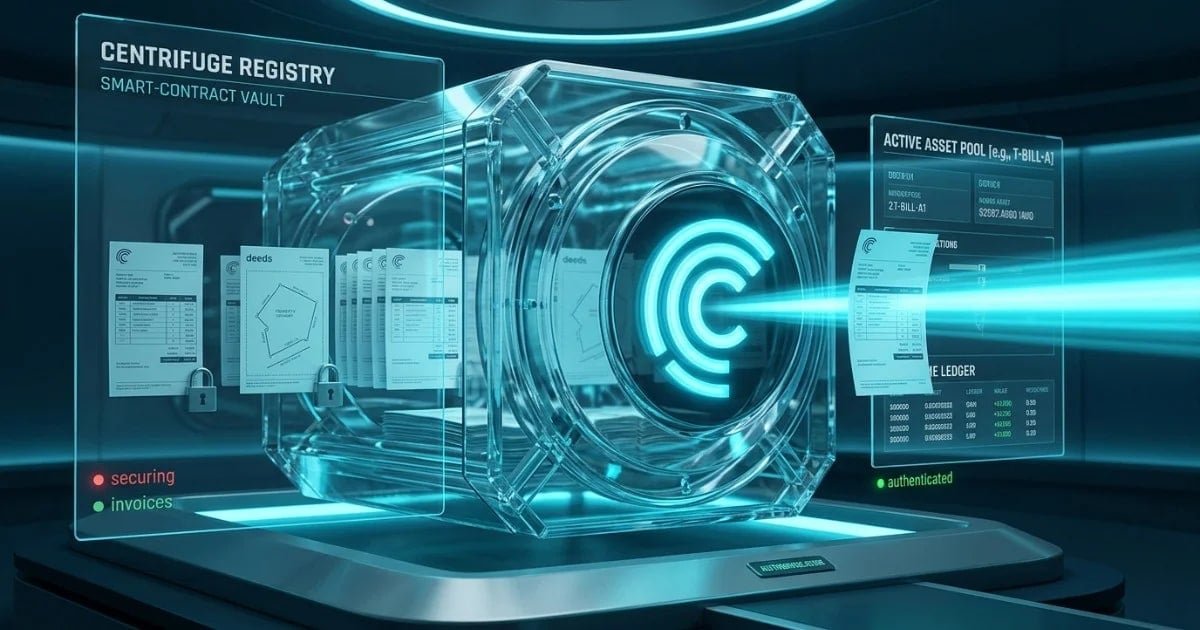
Traditional businesses own trillions in productive assets but struggle to access capital. We break down how Centrifuge uses blockchain enclaves to turn these RWAs into DeFi collateral.
The Liquidity Gap: Connecting Main Street to DeFi Rails
- Centrifuge completely tears down this barrier. Built on Polkadot, Centrifuge serves as the premier decentralized protocol for the Real-World Asset (RWA) tokenization and credit ecosystem. It enables businesses to convert their off-chain assets into on-chain digital securities (NFTs) that can be used as collateral to secure instant, permissionless stablecoin liquidity. By removing traditional intermediaries, Centrifuge provides SMEs with cheaper capital while offering DeFi investors competitive, real-yield returns backed by productive economic activity.
- The global financial system is facing a massive structural imbalance. While decentralized finance (DeFi) has created hyper-efficient, permissionless rails for trading digital assets, it remains isolated from the real economy. Simultaneously, small and medium-sized enterprises (SMEs) face a chronic shortage of affordable capital. These real-world businesses (which own trillions of dollars in productive assets like invoices, real estate, and inventory) are trapped by the slow, expensive, and exclusionary infrastructure of traditional banking.
1. The Origin Story: Tinlake and the First RWA Pools
Before launching its own specialized app-chain, Centrifuge pioneered RWA tokenization through Tinlake, its legacy marketplace dApp on Ethereum.
Tinlake acted as the industry's first open RWA credit marketplace. It allowed asset originators to create customized lending pools backed by diversified real-world portfolios.
Structural Tranches: These primitive pools were structured with specific risk/reward tranches. Investors could choose between senior DROP tokens (representing lower risk and steady yield) or junior TIN tokens (which bore the first loss but offered amplified returns).
Proof of Concept: Tinlake successfully demonstrated that legally enforceable off-chain assets (such as freight invoices for cargo ships and legal litigation financing contracts) could safely be brought on-chain to unlock DeFi capital. This legacy remains vital, as Tinlake continues to service hundreds of millions of dollars in active RWA collateral while the network migrates to V3.
2. Architectural Modernization: Centrifuge V3 and the Multi-Chain Future
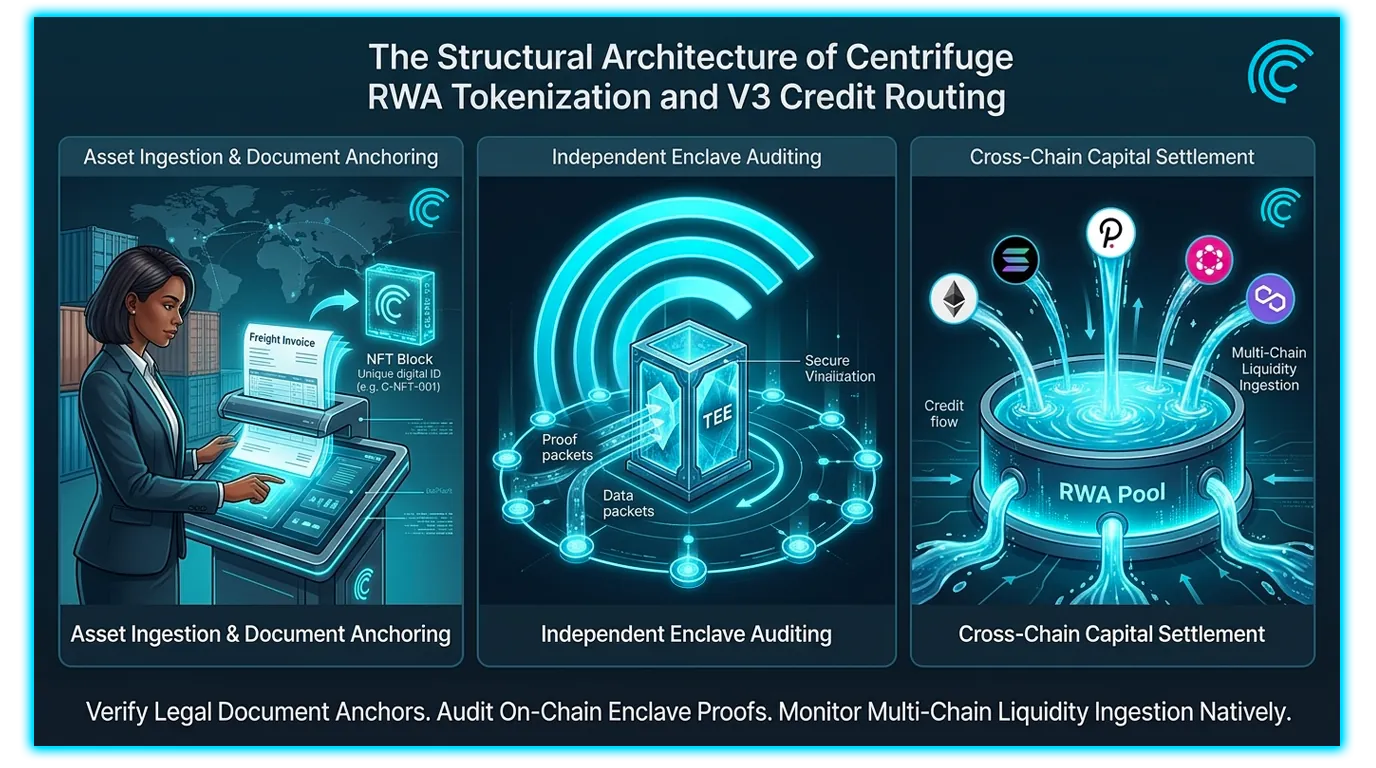
The protocol has completed a comprehensive upgrade to Centrifuge V3, a native, specialized blockchain optimized specifically for institutional-grade RWA management. Centrifuge V3 completely separates the core legal and verification logic from the liquidity execution layer, giving it unmatched scale and composability.
Key advantages of the V3 architecture include:
Decentralized Verification Enclaves: Centrifuge V3 eliminates reliance on centralized oracles. The protocol uses cryptographic enclaves and a decentralized validator set to independently audit and verify that off-chain collateral proofs (like deed registries or balance sheets) are accurate and tamper-proof.
Native Multi-Chain Composability: RWA pools on Centrifuge are designed to be natively multi-chain. Instead of fragmenting liquidity, V3 utilizes advanced bridging technology to let institutional investors from any supported public ledger (including Ethereum, Solana, or Mantle) deposit stablecoins into RWA pools through unified, decentralized interfaces.
3. The DeFi Anchor: Securing MakerDAO Collateral
The primary validation of Centrifuge's infrastructure came through its strategic integration as a primary asset manager for MakerDAO, the issuer of the DAI stablecoin.
MakerDAO utilizes Centrifuge's institutional vaults to diversify DAI's backing beyond volatile cryptocurrencies like ETH. Maker has allocated over $600 million in stablecoin liquidity to RWA pools managed via Centrifuge.
Institutional Credit Line: This setup functions as a massive, decentralized credit facility. Centrifuge V3 allows MakerDAO to verify that the RWA collateral is legally compliant and properly secured, while the smart contract handles the automated minting and burning of DAI credit lines against the verified asset proofs.
Scaling DeFi Yield: By plugging Main Street assets directly into Maker's primary liquidity engine, Centrifuge provides the essential pipeline that allows DeFi protocols to capture real-world yields derived from mortgage payments, trade logistics fees, and inventory financing.
RWA Protocol Comparison Matrix
| Feature | Legacy Tinlake | Centrifuge V3 L1 |
| Trust Layer | Multisig | Enclave Proofs |
| Execution | Ethereum L1 | Native App-Chain |
| Liquidity | Standalone Pools | Global Multi-Chain Vaults |
| Compliance | Off-Chain Setup | On-Chain Verification |
4. Analyzing RWA Markets via DEXTools Telemetry
- Navigating the financial health of the RWA sector requires robust visibility into on-chain asset trends, liquidity distribution, and protocol revenue data. Sourcing analytics through advanced decentralized charting architectures like DEXTools gives market participants an essential universal platform to monitor live token behaviors, evaluate pool depths, and inspect contract parameters across all public execution networks.
- By leveraging core features like the Pair Explorer,Live New Pairs dashboard, and the integrated Trade Story or Top Traders diagnostic tools, technical traders can seamlessly audit localized volume trends, track large whale wallet capital reallocations via the Big Swap Explorer, and check automated contract safety scores before initiating any on-chain interactions, ensuring your hardened hardware setup interacts safely with verified market venues.
You can access DEXTools here and start trading today!
Top 5 Real World Asset (RWA) Tokens in 2026: Tokenized Finance Goes MainstreamFee Revenue per Active Wallet vs Total Fees: Which Shows Real dApp Monetization?What Is Centrifuge (CFG)? RWA Tokenization Protocol Guide 2026RWA Tokenization: A Beginner's Guide to Real-World Assets
Disclaimer: This article is for informational purposes only and does not constitute investment advice, financial advice, trading advice, or any other kind of advice. DEXTools does not recommend buying, selling, or holding any cryptocurrency or token. Users should conduct their own research and consult with a qualified financial advisor before making any investment decisions. Cryptocurrency investments are volatile and high-risk. DEXTools is not responsible for any losses incurred.
Related Guides
- What Is Tokenization? How Real World Assets Become Onchain Claims (2026)
- What Are Real World Assets (RWA) in Crypto? Asset Types, Yield and Risks (2026)
- Tokenized Treasuries: Complete 2026 Guide to Onchain US T-Bills
- RWA Tokenization: A Beginner's Guide to Real-World Assets
- What Is Centrifuge (CFG)? RWA Tokenization Protocol Guide 2026
- What Is World Chain? Worldcoin's L2 Complete Guide 2026
Frequently Asked Questions
What is Centrifuge?
Centrifuge is a protocol focused on bringing real-world assets on-chain so they can be used in decentralized finance. It aims to let businesses use off-chain assets as collateral for financing.
What is the CFG token?
CFG is the native token associated with the Centrifuge ecosystem. Protocol tokens commonly serve functions such as governance and network operations, with specifics defined by the project.
How does Centrifuge bring real-world assets on chain?
It represents off-chain assets as tokens that can serve as collateral within DeFi markets. This is intended to connect traditional financing needs with on-chain liquidity.
Why tokenize real-world assets?
Tokenizing real-world assets aims to unlock liquidity, broaden access, and let off-chain value interact with DeFi protocols. It can give asset owners new ways to obtain financing on-chain.