What Is Gelato: Web3 Automation, Relayers and Gasless Execution (2026)
— By Tony Rabbit in Tutorials
What is Gelato? Learn how this automation and relayer network helps Web3 apps run tasks, automate execution and support gasless flows in 2026.
Intent check: If you want account abstraction onboarding infrastructure, start with our Biconomy explainer. This page is specifically about Gelato as the automation and relayer execution layer.
Gelato is best understood as the execution and automation layer that helps Web3 apps do things on time, in sequence or on behalf of smoother user flows without relying on a human clicking every step manually. Its value often shows up in automation, relayers and gasless execution patterns.
That branded search stays evergreen because Web3 products keep running into the same operational question: how do you make onchain actions feel more automatic and product-like instead of forcing users or operators to handle every trigger themselves? Gelato deserves its own page because that execution problem is distinct from wallet onboarding, monitoring or pure node access.
What Gelato does in plain English
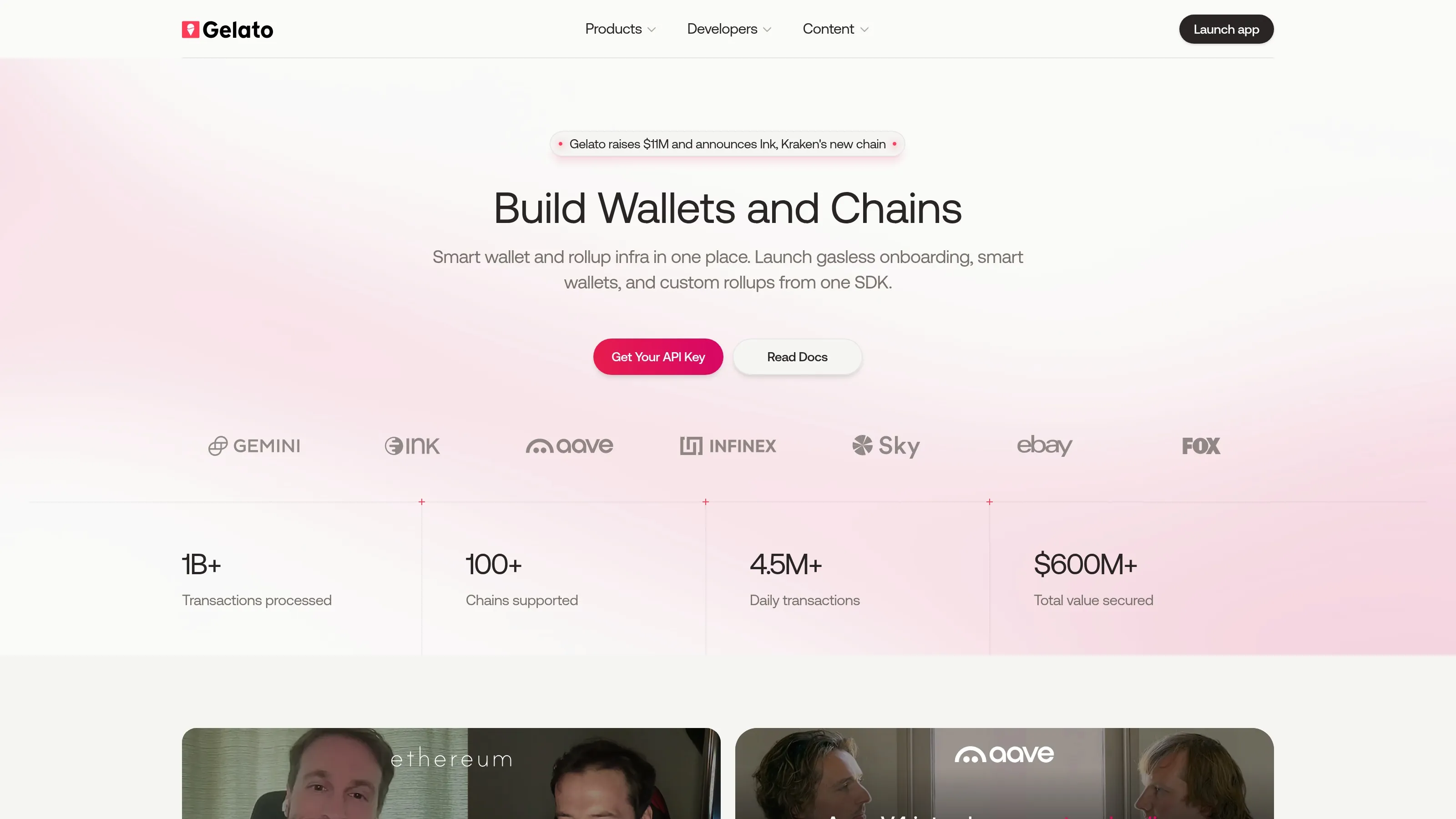
The cleanest mental model is that Gelato helps blockchain applications act with more product logic around execution timing and transaction handling. Instead of leaving everything to manual transactions, the app can lean on automation and relayer infrastructure for certain workflows.
That matters because many useful app experiences depend on what happens between user intent and final execution. If everything requires a manual, perfectly timed onchain action from the user, product quality often suffers.
Why teams look at Gelato
Teams look at Gelato because execution friction is one of the quiet bottlenecks in Web3 UX. Automated tasks, delegated execution and relayer systems can make applications feel far more usable, which is why infrastructure for orchestration and gas abstraction keeps attracting serious attention.
How Gelato fits into a Web3 stack
Gelato sits in the automation and execution-orchestration layer. It is not mainly a wallet SDK, not mainly a blockchain data provider and not mainly a post-deployment debugging tool.
How this article avoids internal overlap
We already cover Tenderly, Biconomy and other adjacent tooling. If this article blurred into generic account abstraction or monitoring language, it would overlap too much with those pieces.
So the correct angle is to keep Gelato focused on automation, relayers and gasless execution workflows.
Who Gelato is for, and where it can feel like overkill
Gelato is most useful for product teams and protocols that want recurring actions, delegated execution and smoother transaction UX inside Web3 applications.
It is less relevant for a project that only needs static contract deployment, simple read access or a basic wallet flow with no automation complexity.
Final take
Gelato matters because Web3 apps become much more usable when execution feels orchestrated instead of manual at every turn. Automation infrastructure keeps growing in importance for that reason.
FAQ
Related Guides
- What Is Biconomy: Account Abstraction, Gasless UX and Cross-Chain Execution (2026)
- What Is Biconomy: Account Abstraction, Gasless UX and Smart Account Infrastructure (2026)
- Sui Network Architecture: Object-Centric Design, Parallel Execution and DeFi Apps (2026)
- Quote vs Execution Price in Crypto Explained (2026)
- TWAP Order Crypto: Complete Execution Guide 2026
Frequently Asked Questions
What is Gelato in Web3?
Gelato is a network that provides automation and relayer services for Web3 applications. It helps apps run scheduled or condition-based tasks and support smoother transaction execution.
What is a relayer in crypto?
A relayer is a service that submits transactions to a blockchain on a user's behalf. This can enable features like gasless transactions, where the user does not pay gas directly at the moment of the action.
What is gasless execution?
Gasless execution lets users interact with a blockchain without paying gas fees themselves at that step, often because a relayer or sponsor covers the cost. The fee is still paid to the network, just not directly by the end user.
Why do Web3 apps need automation?
Smart contracts cannot trigger themselves, so automation networks execute tasks when set conditions or schedules are met. This supports functions like recurring actions, limit-style orders, and routine maintenance without manual intervention.