What Is Katana? The DeFi-First Chain by Polygon and GSR

Institutional DeFi demands custom execution environments. Enter Katana, an AppChain built using Polygon CDK and supercharged by liquidity giant GSR.
Katana Explained: Polygon and GSR’s DeFi-First Chain
- The integration of institutional capital into decentralized finance has historically been bottlenecked by fragmented liquidity, unpredictable transaction execution, and compliance constraints. While public, permissionless networks offer incredible financial freedom, they frequently lack the tailored throughput and structural optimization that global market-making firms and enterprise trading desks require. To solve this scalability and execution friction, a new institutional paradigm has materialized.
- Katana is a specialized, DeFi-first Layer-2 AppChain built using the Polygon Chain Development Kit (CDK) and engineered in tandem with the liquidity infrastructure of GSR, one of the oldest and largest digital asset market makers in the world.
- Designed from its inception to handle high-throughput institutional trading, Katana bridges the gap between traditional order-book efficiency and decentralized trust frameworks. Let's unbundle the core mechanics, liquidity advantages, and structural architecture defining the Katana ecosystem.
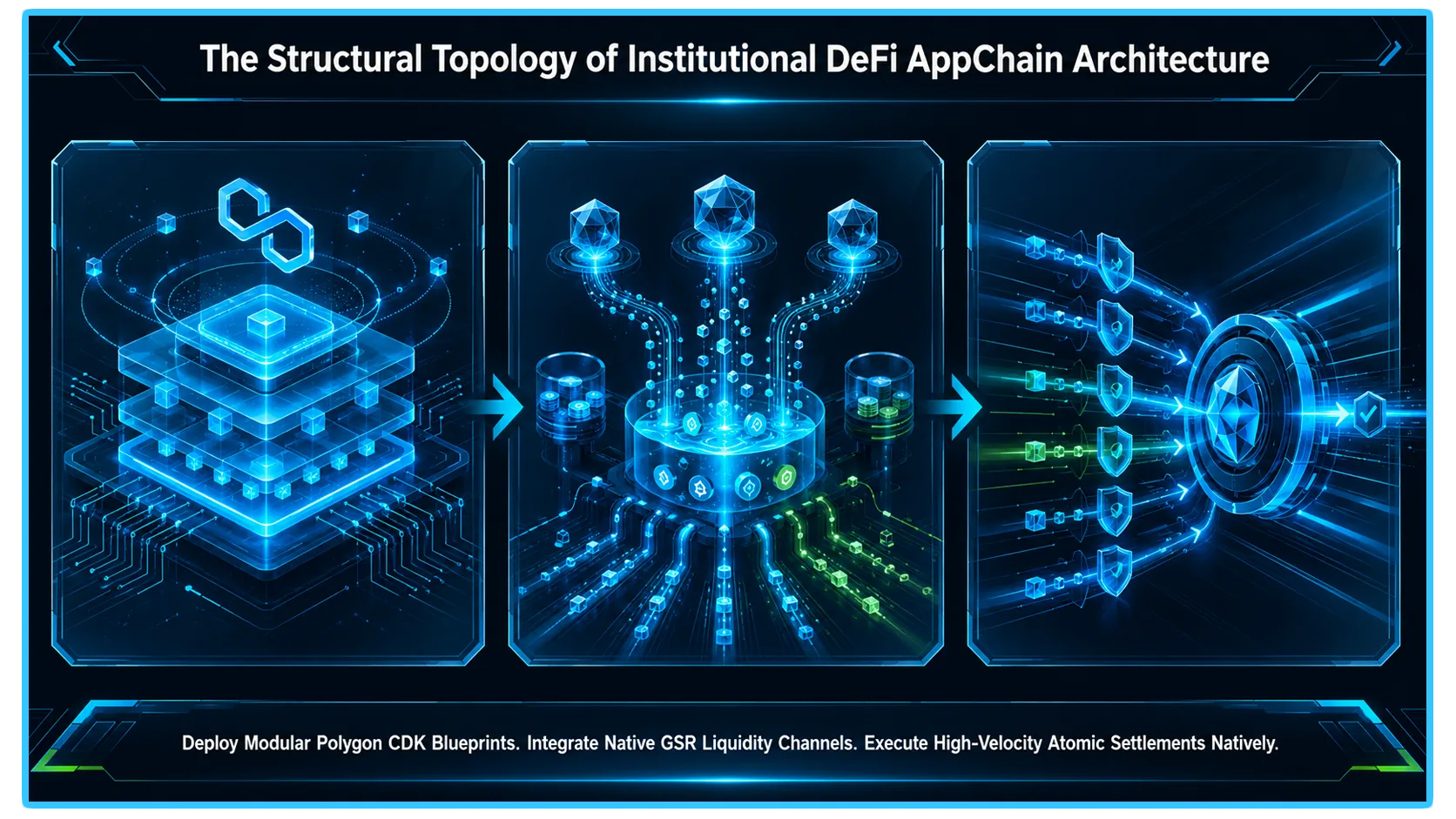
1. The Architectural Blueprint: Polygon CDK Meets GSR
- To evaluate Katana with professional engineering precision, you must understand how custom execution environments operate. Katana is built using Polygon CDK, a modular, open-source software framework that allows developers to launch custom ZK-powered Layer-2 rollups natively tied to the Ethereum ecosystem.
- By utilizing zero-knowledge state proofs, Katana inherits the complete cryptographic security of Ethereum while operating with sub-second block finality and near-zero network execution fees.
- What separates Katana from a generic scaling solution is its native integration with GSR’s market-making technology. Instead of relying purely on passive retail liquidity pools that suffer from severe capital inefficiency, Katana is optimized for high-frequency algorithmic desks, institutional order books, and institutional-grade decentralized applications (dApps).
2. Core Primitives of a DeFi-First Infrastructure
The Katana framework is engineered from the ground up to eliminate the standard vectors of capital degradation found on public networks:
Dedicated Transaction Sequencing: By isolating the chain's state strictly to financial interactions (such as atomic swaps, oracle updates, and margin clearing), Katana bypasses the localized network congestion caused by non-financial dApps like NFT mints or social media protocol spikes.
Native Institutional Liquidity: GSR’s structural involvement ensures that automated, programmatic liquidity injection occurs directly at the validator and sequencer levels, providing deep liquidity across major trading pairs from block zero.
3. The Design Grid: Traditional L2 vs. Katana
To maintain a clean structural overview of how Katana compares to standard scaling environments, evaluate the network performance profiles mapped out inside this optimized layout:
| Network Architecture Profile | Core Liquidity & Execution Engine |
| Standard Public L2 Layer | Relies entirely on passive AMM retail pools |
| Katana DeFi-First Rollup | Supercharged by GSR's institutional market-making nodes |
4. Neutralizing MEV and Execution Friction
On public ledgers, institutional traders lose millions of dollars annually to predatory Maximal Extractable Value (MEV) tactics, such as front-running and sandwich attacks. Katana resolves this vulnerability by re-engineering the transaction sequencing layer.
The Integrity Safe-Haven: Utilizing custom ZK-proof generation and a structured sequencer framework, Katana provides enhanced transaction ordering protections.
This ensures that trades are cleared transparently and optimally, completely insulating large-scale institutional volume from the toxic arbitrage vectors typical of public memepools.
5. Real-Time Telemetry and Market Diagnostics via DEXTools
- Successfully navigating emergent institutional environments like the Katana chain requires continuous access to look-through, live data analytics. While a protocol's documentation presents optimized theoretical throughput figures, tracking actual real-time order book thickness, active volume velocity, and network transactional flows on an independent data grid is the only way to confirm true network health before executing massive capital deployments.
- DEXTools provides the critical analytical data infrastructure needed to perform these diagnostic verifications in real-time. By utilizing advanced cross-chain pair explorers, live transaction logs, and look-through wallet telemetry across Polygon's interconnected AggLayer ecosystem, market participants can instantly verify the structural health of any token pair.
- Cross-referencing your institutional strategies with authentic blockchain metrics ensures your portfolio risk parameters remain completely optimized, keeping your digital wealth securely protected from hidden pool contractions or unexpected execution anomalies.
You can access DEXTools here and start trading today!
Transforming Cross-Chain DeFi Liquidity Sui Network Architecture: Object-Centric Design, Parallel Execution and DeFi Apps What Is a Market Maker in Crypto? Full Guide What Is an AMM in DeFi? Complete Guide
Disclaimer: This article is for informational purposes only and does not constitute investment advice, financial advice, trading advice, or any other kind of advice. DEXTools does not recommend buying, selling, or holding any cryptocurrency or token. Users should conduct their own research and consult with a qualified financial advisor before making any investment decisions. Cryptocurrency investments are volatile and high-risk. DEXTools is not responsible for any losses incurred.