What Is MANTRA Chain (OM)? Regulated RWA Tokenization L1 Guide 2026
— By Whatsertrade in Tutorials
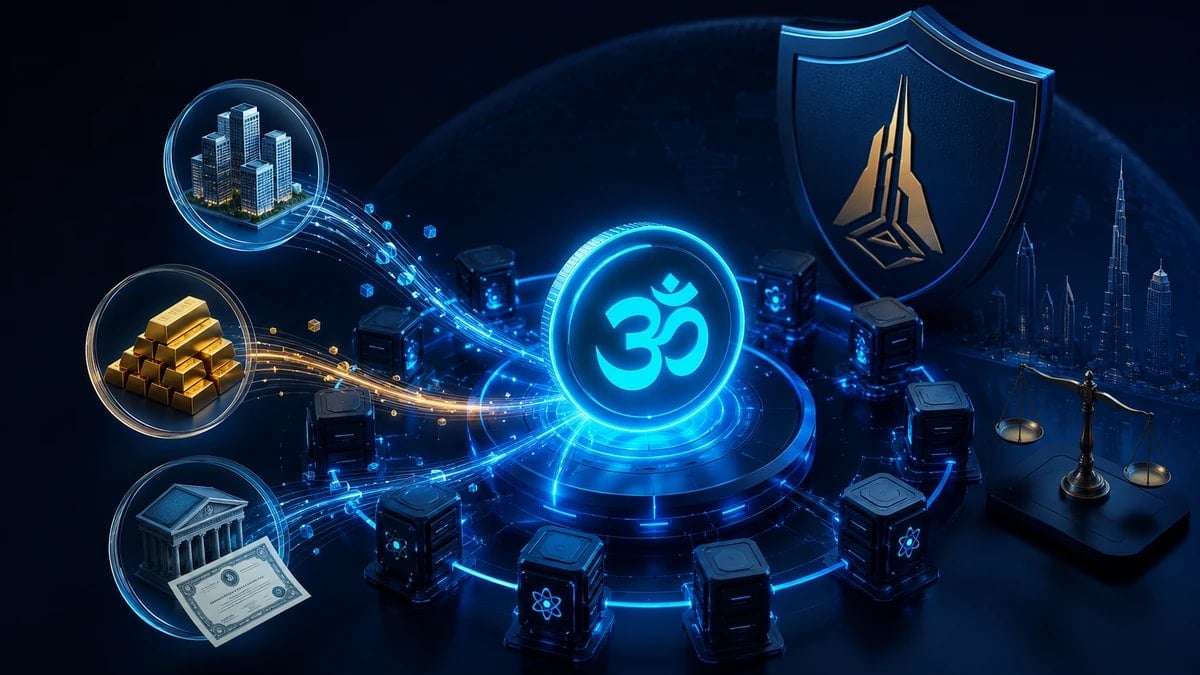
Complete 2026 guide to MANTRA Chain (OM), the Cosmos SDK plus EVM Layer 1 built for regulated real world asset tokenization. Inside the VARA license, the Decentralized Identity module, OM tokenomics, the April 2025 crash, the $108M RWA fund, and how MANTRA stacks up against Plume Network, Ondo Finance, and Centrifuge.
What Is MANTRA Chain (OM)? The Regulated RWA Tokenization Layer 1 Explained in 2026
Real world asset tokenization is the largest unfinished migration in finance. Boston Consulting Group projects the addressable market at thirty trillion dollars by 2030, and every major institution from BlackRock to Franklin Templeton has now planted a flag onchain. The problem is that most blockchains were not designed for regulated assets. MANTRA Chain inverts that assumption from the ground up. It is a Cosmos SDK Layer 1 with a Decentralized Identity layer baked into the protocol, a Dubai VARA license attached to the core team, and an explicit mandate to make real estate, treasuries, commodities, and private credit live natively onchain under a compliance perimeter that institutional capital can actually use.
The thesis is simple to state and hard to execute. If tokenized assets are going to scale into the trillions, the chain that hosts them needs to satisfy issuers, regulators, and investors at the same time. MANTRA Chain attempts to deliver all three through a single architecture. This guide walks through the design, the OM token, the team, the April 2025 crash event, the one hundred and eight million dollar RWA fund, and how the protocol stacks up against Plume Network, Ondo Finance, and Centrifuge.
FEATURED SNIPPET
MANTRA Chain is a Cosmos SDK based Layer 1 blockchain with EVM compatibility, focused on tokenizing real world assets under a regulated compliance framework. Its native token OM is used for governance, transaction fees, staking, and access to permissioned RWA modules. The project holds a VASP license from the Dubai VARA, operates a native Decentralized Identity system for KYC compliant onboarding, and launched a one hundred and eight million dollar fund to seed RWA tokenization startups with the explicit goal of bringing more than one billion dollars in offchain assets onchain.
What Is MANTRA Chain in Plain English
MANTRA Chain is a purpose built blockchain designed to do one thing exceptionally well, which is bring traditional financial assets onto a public ledger in a way that issuers and regulators can sign off on. It is built using the Cosmos SDK, which gives it sovereign control over its own consensus, governance, and module structure rather than inheriting constraints from a general purpose chain. On top of that base, MANTRA adds EVM compatibility, which means Solidity contracts written for Ethereum can be deployed on MANTRA with minimal modification. That bridge between Cosmos and EVM is deliberate. It lets MANTRA attract Ethereum developer talent while keeping the architectural advantages of an application specific chain.
The defining feature that separates MANTRA from generic Layer 1 blockchains is its compliance layer. A native Decentralized Identity module sits between users and protocols. Issuers can require that wallets touching their tokenized securities have a verified DID credential attached, which means transfers can be restricted to whitelisted participants without sacrificing the openness of public chain settlement. The result is a chain that behaves like a permissionless network for most activity but enforces permissioned rules at the asset level when issuers demand it. That hybrid posture is what allows real world asset issuers to consider MANTRA at all.
The OM token is the connective tissue. It pays transaction fees, secures the network through staking, governs protocol upgrades, and gates access to specific RWA modules. Holders who stake OM earn a share of network revenue alongside inflation rewards, which means the token captures value from every transaction settled on the chain. As tokenized asset volume grows, the demand for OM as a fee and security asset is supposed to grow with it. Whether that thesis plays out in practice depends on execution, regulatory tailwinds, and the chain's ability to ship products that actually attract issuers rather than promise them.
The Real World Asset Tokenization Problem MANTRA Is Solving
To understand why a dedicated chain like MANTRA exists at all, it helps to look at why RWA tokenization on general purpose chains is structurally awkward. The first issue is identity. Securities laws in every major jurisdiction require issuers to know who their investors are, restrict transfers to qualified participants, and produce audit trails that regulators can inspect. On a chain like Ethereum, every wallet is pseudonymous by default. Compliance has to be bolted on at the application layer, usually through whitelisted contract logic that is brittle and easy to misconfigure.
The second issue is regulatory engagement. When something goes wrong with a tokenized security, regulators want a recognized entity to engage with. They do not want to chase anonymous developers across jurisdictions. Most layer one chains have no formal legal entity behind them at the protocol level, which makes them difficult to integrate into a regulated workflow. MANTRA's parent organization holds a VARA license in Dubai, which means there is a recognized counterparty for regulators to interact with. That dramatically reduces the friction for issuers who need to demonstrate a defensible compliance posture.
The third issue is asset specific modules. Real estate tokenization needs different primitives than tokenized treasuries or private credit, and a general purpose chain forces every issuer to reinvent these modules in application code. MANTRA's app chain architecture lets the protocol team ship reusable primitives directly at the chain level, including transfer restrictions, dividend distribution logic, and corporate action handling.
Founding Team, Investors, and the Path From Rio DeFi
MANTRA was co founded by John Patrick Mullin, who serves as chief executive officer of the MANTRA Chain organization. Mullin's background spans traditional finance and crypto product development, with prior leadership roles at Rio DeFi, the company that ultimately spun out the MANTRA project. The original product launched in 2020 under the MANTRA DAO brand on the Polkadot ecosystem, focused on staking and governance for proof of stake networks. Over the following years the team pivoted aggressively toward RWA tokenization, restructured around the Cosmos SDK architecture, and rebranded as MANTRA Chain with a renewed focus on regulated asset issuance.
The pivot was capitalized through strategic raises and partnerships across crypto venture funds, Middle East family offices, and a partnership network spanning Hong Kong, Singapore, and the UAE. Holding a VARA license is not a marketing checkbox. It requires real regulatory engagement, capital adequacy, custody arrangements, and ongoing supervision, and that investment in licensing is the single most differentiating moat MANTRA has built relative to its competition.

MANTRA Chain Timeline From Inception to 2026
2020 ORIGIN
MANTRA DAO launches on the Polkadot ecosystem as a community focused staking and governance protocol, spun out of Rio DeFi with co founder John Patrick Mullin at the helm.
2022 PIVOT
The team begins a strategic refocus toward real world asset tokenization as a long term opportunity larger than yield aggregation, and starts engineering against the Cosmos SDK as a sovereign chain stack.
2023 LICENSE
MANTRA secures a VASP license from the Dubai Virtual Assets Regulatory Authority, becoming one of the first dedicated RWA chains with a recognized regulatory counterpart.
2024 MAINNET
MANTRA Chain launches its Cosmos SDK based mainnet, completes the migration of the legacy RDNX token to the new OM denom, and ships the first iteration of its Decentralized Identity module for compliant onboarding.
APRIL 2025 CRASH
A flash liquidation event collapses the OM price by more than ninety percent in hours. The team subsequently coordinates a community burn of one hundred and sixty million OM tokens from a DAO founder allocation in an effort to restore confidence.
LATE 2025 FUND
MANTRA announces a one hundred and eight million dollar fund dedicated to seeding RWA tokenization startups building on the chain, with a stated goal of bringing more than one billion dollars in real world assets onchain.
2026 ECOSYSTEM
EVM compatibility ships in full, IBC integrations across the Cosmos ecosystem mature, partnerships with regional real estate and credit issuers progress, and the chain begins onboarding its first wave of regulated structured products.
Cosmos SDK and EVM Compatibility Under the Hood
MANTRA's architectural choices deserve close attention because they shape everything about how the protocol behaves. The base layer is Cosmos SDK, which means MANTRA is not a smart contract platform first. It is an application specific chain where core modules are written in Go and shipped as part of consensus. The Decentralized Identity module, the staking module, the RWA specific transfer logic, and the governance system are all native to the chain rather than living as application contracts. That is a deliberate design choice. Chain native modules are cheaper to use, harder to misconfigure, and easier to upgrade in coordinated ways than application level smart contracts.
Layered on top of the Cosmos base is full EVM compatibility. Developers can deploy standard Solidity contracts to MANTRA the same way they would to any EVM chain. This unlocks the Ethereum tooling ecosystem, including familiar wallets, block explorers, oracle integrations, and developer frameworks. It also means assets and protocols originating on Ethereum can be ported with minimal modification. The EVM execution environment runs alongside the Cosmos native modules, which means a single application can mix and match capabilities, using native chain modules for compliance and Solidity contracts for application logic.
Connectivity to the broader Cosmos universe is provided by IBC, the Inter Blockchain Communication protocol. Through IBC, MANTRA can exchange assets and messages with every other IBC enabled chain, including Cosmos Hub, Osmosis, and Celestia. That gives MANTRA access to deep liquidity routes and oracle data without building proprietary bridges. Consensus runs on CometBFT delegated Proof of Stake. Validators stake OM, end users delegate to validators of their choice, and the slashing model penalizes downtime and double signing in the standard Cosmos way. The full staking experience is covered in our crypto staking guide.
The VARA License and Why It Matters
The Dubai Virtual Assets Regulatory Authority, known as VARA, is one of the most specialized digital asset regulators in the world. It was established in 2022 specifically to oversee virtual asset service providers operating in or from the emirate of Dubai. Holding a VARA license is not equivalent to a generic business registration. It involves a rigorous review of governance, capital adequacy, custody arrangements, customer onboarding procedures, anti money laundering controls, and ongoing operational standards. The supervisory regime is continuous, not a one time stamp, and license holders are subject to inspections, reporting obligations, and conduct standards.
For MANTRA, the VARA license functions as institutional collateral. When a tokenization issuer is evaluating which chain to build on, the conversation usually stalls at the legal review stage. Lawyers ask who owns the chain, who is accountable for protocol behavior, and how regulatory inquiries would be handled. For most layer one chains the answer is structurally unsatisfying because there is no formal counterparty. For MANTRA, the answer is concrete. There is a licensed VASP entity with regulatory obligations and a recognized supervisory relationship. That dramatically reduces the legal friction of choosing MANTRA over alternative venues for regulated issuance.
Decentralized Identity for Compliant Onboarding
The Decentralized Identity module is the most consequential technical primitive on MANTRA Chain. In a traditional permissionless chain, KYC is enforced at the application boundary. A protocol like a securities issuance platform checks identity off chain through a third party provider and then maintains a whitelist of approved wallets at the contract level. That approach works but it is fragile. It scatters identity data across many providers, creates duplicate compliance overhead for each issuer, and makes cross protocol composition very difficult because every application maintains its own whitelist.
MANTRA's DID system pulls identity into the chain itself. A user goes through a one time KYC process with an authorized identity provider, receives a verifiable credential, and binds that credential to their wallet through a native chain transaction. After that point, any application running on MANTRA can read the DID status of a wallet using a standard chain level query. A tokenized real estate token can require that both sender and recipient have an accredited investor credential, and the chain enforces that rule at the transfer level. A regulated DEX can require that traders have a basic KYC credential, and unverified wallets simply cannot transact in that pool.
The privacy posture is deliberately layered. The DID system stores attestations and proofs onchain, not raw personally identifiable information. The underlying identity data lives with the verified provider under traditional data protection regimes. That separation lets the chain enforce compliance rules without becoming a public ledger of personal data, which would be both illegal under most data protection laws and obviously unacceptable to users. The result is something close to what compliance teams have been asking for since the early days of tokenized securities. Identity that is verifiable, portable across protocols, and respectful of user privacy.

OM Tokenomics in Detail
The OM token is the economic backbone of MANTRA Chain. It serves four primary functions. The first is transaction fees. Every interaction on the chain, including transfers, smart contract calls, DID operations, and module specific actions, consumes gas paid in OM. The second is staking. Validators bond OM as collateral against honest behavior, and delegators stake OM with validators of their choice to participate in network rewards. The third is governance. OM holders propose and vote on protocol upgrades, parameter changes, treasury allocations, and ecosystem grants. The fourth is access. Specific RWA modules can require OM holdings or staking as a precondition for issuance or participation.
Supply dynamics are layered. There is a maximum supply set at the protocol level, an initial distribution that allocated tokens to the team, investors, ecosystem incentives, and the community, and ongoing inflation that funds staking rewards. The supply curve is not static. The April 2025 token burn of one hundred and sixty million OM from a DAO founder allocation reduced the circulating supply by a material amount, and the protocol has signaled an ongoing willingness to use governance to adjust supply parameters in response to ecosystem conditions. That activist posture toward supply is both a feature and a risk. It demonstrates responsiveness but it also adds discretionary volatility that pure mechanical supply curves do not have.
Value accrual to OM comes from three primary streams. Staking rewards come from a combination of inflation and a share of transaction fees, which gives stakers a yield that compounds chain growth. Governance rights have option value that scales with the importance of the decisions being made, which means OM becomes more valuable as the chain hosts larger and more consequential assets. Access utility means certain modules require OM holdings, which creates baseline demand that does not depend on speculative activity. None of these streams are unique to MANTRA, but their combination on a chain with a credible regulatory moat is the differentiating bet.
Real World Assets Supported on MANTRA
MANTRA Chain is explicitly designed to host a wide range of tokenized real world asset categories. Real estate is the flagship category and the one most often discussed in regional partnership announcements. Tokenizing real estate on a chain like MANTRA allows fractional ownership of properties, automated rent distribution to token holders, and a programmable secondary market that operates on a continuous basis rather than on the schedule of traditional property transactions. The compliance perimeter ensures that ownership stays within whitelisted jurisdictions and accredited investor pools where applicable.
Tokenized securities are a second pillar, covering equity tokens, debt tokens, and structured products. The DID module makes it operationally feasible to enforce transfer restrictions tied to investor accreditation and jurisdiction. Tokenized treasuries, including short duration government debt instruments, are a natural fit because their underlying asset class is highly standardized and demand from onchain capital seeking yield is enormous. Tokenized commodities, including precious metals and energy linked products, are a third category that benefits from the combination of regulatory grounding and programmable settlement.
Private credit is increasingly a focus area. Tokenizing private credit lets issuers fractionalize and distribute loan exposure that has historically been the preserve of large institutions, and the DID layer is critical because private credit is almost always restricted to qualified investors. Beyond these categories, MANTRA has signaled openness to carbon credits, intellectual property royalty streams, and tokenized fund interests, all of which benefit from chain native compliance.
STEP 1 OFF CHAIN
An issuer with a real world asset, such as a property or a credit facility, structures the asset under a legal wrapper, secures regulatory approval, and signs a tokenization mandate with a service provider operating on MANTRA Chain.
STEP 2 ONCHAIN
The tokenization platform deploys a compliant token contract on MANTRA, configured with DID restrictions, transfer rules, and corporate action handlers. Tokens are minted against the verified offchain asset and distributed to whitelisted investors.
STEP 3 SECONDARY
Tokens trade on compliant secondary venues, with DID checks enforced at the transfer level. Dividends and coupon payments are distributed onchain to current holders, and corporate actions are executed through governance hooks on the token contract.
The One Hundred and Eight Million Dollar RWA Fund
In late 2025 MANTRA announced a one hundred and eight million dollar fund dedicated specifically to seeding real world asset tokenization startups building on MANTRA Chain. The fund is structured as a deployment vehicle rather than a pure venture allocation, with stated objectives including supporting issuers in their initial token launches, funding the development of compliance infrastructure, and underwriting incentive programs that drive liquidity into MANTRA hosted RWA pools. The announced goal is to catalyze more than one billion dollars in tokenized real world assets coming onto the chain over a defined timeline.
The fund matters for two reasons. The first is the obvious capital signal. A capitalized fund means projects building on MANTRA have a credible non token funding path, which lowers the activation energy for serious teams to commit. The second is the implicit alignment. By deploying capital into ecosystem projects rather than into generic marketing or token buybacks, MANTRA is making a structural bet on its own application layer. If the fund deploys well and the seeded projects deliver real volume, the chain benefits directly through transaction fees, staking demand, and broader market credibility. If the fund deploys poorly, the capital is lost and the credibility cost is significant.
MANTRA vs Plume Network vs Ondo Finance vs Centrifuge
The RWA category has matured to the point where there are several credible architectures competing for issuer mindshare. Plume Network is the most direct architectural peer. It is also an RWA focused Layer 1, also bets on compliance native primitives, and also targets the issuer side of the market. The differentiation tends to come down to ecosystem positioning. Plume has emphasized US relationships and partnerships with established American DeFi infrastructure. MANTRA has emphasized its Middle East presence, the VARA license, and proximity to regional issuers. Both are viable but they imply different distribution paths.
Ondo Finance is structurally different. Ondo is an issuer rather than a chain. It builds compliant tokenized products, especially tokenized US Treasury exposure, and distributes them across multiple chains. Ondo's product OUSG is one of the most widely held tokenized treasuries in the market. MANTRA could in principle host Ondo issued products, the same way Ethereum or Solana do. The comparison is not chain versus chain, it is platform versus product issuer. They are complements as much as competitors, and a healthy RWA ecosystem probably has both Ondo style issuers and MANTRA style chains.
Centrifuge is the longest running player in the category. It started as a private credit tokenization protocol on Ethereum, with a focus on small and medium business invoice financing and structured credit pools. Centrifuge has migrated some of its infrastructure to a Polkadot parachain and has more recently engaged with the broader multichain landscape. Its differentiation is depth in private credit and a long track record of running actual cycles with actual losses, which is rare in this category. MANTRA has the breadth of asset types and the regulatory positioning. Centrifuge has the operating history. They appeal to different parts of the issuer market.

Risks and the April 2025 OM Crash Analysis
Any honest assessment of MANTRA has to grapple with the April 2025 crash event. Over a span of hours, the OM price collapsed by more than ninety percent in what observers characterized as a flash liquidation cascade. The episode involved a combination of concentrated holdings, leverage on centralized exchanges, and a rapid unwind that compounded into a forced selling spiral. The community and the team responded in the following weeks by coordinating a burn of one hundred and sixty million OM tokens from a DAO founder allocation, framing the burn as an alignment gesture and an effort to restore market confidence.
There are several lessons to extract from that event. The first is that concentrated holdings remain a material risk for tokens of this size. When a large allocation can be moved or liquidated quickly, the order book is structurally fragile. The second is that exchange leverage amplifies any localized stress into chainwide price action. The third is that recovery is possible but slow. The OM token did not return to pre crash levels overnight, and trust rebuilding is a multi quarter project rather than a multi week one. The team's response, including the burn and a series of transparency disclosures, was constructive but did not erase the operational scar.
Beyond that specific event, the standing risks of holding OM are the standard categories for an early stage RWA chain. Regulatory risk is real but is at least partially mitigated by the VARA license. Execution risk is real because shipping compliant chain modules at a sustainable pace is hard. Adoption risk is real because tokenization volume is still small relative to the addressable market. Competitive risk is real because Plume, Ondo, Centrifuge, and others are all credible alternatives. Bridge risk and oracle risk apply the same way they apply to any chain, and good operational hygiene from users matters. Watch out for address poisoning and related attack vectors that are unfortunately common in this space, covered in detail in our address poisoning guide.
PROS and CONS at a Glance
PROS
- VARA license provides a credible regulatory counterparty that very few competing chains can match.
- Native Decentralized Identity module makes KYC compliant transfers a chain primitive rather than an application bolt on.
- Cosmos SDK plus EVM compatibility delivers sovereign chain advantages without abandoning Ethereum tooling.
- One hundred and eight million dollar RWA fund creates a real funding moat for ecosystem builders.
- IBC connectivity opens deep liquidity routes across the Cosmos universe by default.
- Middle East positioning aligns with one of the most active jurisdictions for regulated digital asset issuance.
- Founder team has institutional credibility and a multi year track record of pivoting toward the right market.
CONS
- April 2025 OM crash left a meaningful reputational scar that takes time to repair.
- Concentrated holdings remain a structural risk that the burn mitigated but did not eliminate.
- Regulated growth path is inherently slower than permissionless competitors who do not carry licensing obligations.
- RWA tokenization volume is still small relative to the size of the addressable market, which means revenue scale is unproven.
- Plume, Ondo, and Centrifuge are all credible competitors with their own moats.
- OM supply dynamics include discretionary parameters, which adds policy risk to baseline market risk.
- Bridge and oracle risk apply the same as on any chain hosting external value.
Best Practices for OM Holders and Builders
If you are an OM holder, the first best practice is to size your position according to the actual stage of the project. MANTRA is still early in its arc of demonstrating sustained tokenization volume, and treating the token as a venture style position rather than as a defensive asset is honest. Stake what you intend to hold long term and keep operational liquidity in more liquid venues. Use a hardware wallet for any meaningful allocation, and never expose your private keys to a hot environment that you do not fully control. The standard hygiene rules apply with extra weight when you are holding a relatively illiquid asset.
The second best practice is to follow the ecosystem rather than just the token price. Real progress on MANTRA looks like new issuer announcements, new tokenized assets coming online, new IBC integrations, new module ships, and new ecosystem grants deploying. Watch the chain explorer for actual onchain activity rather than relying exclusively on social media narratives. Use independent analytics platforms to verify what you read in announcements, and treat unverified claims with the same skepticism you would apply to any other early stage token. The DEXTools platform covers the OM token and MANTRA ecosystem pairs and is a useful third party data point.
If you are a builder considering MANTRA, the practical advice is to talk to the ecosystem team early, especially if your product touches regulated asset categories. The chain has compliance primitives that you can leverage rather than rebuild, and the team has direct relationships with regional issuers that can shorten go to market dramatically. Test EVM contract deployment on the testnet first, validate your integration against the DID module under realistic flows, and stress test your product against the failure modes that a regulated user base will care about. A working KYC happy path is necessary but not sufficient. You need to think about edge cases including revoked credentials, jurisdiction transitions, and corporate action handling well before you go live.
For users transacting across DeFi on MANTRA, basic operational rules apply. Verify contract addresses, use small test transactions when bridging, and keep a clean separation between wallets used for compliance gated assets and wallets used for general activity. Do not assume that because the chain has a regulatory perimeter every application running on it is safe. The chain provides scaffolding. It does not provide guarantees.
Who MANTRA Chain Is Right For
MANTRA Chain is right for several distinct audiences. It is right for institutional issuers who need a chain with a recognized regulatory counterparty and who value the VARA license as legal collateral. It is right for builders working on regulated asset categories where chain native compliance primitives reduce their integration overhead. It is right for OM holders who believe the regulated RWA category is large enough to support multiple winners and want exposure to the Middle East anchored thesis specifically. It is right for Cosmos ecosystem participants who want to extend their footprint into RWA without leaving the IBC universe.
It is less right for users who prioritize maximally permissionless infrastructure with no licensing obligations, for traders who need extremely deep order books on day one, or for risk averse holders who cannot tolerate the price volatility that comes with an early stage token still rebuilding trust after the April 2025 episode.
Frequently Asked Questions
What is MANTRA Chain in one sentence?
MANTRA Chain is a Cosmos SDK based Layer 1 blockchain with EVM compatibility, a native Decentralized Identity module, and a Dubai VARA license, built specifically to tokenize regulated real world assets like real estate, securities, treasuries, and commodities.
What does OM stand for and what is the token used for?
OM is the native token of MANTRA Chain. It is used to pay transaction fees, to stake with validators for network security and rewards, to vote on protocol governance, and as access collateral for specific RWA modules and applications running on the chain.
How is MANTRA different from Ethereum or other RWA chains?
MANTRA bakes compliance primitives directly into the chain rather than leaving them to application contracts. It also holds a VARA license that provides a recognized regulatory counterparty, which most other chains do not have. Compared to other RWA chains like Plume or Ondo, MANTRA differentiates through its Middle East anchored positioning and its Cosmos SDK plus EVM hybrid architecture.
What is the VARA license and why does it matter?
VARA is the Dubai Virtual Assets Regulatory Authority, established in 2022 as a specialized digital asset regulator. Holding a VARA license means MANTRA operates under continuous supervision, with capital adequacy, custody, AML, and conduct requirements. For institutional issuers it provides a recognized legal counterparty, which dramatically reduces the friction of choosing MANTRA for regulated issuance.
How does MANTRA tokenize real world assets?
An issuer structures the offchain asset under a legal wrapper, partners with a tokenization service provider operating on MANTRA, deploys a compliant token contract with DID restrictions and corporate action logic, mints tokens against the verified asset, and distributes them to whitelisted investors. Secondary trading is enforced through DID checks at the transfer level.
What is the Decentralized Identity (DID) system?
It is a chain native module that binds verified credentials from authorized identity providers to wallet addresses. Applications can query DID status at the chain level to enforce KYC, accreditation, and jurisdiction rules. Personally identifiable information stays off chain with the verified provider, while only attestations and proofs are referenced onchain.
What happened in the April 2025 OM crash?
OM experienced a flash liquidation cascade that collapsed the price by more than ninety percent in hours. The event was driven by a combination of concentrated holdings, leverage on centralized exchanges, and a rapid forced selling spiral. The team subsequently coordinated a community burn of one hundred and sixty million OM tokens from a DAO founder allocation to restore confidence.
What is the one hundred and eight million dollar MANTRA RWA fund?
It is a dedicated deployment vehicle announced by MANTRA to seed RWA tokenization startups building on MANTRA Chain. The stated objective is to catalyze more than one billion dollars in real world assets coming onto the chain by underwriting issuer launches, compliance infrastructure, and liquidity incentives.
How does MANTRA compare to Plume Network or Ondo Finance?
Plume is the closest architectural peer as another RWA focused Layer 1, but it is positioned more around US relationships while MANTRA is anchored in the Middle East. Ondo is an issuer rather than a chain, building tokenized treasury products that distribute across multiple chains. Centrifuge is the longest running private credit specialist. They are complementary as much as competitive in a category that can support multiple winners.
Where can I buy OM and stake it?
OM trades on Binance, OKX, KuCoin, Bybit, Gate, and several other major centralized exchanges, as well as on IBC connected DEXes including Osmosis. To stake, transfer OM to a compatible Cosmos wallet, delegate to a validator of your choice through the official staking dashboard, and accrue staking rewards funded by inflation and a share of transaction fees.
What are the main risks of investing in OM?
Concentration and liquidity risk remain real after the April 2025 episode. Execution risk applies to shipping compliant chain modules at scale. Adoption risk applies because tokenization volume is still small relative to the addressable market. Competitive risk applies because Plume, Ondo, Centrifuge, and others are credible alternatives. Bridge and oracle risk apply the same as on any chain hosting external value.
What is the MANTRA mainnet roadmap?
Near term priorities include shipping EVM compatibility in full, maturing IBC integrations, onboarding the first wave of regulated structured products, expanding the DID provider network, deploying capital from the RWA fund, and progressing real estate and credit issuer partnerships. The longer arc targets crossing one billion dollars in tokenized real world assets hosted on the chain.
The Bottom Line on MANTRA Chain
MANTRA Chain is making a structural bet that real world asset tokenization will become a thirty trillion dollar category over the next decade and that the chain best positioned to host it needs three things at the same time. A regulatory perimeter that institutional issuers can sign off on. A technical architecture that combines sovereign Cosmos modules with familiar EVM tooling. And an ecosystem capable of funding and supporting the actual builders who will originate tokenized assets. The VARA license, the DID module, the Cosmos plus EVM hybrid stack, and the one hundred and eight million dollar fund are all expressions of that bet.
The risks are honest and well known. The April 2025 crash left a scar that takes time to fully heal. Concentration dynamics remain a structural concern. Competitive pressure from Plume, Ondo, Centrifuge, and others is real. Adoption is still small relative to the addressable market, which means revenue scale is unproven. None of these risks invalidate the thesis. They are simply the price of admission for any early stage infrastructure bet in a category that has not yet matured.
For OM holders the most productive posture is to treat the token as exposure to a credible regulatory anchored RWA infrastructure thesis, to size accordingly, and to track ecosystem progress through onchain data rather than narrative alone. For builders the most productive posture is to take advantage of the compliance primitives, the ecosystem fund, and the regional partnerships, while shipping products that earn institutional trust on their own merits. For the category as a whole, MANTRA is one of the more credible attempts to build a chain where regulated finance and onchain composability can actually coexist. Whether that bet pays off is going to be one of the more interesting stories of this cycle.
Related Guides
- What Is Tokenization? How Real World Assets Become Onchain Claims (2026)
- What Is Centrifuge (CFG)? RWA Tokenization Protocol Guide 2026
- RWA Tokenization: A Beginner's Guide to Real-World Assets
- What Is Kalshi: CFTC Prediction Markets & Sports Guide 2026
- Pendle Finance Explained: Yield Tokenization, PT, YT and Fixed-Rate DeFi (2026)