L1 and L2 Ecosystems 2026: Solana, BNB, Ethereum, and Base.
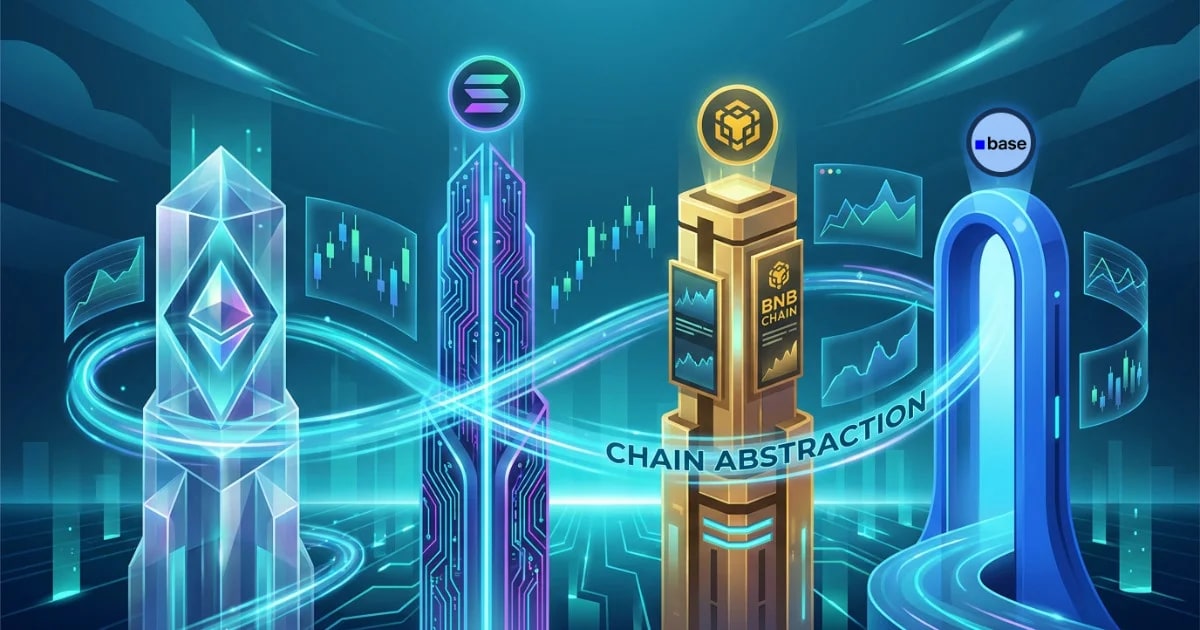
The Layer Wars are over. In 2026, we analyze how Solana, BNB, Ethereum, and Base have specialized into distinct roles: from institutional trust to high-speed DePIN
An Analytical Comparison of Solana, BNB, Ethereum, and Base Ecosystems
- As of 4 May 2026, the digital assets sector has undergone a fundamental shift, moving from the ‘layer wars’ between the major ecosystems of the early 2020s to an era of functional specialisation.
- The theoretical debates regarding monolithic versus modular architectures have largely been settled by market demand. In the current landscape, blockchain ecosystems are no longer viewed as competing "nations," but as specialized infrastructure providers within a unified global liquidity stack.
- The integration of Chain Abstraction has reached a point where the underlying network is becoming secondary to the application’s utility. However, for the professional trader and institutional allocator, the technical and economic nuances of Solana, BNB Chain, Ethereum, and Base remain critical for assessing risk, security, and long-term value accrual.
1. Ethereum: The Institutional Settlement Anchor
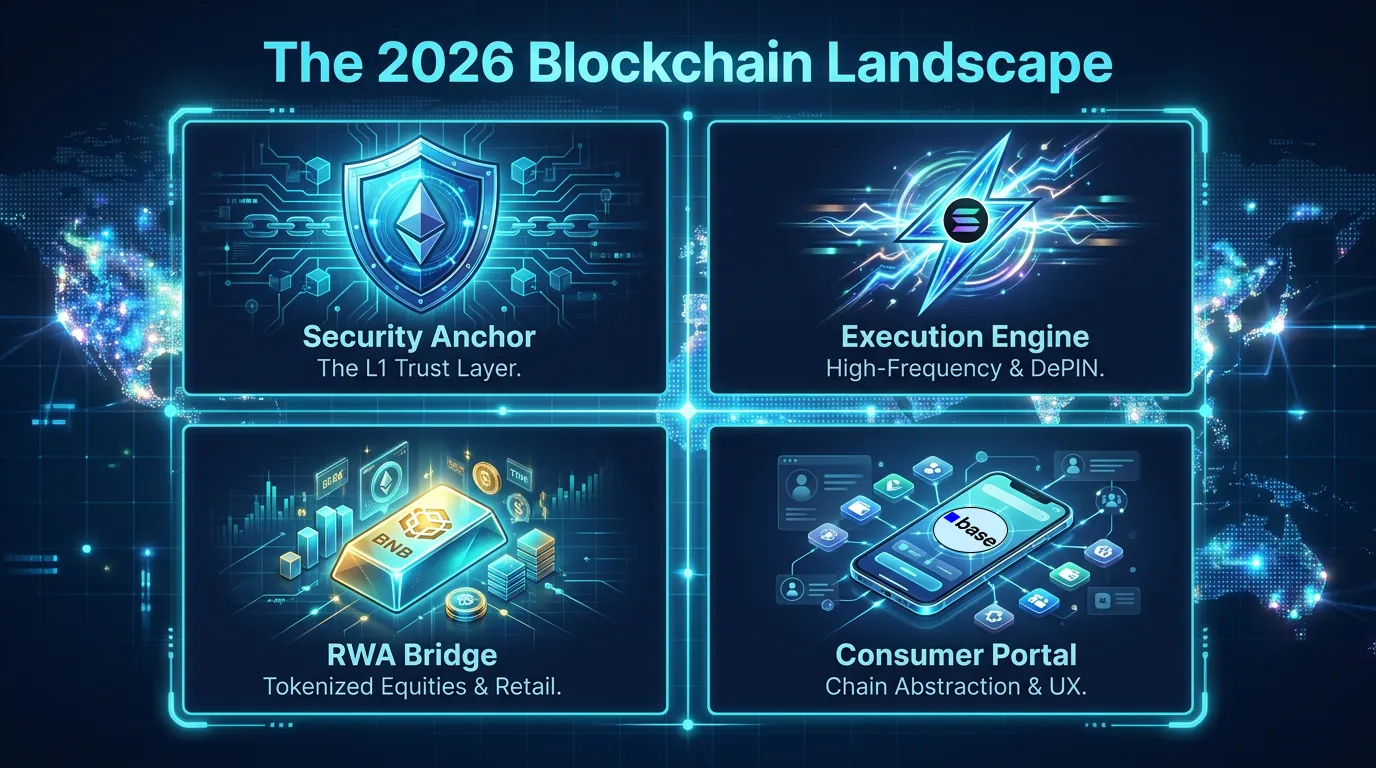
In 2026, Ethereum has successfully transitioned into its role as the "L1 Trust Layer." Following the maturation of the Glamsterdam era upgrades, the mainnet has offloaded the vast majority of its transactional volume to Layer 2 (L2) solutions, focusing its own resources on data availability, censorship resistance, and economic security.
Individual Characteristics
The "Court of Law": Ethereum is where the world’s most valuable assets are settled. It remains the primary home for nation-state level RWA (Real World Asset) issuance and massive institutional vaults.
Post-Quantum Readiness: Ethereum is the first major L1 to implement Post-Quantum Cryptography (PQC) hooks, protecting its $300B+ market cap from future computational threats.
Technical Efficiency: The "Purge" has been largely completed, significantly reducing the historical state bloat and making it easier for institutions to run their own full nodes for verification.
Evolution Forecast
Ethereum will continue to evolve as a passive security provider. Its success will no longer be measured by "user count" on the mainnet, but by the cumulative Total Value Locked (TVL) and the security fees paid by its L2 sub-networks. It is the "gold standard" of decentralization, with over 1.2 million active validators.
2. Solana: The High-Frequency Execution Engine
Solana has defied earlier skepticism to become the premier engine for monolithic performance. The 2026 rollout of Firedancer (the independent validator client) and the Alpenglow protocol has solved previous stability issues, providing a network with near-physical limits of data propagation.
Individual Characteristics
Sub-150ms Finality: Solana offers the fastest finality of any major public chain, making it the preferred choice for high-frequency trading (HFT) and real-time social applications.
DePIN Leader: Solana has captured the Decentralized Physical Infrastructure (DePIN) market. Networks for mapping, wireless data, and GPU compute utilize Solana’s low fees and high throughput to synchronize real-world hardware in real-time.
Unified State: By avoiding sharding, Solana maintains a unified state that allows for atomic transactions across all its decentralized applications (dApps) without the need for complex cross-chain bridges.
Evolution Forecast
Solana is headed toward hardware-level integration. By 2028, some analysts anticipate Solana-native chips appearing in mobile devices and IoT hardware. They say It will evolve into a "Global State Machine" acting as a real-time ledger for the world’s physical and digital assets, effectively serving as the "NASDAQ of Web3."
3. BNB Chain: The RWA and Retail Bridge
The BNB Chain has utilized its unique position as a bridge between the world’s largest exchange (Binance) and the decentralized world to become the leader in regulated retail finance. It has pivoted away from being an "Ethereum clone" to becoming a specialized high-performance chain for Real-World Assets.
Individual Characteristics
The RWA Hub: With over $3.8 billion in RWA TVL, BNB Chain is the primary venue for tokenized equities (e.g., xStocks), ETFs, and commodities.
Transaction Speed: Achieving 0.45-second block times, it offers a "Web2-like" feel for retail users while maintaining a decentralized execution layer.
Ecosystem Synergy: The tight integration with Binance’s custodial and compliance tools makes it the easiest entry point for retail investors moving from CEX to DEX.
Evolution Forecast
BNB Chain is evolving toward a "Hybrid Compliance" model. Experts expect the introduction of "Institutional Sub-nets": private partitions of the chain that comply with specific regional regulations (e.g., MiCA in Europe) while remaining interoperable with the public BNB Liquidity Layer.
4. Base: The Portal to the "Invisible Blockchain"
Base, the L2 incubated by Coinbase, has become the poster child for the "Chain Abstraction" movement. As part of the Optimism Superchain, it focuses entirely on the user experience, aiming to make the blockchain completely invisible to the end-user.
Individual Characteristics
Account Abstraction: Base has pioneered the use of "Smart Wallets" where users do not need to manage seed phrases or pay for gas in native tokens. Fees are abstracted away or paid in stablecoins.
The Gateway to SocialFi: Most decentralized social media platforms (SocialFi) have settled on Base due to its proximity to Coinbase’s 100M+ user base.
Superchain Connectivity: Base shares a unified bridge and security model with other OP-stack chains, allowing liquidity to flow between them as if they were a single network.
Evolution Forecast
Base will likely "disappear" into the Coinbase product suite. By 2028, a user of the Coinbase app might be using Base for every transaction without ever seeing the words "blockchain" or "Layer 2." It will evolve into the primary Consumer Settlement Layer for the global retail economy.
5. Feature Ecosystems Comparison Table (May 2026)
| Feature | Ethereum (L1) | Solana | BNB Chain | Base (L2) |
| Consensus | Proof of Stake (L1) | PoH + PoS (Alpenglow) | PoSA | Optimistic Rollup |
| Real-world TPS | 15 - 30 (L1) | 10,000+ | 2,000+ | 500+ |
| Avg. Finality | ~12 Minutes | ~150 Milliseconds | ~3 Seconds | Instant UX (L2) |
| Avg. Transaction Fee | $2.00 - $10.00 | <$0.001 | $0.01 - $0.03 | <$0.01 |
| Nodes / Validators | 1,200,000+ | ~3,500 | ~40 | Sequencer-based |
| Primary Economic Use | Institutional Trust | DePIN & Trading | RWAs & Retail | Consumer Apps & Social |
6. Strategic Conclusion: Choosing the Right Infrastructure
In 2026, the choice of a blockchain is a choice of economic trade-offs and broader ecosystems design.
- Ethereum is for those who value absolute security and long-term archival integrity.
- Solana is for those who require atomic speed and massive throughput.
- BNB Chain is for those seeking regulated financial products and easy on-ramps.
- Base is for those who want the simplest user experience and retail distribution.
Monitoring and Verification with DEXTools
In a market where liquidity is fragmented across these four giants, the risk of technical exploits and "imposter tokens" remains high. DEXTools is the optimal tool for analyzing the market, finding early crypto gems, and avoiding scams across all these ecosystems. Whether you are auditing an RWA on BNB Chain or a high-speed DePIN token on Solana, DEXTools provides the transparency needed to verify contract safety and liquidity depth in real-time.
To monitor the DeFi market in an agile and secure way in real-time and trade across Solana, BNB, Ethereum, and Base (as well as many other blockchains) with the help of the best crypto tools, you can access DEXTools here.
Disclaimer: This article is for informational purposes only and does not constitute investment advice, financial advice, trading advice, or any other kind of advice. DEXTools does not recommend buying, selling, or holding any cryptocurrency or token. Users should conduct their own research and consult with a qualified financial advisor before making any investment decisions. Cryptocurrency investments are volatile and high-risk. DEXTools is not responsible for any losses incurred.
Related Guides
- DEX Volume Race 2026: Solana, Ethereum, BNB, and Base
- How to Avoid Rug Pulls: Solana, Ethereum & Base Guide 2026
- How to Bridge Base to Ethereum Safely in 2026
- Base vs Arbitrum: Ethereum Layer 2 Networks Compared (2026)
- Chain Rotation: How Traders Detect Liquidity Moving Between Ecosystems
Frequently Asked Questions
What is the role of Ethereum in the L1 ecosystem as of 2026?
Ethereum has transitioned into the 'L1 Trust Layer,' focusing on data availability, censorship resistance, and economic security, while offloading most transactional volume to Layer 2 solutions.
How has Solana evolved by 2026?
Solana has become the premier engine for high-frequency trading, offering sub-150ms finality and capturing the Decentralized Physical Infrastructure market, with plans for hardware-level integration by 2028.
What distinguishes BNB Chain in the current blockchain landscape?
BNB Chain serves as a bridge between centralized and decentralized finance, specializing in Real-World Assets and leading in regulated retail finance with a significant Total Value Locked.
What is Chain Abstraction and its impact on blockchain applications?
Chain Abstraction has led to a shift where the underlying network is less important than the application's utility, allowing blockchains to be viewed as specialized infrastructure providers.
What are the key features of Ethereum's upgrades in 2026?
Ethereum's upgrades include Post-Quantum Cryptography for security, a completed 'Purge' to reduce state bloat, and a focus on Total Value Locked and security fees from its L2 sub-networks.