Avoid Wrapped USDC When Bridging

Bridging stablecoins shouldn't leave you with fragmented, illiquid wrappers. We deconstruct native USDC migrations and how to spot copycat bridged assets.
How to Avoid Getting Wrapped USDC Instead of Native USDC When Bridging
- The proliferation of alternative Layer-1 networks and Layer-2 rollups has transformed the decentralized financial landscape into a highly powerful, multi-chain grid. At the absolute heart of this cross-chain economy sits USD Coin (USDC), the premier regulated stablecoin used to settle trades, fund lending vaults, and anchor secondary market liquidity. Yet, as capital migrates at high velocity across competitive blockchain networks, everyday market participants routinely run into a frustrating structural trap: bridging assets only to find their wallets loaded with a wrapped proxy instead of official, native stablecoins.
In the early eras of modular scaling, third-party cross-chain bridges were forced to rely on rudimentary technology to move value.
- If you wanted to move dollars from Ethereum to a newly launched rollup, the bridge would lock your authentic assets inside an Ethereum vault and print a synthetic clone (a "bridged" or "wrapped" proxy) on the destination network. Today, these fragmented copycats introduce massive conversion friction and severe security risks. This guide breaks down the core architecture of stablecoin distribution and delivers an exact operational playbook to ensure you always receive native USDC when navigating the multi-chain frontier.
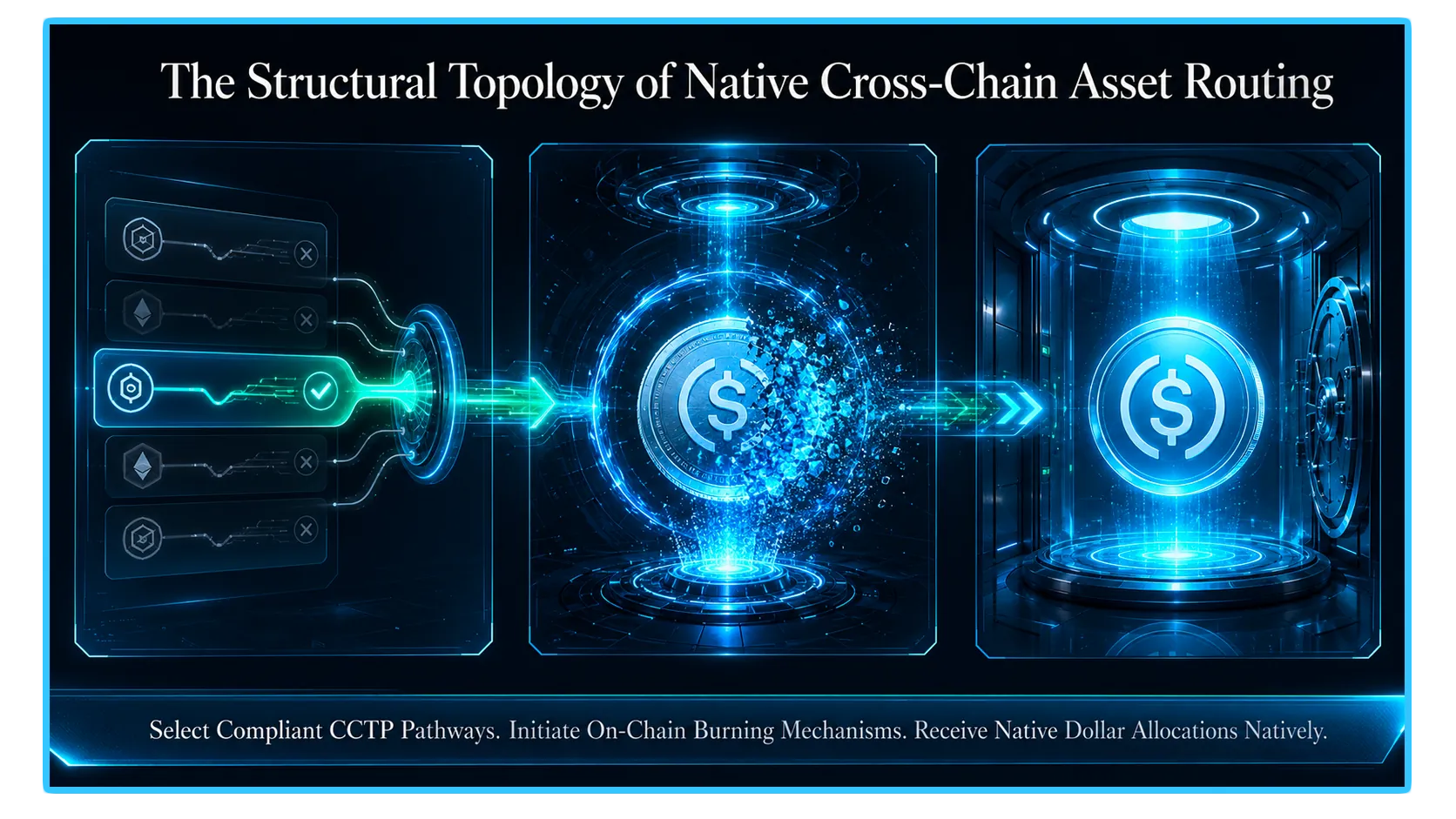
1. The Token Architecture: Native vs. Bridged Variants
To insulate your capital from structural liquidity traps, you must understand the deep accounting difference between official stablecoins and synthetic bridge wrappers.
Native USDC: This is the official digital dollar issued directly by Circle. It is backed 1:1 by highly secure reserves, holds full redemption parity for physical fiat cash, and serves as the compliant baseline for institutional DeFi protocols.
Bridged (Wrapped) USDC: This is an unlinked, synthetic receipt token printed by a third-party bridge protocol (such as old bridge frameworks or generic cross-chain routers). It simply represents a claim check on real USDC locked inside a smart contract on an entirely alternate blockchain.
[Native USDC Source] ───> Circle CCTP Interactivity ───> Atomic Burn ───> Native Mint on Destination
[Bridged Route] ───> Third-Party Bridge Contract ───> Locks Asset ───> Prints Synthetic Wrapped Clone
If a third-party bridge holding the master collateral vault suffers a systemic smart contract exploit, the synthetic wrapped proxy tokens circulating on the secondary rollup will lose their backing entirely, decoupling from the dollar peg and crashing to absolute zero.
2. The Diagnostic Grid: Stablecoin Profiling
To maintain clean scannability when filtering real-time cross-chain routing paths, use this optimized data matrix to map standard token profiles directly to their operational realities:
| Stablecoin Variant Profile | Core Sovereignty Mechanism |
| Native USDC (Circle CCTP) | Direct cryptographic burn-and-mint clearing that eliminates smart contract lockup traps. |
| Bridged USDC (Wrapped Proxy) | Third-Party contract escrow wrapping that relies entirely on isolated bridge liquidity pools. |
3. Step-by-Step Playbook: Ensuring Native Execution
Step 1: Audit the Ticker Label and Extension Strings
When selecting destination assets inside a bridging user interface or checking your balance sheets on a block explorer, look closely at the exact ticker naming nomenclature.
Native USDC will always display cleanly under the standard USDC asset symbol.
Wrapped variations are forced to attach clear architectural warning labels or extension tags. Look out for indicators like USDC.e (representing bridged assets on Arbitrum or Avalanche), axlUSDC (Axelar wrapped proxies), or USDBc (Base's historical bridged variant). If you spot an extension appended to the end of the ticker string, you are dealing with a wrapped clone.
Step 2: Force Route Execution Via Circle CCTP Pathways
- The ultimate technological shield against wrapped token fragmentation is Circle's official Cross-Chain Transfer Protocol (CCTP). CCTP completely eliminates the requirement to lock assets inside vulnerable third-party smart contract vaults.
- When you route a stablecoin transfer through a CCTP-supported interface, the protocol executes an atomic operational loop: it forcefully burns the native USDC on your source chain, transmits a secure cryptographic attestation across the network, and mints brand-new, official native USDC directly onto the destination chain.
The Native Routing Check: Before authorizing a cross-chain signature inside bridge aggregators (such as Jumper, Bungee, or deBridge), open the advanced routing configuration panel. Explicitly ensure that the underlying transaction path is designated as a CCTP Native Mint rather than a generic liquidity pool swap or a lock-and-mint execution path.
Step 3: Verify the Official Contract Address Hash
- If you are interacting with a newly deployed Layer-2 network or swapping assets on a decentralized exchange, automated front-ends can occasionally display misleading data fields. To guarantee absolute security, copy the token's contract address from your wallet and paste it into the network's official block explorer.
- Cross-reference the contract hash with Circle's formal developer directory. If the contract bytecode reveals the master deployment origin belongs to an unlinked third-party bridge deployer rather than Circle’s official issuer factory, reject the transaction path immediately.
4. Real-Time Telemetry and Pool Diagnostics via DEXTools
- Successfully migrating capital across alternative blockchain networks without getting trapped in illiquid, wrapped proxy pools requires continuous access to look-through, live data analytics. If you mistakenly bridge into a wrapped stablecoin variant with thin market depth, attempting to swap that asset back into a usable native format on a decentralized exchange can trigger massive execution slippage, eating away at your principal capital.
- DEXTools provides the critical analytical data infrastructure needed to perform these diagnostic verifications in real-time. By utilizing the advanced Cross-Chain Pair Explorer, live transaction feeds, and look-through wallet telemetry, market participants can instantly audit the structural health of any stablecoin pool across networks like Arbitrum, Base, Optimism, and Solana.
- Before committing your capital to a cross-chain transfer route, load the token contract on the DEXTools dashboard to verify its active pool status. By inspecting the live buy/sell ledger logs and assessing token holder dispersion profiles, you can proactively confirm if the asset you are receiving possesses deep, organic trading volume or if it is an isolated, illiquid wrapper, ensuring your digital treasury loops remain entirely optimized.
You can access DEXTools here and start trading today!
Disclaimer: This article is for informational purposes only and does not constitute investment advice, financial advice, trading advice, or any other kind of advice. DEXTools does not recommend buying, selling, or holding any cryptocurrency or token. Users should conduct their own research and consult with a qualified financial advisor before making any investment decisions. Cryptocurrency investments are volatile and high-risk. DEXTools is not responsible for any losses incurred.