ブリッジング時にラップされた USDC を回避する

ステーブルコインのブリッジングによって、断片化された非流動性のラッパーが残されるべきではありません。ネイティブ USDC 移行を分解し、模倣ブリッジされたアセットを特定する方法を説明します。
ブリッジング時にネイティブ USDC ではなくラップされた USDC を回避する方法
- The proliferation of alternative Layer-1 networks and Layer-2 rollups has transformed the decentralized financial landscape into a highly powerful, multi-chain grid. At the absolute heart of this cross-chain economy sits USD Coin (USDC), the premier regulated stablecoin used to settle trades, fund lending vaults, and anchor secondary market liquidity. Yet, as capital migrates at high velocity across competitive blockchain networks, everyday market participants routinely run into a frustrating structural trap: アセットをブリッジすると、公式のネイティブ ステーブルコインではなく、ラップされたプロキシがロードされたウォレットが見つかるだけです。
モジュラー スケーリングの初期の時代、サードパーティのクロスチェーン ブリッジは、価値を移動するために初歩的なテクノロジーに依存することを余儀なくされました。
- If you wanted to move dollars from Ethereum to a newly launched rollup, the bridge would lock your authentic assets inside an Ethereum vault and print a synthetic clone (a "bridged" or "wrapped" proxy) on the destination network.現在、これらの断片化されたコピーキャットは、大規模な変換の摩擦と重大なセキュリティ リスクを引き起こします。 This guide breaks down the core architecture of stablecoin distribution and delivers an exact operational playbook to ensure you always receive native USDC when navigating the multi-chain frontier.
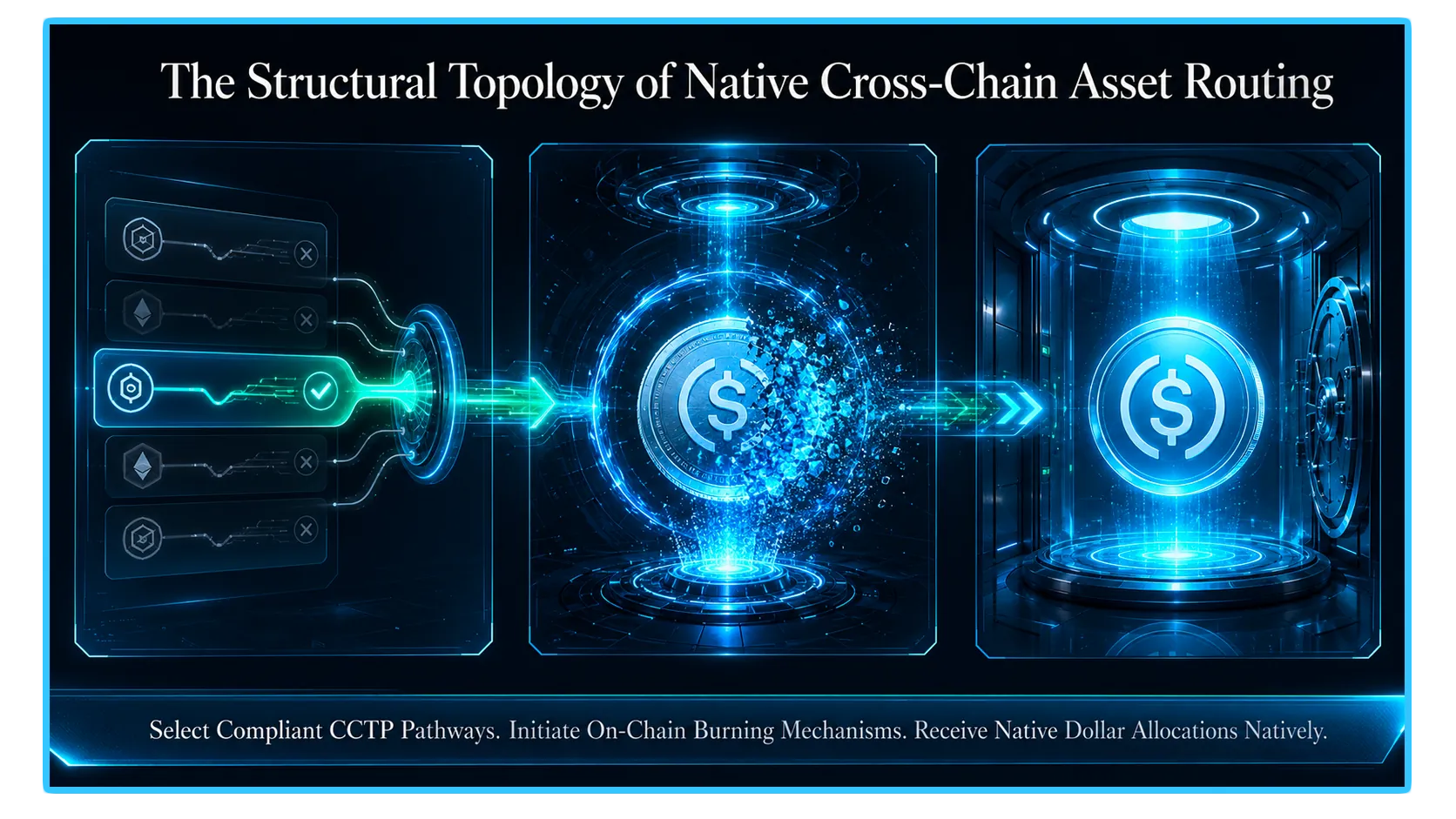
1. トークン アーキテクチャ: ネイティブ バリアントとブリッジ バリアント
To insulate your capital from structural liquidity traps, you must understand the deep accounting difference between official stablecoins and synthetic bridge wrappers.
ネイティブ USDC: Circleが直接発行する公式デジタルドルです。 It is backed 1:1 by highly secure reserves, holds full redemption parity for physical fiat cash, and serves as the compliant baseline for institutional DeFi protocols.
ブリッジ (ラップ) USDC: This is an unlinked, synthetic receipt token printed by a third-party bridge protocol (such as old bridge frameworks or generic cross-chain routers).これは、完全に代替ブロックチェーン上のスマート コントラクト内にロックされた実際の USDC の請求チェックを単に表しているだけです。
[Native USDC Source] ───> Circle CCTP Interactivity ───> Atomic Burn ───> Native Mint on Destination
[Bridged Route] ───> Third-Party Bridge Contract ───> Locks Asset ───> Prints Synthetic Wrapped Clone
If a third-party bridge holding the master collateral vault suffers a systemic smart contract exploit, the synthetic wrapped proxy tokens circulating on the secondary rollup will lose their backing entirely, decoupling from the dollar peg and crashing to absolute zero.
2. 診断グリッド: ステーブルコインのプロファイリング
To maintain clean scannability when filtering real-time cross-chain routing paths, use this optimized data matrix to map standard token profiles directly to their operational realities:
| ステーブルコインバリアントプロファイル | コア主権メカニズム |
| ネイティブUSDC (サークルCCTP) | スマート コントラクトのロックアップ トラップを排除する直接暗号化バーンアンドミント クリアリング。 |
| ブリッジされた USDC (ラップされたプロキシ) | 孤立したブリッジに完全に依存するサードパーティ契約エスクロー ラッピング 流動性プール。 |
3. ステップバイステップのプレイブック: ネイティブ実行の確保
Step 1: Audit the Ticker Label and Extension Strings
ブリッジ ユーザー インターフェイス内で宛先資産を選択するとき、またはブロック エクスプローラーで貸借対照表を確認するときは、正確なティッカーの命名規則をよく確認してください。
Native USDC will always display cleanly under the standard USDC 資産シンボル。
Wrapped variations are forced to attach clear architectural warning labels or extension tags.次のような指標に注意してください USDC.e (representing bridged assets on Arbitrum or Avalanche), アクセルUSDC (Axelar ラッププロキシ)、または USDB (Base's historical bridged variant). If you spot an extension appended to the end of the ticker string, you are dealing with a wrapped clone.
Step 2: Force Route Execution Via Circle CCTP Pathways
- The ultimate technological shield against wrapped token fragmentation is Circle's official Cross-Chain Transfer Protocol (CCTP)。 CCTP completely eliminates the requirement to lock assets inside vulnerable third-party smart contract vaults.
- CCTP がサポートするインターフェイスを介してステーブルコイン転送をルーティングすると、プロトコルはアトミックな操作ループを実行します。つまり、ソース チェーン上でネイティブ USDC を強制的に書き込み、安全な暗号化証明書をネットワーク全体に送信し、新しい公式ネイティブ USDC を宛先チェーンに直接作成します。
ネイティブ ルーティング チェック: ブリッジ アグリゲーター (ジャンパー、バンジー、デブリッジなど) 内でクロスチェーン署名を承認する前に、高度なルーティング設定パネルを開きます。 Explicitly ensure that the underlying transaction path is designated as a CCTP ネイティブミント rather than a generic liquidity pool swap or a lock-and-mint execution path.
Step 3: Verify the Official Contract Address Hash
- 新しく展開されたレイヤー 2 ネットワークと通信している場合、または分散型取引所で資産を交換している場合、自動化されたフロントエンドによって誤解を招くデータ フィールドが表示されることがあります。絶対的なセキュリティを保証するには、ウォレットからトークンのコントラクト アドレスをコピーし、ネットワークの公式ブロック エクスプローラーに貼り付けます。
- Cross-reference the contract hash with Circle's formal developer directory.コントラクトのバイトコードによって、マスター デプロイメントのオリジンが Circle の公式発行者ファクトリーではなく、リンクされていないサードパーティのブリッジ デプロイヤに属していることが明らかになった場合は、トランザクション パスを直ちに拒否します。
4. Real-Time Telemetry and Pool Diagnostics via DEXTools
- 流動性のないラップされたプロキシ プールに閉じ込められることなく、代替ブロックチェーン ネットワーク間で資本をうまく移行するには、ルックスルーのライブ データ分析への継続的なアクセスが必要です。市場厚みが薄いラップされたステーブルコインのバリアントに誤ってブリッジした場合、その資産を分散型取引所で使用可能なネイティブ形式に戻そうとすると、大規模な執行遅延を引き起こし、元本を食いつぶす可能性があります。
- DEXTools は、これらの診断検証をリアルタイムで実行するために必要な重要な分析データ インフラストラクチャを提供します。 By utilizing the advanced Cross-Chain Pair Explorer, live transaction feeds, and look-through wallet telemetry, market participants can instantly audit the structural health of any stablecoin pool across networks like Arbitrum, Base, Optimism, and Solana.
- Before committing your capital to a cross-chain transfer route, load the token contract on the DEXTools dashboard to verify its active pool status. By inspecting the live buy/sell ledger logs and assessing token holder dispersion profiles, you can proactively confirm if the asset you are receiving possesses deep, organic trading volume or if it is an isolated, illiquid wrapper, ensuring your digital treasury loops remain entirely optimized.
DEXTools にアクセスできます はこちら 今日から取引を始めましょう!
免責事項: This article is for informational purposes only and does not constitute investment advice, financial advice, trading advice, or any other kind of advice. DEXTools は、暗号通貨やトークンの購入、販売、または保有を推奨しません。ユーザーは、投資に関する決定を下す前に、自分で調査を行い、資格のある財務アドバイザーに相談する必要があります。暗号通貨への投資は不安定でリスクが高くなります。 DEXTools は、発生した損失に対して責任を負いません。