Bot-Native Tokens: Are Some Launches Designed for Machines, Not Humans?
— By Whatsertrade in Tutorials
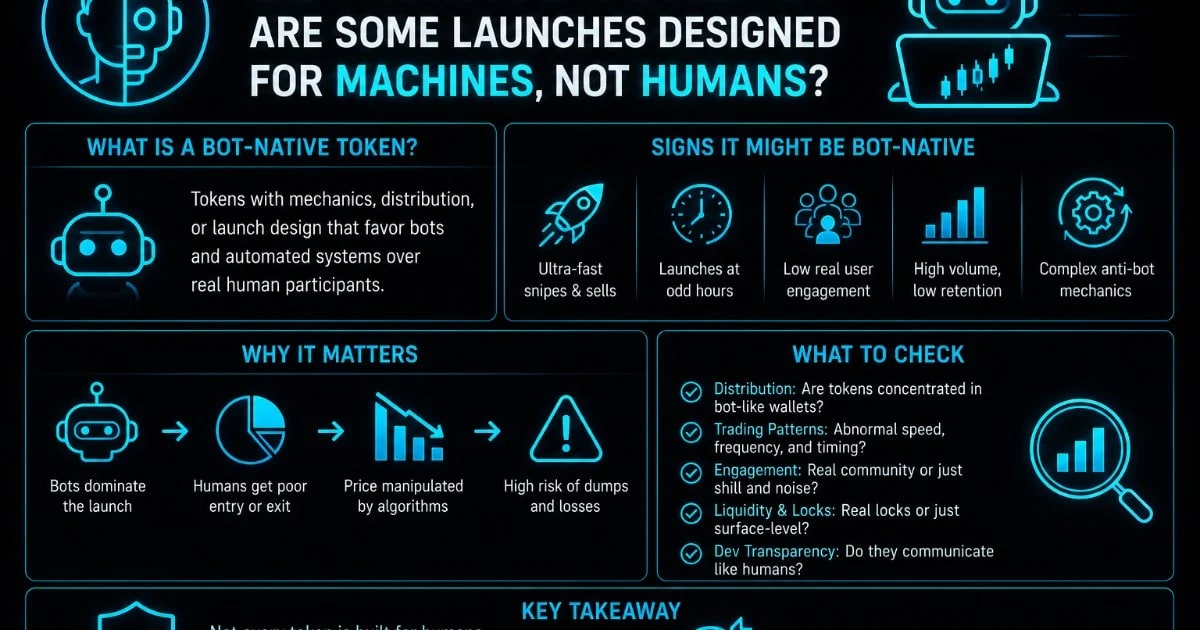
Explore the phenomenon of bot-native tokens and how automated trading shapes their market dynamics, offering insights for crypto enthusiasts and traders.
Crypto trading is no longer only human. Bots monitor new pairs, scan contracts, execute buys, detect liquidity, and react faster than any manual trader. In many low cap markets, automated systems shape the first minutes of a token’s life.
This has created a new type of launch: the bot-native token.
A bot-native token is not necessarily built for a real community first. It may be structured to attract automated trading, sniper activity, fast volume, and early chart movement. These tokens can look active immediately, but the activity may come more from machines than humans.
What Makes a Token Bot-Native
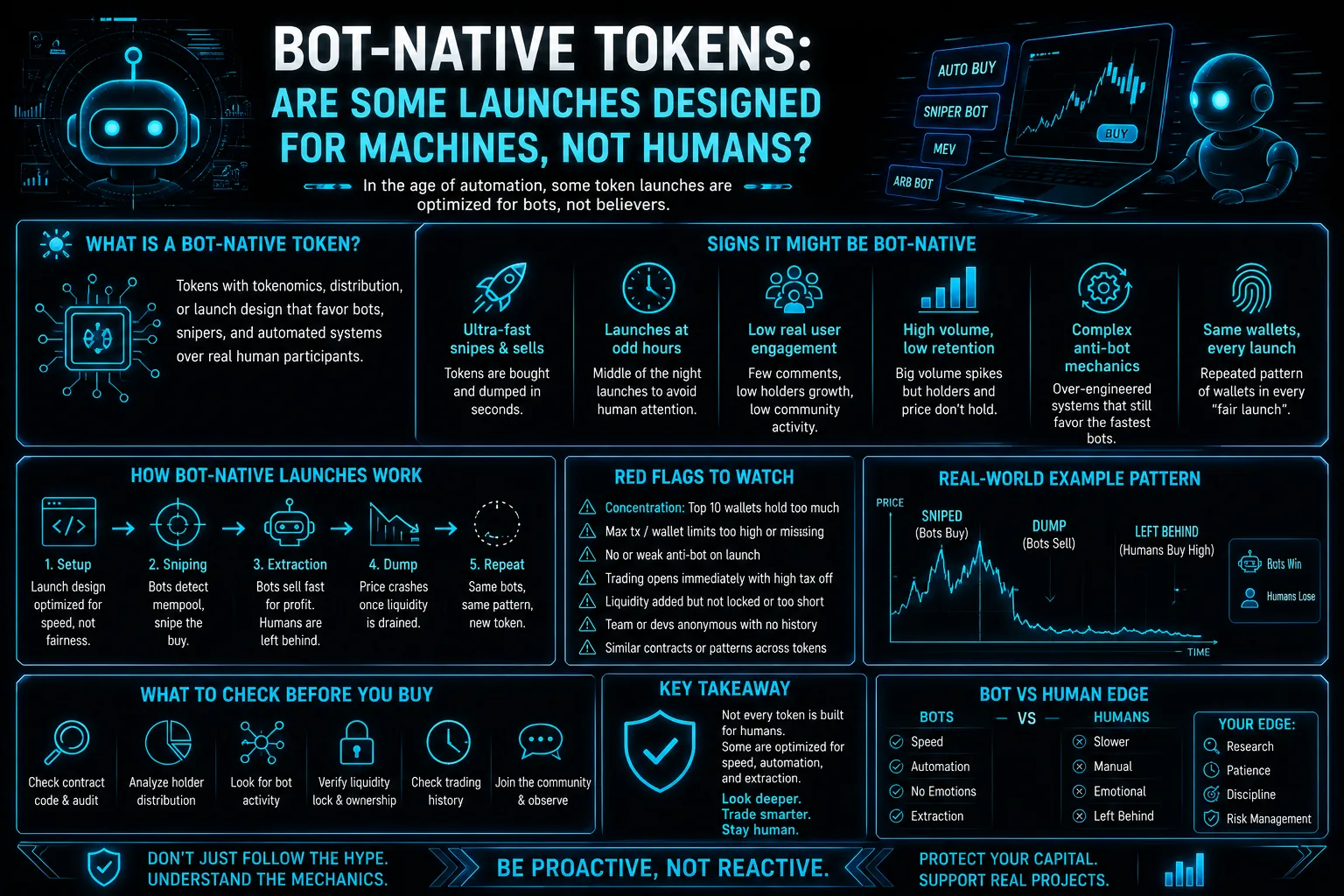
A bot-native launch often shows extreme speed. Transactions appear within seconds of liquidity being added. Wallets buy instantly. The chart moves before most human traders even find the pair.
Common signs include:
- Very fast first buys
- Repeated small transactions
- Many wallets entering within seconds
- Sharp early price movement
- High volume with little community activity
- Sniper wallets exiting quickly
- Similar transaction patterns across wallets
This does not always mean the token is a scam. But it does mean the market structure may be heavily automated.
Why Bots Matter
Bots can create liquidity and volume, but they can also create risk. Automated wallets may not care about the project, community, or long term narrative. They may enter only to capture a fast move and exit immediately.
When bots dominate early trading, the chart can become unstable. Human traders may buy after the first pump, only to become exit liquidity for faster wallets.
Bots change the rhythm of a launch. The first minutes become a competition for speed.
How Bot Activity Can Mislead Traders
Bot activity can make a token look stronger than it really is. High transaction count, fast volume, and early green candles may create the impression of demand.
But real demand requires more than speed.
A token with bot activity but no real buyers may fade quickly after the automated phase ends. Once snipers exit and volume slows, the chart may lose support.
Warning signs include:
- Volume collapses after launch
- Holder count rises but real community is absent
- Large early wallets sell fast
- No organic buyers arrive after bots exit
- Social activity appears only after the pump
Are Bot-Native Tokens Always Bad?
Not always. Some successful tokens attract bots early and later build real communities. In active DEX markets, bot participation is almost impossible to avoid.
The problem appears when bot activity is the only activity.
A healthy token can survive after bots leave. A weak token depends on them.
How Traders Can Analyze Bot-Native Launches
Traders can use a simple framework:
- Check the first 10 minutes of transactions
- Look for repeated wallet behavior
- Compare volume with community activity
- Watch whether buyers return after the first dump
- Analyze whether liquidity remains stable
- Track whether holders grow naturally after launch
The best signal is what happens after the automated phase. If humans arrive later and support the market, the token may have real traction.
Final Thoughts
Some token launches are designed for machines before humans. They move fast, attract bots, and create early volume that can be difficult to interpret.
Traders should not confuse automated activity with real demand.
In modern DEX markets, the first question is not only who is buying. It is whether the buyers are human, automated, or simply faster than everyone else.
The First 60 Minutes After a Token Launch: What to Watch on DEXTools Healthy vs Unstable Token Launch Patterns: Key Insights Best Crypto Sniper Tools in 2026: Platforms for Token Launch Entries Fake Volume vs Real Demand: How to Spot Artificial Momentum in DeFi Trading