Commodity Perps On-Chain: Gold, Oil & More on Hyperliquid
— By Whatsertrade in Tutorials

Find out why macro assets like gold and oil are now part of Hyperliquid's on-chain markets, a new era for decentralized trading enthusiasts.
Crypto trading is no longer limited to Bitcoin, Ethereum and altcoins. A new category of on-chain markets is growing around macro assets: gold, oil, equity indices, foreign exchange exposure and other traditional financial instruments represented through perpetual contracts.
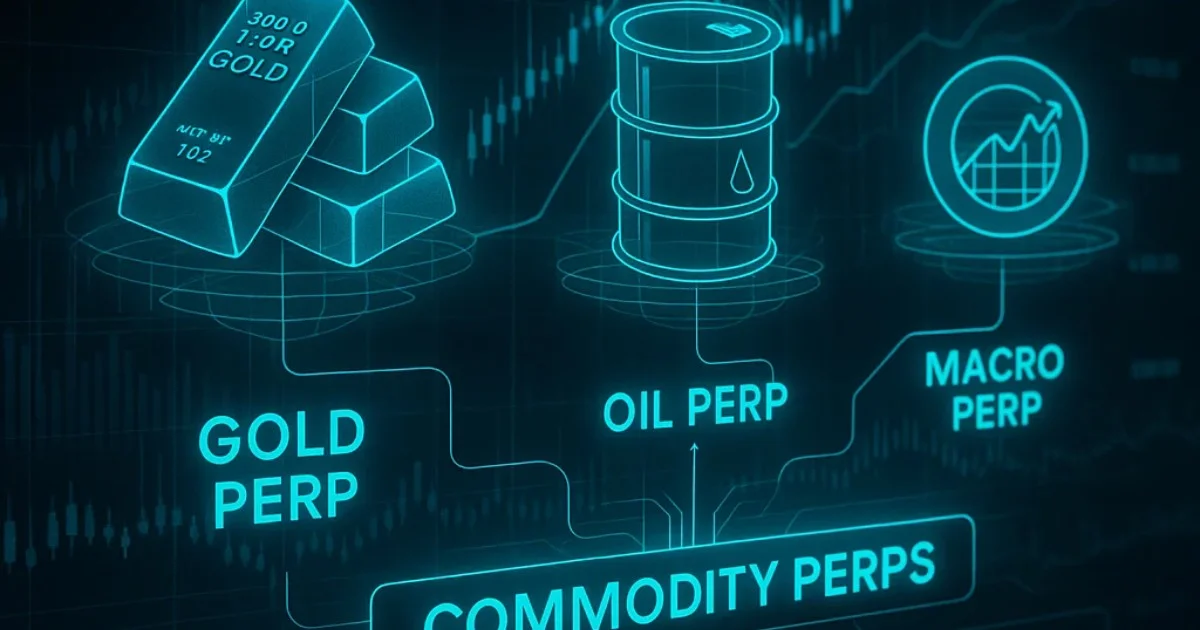
This shift is especially visible in decentralized perpetual exchanges such as Hyperliquid, where traders can access more than crypto-native markets. The idea is simple but powerful: bring the speed, transparency and accessibility of on-chain trading to assets that were historically traded through traditional brokers, futures markets or centralized platforms.
Commodity perps are part of this broader trend. They allow traders to speculate on assets such as gold and oil without taking delivery of the underlying commodity. Instead, traders use perpetual futures contracts that track price exposure.
For crypto traders, this opens a new type of opportunity. Instead of leaving the on-chain environment to trade macro events, they can react directly from crypto-native platforms. But it also introduces new risks around liquidity, funding, price tracking and volatility.
What Are Commodity Perps?
Commodity perps are perpetual futures contracts linked to commodity prices. Unlike traditional futures, perpetual contracts do not have a fixed expiry date. Traders can hold positions as long as margin requirements are met.
A gold perp gives exposure to gold price movements. An oil perp gives exposure to oil price movements. The contract is usually settled in a crypto-native collateral system, which allows users to trade macro assets without using a traditional brokerage account.
The appeal is clear:
- 24/7 market access
- Crypto-native collateral
- Fast execution
- No need for traditional futures accounts
- Ability to trade macro events on-chain
- Portfolio diversification beyond crypto tokens
However, traders need to understand that a perp is not the same as holding the underlying asset. A gold perp is not physical gold. An oil perp is not a barrel of oil. It is synthetic price exposure.

Why Hyperliquid Became a Key Player
Hyperliquid has attracted attention because it combines high-performance perpetual trading with an on-chain user experience. It feels closer to a centralized exchange in terms of speed, but it still belongs to the broader decentralized trading movement.
The platform has become especially relevant for traders who want:
- Fast order execution
- Deep perp markets
- A growing range of listed assets
- On-chain transparency
- Crypto-native collateral management
- Access to non-crypto markets from a crypto interface
Commodity perps fit naturally into this model. Crypto traders are already familiar with leverage, funding rates and fast-moving markets. Adding macro assets gives them more ways to express views during global events.
For example, when geopolitical risk rises, traders often watch oil and gold. In traditional markets, they might need a brokerage account or futures access. On-chain commodity perps give them another route.
Why Gold and Oil Matter to Crypto Traders
Gold and oil are two of the most important macro assets in global markets.
Gold is often seen as a store of value, inflation hedge or crisis asset. Traders watch it during periods of monetary uncertainty, banking stress, currency weakness or geopolitical tension.
Oil is tied to energy demand, supply shocks, global growth and geopolitical conflict. It can react sharply to war risk, sanctions, production changes or shipping disruptions.
Crypto traders increasingly follow these markets because macro conditions affect digital assets too. Bitcoin may trade like a risk asset in some periods and like a monetary hedge in others. Altcoins often react to liquidity expectations, interest rates and global risk appetite.
By trading commodity perps on-chain, crypto-native traders can respond to macro themes without leaving their usual environment.
The Rise of On-Chain Macro Trading
On-chain macro trading is the idea that crypto rails can support exposure to traditional financial markets. This includes commodities, equity indices, foreign exchange pairs and tokenized real-world assets.
The trend is driven by several forces.
First, crypto traders want more markets. Once users are comfortable trading perps on-chain, it makes sense to add assets beyond BTC and ETH.
Second, global markets are increasingly interconnected. A trader who watches Bitcoin may also care about gold, oil, the dollar and interest rates.
Third, on-chain platforms want to compete with centralized exchanges and traditional brokers by expanding product coverage.
Fourth, tokenization is making the boundary between crypto and traditional finance less rigid.
Commodity perps are one of the most obvious bridges between these worlds.
Benefits of Commodity Perps On-Chain
The biggest benefit is accessibility. Traders can access macro exposure from a crypto wallet instead of opening a specialized futures account.
Another benefit is speed. Crypto markets operate continuously, and on-chain platforms can offer fast reaction times during major events.
Collateral efficiency is also important. Traders who already hold crypto assets or stablecoins can use them within the same ecosystem instead of moving funds between separate financial platforms.
On-chain transparency adds another advantage. Traders can often inspect market activity, open interest, funding behavior and liquidity more directly than in opaque trading environments.
Finally, commodity perps can help diversify trading strategies. When altcoins are quiet, macro markets may still offer volatility.
The Risks Are Different From Crypto Perps
Commodity perps may look familiar, but they carry different risks.
The first risk is liquidity. A BTC perp may have deep liquidity, but a commodity perp can be thinner. Thin liquidity can increase slippage and make exits harder during volatile events.
The second risk is oracle or pricing risk. Since the contract tracks an external market, the quality and reliability of price feeds matter.
The third risk is funding rate volatility. If many traders crowd into the same side of a trade, funding can become expensive.
The fourth risk is market hours mismatch. Traditional commodity markets have specific trading sessions, while crypto platforms operate continuously. This can create unusual behavior when the underlying reference market is closed or less liquid.
The fifth risk is leverage. Macro assets can move sharply during geopolitical events, economic releases or supply shocks. Leverage can magnify both gains and losses.
How Crypto Traders Should Approach Commodity Perps
Commodity perps should not be treated like random altcoins. They require a macro mindset.
Before opening a trade, ask:
- What is the macro catalyst?
- Is the move event-driven or trend-driven?
- How deep is liquidity?
- What is the funding rate?
- Is the market crowded?
- What is the invalidation level?
- How does this position affect total portfolio risk?
For gold, traders may watch interest rates, inflation expectations, central bank demand, currency weakness and crisis headlines.
For oil, traders may watch supply disruptions, OPEC policy, geopolitical tension, demand expectations and inventory data.
The chart matters, but the macro context matters too.
How This Trend Connects to DEXTools Users
DEXTools users are used to reading on-chain activity, liquidity and token behavior. Commodity perps are not spot DEX pairs, but the mindset is similar: do not trust hype alone. Follow market structure.
If a macro trading narrative grows, it can influence related crypto sectors. For example, increased interest in gold or oil perps may also drive attention toward tokenized commodities, RWA platforms, perp DEX tokens or infrastructure projects.
A DEX trader can use this trend in two ways.
First, follow the direct perp market if they trade derivatives.
Second, watch for spot tokens that benefit from the narrative. When on-chain macro trading becomes popular, related tokens can attract speculative flows on DEXs.
This is where DEXTools becomes useful. Traders can monitor whether macro-related narratives are translating into real spot volume, liquidity growth and trending pairs.
Commodity Perps vs Tokenized Commodities
Commodity perps and tokenized commodities are not the same.
A commodity perp gives leveraged synthetic exposure to price movement. It is designed for trading.
A tokenized commodity usually represents some form of asset-backed claim or tokenized exposure. It may be designed for holding, settlement or DeFi collateral.
Perps are about speculation and hedging. Tokenized commodities are about ownership representation or financial infrastructure.
Both can grow, but they serve different users.
What Could Happen Next?
The next phase of on-chain macro trading may include broader asset coverage. Traders may see more equity index perps, foreign exchange pairs, metals, energy products and synthetic exposure to global markets.
If liquidity improves, these products could become a serious alternative for crypto-native traders who want macro exposure. If liquidity remains shallow, they may stay as niche products for advanced users.
The key metric is not how many markets are listed. It is whether traders can enter and exit with acceptable slippage, transparent pricing and sustainable funding.
Final Thoughts
Commodity perps are one of the clearest signs that on-chain trading is expanding beyond crypto-native assets. Gold, oil and other macro markets give traders new ways to react to global events without leaving the crypto ecosystem.
Hyperliquid has helped push this trend into the spotlight, but the broader idea is bigger than one platform. Crypto rails are becoming a venue for macro speculation, synthetic exposure and tokenized financial markets.
For traders, the opportunity is real, but so are the risks. Commodity perps require more than chart chasing. They require liquidity analysis, macro awareness and careful risk management.
On-chain macro trading is still early. But if liquidity continues to grow, the next major trading cycle may not only be about which crypto narrative wins. It may also be about which traditional markets become liquid enough to trade on-chain.
How to Bridge Crypto Between Chains: Complete Cross-Chain Tutorial 2026 How to Use 1inch: Complete DEX Aggregator Swap Tutorial (2026) How to Use OKX Web3 Wallet: Multi-Chain DeFi Hub Guide (2026)Frequently Asked Questions
What are commodity perps on Hyperliquid?
Commodity perps on Hyperliquid are perpetual futures contracts that allow traders to speculate on the price movements of various commodities like gold, oil, and more, using cryptocurrency collateral.
How do commodity perps differ from traditional commodity trading?
Unlike traditional commodity trading which may involve physical delivery or large capital requirements, commodity perps on Hyperliquid are derivatives that track commodity prices and can be traded with leverage using crypto.
What types of commodities are available for perpetual futures on Hyperliquid?
Hyperliquid offers perpetual futures for a range of commodities, including but not limited to, gold (XAU) and crude oil (WTI), allowing for diversified exposure within the crypto ecosystem.
What are the benefits of trading commodity perps on-chain?
Trading commodity perps on-chain provides advantages such as 24/7 access, transparency through blockchain records, and the ability to use crypto assets as collateral, potentially offering greater capital efficiency.
What are the risks associated with commodity perps on Hyperliquid?
Risks include price volatility inherent in commodity markets, the potential for liquidation due to leverage, and smart contract risks associated with decentralized platforms.