Top 5 Perpetual DEXs 2026: Best Perp Trading Platforms
— By Tony Rabbit in Tutorials
Discover the best perpetual DEXs for 2026, including Hyperliquid, dYdX, GMX, Jupiter Perps, and Drift Protocol, for on-chain leverage trading.
The landscape of decentralized perpetual exchanges (DEXs) is rapidly evolving, offering sophisticated tools for on-chain leverage trading without the reliance on centralized entities. For 2026, the top perpetual DEXs that stand out for their liquidity, user experience, and ecosystem integration are Hyperliquid, dYdX, GMX, Jupiter Perps, and Drift Protocol. Each platform caters to distinct trader profiles, from those seeking deep order book liquidity to users prioritizing DeFi-native simplicity or Solana-specific integrations.
Why Perpetual DEXs Matter in 2026
Perpetual DEXs have evolved beyond niche platforms to become fundamental infrastructure for crypto derivatives trading. They offer censorship resistance, self-custody of funds, and transparency that centralized exchanges (CEXs) cannot match. As the DeFi ecosystem matures, these platforms are integrating advanced features, deeper liquidity, and more robust risk management tools, making them indispensable for serious traders seeking on-chain leverage.
Understanding the Core Value Proposition
The primary appeal of perpetual DEXs lies in their ability to provide leverage and derivatives-style positioning without requiring users to relinquish control of their assets. This commitment to self-custody, combined with the transparency of blockchain transactions, addresses key concerns around trust and security prevalent in traditional finance and centralized crypto exchanges. Furthermore, the permissionless nature of DEXs opens up global access to sophisticated trading instruments.
Top 5 Perpetual DEXs for 2026: A Deep Dive
While many perpetual DEXs exist, the following five have distinguished themselves through innovation, community adoption, and sustained development, making them the most compelling choices for 2026.
1. Hyperliquid: The All-Rounder Champion
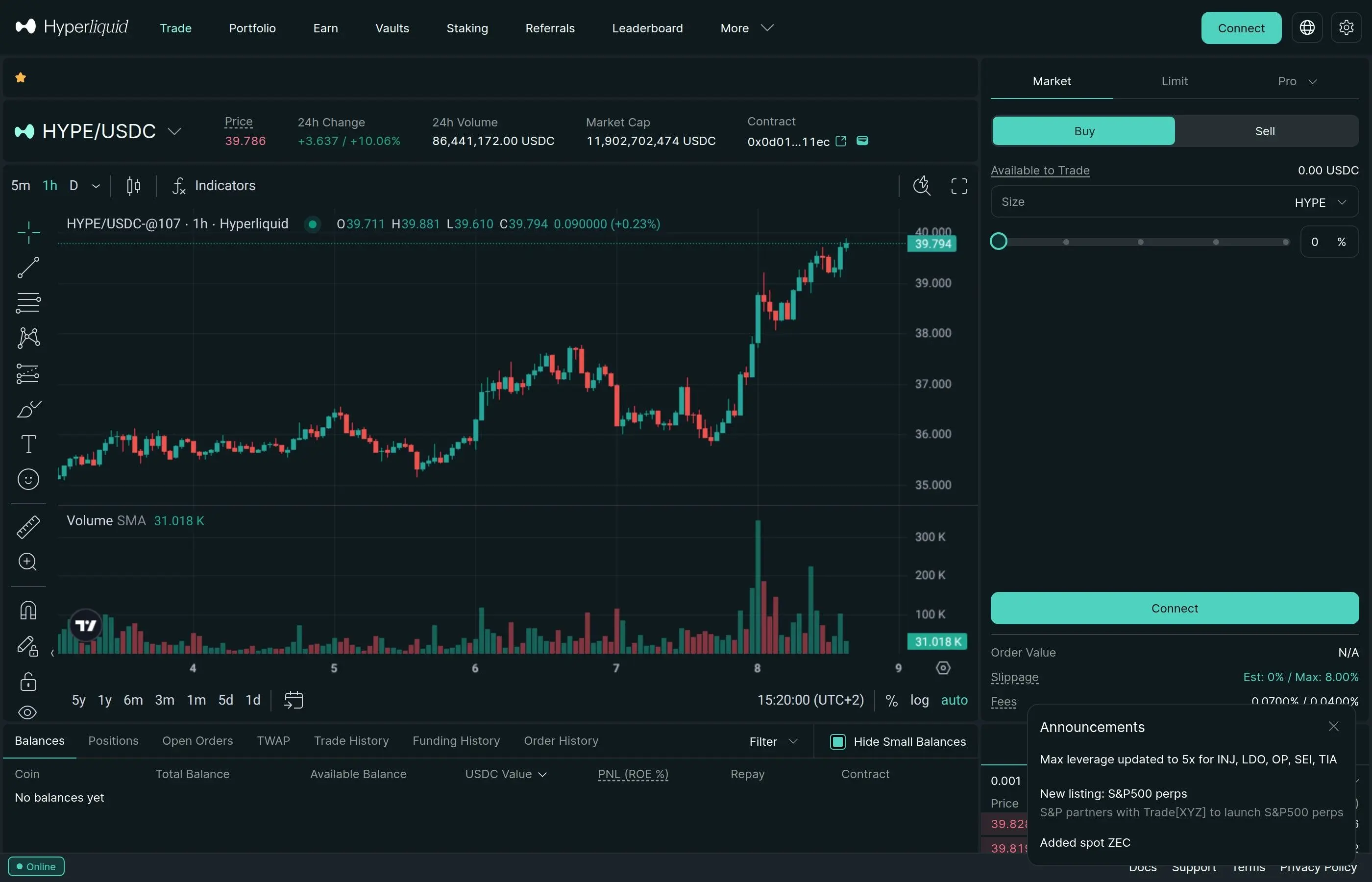
Hyperliquid has rapidly ascended to the top as a leading broad-spectrum perpetual DEX. Its appeal stems from a blend of deep liquidity, a high-performance order book, and a user experience meticulously crafted for derivatives traders. It offers a low-latency trading environment, making it suitable for active participants. Hyperliquid's commitment to continuous innovation, including advanced order types and a growing range of perpetual markets, solidifies its position as the default choice for many.
2. dYdX: The Derivatives Pedigree
dYdX remains a titan in the perpetual DEX space, leveraging years of development and a strong reputation for robust derivatives trading. Transitioning to its own app-chain built on Cosmos SDK, dYdX offers unparalleled scalability and customizability. It's known for its professional-grade interface, extensive market offerings, and deep liquidity pools, making it a go-to for experienced traders who prioritize a derivatives-first approach and institutional-grade infrastructure.
3. GMX: DeFi-Native Simplicity and Yield
GMX distinguishes itself with a unique liquidity model that appeals to users seeking a more DeFi-native leverage experience, often coupled with opportunities for passive yield. Instead of a traditional order book, GMX uses a multi-asset liquidity pool (GLP) where users can provide liquidity and earn fees from traders. This model offers simplicity and capital efficiency, making it attractive for those who prefer a streamlined interface and integrated yield generation alongside their trading activities. GMX is a strong contender for traders who value a clean, intuitive, and community-driven platform.
4. Jupiter Perps: Solana's Familiarity Hub
Jupiter Perps, part of the broader Jupiter aggregator on Solana, has quickly become a dominant force for Solana-native traders. Its strength lies in its seamless integration within the Solana ecosystem, offering a familiar user experience for those already accustomed to Solana's speed and low transaction costs. Jupiter Perps benefits from Jupiter's extensive liquidity aggregation, providing competitive pricing and efficient execution for perpetual contracts directly within the Solana environment. It's the ideal choice for users whose primary crypto activity resides on Solana.

5. Drift Protocol: Solana Power-User Angle
Drift Protocol stands out as another premier Solana-based perpetual DEX, catering to more active and power users within the ecosystem. It offers a high-performance, on-chain order book that leverages Solana's capabilities for fast and cheap trades. Drift's focus on advanced trading features, competitive fees, and a strong emphasis on community governance positions it as a sophisticated option for traders who demand a robust, chain-native derivatives workflow on Solana. Its continuous innovation in trading mechanics and risk management makes it a compelling choice for those looking for an edge.
Comparing the Top Perpetual DEXs: A Checklist
Choosing the best perpetual DEX depends heavily on individual trading style and preferences. Here's a comparison to help narrow down your options:
How to Choose the Best Perpetual DEX for You
The 'best' perpetual DEX is subjective. Consider these factors:
- Liquidity Depth: For large trades or minimal slippage, platforms with deep order books like Hyperliquid or dYdX are crucial.
- Ecosystem Fit: If you're heavily invested in a particular blockchain (e.g., Solana), Jupiter Perps or Drift might offer a more seamless experience.
- User Experience (UX): Some prefer the simplicity of GMX's liquidity pool model, while others demand the advanced charting and order types of dYdX or Hyperliquid.
- Trading Fees: Compare maker/taker fees, funding rates, and gas costs across platforms.
- Available Markets: Ensure the DEX offers perpetual contracts for the assets you wish to trade.
- Security & Audits: Prioritize platforms with a strong security track record and regular audits.
- Community & Support: An active community and responsive support can be invaluable.
Getting Started with a Perpetual DEX: A Step-by-Step Guide
While specifics vary, the general process for trading on a perpetual DEX is similar:
- Step 1: Choose Your DEX. Based on the comparisons above, select the perpetual DEX that best aligns with your trading goals and preferences.
- Step 2: Connect Your Wallet. Most DEXs support popular wallets like MetaMask (EVM chains) or Phantom (Solana). Ensure your wallet is funded with the native token for gas fees and the collateral asset (e.g., USDC, ETH).
- Step 3: Deposit Collateral. Transfer your chosen collateral into the DEX's smart contract or your account on the platform. This will be used to back your leveraged positions.
- Step 4: Select a Market. Navigate to the perpetual market you wish to trade (e.g., BTC-PERP, ETH-PERP).
- Step 5: Place an Order. Choose your order type (market, limit, stop-limit), set your leverage, and specify the size of your position. Confirm the transaction in your wallet.
- Step 6: Monitor Your Position. Keep an eye on your open positions, P&L, and liquidation price. Manage your risk by setting stop-loss orders or adding more collateral.
- Step 7: Close Your Position. When ready, close your position to realize profits or cut losses.
Risks Associated with Perpetual DEXs
How DEXTools Helps in Your Perpetual DEX Journey
While DEXTools is primarily known for its real-time data and analytics for spot trading, its comprehensive suite of tools can indirectly assist perpetual DEX traders. By providing deep insights into token performance, liquidity trends, and market sentiment across various chains, DEXTools helps traders make informed decisions about which assets to trade on perpetual DEXs. Understanding underlying spot market dynamics and identifying emerging trends can be crucial for successful derivatives trading strategies.
The Future of Perpetual DEXs
The perpetual DEX landscape is poised for continued growth and innovation. Expect further advancements in scalability solutions, cross-chain interoperability, and the introduction of more complex derivatives products. The ongoing convergence of CEX-like performance with DeFi's core principles of transparency and self-custody will define the next generation of these platforms, making them even more competitive and accessible to a broader range of traders globally.
Frequently Asked Questions
What is a perpetual DEX?
A perpetual DEX (Decentralized Exchange) allows users to trade perpetual futures contracts (derivatives that never expire) with leverage directly on a blockchain, maintaining self-custody of their funds.
Which perpetual DEX is best for beginners?
GMX is often recommended for beginners due to its simpler liquidity pool model and more intuitive interface, though Hyperliquid also offers a user-friendly experience.
What are the main advantages of using a perpetual DEX over a CEX?
Key advantages include self-custody of funds, censorship resistance, transparency of on-chain transactions, and global permissionless access without KYC requirements.
Can I lose more than my initial capital on a perpetual DEX?
Yes, due to leverage, it's possible to lose more than your initial collateral if the market moves significantly against your position and you are liquidated. Always manage your risk.
What is the role of 'funding rates' on perpetual DEXs?
Funding rates are periodic payments exchanged between long and short position holders to keep the perpetual contract price pegged to the underlying asset's spot price. Positive rates mean longs pay shorts, and vice versa.
Which perpetual DEX offers the highest leverage?
dYdX and Jupiter Perps typically offer some of the highest leverage options, often up to 100x, though this can vary by asset and market conditions.
Are perpetual DEXs safe?
Perpetual DEXs are generally considered safer in terms of self-custody compared to CEXs. However, they are still subject to smart contract risks, oracle failures, and the inherent risks of leveraged trading.
What is the difference between an order book DEX and a liquidity pool DEX?
Order book DEXs (like Hyperliquid, dYdX) match buyers and sellers directly. Liquidity pool DEXs (like GMX) use a pool of assets provided by LPs to facilitate trades, with prices determined by an oracle.
Why are Solana-based perpetual DEXs gaining popularity?
Solana's high transaction speed and low fees make it an ideal blockchain for high-frequency trading and on-chain order books, leading to a smoother and more cost-effective user experience for perpetual trading.