How to Clean Up Spam Tokens and Scam NFTs From Your Wallet
Unsolicited tokens cluttering your crypto dashboard? Learn the hidden dangers of interacting with airdrop scams and how to safely sanitize your wallet.
How to Clean Up Spam Tokens
- Because public blockchains operate as transparent, open-access registries, your public wallet address is entirely visible to the world. While this openness enables seamless decentralized peer-to-peer commerce, it introduces an inevitable modern nuisance: on-chain spam. Malicious actors routinely scrape block explorers for active addresses and blast them with millions of unsolicited, worthless tokens and scam NFTs.
If you have opened your favorite non-custodial wallet app only to discover a random asset asserting that you won a free raffle, a surprise airdrop, or a mystery box allocation, you are being actively targeted.
- Cleaning up this digital toxic waste requires immense operational caution. Approaching an airdrop scam with standard cleanup tactics can backfire catastrophically. This guide breaks down the hidden mechanics of token-based phishing and outlines the safest protocols to sanitize your Web3 wallet layout.
1. The Bait: Why You Must Never Manually Move Spam Assets
- When a trader encounters unprompted garbage polluting their clean dashboard layout, their natural instinct is to get rid of it immediately by executing a manual transfer. They copy a known dead burn address or a secondary junk wallet and attempt to send the tokens away.
This is exactly what the scammer is banking on.
Many modern spam tokens are intentionally coded with highly malicious, non-standard smart contract logic. When you initiate a manual transaction to transfer or interact with the asset, you are invoking the contract's custom code. This interaction can trigger several severe security exploits:
The Phishing Redirect Trap: The smart contract programmatically triggers a transaction failure. It locks up your execution and broadcasts an error message inside your wallet metadata reading something like: "Transaction failed. Visit UnlockMyTokens.org to release your asset." The second you visit that external site and connect your keys, your wallet is drained.
Hidden Allowance Exploits: Sophisticated exploit payloads camouflage an aggressive approval signature inside a standard-looking transaction request, tricking you into granting an attacker permanent permission to move your high-value stablecoins or layer-one assets.
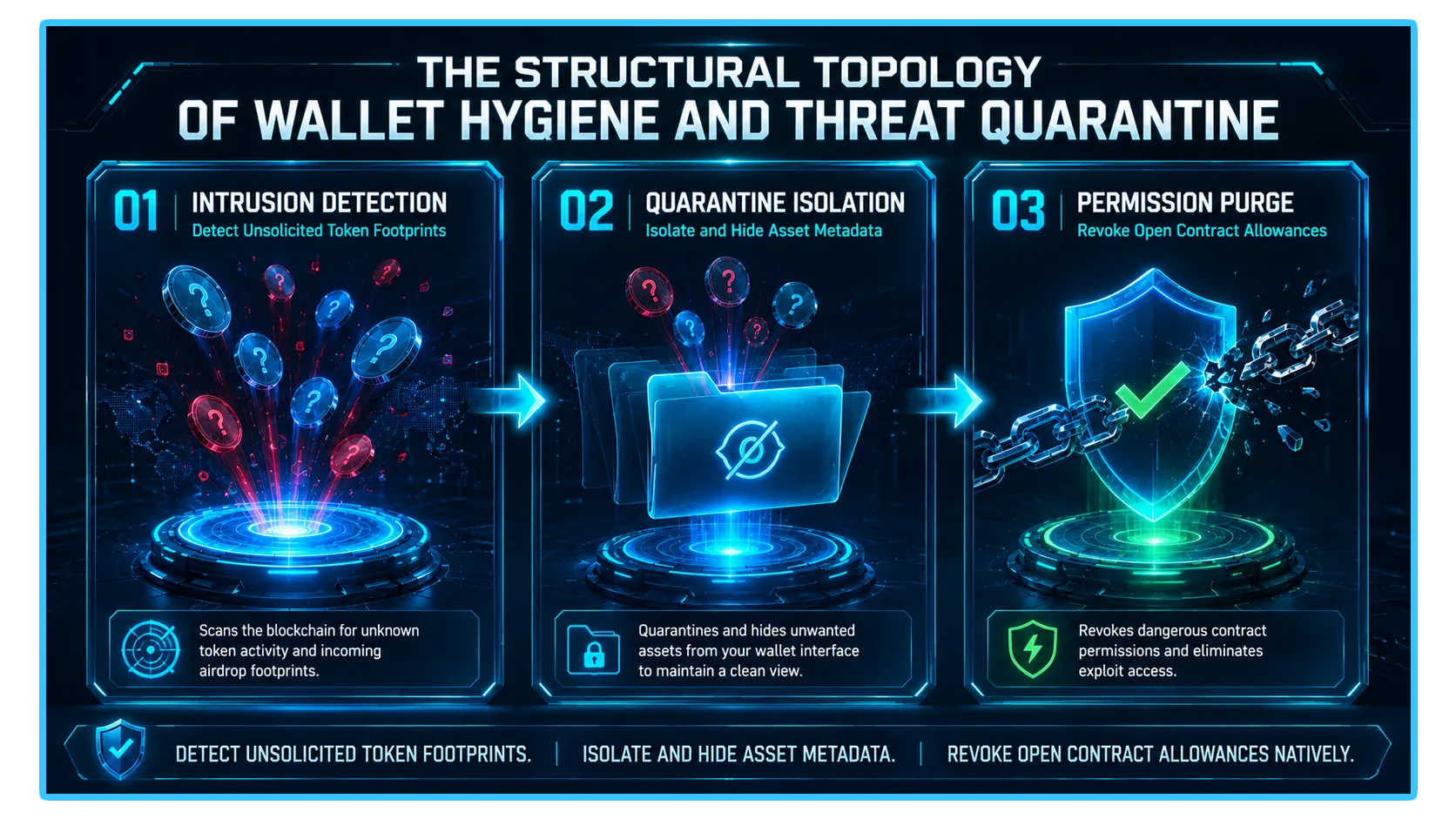
The Sovereign Rule of On-Chain Dust: If you did not explicitly buy it, mint it, or earn it from a verified, documented protocol campaign, it is hostile. Never sell it, never swap it, and never manually transfer it to a burn address.
2. The Security Grid: Core Sanitization Matrix
To maintain a pristine structural overview of how alternative blockchain networks handle unsolicited assets, evaluate the sanitization parameters organized inside this optimized table layout:
| Blockchain Network Environment | Primary Safe Remediation Path |
| Solana Ecosystem (SOL) | Natively supports automated token burning inside select premium wallets to reclaim storage rent. |
| EVM-Compatible Networks (ETH/BNB/Base) | Relies strictly on client-side "Hide and Report" protocols to eliminate interface visibility safely. |
3. Step-by-Step Playbook: Purging the Digital Waste Safely
Step 1: Execute Client-Side Hiding (MetaMask, Rabby, Ledger Live)
- On EVM networks like Ethereum, BNB Chain, or Base, burning an asset costs gas. Spending your own valuable native tokens to clear out a scammer's garbage is financially inefficient. Instead, utilize client-side UI filters.
- In wallets like MetaMask, Rabby, or Ledger Live, navigate to your asset portfolio screen, locate the suspicious token entry, click the three-dot options block, and select "Hide Token" or "Mark as Spam." This completely deletes the asset from your visual display without executing a dangerous on-chain transaction.
Step 2: Utilize Safe Native Burning on Solana (Phantom, Solflare)
- The Solana network utilizes a unique technical storage framework where every account must maintain a tiny balance of SOL to pay for its ledger data space: a mechanism known as Storage Rent. Because of this framework, spam assets on Solana can actually be turned into free capital.
- Open a premier utility wallet like Phantom, navigate to your Collectibles or Token tab, select the scam NFT, open the menu icon in the upper-right corner, and choose "Burn Token."
- Phantom routes this request through a natively insulated, secure proxy script that destroys the target token safely, removes it permanently from your history, and rewards your wallet with the reclaimed SOL storage rent.
4. Advanced Hygiene: Eradicating Address Poisoning Footprints
- A highly prevalent variation of on-chain spamming is Address Poisoning. Scammers monitor your active wallet movements and use automated scripts to generate dummy addresses that perfectly copy the first few and last few alphanumeric characters of your routine transfer destinations. They then zero-dollar airdrop a spoofed token to your wallet using this copycat address.
- The attack targets human laziness. When you open your wallet to execute your next routine transfer, you might carelessly copy the destination address straight from your recent transaction history log instead of pulling it from your secure address book.
- To break this attack loop, verify every single character of a destination address prior to confirming a transaction. Never copy addresses out of unverified historical transaction feeds.
5. Real-Time Diagnostics and Contract Verification via DEXTools
- Successfully hiding visual clutter from your wallet frontend keeps your interface pristine and insulates your keys from immediate phishing risks. However, if a random airdrop token appears with a familiar name or matches a project you recently explored, determining whether it is an authentic reward or a malicious duplicate requires independent, look-through data telemetry.
- DEXTools provides the critical analytical data infrastructure needed to perform these diagnostic contract verifications in real-time. Before assuming an inbound asset has real value or attempting to swap it on a decentralized exchange, copy its exact contract address string from a block explorer and paste it into the advanced DEXTools Pair Explorer.
- Reviewing live transaction velocity charts, reading verified security audits, inspecting pool thickness, and checking automated blacklist warning flags instantly unmasks copycat tokens. This diagnostic check ensures you interact exclusively with authentic pools, keeping your digital wealth fully protected from market traps and systemic wallet exploits.
You can access DEXTools here and secure your workflow today!
Disclaimer: This article is for informational purposes only and does not constitute investment advice, financial advice, trading advice, or any other kind of advice. DEXTools does not recommend buying, selling, or holding any cryptocurrency or token. Users should conduct their own research and consult with a qualified financial advisor before making any investment decisions. Cryptocurrency investments are volatile and high-risk. DEXTools is not responsible for any losses incurred.