Ist Kryptowahrung sicher? Sicherheitsanalyse (2026)
— By Tony Rabbit in Tutorials
Ist Krypto sicher? Risikoanalyse.
Is cryptocurrency safe? The honest answer depends entirely on what you mean by "safe." The underlying blockchain technology that powers Bitcoin, Ethereum, and thousands of other cryptocurrencies is one of the most secure systems ever created. Bitcoin's network has never been hacked in its 17 years of existence. But here is the uncomfortable truth: in 2025 alone, over $17 billion was lost to cryptocurrency hacks, scams, and exploits. The technology is safe. The way most people use it is not.
This distinction matters more than anything else you will read today. When someone asks "is cryptocurrency safe?" they are really asking two separate questions. First, is the blockchain itself secure? And second, is my money safe when I buy, hold, and trade crypto? The answers to these two questions are wildly different, and understanding that gap is the key to protecting yourself in 2026 and beyond.
Throughout this guide, we will break down every major risk you face as a crypto holder, rank them by severity, show you exactly how losses happen, and give you a concrete security stack that reduces your risk by over 90%. Whether you are considering your first Bitcoin purchase or you already hold a diversified portfolio, this analysis will change how you think about cryptocurrency safety.
Blockchain Security: Why the Technology Itself Is Safe
Before we talk about the risks, let's establish what makes cryptocurrency fundamentally secure at the protocol level. Bitcoin operates on a proof-of-work consensus mechanism where thousands of independent miners verify every single transaction. To attack the Bitcoin network, you would need to control more than 50% of all mining power on the planet simultaneously. The cost of a 51% attack on Bitcoin is estimated at over $20 billion per hour in 2026, making it economically irrational for any entity to attempt.
Ethereum, after its transition to proof-of-stake, is secured by over 34 million staked ETH (worth roughly $80 billion at current prices). Validators who attempt to act maliciously have their staked ETH "slashed," creating a powerful financial disincentive against attacks. The cryptographic foundations of these networks use the same mathematical principles that secure your online banking, military communications, and government systems. If someone broke SHA-256 or elliptic curve cryptography, cryptocurrency would be the least of the world's problems. Your understanding of what a private key is and how it works helps you appreciate why this cryptographic foundation is virtually unbreakable.
So when we say "crypto is not safe," we are never talking about the protocol layer. We are talking about everything built on top of it: the exchanges, the wallets, the bridges, the DeFi protocols, and most importantly, the human beings who use them. This is where the $17 billion in losses comes from, and this is where you need to focus your attention.
The 7 Biggest Cryptocurrency Risks, Ranked by Severity
Not all crypto risks are created equal. Some you can eliminate entirely with the right tools. Others require ongoing vigilance. And a few are simply part of the game that you accept when you enter this market. Here is every major risk ranked from most severe to most manageable.
⚠ Top 3 Ways People Lose Crypto
1. Exchange Hacks and Platform Failures
Centralized exchanges remain the single largest point of failure in cryptocurrency. The 2025 Bybit hack resulted in $1.46 billion stolen in a single incident, the largest exchange hack in crypto history. Before that, we saw the Mt. Gox collapse ($470 million), the FTX fraud ($8 billion in customer funds), and dozens of smaller exchange failures. When your crypto sits on an exchange, you do not actually own it. You own an IOU from that company. If they get hacked, go bankrupt, or turn out to be fraudulent, your money may be gone forever. This is why the crypto community repeats the mantra: "Not your keys, not your coins." Learning how to protect your crypto from hackers starts with understanding this fundamental vulnerability.
2. Rug Pulls and Project Scams
A rug pull occurs when the developers of a cryptocurrency project suddenly abandon it after draining investor funds. In 2025, rug pulls accounted for an estimated $3.2 billion in losses. These scams are especially common in the meme coin and new token space, where projects launch with flashy marketing, pump the price through coordinated buying, then dump their holdings and disappear. The Squid Game token, various "SafeMoon" clones, and countless DeFi yield farming schemes have all followed this pattern. Knowing how to spot a rug pull is essential survival knowledge for any crypto investor.
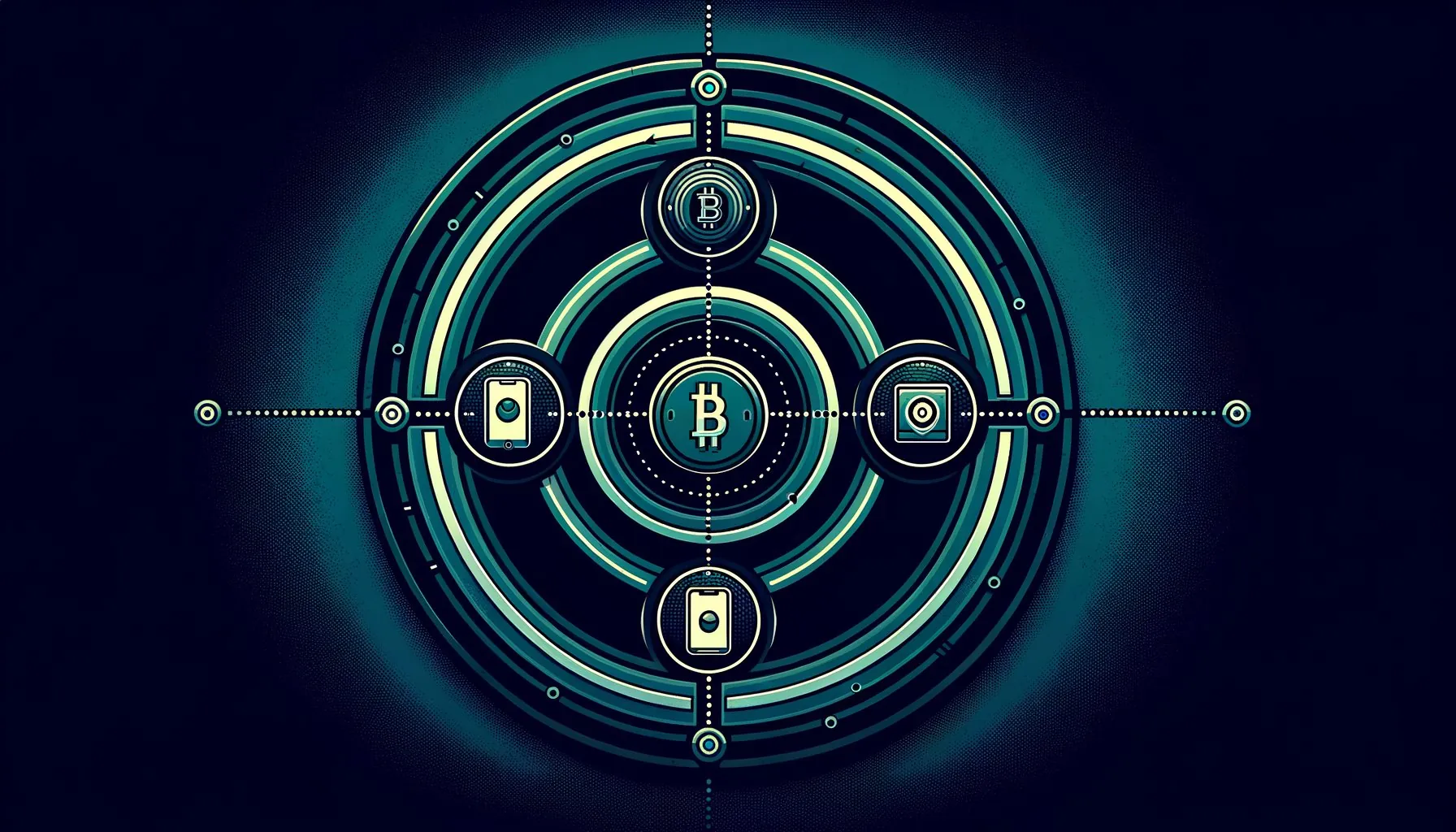
3. Phishing and Social Engineering
Phishing attacks in crypto are devastatingly effective because transactions are irreversible. Unlike a fraudulent credit card charge that your bank can reverse, once crypto leaves your wallet, it is gone. Attackers create pixel-perfect replicas of popular exchanges and wallet interfaces, send fake "security alert" emails, and even impersonate customer support on social media. In 2025, phishing attacks targeting crypto users increased by 40% year-over-year. The most sophisticated attacks now use AI-generated voice calls pretending to be from your exchange's security team, asking you to "verify" your account by entering your seed phrase on a fake site.
4. SIM Swap Attacks
SIM swapping is when an attacker convinces your mobile carrier to transfer your phone number to their device. Once they control your number, they can intercept SMS-based two-factor authentication codes and break into your exchange accounts. High-profile crypto holders have lost millions to SIM swaps. In January 2024, even the SEC's official X (Twitter) account was compromised via a SIM swap attack to post a fake Bitcoin ETF approval. To protect yourself, never use SMS-based 2FA for crypto accounts. Always use an authenticator app like Google Authenticator or a hardware security key. Our guide on crypto wallet security tips covers this in detail.
5. Smart Contract Exploits
Every time you interact with a DeFi protocol, you are trusting that the smart contract code is bug-free. Unfortunately, even audited contracts can contain exploitable vulnerabilities. In 2025, smart contract exploits on bridges and DeFi platforms accounted for billions in losses. The Wormhole bridge hack ($320 million), the Ronin bridge hack ($624 million), and numerous flash loan attacks demonstrate that even well-funded projects can have fatal code flaws. If you use DeFi, regularly revoke old token approvals to limit your exposure to compromised contracts.
6. Market Volatility
While not a "security" risk in the traditional sense, market volatility is the risk that affects the most crypto holders. Bitcoin has historically experienced drawdowns of 50-80% during bear markets. Altcoins routinely lose 90-99% of their value. If you invest money you cannot afford to lose, a market crash can be financially devastating even if no hack or scam is involved. Understanding that volatility is a feature (not a bug) of an emerging asset class helps you size your positions appropriately. This is one of the top mistakes crypto beginners make: investing more than they can stomach losing.
7. Regulatory Risk
Governments around the world are still figuring out how to regulate cryptocurrency. In 2025 and into 2026, we have seen a patchwork of approaches: the US has moved toward clearer frameworks with spot ETF approvals and proposed stablecoin legislation, while other jurisdictions have imposed outright bans on certain crypto activities. Regulatory risk can affect you directly (your exchange might be forced to shut down in your country) or indirectly (new laws could tank the price of certain assets). While regulatory clarity is improving, it remains an ongoing risk factor.
Your Crypto Security Checklist
How to Assess Your Personal Crypto Risk
Your risk profile depends on three factors: what you hold, where you hold it, and how you interact with the ecosystem. A person who buys Bitcoin on Coinbase and transfers it to a hardware wallet faces a fundamentally different risk profile than someone who farms yield across five DeFi protocols using a browser-based hot wallet. Let's walk through a risk assessment framework you can apply right now.
Start by asking yourself: how much total value do I have in crypto? If the answer is under $1,000, a reputable exchange with strong 2FA might be sufficient. Between $1,000 and $10,000, you should strongly consider a hardware wallet for the majority of your holdings. Above $10,000, a hardware wallet is non-negotiable, and you should consider multi-signature setups or splitting funds across multiple wallets. Our best cold wallets comparison guide for 2026 breaks down the top options at every price point.
Next, evaluate your attack surface. Every exchange account, every DeFi protocol approval, every wallet app on your phone is a potential entry point for an attacker. The fewer connections you have, the smaller your attack surface. If you have token approvals on protocols you no longer use, those are open doors you have forgotten about. If you use the same email and password across multiple crypto services, a breach at one could cascade to all of them.
Finally, consider your knowledge level honestly. Crypto security has a steep learning curve, and overconfidence kills. The people who lose the most money are often not complete beginners (who tend to be cautious) but intermediate users who think they understand the risks better than they actually do. If you do not know what a seed phrase is and how to protect it, you are not ready to self-custody large amounts.
The Crypto Security Stack: Exchange vs Hot Wallet vs Cold Wallet
Think of crypto storage as a spectrum from convenience to security. At one end, you have centralized exchanges: easy to use, fast to trade, but you trust a third party with your funds. In the middle, you have hot wallets (software wallets on your phone or browser): you control your keys, but they are connected to the internet and vulnerable to malware. At the other end, you have cold wallets (hardware devices): maximum security, your keys never touch the internet, but less convenient for frequent trading. The comparison between hot wallets and cold wallets is one of the most important decisions you will make.
The ideal setup for most people in 2026 uses all three tiers strategically. Keep a small amount (what you might trade this week) on a reputable exchange like Coinbase or Kraken. Hold a moderate amount in a hot wallet like MetaMask for DeFi interactions and quick transfers. And store the bulk of your holdings (your long-term savings) on a hardware wallet like a Ledger Nano X or Trezor Safe 5. Our tutorial on how to use a Ledger hardware wallet walks you through the setup step by step.
This tiered approach means that even in a worst-case scenario, you only lose one tier. If your exchange gets hacked, your hot wallet and cold wallet are safe. If your computer gets malware that compromises your hot wallet, your exchange and cold wallet are unaffected. If someone somehow gets physical access to your hardware wallet (which still requires your PIN), the rest of your funds remain secure. Diversification applies to security, not just your portfolio.
Actionable Protection Steps for 2026
Theory is useful, but implementation is what saves your money. Here are the concrete steps you should take today, in order of priority, to maximize your crypto security.
Step one: Audit your current setup. List every exchange account, wallet, and DeFi protocol where you have funds or active approvals. Check each one for 2FA status (and upgrade from SMS to an authenticator app if needed). Run your email through HaveIBeenPwned.com to see if your credentials have been leaked in any data breaches. If they have, change those passwords immediately and make sure you are not reusing them anywhere in crypto.
Step two: Move your long-term holdings to cold storage. If you have more than $500 in crypto sitting on exchanges or in hot wallets and you do not need it for active trading, buy a hardware wallet and transfer your funds. The $79-$149 cost of a hardware wallet is the cheapest insurance you will ever buy. Check our hardware wallet comparison guide to find the right device for your needs.
Step three: Clean up your token approvals. Connect your wallet to Revoke.cash and review every active approval. Any protocol you no longer use should have its approval revoked immediately. This costs a small gas fee but eliminates the risk of a compromised protocol draining your wallet through an old approval. Our token approval revocation tutorial shows you exactly how to do this.
Step four: Set up a dedicated email for crypto. Create a new email address that you use exclusively for exchange accounts and crypto services. Do not use this email for social media, newsletters, or anything else. This dramatically reduces your phishing risk because attackers will not know which email to target. Use a provider with strong security like ProtonMail or Gmail with Advanced Protection.
Step five: Create a recovery plan. Write down your seed phrases on metal (not paper, which can burn or get wet) and store them in a secure location separate from your hardware wallet. Consider giving a trusted family member instructions on how to access your crypto in case something happens to you. This is not paranoia. It is responsible financial planning.
Step six: Stay informed about emerging threats. The crypto threat landscape evolves rapidly. Subscribe to security-focused newsletters, follow blockchain security firms like CertiK, SlowMist, and PeckShield on social media, and periodically review the latest scam techniques. In 2025 and 2026, AI-powered phishing attacks have become increasingly convincing, using deepfake voice calls and personalized emails that reference your actual transaction history. Awareness is your first and most effective line of defense. Bookmark trusted security resources and verify any "urgent" communication through official channels before acting on it.
Step seven: Test your setup before going all-in. Before transferring your entire portfolio to a new hardware wallet or security configuration, do a test run with a small amount. Send a small transaction, verify you can receive it, confirm you can restore from your seed phrase on a different device, and make sure every part of your security stack works as expected. Many people have lost funds by transferring large amounts to a wallet they later discovered they could not access due to a firmware issue, an incorrect seed phrase backup, or a misunderstanding of how a particular wallet works.
Crypto Insurance: Does It Exist?
Traditional insurance for cryptocurrency is still in its early stages, but options are expanding in 2026. Some centralized exchanges carry insurance policies that cover a portion of funds in the event of a hack. Coinbase, for example, insures USD balances up to $250,000 through FDIC insurance (for the fiat portion only) and carries a crime insurance policy for digital assets held in hot storage. However, these policies typically do not cover losses from your own account being compromised due to phishing or poor security practices.
In the DeFi space, protocols like Nexus Mutual and InsurAce offer smart contract cover that pays out if a specific protocol gets exploited. You pay a premium (typically 2-5% annually) and receive compensation if the covered event occurs. While this is not as comprehensive as traditional insurance, it provides a meaningful safety net for DeFi users who want to protect against smart contract risk without completely avoiding DeFi.
For large holders, specialized crypto custodians like BitGo, Fireblocks, and Copper offer institutional-grade security with insurance coverage. These services use multi-party computation, multi-signature wallets, and cold storage vaults with insurance policies that can cover hundreds of millions of dollars. While primarily designed for institutions, some offer services for high-net-worth individuals as well.
Regulated vs Unregulated Platforms
The regulatory landscape has shifted significantly. In 2026, using a regulated platform provides several concrete safety advantages. Regulated exchanges must maintain proof of reserves, undergo regular audits, segregate customer funds from company funds, and comply with anti-money laundering and know-your-customer regulations. These requirements do not make hacks impossible, but they dramatically reduce the risk of another FTX-style fraud where customer funds are secretly misused.
In the United States, platforms like Coinbase (publicly traded, SEC-regulated), Kraken, and Gemini operate under strict regulatory oversight. In Europe, MiCA (Markets in Crypto-Assets) regulation now provides a unified framework. These regulated platforms may have higher fees and more identity verification requirements, but the trade-off is meaningful consumer protection. If a regulated exchange in the US collapses, there are legal frameworks for recovering customer assets. If an unregulated offshore exchange disappears, your options are essentially zero.
That said, regulation is not a silver bullet. Regulated platforms can still get hacked. They can still have security vulnerabilities. And they still require you to trust a third party with your funds. The safest approach remains self-custody with a hardware wallet for your long-term holdings, using regulated exchanges only as on-ramps and off-ramps for converting between fiat and crypto.
Advanced Security: Multi-Signature and Social Recovery
For users holding significant crypto wealth, single-key wallets represent a single point of failure. If that one hardware wallet breaks and you lose your seed phrase backup, everything is gone. Multi-signature (multisig) wallets solve this by requiring multiple separate keys to authorize a transaction. A common setup is a 2-of-3 multisig, where you create three keys stored in three different locations, and any two of them can sign a transaction. This means you can lose one key entirely and still access your funds, while an attacker would need to compromise two separate locations simultaneously.
Gnosis Safe (now Safe) is the most widely used multisig solution on Ethereum and EVM-compatible chains, securing over $100 billion in assets. For Bitcoin, platforms like Casa and Unchained Capital offer guided multisig setups where they hold one key, you hold one, and a third is stored in a geographically separate secure location. This hybrid model gives you the security of multisig without the complexity of managing all keys yourself. It also provides an inheritance solution, as the company can assist your heirs in accessing funds.
Social recovery wallets are a newer innovation where you designate trusted "guardians" (friends, family, or institutions) who can collectively help you recover access to your wallet if you lose your primary key. Vitalik Buterin has called social recovery his preferred model for wallet security going forward. While still emerging, these solutions represent the future of crypto safety, where you do not have to choose between the security of self-custody and the convenience of having a recovery safety net.
When Crypto Is NOT Safe
Let's be direct about the situations where cryptocurrency is objectively not safe for most people. If you cannot afford to lose the money you are investing, crypto is not safe for you. The volatility alone can wipe out 50% or more of your investment in a matter of weeks, and there is no guarantee of recovery within any specific timeframe.
If you are investing based on tips from social media influencers, crypto is not safe for you. The number of paid promotions, undisclosed conflicts of interest, and outright scams pushed through YouTube, TikTok, and X (Twitter) is staggering. Many influencers are paid to promote tokens that they dump immediately after their audience buys in. If someone is telling you about a "guaranteed" 100x opportunity, they are either lying or selling you something.
If you are chasing newly launched tokens without doing thorough research, crypto is not safe for you. The vast majority of new tokens launched in 2025 went to zero. Many were outright scams from the start. Legitimate projects have verifiable teams, audited code, working products, and transparent tokenomics. If a project cannot demonstrate all four, it is too risky for most investors.
If you do not understand basic security concepts like seed phrases, private keys, and token approvals, you should not be self-custodying large amounts of crypto. There is no shame in using a regulated exchange while you learn. In fact, for beginners, the risks of self-custody mistakes (sending to wrong addresses, losing seed phrases, falling for approval scams) can exceed the risks of keeping funds on a reputable exchange. Take the time to read about private keys and seed phrases before making the leap to self-custody.
Pros and Cons of Cryptocurrency Safety
Pros (Safety Advantages)
- + Blockchain technology is cryptographically secure and battle-tested
- + Self-custody eliminates third-party risk entirely
- + Transactions are transparent and verifiable on-chain
- + No single point of failure in decentralized networks
- + Hardware wallets provide bank-vault-level security for under $150
- + Regulatory frameworks improving consumer protections in 2026
- + Insurance options expanding for both CeFi and DeFi
Cons (Safety Risks)
- - Transactions are irreversible with no fraud protection
- - $17 billion lost to hacks and scams in 2025 alone
- - User error (lost keys, wrong address) can mean permanent loss
- - Phishing and social engineering attacks increasingly sophisticated
- - Market volatility of 50-80% drawdowns is normal
- - Regulatory uncertainty can freeze assets or ban platforms
- - Security requires ongoing education and vigilance
Real Loss Statistics That Put Crypto Safety in Perspective
Numbers tell a story that opinions cannot. According to blockchain analytics firms, over $17 billion was lost to cryptocurrency hacks, exploits, and scams in 2025. The Bybit hack alone accounted for $1.46 billion. Bridge exploits contributed approximately $2.1 billion. Rug pulls and exit scams accounted for $3.2 billion. Phishing and social engineering attacks netted an estimated $1.8 billion. And these are only the reported losses; the actual figure is likely higher.
However, context matters. The total cryptocurrency market cap exceeded $3.5 trillion in 2025. That means total losses represented roughly 0.48% of the market's total value. By comparison, traditional credit card fraud costs the financial industry approximately $32 billion per year against a global transaction volume of $15 trillion, a fraud rate of about 0.21%. Crypto's loss rate is higher, but perhaps not as dramatically different from traditional finance as headlines suggest.
The critical difference is who bears the loss. In traditional finance, banks and payment processors absorb most fraud losses and make customers whole. In crypto, losses fall almost entirely on the individual user. This is the fundamental trade-off of decentralization: you gain sovereignty over your money but also bear full responsibility for its security. That responsibility is a feature for those who take it seriously and a catastrophic bug for those who do not.
There is also a geographic dimension to crypto safety that is worth examining. Users in countries with strong regulatory frameworks (the US, UK, EU, Japan, Australia) benefit from licensed exchanges, legal recourse, and consumer protection laws. Users in jurisdictions with minimal crypto regulation face higher risks from unregulated platforms, local scams, and limited legal options if something goes wrong. If you live in a region with weak crypto regulation, using internationally regulated platforms and prioritizing self-custody becomes even more important.
One encouraging trend is that the rate of losses relative to total market activity has actually been decreasing year-over-year since 2022. Better security tooling, increased regulatory oversight, improved exchange security practices, and greater user education are all contributing to a safer ecosystem. The crypto industry is learning from its mistakes, albeit at a painful cost. The tools and knowledge you need to stay safe exist today; the question is whether you will use them.
Video: Is Crypto Safe?
Watch this explainer for a visual overview of cryptocurrency safety.
Frequently Asked Questions
Is cryptocurrency safe to invest in?
Cryptocurrency can be safe to invest in if you follow proper security practices and only invest money you can afford to lose. The blockchain technology is secure, but user-level risks like exchange hacks, phishing, and scams are real threats. Using a hardware wallet, enabling 2FA, and sticking to established cryptocurrencies on regulated platforms significantly reduces your risk. Start with our guide on protecting your crypto from hackers before investing significant amounts.
Is Bitcoin safe?
Bitcoin's network is the most secure blockchain in existence and has never been successfully hacked. The protocol itself is safe. However, your Bitcoin can still be stolen if you store it insecurely (on a compromised exchange, in a hot wallet on an infected device) or if you fall for phishing scams. Bitcoin's safety depends almost entirely on how you store and manage it.
Can you lose all your money in crypto?
Yes, it is possible to lose all your money in crypto through several mechanisms: exchange hacks or collapses (like FTX), rug pulls on new tokens, sending funds to the wrong address (irreversible), losing your seed phrase with no backup, or simply holding a token that goes to zero. However, following the security practices outlined in this guide dramatically reduces these risks.
Is it safe to keep crypto on an exchange?
Keeping crypto on a reputable, regulated exchange like Coinbase or Kraken is reasonably safe for small amounts and active trading. These exchanges have robust security measures and insurance policies. However, for long-term holdings or amounts over $500, transferring to a hardware wallet is significantly safer because you control the private keys directly.
What is the safest way to store cryptocurrency?
The safest way to store cryptocurrency is on a hardware wallet (cold wallet) like a Ledger or Trezor device. These devices keep your private keys offline and require physical confirmation for every transaction. For maximum security, use a multi-signature setup where multiple devices must approve a transaction. Learn more in our Ledger hardware wallet tutorial.
What is a seed phrase and why does it matter?
A seed phrase (also called a recovery phrase) is a set of 12 or 24 words that serves as the master key to your cryptocurrency wallet. Anyone who has your seed phrase has complete control over your funds. Never share it with anyone, never store it digitally (no photos, no cloud storage, no notes apps), and never enter it on any website. Our seed phrase security guide explains everything you need to know.
How do I know if a crypto project is a scam?
Red flags for crypto scams include: anonymous or unverifiable team members, no working product or prototype, promises of guaranteed returns, aggressive marketing with no substance, unaudited smart contracts, locked liquidity that can be unlocked by the team, and pressure to invest quickly. Our rug pull checklist provides a comprehensive framework for evaluating any project.
Is crypto safer than stocks?
Crypto and stocks have different risk profiles. Stocks benefit from established regulation, SIPC insurance (up to $500,000), circuit breakers during crashes, and centuries of legal precedent. Crypto offers greater individual control but less institutional protection. In terms of volatility, crypto is significantly riskier than a diversified stock portfolio. In terms of counterparty risk, properly self-custodied crypto can actually be safer because you do not depend on any institution.
What should I do if my crypto is stolen?
If your crypto is stolen, immediately secure your remaining assets by transferring them to a new wallet with fresh seed phrases. Report the theft to your local law enforcement and file a complaint with the FBI's IC3 (Internet Crime Complaint Center) if you are in the US. Contact the exchange if the theft occurred there. Track the stolen funds using a blockchain explorer and report the addresses to exchanges (who may freeze them). Unfortunately, recovery of stolen crypto is rare, which is why prevention is critical.
Are crypto wallets safe?
The safety of a crypto wallet depends on the type. Hardware wallets are extremely safe when purchased directly from the manufacturer and set up correctly. Software wallets (hot wallets) are reasonably safe for small amounts but are vulnerable to malware and phishing. The key factor is how well you protect your private keys and seed phrase. Compare your options in our hot wallet vs cold wallet comparison guide.
Is DeFi safe to use?
DeFi carries additional risks beyond standard crypto holding, including smart contract vulnerabilities, impermanent loss, oracle manipulation, and governance attacks. However, established protocols like Aave, Uniswap, and MakerDAO have been battle-tested over years with billions in total value locked. If you use DeFi, stick to audited protocols, regularly revoke unused token approvals, and never invest more than you can afford to lose in any single protocol.
How much crypto should I keep on an exchange?
Only keep what you actively need for trading on an exchange. A common rule of thumb is to keep no more than 10-20% of your total crypto portfolio on exchanges, with the rest in self-custody via a hardware wallet. If you are a day trader, you may need more on-exchange, but you should still move profits to cold storage regularly.
What is the safest cryptocurrency to buy?
Bitcoin is generally considered the safest cryptocurrency due to its network security, decentralization, liquidity, regulatory clarity (multiple spot ETFs approved), and longest track record. Ethereum is the second-safest by most measures. Beyond those two, safety decreases as you move to smaller-cap assets. Established large-cap cryptocurrencies with proven teams, working products, and strong communities are generally safer than newly launched tokens.
Do I need a VPN for crypto?
A VPN is a good additional security measure for crypto, especially when using public Wi-Fi or if you want to prevent your ISP from seeing your crypto activity. However, a VPN alone does not protect you from phishing, malware, or poor password practices. Consider a VPN as one layer in your security stack, not a standalone solution. Make sure to use a reputable, paid VPN service rather than free options that may log your data.
Final Verdict: Is cryptocurrency safe in 2026? The technology is more secure than ever, and the tools available for self-protection have never been better. But crypto's safety ultimately rests on your shoulders. The $17 billion lost in 2025 was not taken from people who followed best practices with hardware wallets, strong 2FA, and healthy skepticism. It was taken from those who cut corners, trusted the wrong platforms, or simply did not know any better. Now you know better. Follow the security stack outlined in this guide, use the checklist above, and you can participate in cryptocurrency markets with confidence. Start with a hardware wallet, learn how to protect your crypto from hackers, and build your security one layer at a time.