Liquidity Velocity: Why Fast LP Changes Matter More Than Total Liquidity
— By Whatsertrade in Tutorials

Liquidity is one of the first metrics traders check before buying a token. A large liquidity number can make a pool look strong, stable, and easy to trade. But
Liquidity is one of the first metrics traders check before buying a token. A large liquidity number can make a pool look strong, stable, and easy to trade. But total liquidity is only one part of the story.
The speed at which liquidity changes can be even more important.
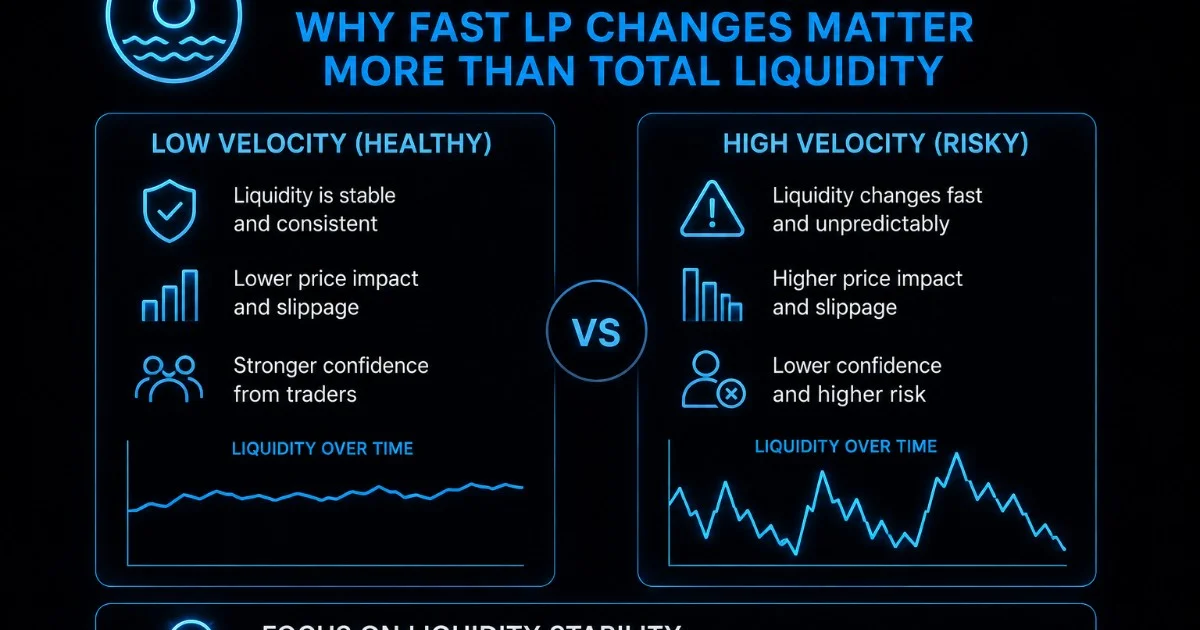
Liquidity velocity describes how quickly liquidity is added, removed, shifted, or restructured in a trading pool. A token with moderate but stable liquidity may be safer to trade than a token with large liquidity that changes rapidly. Fast LP changes can reveal uncertainty, manipulation, market maker adjustments, or loss of confidence.
In decentralized exchange trading, liquidity is not only about size. It is about behavior.
What Is Liquidity Velocity?
Liquidity velocity measures the pace of liquidity movement in a pool. If liquidity remains stable over time, velocity is low. If liquidity changes frequently or sharply, velocity is high.
High liquidity velocity can happen when liquidity providers add and remove funds quickly. It can also happen during migrations, launch events, incentives, unlocks, or market stress. Some changes may be normal, but sudden or repeated liquidity movements deserve attention.
A pool with high liquidity today may not offer the same conditions tomorrow. This is why traders should look beyond the current liquidity number.
Why Total Liquidity Can Be Misleading
Total liquidity shows how much value appears to be in the pool at a specific moment. It does not show whether that liquidity is stable, concentrated, locked, active, or likely to remain.
A token can show impressive liquidity during a promotional push, only to lose much of it later. A team may add liquidity to create confidence, then remove part of it after volume arrives. A liquidity provider may rebalance positions in a way that changes trade execution.
For traders, the risk is simple. They may buy under one liquidity condition and sell under a worse one.
Why Fast LP Changes Matter
Fast LP changes can affect price impact, slippage, confidence, and trader behavior. If liquidity is removed quickly, even small sells can move the price more aggressively. If liquidity is added suddenly, the pool may look stronger, but traders should ask whether the addition is permanent or temporary.
Fast changes can also influence psychology. When traders see liquidity drop, they may become cautious or rush to exit. When they see liquidity rise, they may assume the market is safer. Both reactions can create volatility.
Liquidity velocity matters because it can change the quality of the market before the chart fully reflects it.
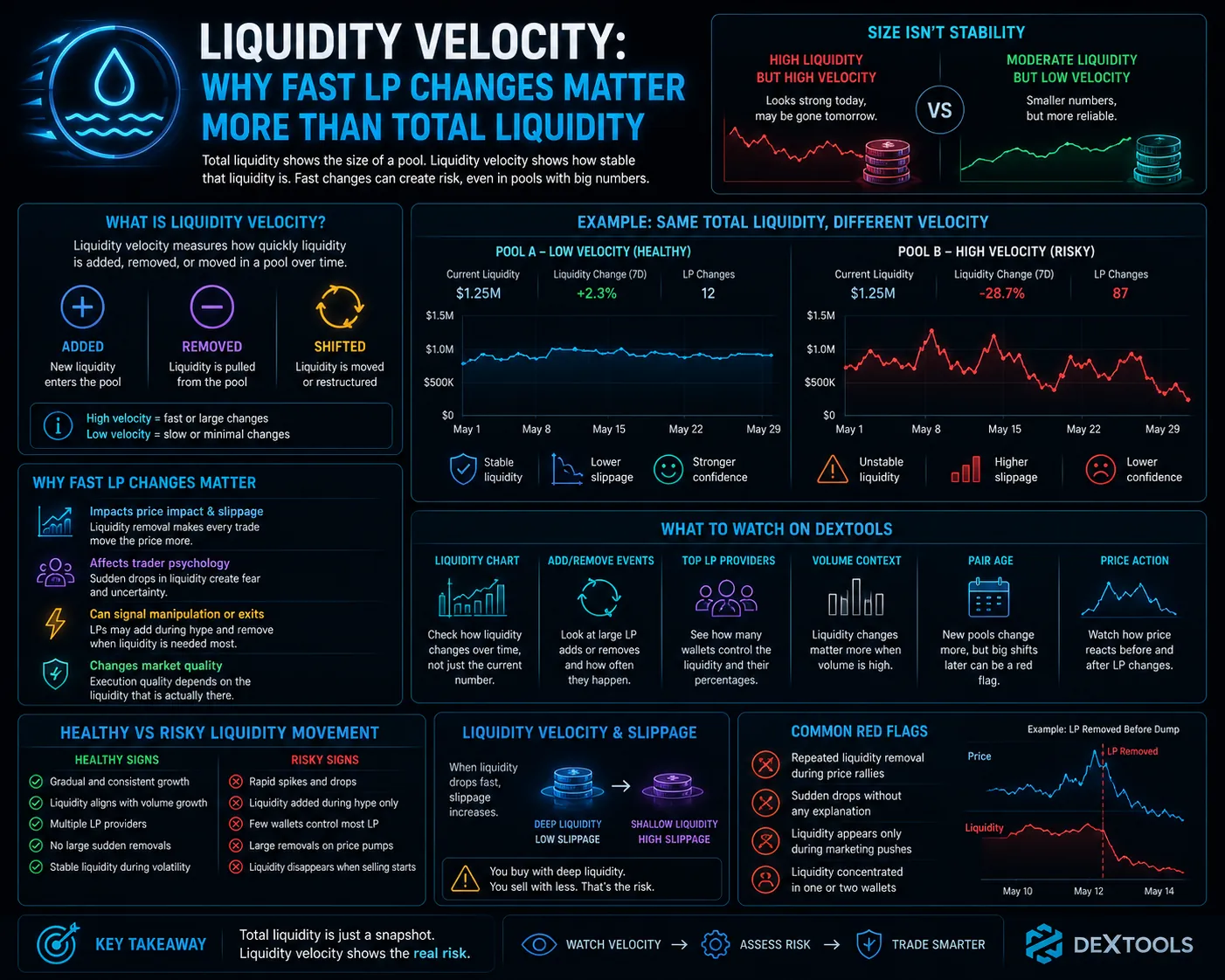
Healthy Liquidity Growth vs Risky Liquidity Movement
Healthy liquidity growth is usually gradual, transparent, and aligned with real market activity. It may happen as a project matures, volume increases, or more participants provide liquidity. This kind of growth can strengthen trading conditions.
Risky liquidity movement often looks abrupt or inconsistent. Liquidity may spike and disappear. It may change during major price moves. It may be controlled by a small number of wallets. It may rise during hype and fall when traders need it most.
The difference is stability. Healthy liquidity supports the market. Unstable liquidity creates uncertainty.
What Traders Should Watch on DEXTools
DEXTools can help traders monitor liquidity behavior by showing liquidity levels, volume, price action, pair age, and transaction data. Traders should not only check how much liquidity exists. They should watch how it changes over time.
If liquidity rises while volume and holder growth also improve, the signal may be constructive. If liquidity rises without real trading activity, it may be cosmetic. If liquidity falls while selling increases, the market may become fragile.
Pair age also matters. New pools naturally experience changes, but repeated large LP shifts after the launch phase can be a warning sign.
Liquidity Velocity and Slippage
Slippage is directly affected by liquidity conditions. When liquidity leaves the pool, slippage can increase. A trader who entered under deep liquidity may discover that exiting is much harder after LP changes.
This is especially important in low cap tokens. A small liquidity reduction can have a large effect on execution. If liquidity velocity is high, traders may need to reduce position size or avoid entering until conditions stabilize.
A pool is only as tradable as the liquidity available when you need to trade.
Common Red Flags
One red flag is repeated liquidity removal during price rallies. This can suggest that liquidity providers are reducing exposure while buyers arrive. Another red flag is a sudden liquidity drop without clear communication. A third is liquidity that appears only during marketing pushes.
Traders should also be cautious when liquidity is controlled by very few wallets. If one provider can change the pool dramatically, the market has a single point of failure.
The faster liquidity can change, the more carefully traders should manage risk.
Conclusion
Liquidity velocity helps traders understand the stability of a pool. Total liquidity shows the current size of the market, but liquidity velocity shows how reliable that market may be.
DEXTools gives traders the ability to monitor liquidity in context with price, volume, transactions, and pair age. By watching how quickly LP conditions change, traders can identify risk before it appears as a major price move.
In DEX trading, liquidity is not just a number. It is a moving signal. The speed of that movement can tell traders whether the market is becoming stronger or more fragile.
How to Bridge Crypto Between Chains: Complete Cross-Chain Tutorial 2026 How to Use 1inch for Swaps: Classic, Fusion and Limit Orders (2026) OKX Web3 Wallet Tutorial 2026: Multi-Chain Setup GuideThe Silent Partner: Understanding Liquidity Concentration and Its Velocity Implications
While total liquidity and its velocity are crucial, a deeper dive into how that liquidity is distributed within a pool offers even greater insight. Concentrated liquidity, particularly prevalent in V3 AMMs, allows LPs to provide capital within specific price ranges. This efficiency means less capital is needed to achieve similar depth to a V2 pool, but it also introduces new dynamics for velocity. If a significant portion of the liquidity is concentrated far from the current trading price, its effective velocity for current trades is severely diminished, regardless of the overall pool size.
High velocity in a concentrated pool can signal rapid shifts in where LPs believe the price will move, or it could indicate that a large whale is moving their concentrated position. For traders, understanding these concentration zones is paramount. A pool with high total liquidity but thinly spread concentration around the current price might experience higher slippage than a smaller pool with tightly concentrated liquidity exactly where trades are occurring. This nuance is often overlooked when simply viewing the "total liquidity" figure.
Practical Considerations for Velocity-Aware Traders
- Examine the current price relative to the active liquidity range in V3 pools. Liquidity outside this range is effectively dormant for current trades.
- Monitor shifts in liquidity concentration. A rapid influx or exodus of liquidity within a specific range can precede significant price action.
- Use tools that visualize liquidity depth across different price points, not just the aggregate total.
- Be wary of "phantom liquidity" - large total liquidity numbers where the vast majority is concentrated far from the current trading price.
- Consider the impact of impermanent loss on LPs. High velocity can indicate LPs rebalancing or exiting positions due to significant price swings.
Related Guides
- What Is a Liquidity Locker in Crypto? Why LP Locks Matter
- Market Cap vs Liquidity: Which Matters More?
- Arbitrage Delay: Why Same Token Price Gaps Stay Open Longer Than Traders Expect
- What Is a Rebase Token in Crypto? How Elastic Supply Changes Balances (2026)
- Understanding Block Reorgs: Temporary Blockchain Changes
Frequently Asked Questions
What is liquidity in crypto?
Liquidity refers to how easily a crypto asset can be converted into cash or another cryptocurrency without significantly affecting its price. It indicates the depth and stability of a trading market.
Why is total liquidity often considered important?
A high total liquidity number can suggest a strong and stable market for a token. It implies that large trades can be executed without causing major price swings, making the asset appear easier to trade and more reliable.
What is 'liquidity velocity' and why does it matter more?
Liquidity velocity refers to the rate at which liquidity within a pool changes or is utilized. It matters more than total liquidity because a high velocity indicates active trading and efficient capital use, even if the total amount isn't the highest. Fast LP changes can signal dynamic market activity and responsiveness.
How does liquidity velocity impact trading?
High liquidity velocity suggests that a market is actively being traded and rebalanced. This can lead to tighter spreads and more efficient price discovery, potentially offering better execution for traders even in pools with lower overall liquidity.