PancakeSwap v4 Infinity: CLAMM, Hooks & LBAMM Guide 2026
— By Tony Rabbit in Tutorials

PancakeSwap v4 Infinity explained: CLAMM, LBAMM, hooks and stablecoin pools for LPs. A 2026 guide to how v4 works and how to provide liquidity.
PancakeSwap Infinity CLAMM vs LBAMM is one of the most practical DeFi comparison queries right now because liquidity providers do not just want definitions. They want to know which pool type is better for their pair, how much management each model requires, and where the real fee opportunity sits.
The short version is that CLAMM is usually better for LPs who want capital efficiency and active control, while LBAMM is often the cleaner fit for low-volatility pairs and lower-maintenance liquidity strategies. But that summary hides a lot of nuance. The right choice depends on volatility, management style, gas sensitivity, and whether you want NFT-style positions or fungible liquidity.
Quick answer
- Choose CLAMM if you want concentrated liquidity, finer control, and you are comfortable actively managing ranges.
- Choose LBAMM if you want bin-based liquidity, simpler position management, and a better fit for low-volatility pairs.
- For SEO and real LP decision-making, the key question is not which model sounds newer. It is which pool structure matches the pair you actually want to provide liquidity for.

What Is PancakeSwap Infinity?
PancakeSwap Infinity is PancakeSwap's modular liquidity architecture. Instead of forcing every market into one AMM design, Infinity supports different pool managers and pricing models. That gives liquidity providers more strategic flexibility because not every pair behaves the same way. A highly active pair may reward concentrated liquidity, while a tighter pair may reward bin-based execution and simpler maintenance.
If you need the broader platform context first, read our PancakeSwap beginner guide. If you want the DEX landscape view, read our Uniswap vs Jupiter vs PancakeSwap comparison.
PancakeSwap Infinity CLAMM vs LBAMM at a glance
What Is CLAMM on PancakeSwap Infinity?
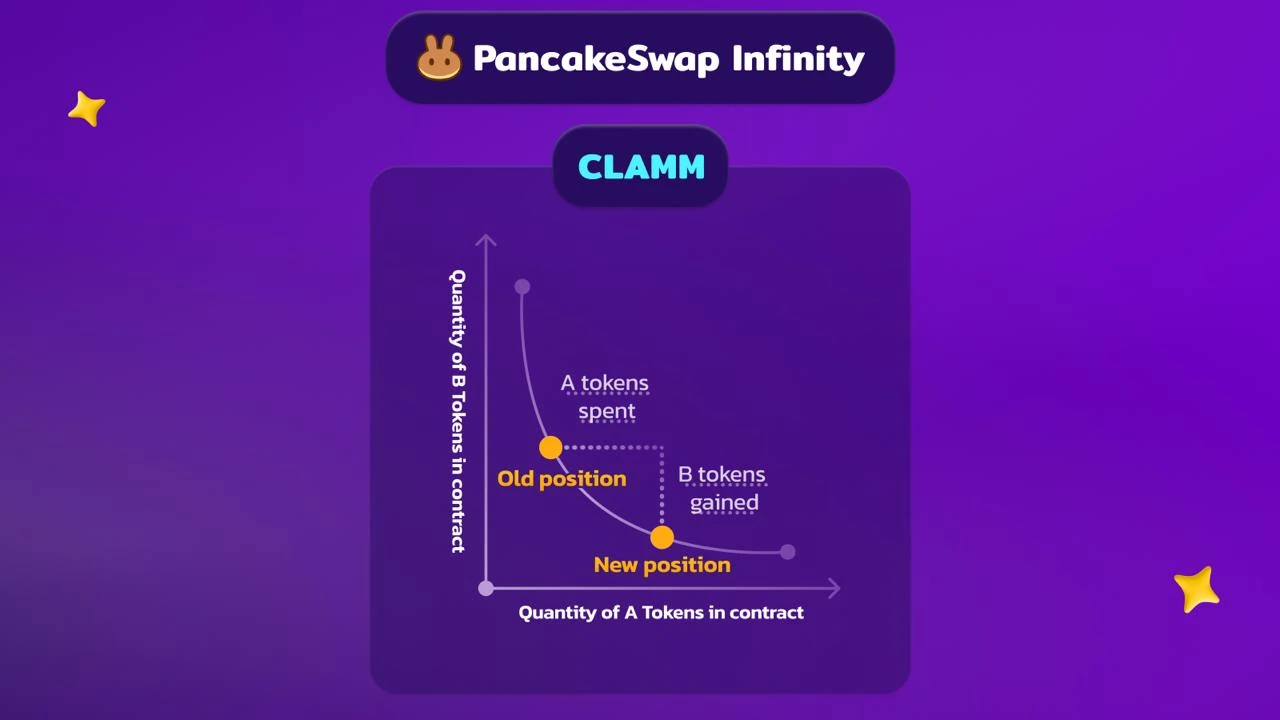
CLAMM stands for Concentrated Liquidity Automated Market Maker. In practice, that means LPs choose the price range where they want their liquidity to stay active instead of spreading capital across the full curve. The reward is stronger capital efficiency. The cost is that the position needs more attention.
When price stays inside your chosen range, CLAMM can make your liquidity work much harder. When price moves outside it, your position can become inactive until you rebalance. That is why CLAMM attracts LPs who want precision and are willing to manage it.
Why LPs choose CLAMM
What CLAMM demands from you
What Is LBAMM on PancakeSwap Infinity?
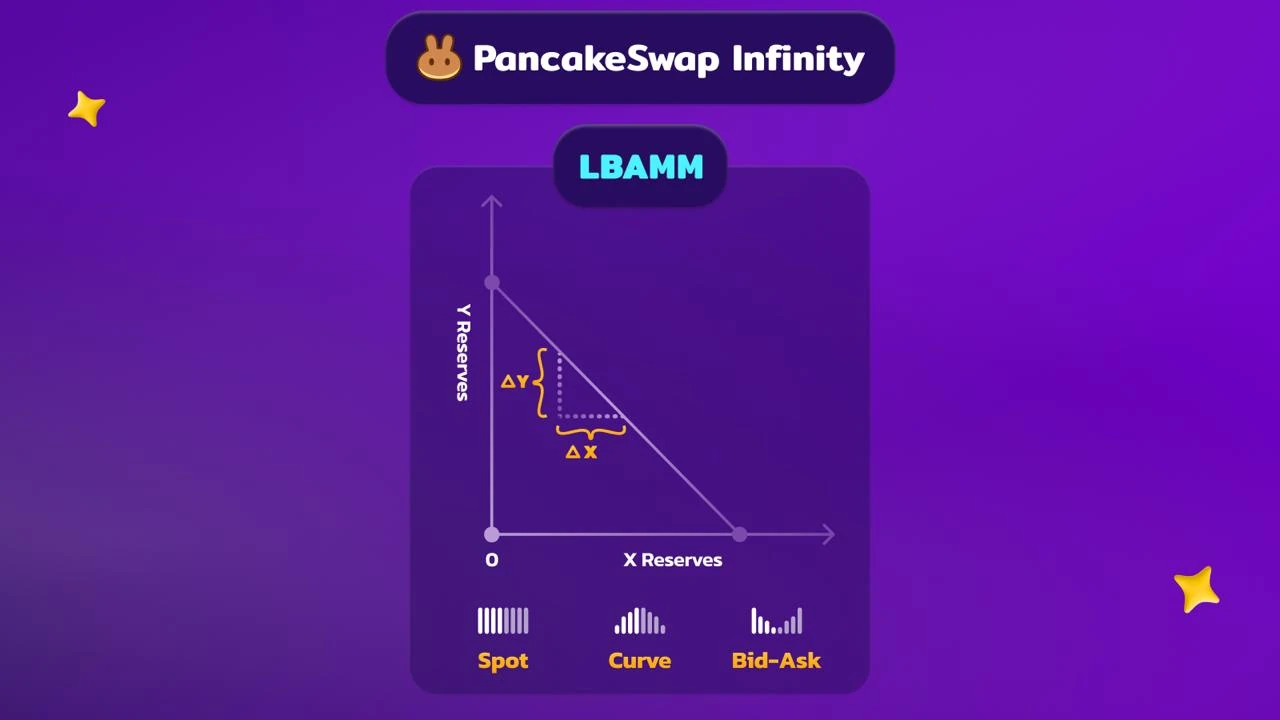
LBAMM stands for Liquidity Book AMM. Instead of one smooth curve, liquidity is distributed into discrete price bins. Each bin represents a specific price interval, and trading within a single bin can happen with zero price impact. That makes LBAMM especially interesting for tighter markets where price tends to move inside smaller ranges.
LBAMM positions are also fungible within each bin, which makes them operationally simpler than NFT-style concentrated liquidity. That simplicity is one of the reasons LBAMM is attractive for more passive LP behavior.
Why LPs choose LBAMM
Where LBAMM is weaker
CLAMM vs LBAMM for Stablecoins and Low-Volatility Pairs
If you are comparing PancakeSwap Infinity CLAMM vs LBAMM for stablecoins, tightly correlated assets, or other lower-volatility pairs, LBAMM usually starts with the edge. That is because the bin-based structure fits markets that spend more time moving inside narrower zones. You still need to choose bins intelligently, but the model is more naturally aligned with predictable price behavior than an actively managed concentrated range. If you need a broader refresher first, our liquidity pools guide is the best companion read.
That does not mean CLAMM is wrong for low-volatility pairs. A skilled LP can still use CLAMM effectively there. The difference is that CLAMM asks you to earn the edge through more deliberate range management, while LBAMM gives you a structure that already feels native to tighter markets. And if you are worried about range risk, read our impermanent loss guide alongside this comparison.
CLAMM vs LBAMM Gas Costs, NFTs, and ERC-1155 Positions
This is one of the most important practical differences, and it is where many comparison articles stay too shallow. CLAMM positions are non-fungible, which means they behave more like unique positions that can be tuned precisely. LBAMM liquidity is fungible within bins, which makes position handling operationally simpler. For many LPs, that difference matters almost as much as the pricing curve itself.
If you care about lower-friction LP management, cheaper adjustments, and a cleaner operational workflow, LBAMM becomes more attractive. If you care more about precision and are comfortable managing something more hands-on, CLAMM remains stronger despite the added complexity.
Operational difference that actually matters
PancakeSwap Infinity CLAMM vs LBAMM: Which Pool Type Fits Which Pair?
Best fit by liquidity profile
How to choose in practice
If You Already Understand PancakeSwap v3, Use This Mental Model
The easiest way to understand Infinity quickly is this: CLAMM will feel more familiar if you already understand concentrated liquidity from PancakeSwap v3 or similar designs. LBAMM is the alternative path, built around bins and simpler liquidity management for different market conditions. That framing helps because it turns the comparison into a workflow decision rather than a purely academic AMM debate.
So if you already liked the logic of concentrated liquidity and you do not mind maintaining ranges, CLAMM is the natural continuation. If you wanted something more operationally forgiving, LBAMM is where Infinity becomes genuinely different.
Do Fees and Hooks Change the Decision?
Yes, and this is where PancakeSwap Infinity becomes more interesting than a simple CLAMM vs LBAMM headline. Both pool types support hooks, which means developers can customize behavior beyond the base liquidity curve. Infinity also supports both static and dynamic fees, which lets pool creators tune the market for different trading or LP goals.
Fee design details that matter
So Which One Is Better for Liquidity Providers?
If you want the honest SEO answer, neither model is universally better. CLAMM is better when you want concentrated liquidity, deeper control, and the ability to manage a pair actively. LBAMM is better when you want simpler operations, lower-volatility deployment, and more passive position behavior.
That makes this less about tribalism and more about fit. The LP who treats every pair like the same market will get weaker results than the LP who matches the pool structure to the actual behavior of the asset pair.
Common Mistakes When Comparing CLAMM vs LBAMM
Mistakes that distort the decision
Frequently Asked Questions
What is the difference between CLAMM and LBAMM on PancakeSwap Infinity?
CLAMM uses concentrated liquidity inside a chosen range, while LBAMM uses discrete price bins. CLAMM is usually better for active management, while LBAMM is often better for simpler, low-volatility liquidity strategies.
Is CLAMM better than LBAMM for PancakeSwap Infinity?
Not by default. CLAMM is better for capital efficiency and active LP control. LBAMM is better for simpler management and low-volatility pairs.
Is LBAMM better for stablecoins?
In many cases, yes. LBAMM is generally a more natural fit for stablecoin or tightly correlated pairs because it works well in lower-volatility conditions.
Does PancakeSwap Infinity support hooks in both CLAMM and LBAMM?
Yes. Both pool types support hooks, which means developers can customize pool behavior and fee logic beyond the base liquidity design.
What should beginners choose between CLAMM and LBAMM?
Most beginners will find LBAMM easier to understand and manage. CLAMM can be more efficient, but it rewards more active monitoring and better range selection.
Related reading
Disclaimer: This article is for educational purposes only and does not constitute investment, legal, or tax advice. DeFi liquidity provision involves smart contract risk, market risk, and impermanent loss. Always verify current PancakeSwap Infinity documentation and fee settings before deploying capital.
Related Guides
- WETH vs USDC Pair: Which Trading Pool Is Better?
- What Is Taiko? Type 1 ZK EVM Ethereum Equivalent L2 Guide 2026
- Crypto Order Types: The Complete 2026 Guide to Every Order Type in Trading
- Uniswap vs Jupiter vs PancakeSwap: Best DEX Comparison 2026
- How to Farm on PancakeSwap: Liquidity, CAKE Rewards and LP Risks (2026)